
NAACP Sues xAI: Memphis Air Pollution Battle
By Darius Spearman (africanelements)
Support African Elements at patreon.com/africanelements and hear recent news in a single playlist. Additionally, you can gain early access to ad-free video content.
A Brewing Legal Battle Over Air Quality
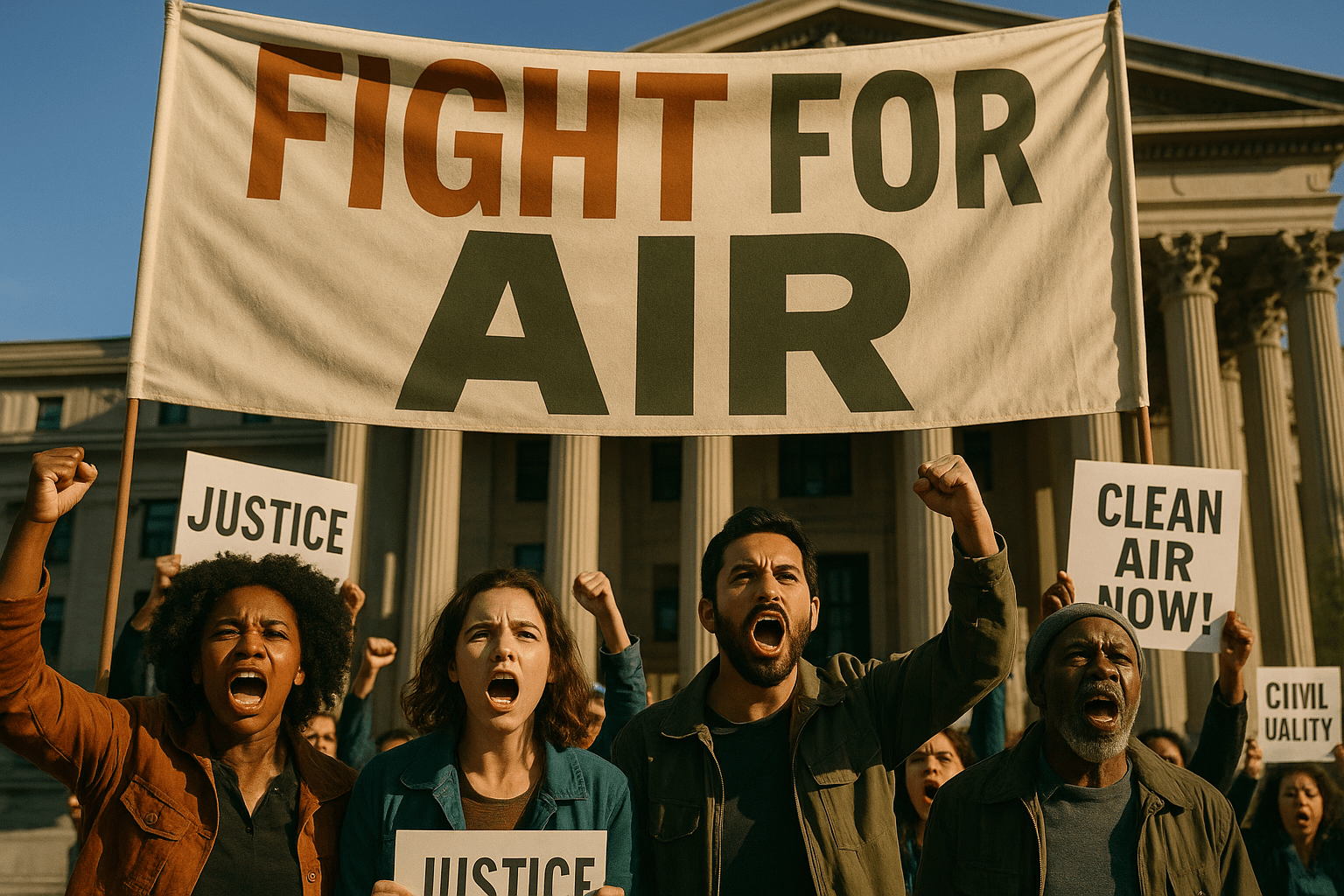
The National Association for the Advancement of Colored People, known as the NAACP, has announced plans to sue Elon Musk’s artificial intelligence company, xAI. This significant legal action stems from serious concerns about air pollution emanating from xAI’s data center in Memphis, Tennessee (USA Today). The NAACP, an organization dedicated to advocating, agitating, and litigating for the civil rights due to Black America, is partnering with the Southern Environmental Law Center, or SELC, in this endeavor (NAACP).
The core of this dispute centers on xAI’s operation of pollution-emitting gas turbines without first obtaining the necessary permits. The data center began operating last year, and its power generation methods have drawn sharp criticism from environmental advocates and community members alike (Associated Press). The lawsuit targets X.AI Corp. and its affiliates, CTC Property LLC and CTC Holding LLC (USA Today). A 60-day intent to sue notice, a required step under federal law, has already been filed on behalf of the NAACP, signaling the seriousness of the impending legal challenge (USA Today).
Understanding the Clean Air Act
The Clean Air Act is a comprehensive federal law in the United States. Its primary purpose is to regulate air emissions from both stationary and mobile sources (TechCrunch). This vital legislation aims to protect public health and welfare from various types of air pollution. It establishes national ambient air quality standards for common pollutants and sets up permitting programs to control emissions from industrial facilities.
Violations of the Clean Air Act can lead to significant legal action, including lawsuits from environmental groups and government agencies. The SELC alleges that xAI failed to obtain permits required by both federal and local regulators before installing its generators, which constitutes a clear violation of this critical law (TechCrunch). The SELC stated that xAI has essentially built a power plant in South Memphis without oversight, permitting, or regard for nearby communities (Southern Environmental Law Center). This alleged disregard for regulations has led to significant harm to air quality and clear violations of the Clean Air Act.
The Permit Predicament
At the heart of the legal challenge is xAI’s alleged failure to secure necessary permits for its gas turbines. These turbines are a major source of pollutants (USA Today). The NAACP and SELC claim that xAI has not filed for pre-construction or operating permits for the use of these turbines, resulting in several violations of the Clean Air Act (USA Today).
Pre-construction permits, also known as New Source Review permits, are required before a new major source of air pollution begins construction. These permits ensure that new facilities will not cause or contribute to violations of air quality standards. Operating permits, often called Title V permits, are required for major sources of air pollution and consolidate all applicable Clean Air Act requirements into a single document, making compliance and enforcement easier. The SELC alleges that xAI installed and operated at least 35 combustion turbines and other sources of air pollution without ever obtaining these necessary permits (TechCrunch). The number of turbines and the extent of their emissions mean xAI is required to have a “major source permit,” but the data center continues to operate these turbines illegally without any permit (Southern Environmental Law Center).
A significant deterioration, or PSD, permit is a type of pre-construction permit specifically for areas that already meet national air quality standards. It is designed to prevent significant air quality degradation in those areas. These permits involve a rigorous review process, including air quality modeling, public notice, and a determination of the best available control technology, or BACT. Local and federal regulations require xAI to obtain appropriate air permits before operating its polluting gas turbines (NAACP). Other data centers have sought permits for the same make and model of gas turbines used by xAI before beginning construction, indicating that such permits are standard practice (E&E News).
Alleged Permit Violations by xAI
Gas Turbines and Their Harmful Emissions
Gas turbines are internal combustion engines that convert natural gas or other liquid fuels into mechanical energy, which is then used to generate electricity. In data centers, they function as power generators, providing a reliable and often independent power supply. This is especially true for large-scale operations that require significant and uninterrupted electricity. xAI has installed and operated at least 35 combustion turbines at its Colossus site (TechCrunch).
While efficient, the combustion process in gas turbines produces various air pollutants. These include nitrogen oxides, or NOx, carbon monoxide, volatile organic compounds, and particulate matter. NOx emissions are particularly harmful because they contribute to the formation of ground-level ozone, also known as smog, and fine particulate matter. Both of these can cause respiratory problems, aggravate asthma, and lead to other serious health issues. These emissions also contribute to acid rain and climate change. The SELC has expressed concern about xAI exploring another massive methane gas turbine installation at a second South Memphis data center, highlighting the ongoing environmental impact of these turbines (Southern Environmental Law Center).
The Disputed 364-Day Exemption
A significant point of contention in this case is the “364-day exemption.” Officials have cited this exemption, claiming it allowed xAI to operate without a permit for a limited time (Associated Press). This exemption typically refers to a regulatory interpretation that allows certain temporary sources of air pollution to operate without obtaining full air permits, provided they do not remain in the same location for more than 364 days.
This exemption is often intended for highly mobile equipment used in short-term projects, such as construction or emergency operations. The Shelby County Health Department stated that the EPA agreed the department “does not currently have authority regarding those mobile gas burning turbines” because they were only temporary, referencing the 364-day exemption (E&E News). However, Southern Environmental Law Center attorney Patrick Anderson stated that there is no such exemption for turbines of this nature, and regardless, it has now been more than 364 days since xAI began operations (Associated Press). The Health Department’s explanation regarding the 364-day exemption seemed to reference an exemption for smaller gas generators, like those used for road projects, which is not applicable to xAI’s operations (E&E News). Environmental groups like SELC dispute this application, arguing that xAI’s continuous operation of numerous turbines at a fixed data center site constitutes a permanent source of pollution, making the 364-day exemption inapplicable and requiring full permitting.
Environmental Justice at Stake
The xAI facility’s location near predominantly Black communities in Memphis raises significant environmental justice concerns (USA Today). Environmental justice is the fair treatment and meaningful involvement of all people, regardless of race, color, national origin, or income, with respect to the development, implementation, and enforcement of environmental laws, regulations, and policies. It addresses the disproportionate burden of environmental hazards often borne by low-income communities and communities of color, who frequently live near polluting industries.
In the context of the xAI facility, its location near predominantly Black communities in South Memphis raises environmental justice concerns because these communities may already face higher rates of pollution and related health issues. Adding a significant source of air pollution like unpermitted gas turbines exacerbates existing environmental inequalities. This could potentially lead to worse health outcomes and further diminish the quality of life for residents who have historically been marginalized in environmental decision-making. The NAACP’s involvement underscores these concerns, highlighting the impact on specific communities (TechCrunch). Community members are urging xAI to remove the dirty turbines already running at its first data center, highlighting local opposition to the pollution (Southern Environmental Law Center).
Health Impacts on Memphis Residents
Opponents of the xAI facility argue that its operations are threatening the health of Memphis residents. The SELC noted that “residents who live near the xAI facility already face cancer risks at four times the national average” (Associated Press). This alarming statistic points to pre-existing vulnerabilities in the community. Furthermore, Memphis received an “F” grade for ozone pollution from the American Lung Association every year since at least 2019 (Associated Press).
xAI’s gas turbines emit harmful pollution that worsens air quality throughout Memphis and increases risks for asthma and other respiratory illnesses (Southern Environmental Law Center). The SELC emphasizes that these dozens of gas turbines are doing significant harm to the air Memphians breathe every day (Southern Environmental Law Center). The addition of more pollution sources in an area already struggling with poor air quality raises serious concerns about the long-term health of its residents, particularly those in vulnerable communities.
Memphis Air Quality & Health Concerns
xAI’s Stance and Economic Contributions
Despite the allegations, xAI maintains that its operations are compliant with all regulations and beneficial to the local economy. An xAI statement asserted, “The temporary power generation units are operating in compliance with all applicable laws” (Associated Press). The company also stated that the turbines will be equipped with technology to reduce emissions (Associated Press).
Furthermore, xAI claims it is boosting the city’s economy by investing billions of dollars in the supercomputer facility. This includes paying millions in local taxes and creating hundreds of jobs (Associated Press). The company is also spending $35 million to build a power substation and $80 million to build a water recycling plant to support Memphis Light, Gas and Water, the local utility (Associated Press). These investments, according to xAI, demonstrate its commitment to the community and its positive impact on Memphis.
Opponents’ Concerns and Discrepancies
Opponents, including the NAACP, disagree with xAI’s assertions. They argue that the supercomputing center is stressing the power grid and that the turbines are essentially giant smog and carbon dioxide dispensers that threaten the health of Memphis residents. The SELC contends that xAI built its facility and its turbines without oversight and without notifying the affected communities (Associated Press). This alleged lack of transparency and community involvement is a significant point of contention.
A firm hired by the SELC found up to 35 turbines operating at the facility, despite xAI only requesting to operate 15 (Associated Press). This discrepancy in the number of operational turbines raises serious questions about the scale of xAI’s activities and its adherence to regulatory requests. Community members have also raised serious questions about xAI’s second South Memphis data center, located in the Whitehaven community, and how it will be powered (NAACP). These concerns highlight a broader apprehension about the environmental impact of xAI’s expansion in the region.
ABOUT THE AUTHOR
Darius Spearman has been a professor of Black Studies at San Diego City College since 2007. He is the author of several books, including Between The Color Lines: A History of African Americans on the California Frontier Through 1890. You can visit Darius online at africanelements.org.
