
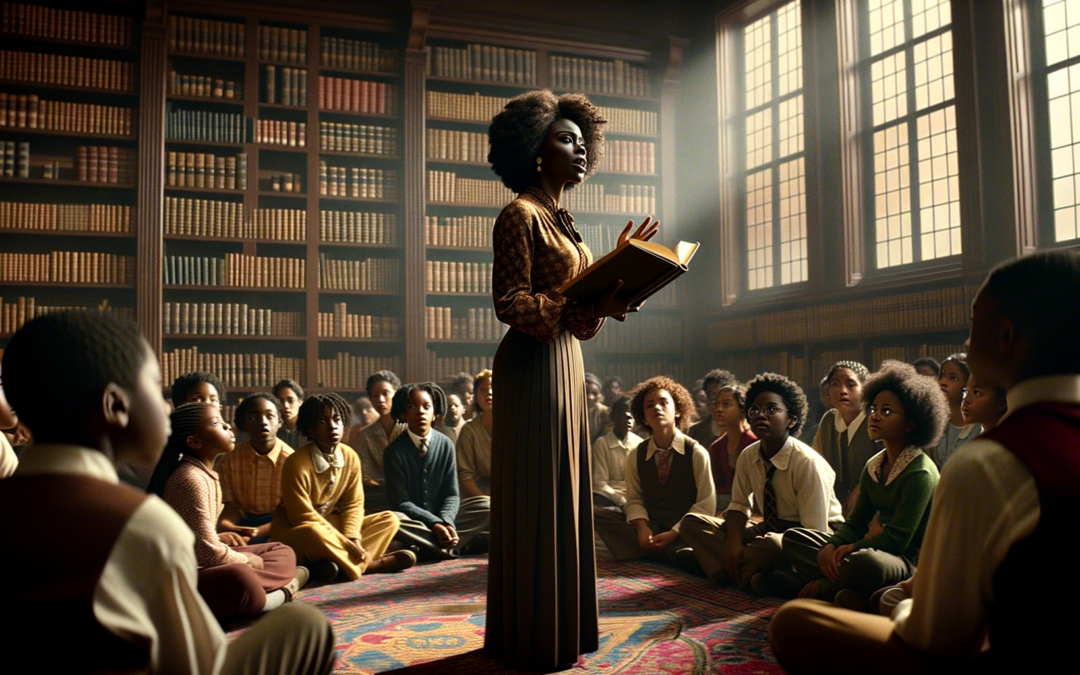
Trump’s policies threaten Black history preservation through funding cuts to institutions like Whitney Plantation and IMLS, Smithsonian and Naval Academy book purges, and state education laws restricting critical narratives on systemic racism, despite 80% public support for teaching Black history in schools. (AI-Generated Image).
Trump Black History Cuts: An Unfolding Crisis
By Darius Spearman (africanelements)
Support African Elements at patreon.com/africanelements and hear recent news in a single playlist. Additionally, you can gain early access to ad-free video content.
Impact of Trump’s Policies on Black History Preservation
The story of Black people in America is a cornerstone of the nation’s identity, filled with resilience, struggle, and triumph. However, recent policies and actions, particularly during the Trump administration, have raised serious concerns about the preservation and teaching of this vital history. From federal funding cuts to the removal of historical content, these measures threaten to obscure the past and undermine our communities’ efforts to keep these narratives alive. Furthermore, understanding these challenges is crucial for us to advocate for the truth of our history.
Federal Funding Slashed: Trump’s Black History Cuts
Federal funding is often a lifeline for institutions dedicated to preserving and sharing Black history. When these funds are cut, the impact is immediate and far-reaching. For instance, the Trump administration terminated two grants to Louisiana’s Whitney Plantation, a museum specifically focused on the experiences of enslaved people and their resistance. One of these was a $55,000 grant for an exhibit on resistance to slavery, with the administration citing that the project no longer “serves the interest of the United States” (Washington Informer). This decision directly impacts the ability of such sites to tell a complete and honest story of our ancestors.
The Whitney Plantation is particularly significant because it shifts the narrative away from the “big house” and focuses on the lives and resistance of the enslaved. Its exhibits detail various forms of defiance, offering a crucial counter-narrative to sanitized versions of plantation life (Whitney Plantation Official Website). Similarly, the Institute of Museum and Library Services (IMLS), a key federal agency supporting libraries and museums, faced turmoil. Under a Trump executive order aimed at eliminating “non-statutorily required activities,” IMLS staff were placed on administrative leave and grants were revoked, destabilizing museums nationwide (Washington Informer). This move was justified by targeting programs not explicitly mandated by law, which often included Diversity, Equity, and Inclusion (DEI) initiatives that benefit institutions serving our communities (The New York Times). Consequently, small and rural libraries, often critical access points for Black history resources, lost vital IMLS funding, jeopardizing their ability to serve their communities (WUNC). Indeed, the loss of such funding can lead to the disappearance of local archives and educational programs, creating lasting knowledge gaps, particularly in under-resourced rural areas (Library Journal).
Federal Funding Cuts to Black History Initiatives
Erasing Our Past: Smithsonian and Naval Academy Book Purge
Beyond funding, there have been direct actions to remove or alter Black history content from public view. The Smithsonian National Museum of African American History and Culture, a beacon for our heritage, faced accusations of promoting “divisive” narratives. This pressure reportedly contributed to the resignation of its director, Kevin Young, and was accompanied by reduced federal support (Politico). Such attacks aim to sanitize the difficult truths of racism and oppression that are integral to understanding American history. Unfortunately, this trend was not isolated.
The National Park Service, custodian of many historical sites, deleted references to Harriet Tubman, enslaved African Americans, and the Underground Railroad from its online exhibits (Seattle Medium). Even military institutions were not immune. The U.S. Naval Academy purged nearly 400 books, including cherished works by Maya Angelou and even Holocaust memorials, as part of a purge related to Diversity, Equity, and Inclusion initiatives (Maryland Democratic Party). Furthermore, Defense Department web pages honoring the Tuskegee Airmen and Jackie Robinson were stripped of essential historical context, diminishing their profound contributions and struggles (Seattle Medium). These actions represent a deliberate effort to control the narrative, effectively erasing parts of our story from the public record.
Guardians of Our Stories: Black Librarians Face Funding Gaps
Black librarians and archivists have long been on the front lines of preserving our history, often against incredible odds. Historically, they battled segregated libraries and the erasure of our narratives from mainstream archives. Their resistance took many forms, including the creation of community-centered digital archives and oral history projects to ensure our stories were not lost (The Black Librarian in America – YouTube). These community-led projects are vital for reclaiming historical agency, allowing us to document and share our own experiences, especially when official records exclude or misrepresent them (The Atlantic).
Pioneering Black women librarians like Augusta Baker and Eliza Atkins Gleason championed equitable library services in the face of systemic racism, laying groundwork for future generations (ALA). Today, modern Black librarians continue this legacy, advocating for inclusive narratives. However, they now face renewed federal pressure to avoid so-called “divisive” topics like systemic racism, making their crucial work even more challenging (Georgia Library Association). This pressure directly impacts their ability to secure funding and resources, especially when “Black librarians funding” becomes scarce due to shifting political winds.
Uneven Ground: Black History Education Laws and Their Limits
While there is a growing call for comprehensive Black history education, state-level mandates remain inconsistent and often under-resourced. Currently, only 12 states require Black history to be taught. Even in these states, the requirement is often symbolic, lacking dedicated funding for crucial teacher training or curriculum development (Education Week). This means that even where mandates exist, their effectiveness can be severely limited.
Compounding this issue, some states have enacted laws that directly conflict with meaningful Black history education. States like Florida, with its “Stop WOKE Act,” and Texas have passed legislation restricting discussions on race and systemic oppression in K-12 classrooms (flgov.gov). These laws often prohibit teaching that slavery or oppression is an “inherent characteristic” of a race or that individuals should feel guilt for past actions of their racial group. This can effectively sanitize history, reducing complex events like rebellions or discussions of systemic racism to mere footnotes, if they are mentioned at all (The Texas Tribune). Thus, a paradoxical situation arises where Black history education is supposedly mandated, yet legal barriers prevent the critical instruction necessary to truly understand it.
State Mandates for Black History Instruction
The People Speak: Support for Black History Amidst Knowledge Gaps
Despite these challenges, there is significant public support for teaching Black history. A striking 80% of Americans believe schools should teach Black history (YouGov). However, this broad support often coexists with significant knowledge gaps about specific historical events and figures. For example, the same source reveals that only 33% of white adults are familiar with Nat Turner’s 1831 revolt, a pivotal moment of resistance against slavery. This highlights a disconnect between general approval and deeper historical understanding.
Furthermore, the intensity of this support varies. While 77% of Black Americans strongly support Black history curricula, only 52% of white Americans express the same level of strong support (YouGov). These knowledge gaps are unfortunately exacerbated by education policies that restrict discussions about race. When laws prevent students from learning about topics like Nat Turner’s revolt or the complexities of systemic oppression, it creates a sanitized, incomplete version of history (Education Week). In fact, a 2020 survey found that a shocking 66% of high school students could not even name a Black U.S. historical figure like Harriet Tubman or describe their contributions, underscoring the urgent need for comprehensive and accurate historical education (Pew Research Center).
Public Views on Black History Education
The deliberate underfunding, erasure of narratives, and weakening of educational mandates all contribute to a climate where preserving and teaching Black history becomes an uphill battle. These actions don’t just affect dusty archives or museum displays; they impact how our children see themselves and their place in the world. They also affect how the broader society understands the foundations of America. Therefore, continued vigilance and advocacy are essential to ensure that our stories are told, our histories are preserved, and future generations can learn the full, unvarnished truth.
ABOUT THE AUTHOR
Darius Spearman is a professor of Black Studies at San Diego City College, where he has been teaching since 2007. He is the author of several books, including Between The Color Lines: A History of African Americans on the California Frontier Through 1890. You can visit Darius online at africanelements.org.
