
Listen to this article
Download AudioMayor Baraka’s ICE Protest Arrest Explained
By Darius Spearman (africanelements)
Support African Elements at patreon.com/africanelements and hear recent news in a single playlist. Additionally, you can gain early access to ad-free video content.
Mayor Baraka Arrest ICE Protest: A Closer Look
Baraka Arrest: Newark Mayor Detained at ICE Facility
Newark Mayor Ras Baraka found himself in handcuffs on a Friday. The date was May 10, 2025. This arrest happened at the new Delaney Hall ICE detention center in Newark, New Jersey. Mayor Baraka was not alone initially. He was with three members of Congress. They were there to look into how the facility was being run (ABC News). However, things took a turn during a protest against the center’s opening.
Mayor Baraka insists he did nothing wrong. He stated he did not trespass onto the property. Later that same evening, authorities released him from custody (Fox 5 NY). This incident quickly drew attention. It highlights the ongoing, often tense, relationship between local leaders and federal immigration policies. Many in our community see this as another example of authorities overstepping, especially when it involves Black leaders standing up for justice.
ICE Protest: Confrontation at Delaney Hall
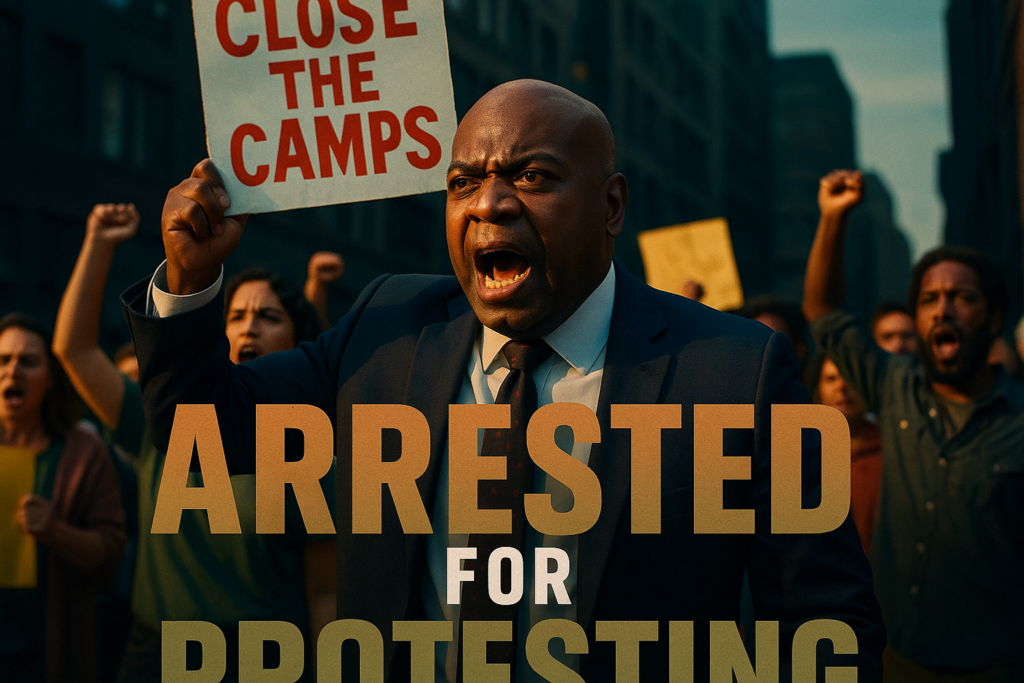
The protest was about more than just one building. It was part of a larger stand against the Delaney Hall facility opening. People raised concerns about permits for the center. They also opposed federal immigration policies in general (Black News). The situation escalated when Mayor Baraka was near the gate. Bodycam footage captured the moments leading to his arrest. In the video, ICE agents are heard warning Mayor Baraka. They told him to step back from the gate.
The agents stated that only members of Congress could go past that point (Sky News). A heated argument followed these warnings. Soon after, officers arrested Mayor Baraka. The footage shows him being dragged back through the gate in handcuffs. For many, this scene was disturbing. It felt like a strong message was being sent to those who dare to question federal actions. Indeed, the image of a Black mayor, an elected official, being handled this way by federal agents is powerful and unsettling.
Trespassing Claims: Accusations and Denials
Federal authorities have their side of the story. They claim Mayor Baraka ignored several warnings. They say he was told to leave the restricted area but refused. This led to his arrest for trespassing (ABC News). Interim U.S. Attorney Alina Habba commented on the situation. She stated that Mayor Baraka “chose to disregard the law” (Sky News).
Mayor Baraka strongly denies these claims. He maintains he was invited to the location. He also states he had permission to be where he was (Fox 5 NY). This creates a classic “he said, they said” situation. The Department of Homeland Security (DHS) is still investigating the incident. DHS officials have characterized Mayor Baraka’s actions as “political games.” As of the latest updates, no federal charges have been filed against him. This lack of charges, for now, makes many wonder about the strength of the trespassing claim. Furthermore, it raises questions about the real motives behind the arrest.
Incident Snapshot: Mayor Baraka’s Arrest
ICE Explained: The Agency at the Center
To understand this situation, we need to know about ICE. ICE stands for U.S. Immigration and Customs Enforcement. It is a federal law enforcement agency. ICE operates under the Department of Homeland Security (DHS) (Immigration and Customs Enforcement | Homeland Security). Formed in 2003, its job is to protect the U.S. from cross-border crime. It also handles illegal immigration that could threaten national security and public safety. This mission sounds straightforward. However, its methods and impact are often debated, especially in immigrant communities and communities of color.
ICE has two main parts. Enforcement and Removal Operations (ERO) finds, arrests, detains, and deports undocumented immigrants (ICE – Who We Are). Homeland Security Investigations (HSI) looks into crimes linked to immigration. These crimes include human trafficking and drug smuggling. ICE also runs detention facilities like Delaney Hall. Its creation after 9/11 emphasized national security. Nevertheless, its role in arresting and detaining people has led to many protests and calls for reform from our communities.
Understanding U.S. Immigration and Customs Enforcement (ICE)
Detention Center: The Delaney Hall Controversy
Delaney Hall ICE Detention Center is now part of this larger story. Facilities like these are where ICE holds people during immigration proceedings. Their openings often spark protests. People worry about conditions inside. They are concerned about civil rights. Many question the very idea of detaining immigrants, especially when a facility is new. The protest at Delaney Hall highlighted concerns about “permit issues” (Black News). Protesters often raise these issues to question if a facility meets all local and federal rules. This can involve zoning, environmental standards, or other regulations.
These detention centers are controversial. They represent a physical part of immigration policies that many find unjust. The inauguration of Delaney Hall brought these feelings to the surface in Newark. Local activists and public officials like Mayor Baraka often challenge ICE’s actions. Their presence shows deep community concern. Thus, the opening of a new center is rarely quiet. It becomes a focal point for broader debates on immigration.
Congressional Oversight: A Limited Shield?
Mayor Baraka was with members of Congress. They were there for “oversight” at the ICE facility (ABC News). Congressional oversight means Congress members can monitor federal agencies, including ICE. However, their access to restricted places like detention centers can be limited. Security rules or other laws might prevent full access. Oversight can involve reviewing documents or holding hearings. But being physically present, especially with a mayor who isn’t a Congress member, has its own rules.
The ICE agents’ words, “only congressmen and congresswomen were allowed beyond the gate,” highlight this (Sky News). A mayor might not have the same access rights even with congressional presence. This incident shows the tricky line between oversight and security protocols. It also raises questions about how much protection accompanying Congress members can offer. Ultimately, it seems the federal agents at the gate had the final say on who could pass, regardless of the oversight mission.
Bodycam Evidence: Seeing is Believing?
Bodycam footage of Mayor Baraka’s arrest has been released (Sky News). This kind of footage is supposed to offer an objective look at police encounters. It can show what happened. This is important for public accountability. It helps clear up different stories about an event. In cases like this, bodycam video can heavily influence what people think. It can either support or challenge the official story.
The footage shows the argument and the arrest. For some, it will confirm the federal agents’ claim that Baraka was warned. For others, it might show an overreaction by ICE. It might support Baraka’s feeling that he was unfairly targeted. How this footage affects the ongoing DHS investigation or public opinion is still unfolding. However, its existence means there’s a visual record. This record will be part of the conversation for a long time.
Political Implications: More Than Just an Arrest
The arrest of a sitting mayor, especially someone like Ras Baraka, known for activism, is a big deal. It’s not just a local news story. It touches on national debates. These include local versus federal power, the right to protest, and immigration enforcement. DHS officials called Baraka’s actions “political games” (Fox 5 NY). This suggests they see his protest as a political stunt. However, for many, it’s a legitimate stand against policies they see as harmful.
This incident could tense the relationship between Newark officials and federal agencies. It also energizes activists. It brings more attention to the broader issues of immigrant rights. The arrest of a Black mayor by federal agents adds another layer. It connects to wider concerns in the African American community about policing and justice. Therefore, the political ripples from this event will likely be felt for some time.
Why This Arrest Matters to Our Community
Black Community: Echoes of a Larger Struggle
For the Black community, the arrest of Mayor Ras Baraka is not just an isolated event. It resonates deeply. It connects to a long history of activism. It also echoes struggles against systemic racism and unjust treatment by law enforcement. Seeing a Black mayor, a respected leader, arrested while protesting touches a raw nerve. It brings up memories of civil rights leaders facing similar opposition. This event highlights the links between the fight for immigrant rights and the fight for racial justice. Many in our community see these struggles as intertwined.
The incident may inspire more activism. It can raise awareness about how immigration policies impact all communities of color. When a Black leader takes a stand like this, it can galvanize people. It can foster solidarity between different groups fighting for fairness. The image of Mayor Baraka in handcuffs is a powerful symbol. For us, it represents the ongoing need to challenge systems that seem to unfairly target and silence dissenting voices, especially voices from our community. Consequently, this event will likely strengthen our resolve to seek justice and accountability.
ABOUT THE AUTHOR
Darius Spearman is a professor of Black Studies at San Diego City College, where he has been teaching since 2007. He is the author of several books, including Between The Color Lines: A History of African Americans on the California Frontier Through 1890. You can visit Darius online at africanelements.org.
