
Listen to this article
Download AudioDallas Police: Justice Denied for Silvester Hayes?
By Darius Spearman (africanelements)
Support African Elements at patreon.com/africanelements and hear recent news in a single playlist. Additionally, you can gain early access to ad-free video content.
Another Black Man, Another Dismissal: Hayes’s Story
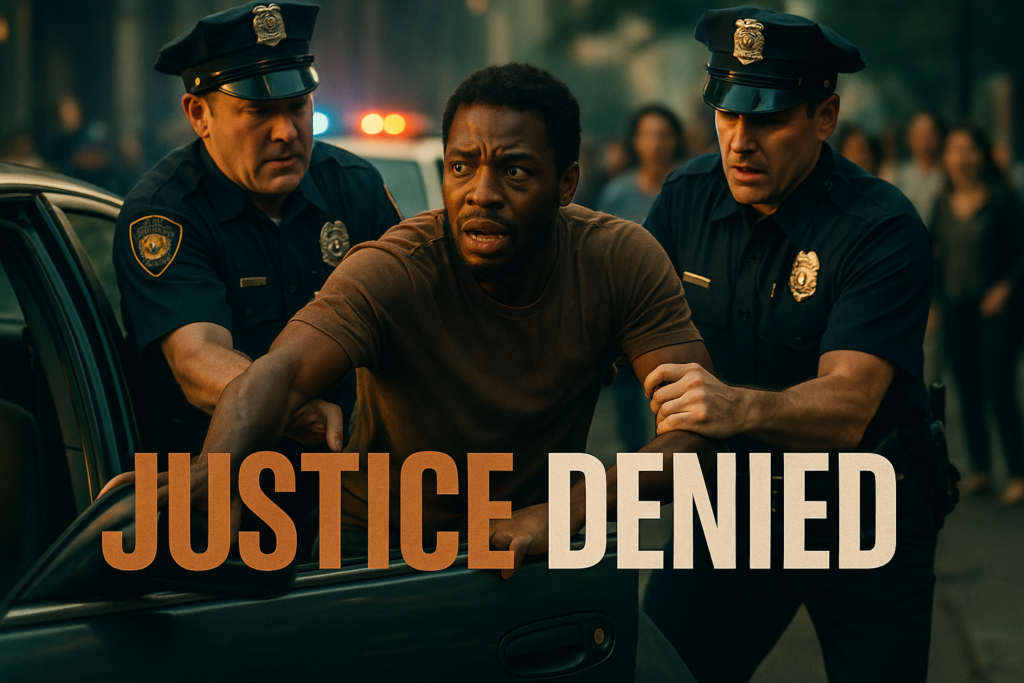
Silvester Hayes, a Black man from South Oak Cliff, once dreamed of wearing a Dallas police badge. That dream is now gone. Instead, he found himself on the receiving end of what he described as a brutal arrest by Dallas police officers. They mistakenly identified him as a family violence suspect (Atlanta Black Star). A former security guard, Hayes had a legally registered firearm in his vehicle. This fact should have mattered, especially after police ran a database check. The check revealed Hayes had no prior arrests, and his gun was lawfully owned.
Despite this critical information, officers proceeded with a forceful arrest. Hayes alleged they tried to frame him on gun charges. He felt unprotected and wronged by the very system he once aspired to join. This experience highlights a familiar narrative for many Black men encountering law enforcement. Indeed, the mistake by the officers stemmed from not properly verifying Hayes’s identity before the arrest (The Dallas Morning News). His subsequent lawsuit, claiming excessive force and false arrest, met a disappointing end.
Silvester Hayes: A Case of Mistaken Identity
Judge Calls It ‘Reasonable’: The System’s View on Dallas Police
The federal judge overseeing Silvester Hayes’s case, Judge Scholer, delivered a ruling that stunned many. She determined the police actions were “reasonable” under existing case law (Atlanta Black Star). This decision effectively shut down Hayes’s claims of excessive force and false arrest. The judge noted that Hayes posed some threat simply by being in his vehicle. Furthermore, his vehicle could be considered a dangerous weapon because police cruisers blocked it in. This reasoning implies Hayes, not the officers, was the aggressor.
For Hayes, this legal interpretation was a bitter pill. “I don’t feel comfortable calling 911,” he expressed, a sentiment echoing through many Black communities. His aspiration to become a Dallas police officer is now a thing of the past (The Dallas Morning News). Instead, he focuses on working at a high school, hoping to become a football coach. The court’s view of “reasonable” force often hinges on case law interpretations. In Hayes’s situation, the reference to motor vehicles as potential weapons played a significant role. This highlights how legal standards can be challenging for victims of wrongful arrest or excessive force to overcome.
Dallas Police Brutality: Echoes of Botham Jean
Silvester Hayes’s experience doesn’t exist in a vacuum. It reflects ongoing, deeply troubling issues of police misconduct and wrongful arrests in Dallas. These issues have repeatedly sparked public outrage and fervent calls for accountability. The city carries the scar of the Botham Jean shooting. In 2018, Dallas police officer Amber Guyger fatally shot Jean, an innocent Black man, in his own apartment (RBL Law). Guyger, an off-duty white officer, claimed she mistook his apartment for her own. This tragedy ignited national protests against police brutality.
The Botham Jean case brought systemic problems into sharp focus. These included racial bias, failures in officer training, and insufficient police accountability. While a civil lawsuit against Guyger resulted in a historic $98.65 million verdict for Jean’s family, many other lawsuits, like Hayes’s, are dismissed (KERA News). This contrast illustrates the immense challenges victims face in their quest for justice. Indeed, the Botham Jean civil trial underscored the lack of justification for the use of deadly force. It also pointed to the Dallas Police Department’s failure to supervise its officers adequately. These cases continue to fuel vital debates about race, policing, and the urgent need for reform in Dallas and across the United States.
Botham Jean: A Staggering Verdict
Why Justice is Hard to Find: Legal Hurdles in Dallas Police Cases
Navigating police misconduct lawsuits in Texas, including Dallas, is like walking a legal tightrope. Strict statutes of limitations mean that victims must act quickly. These laws dictate the time frame within which a lawsuit can be filed, demanding prompt legal action after an incident occurs (Express Legal Funding). Often, these legal battles boil down to how courts interpret “reasonable” force. This interpretation relies heavily on previous court decisions, known as case law.
As seen in Silvester Hayes’s case, the judge’s ruling referenced prior case law concerning motor vehicles as potential weapons. This significantly influenced the decision to uphold the officers’ conduct (Atlanta Black Star). Such legal standards can make it extremely difficult for victims of wrongful arrest or excessive force to win in court. This is especially true if they lack overwhelming evidence or strong witness support. Consequently, the courts often find themselves balancing officer safety concerns against citizens’ rights. In many contentious cases, the balance seems to tip in favor of law enforcement, leaving victims feeling like justice remains out of reach.
Understanding Force: When Does It Cross The Line with Dallas Police?
The terms “excessive force” and “reasonable force” are central to understanding police misconduct cases. Excessive force means using more force than what is truly needed to control a situation. Legally, it’s defined as force that isn’t justified given the circumstances (TDCAA). Imagine a situation where the level of force goes way beyond what’s needed to protect an officer or others. That’s excessive force. Courts look at everything: safety risks, if warnings were given, other methods available, and how the suspect behaved (Bracamonte Law, PLLC).
On the other hand, reasonable force is the amount of force an officer genuinely believes is necessary to make an arrest or protect themselves or others. This is judged based on what happened at the exact moment of the incident (Bracamonte Law, PLLC). Officers are supposed to use the least amount of force needed. They should start with words and only use physical methods if absolutely necessary. Texas Penal Code Sec. 9.51, for example, requires officers to use only the force necessary for lawful purposes (FindLaw). The landmark case **Graham v. Connor** established that force must be reasonable under the circumstances, considering factors like crime severity and immediate threat. However, the line between reasonable and excessive can often seem blurred, especially to those who feel they’ve been wronged.

Defining Force: Reasonable vs. Excessive
Excessive Force
This refers to the use of more force than necessary to control a situation, potentially leading to harm. It’s force not justified by the circumstances, exceeding what’s needed for protection.
Sources: TDCAA, Bracamonte Law
Reasonable Force
This is the amount of force an officer reasonably believes is necessary to make an arrest or protect themselves or others. It’s evaluated based on the circumstances at the time of the incident, guided by using the minimum force necessary.
Sources: Bracamonte Law, FindLaw
Systemic Issues: More Than Just ‘Bad Apples’ in Dallas Policing
When cases like Silvester Hayes’s emerge, focusing on individual officers is easy. However, these incidents often point to deeper, systemic problems within police departments. Systemic problems refer to structural issues that can lead to repeated instances of misconduct or bias. These aren’t just isolated events; they are patterns. Such issues can include inadequate training, a lack of meaningful accountability, and troubling racial disparities in how policing is carried out.
For instance, flawed database checks or a lack of comprehensive bias training can directly contribute to misidentification errors like the one Hayes experienced. Systemic problems often involve broader cultural and institutional factors within police departments. These factors can, unfortunately, perpetuate inequality and injustice. Addressing these root causes requires more than just disciplining individual officers. It demands a commitment to reforming policies, improving training, and fostering a culture of accountability. Until these systemic issues are tackled head-on, stories like Silvester Hayes’s may continue to surface, further eroding trust between communities and the police who are sworn to protect them.
ABOUT THE AUTHOR
Darius Spearman has been a professor of Black Studies at San Diego City College since 2007. He is the author of several books, including Between The Color Lines: A History of African Americans on the California Frontier Through 1890. You can visit Darius online at africanelements.org.
