
Listen to this article
Download AudioAppraisal Bias: Our Homes, Our Worth
By Darius Spearman (africanelements)
Support African Elements at patreon.com/africanelements and hear recent news in a single playlist. Additionally, you can gain early access to ad-free video content.
Oakland Couple’s Appraisal Bias Victory
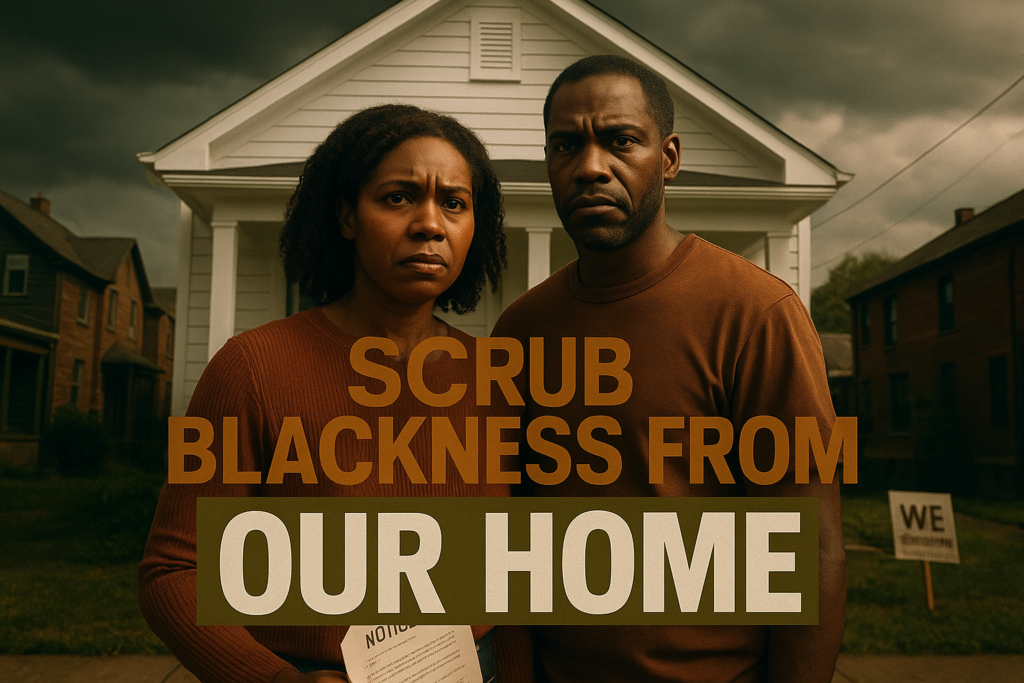
Imagine working hard, investing in your home, only to be told it’s worth far less than you know it is. This isn’t just a bad day; for many Black families, it’s a harsh reality tied to appraisal bias. Ronald and Dominique Curtis, a couple from Oakland, California, recently faced this head-on. Their story, however, shines a light on how we can fight back and win.
The Curtises are celebrating a significant legal victory. They settled a case against an appraiser and a lender who undervalued their home by a staggering $254,000. This wasn’t just a simple mistake; the California Civil Rights Department (CRD) oversaw the settlement, which involved serious allegations of racial bias. Consequently, this win sends a powerful message about holding people accountable (Oakland Couple Forced to Whitewash Their Home to Prove Its Worth).
The Price of Justice: An Oakland Couple’s Story
The fight for the Curtises wasn’t easy. They bought their duplex in Oakland back in 2019. After putting in work with renovations, an appraisal in April 2020 valued their home at $1.15 million. But when they tried to refinance with Quicken Loans (now Rocket Mortgage) in December 2020, a different appraiser came in and sang a very different, much lower tune (Oakland Couple Forced to Whitewash Their Home to Prove Its Worth). This new valuation was a punch to the gut, a common experience for Black homeowners who see their property’s worth shrink before their eyes due to biased assessments.
As part of the settlement, the appraiser, Mehdi Mehdipour-Mossafer, faced real consequences. He agreed to pay the Curtises $75,000 and an additional $15,000 to the CRD. Beyond the financial penalty, Mehdipour-Mossafer is also required to watch the documentary “Our America: Lowballed.” This film specifically highlights how appraisal discrimination hurts Black and Latino families. Hopefully, this educational component will lead to a deeper understanding of the harm caused by such biases (Bay Area home appraiser must pay $75K, watch ABC7 documentary). It’s a step towards change, one case at a time.
The Curtis Family’s Fight: Financial Impact
Challenging a Flawed Appraisal Process
The Curtises didn’t just accept the lowball appraisal. They accused the appraiser of using “comps,” or comparable homes, that were not fair comparisons. Some of these homes were reportedly in disrepair, a far cry from their renovated property. Armed with their real estate knowledge, the couple fought back by filing an extensive 60-page rebuttal (Bay Area home appraiser must pay $75K, watch ABC7 documentary). This kind of “real estate savvy,” understanding how to analyze comparable sales and property values, is a powerful tool for homeowners. It allows us to challenge unfair valuations with solid evidence.
The settlement also involved the appraisal management company (AMC) and the lender, Rocket Mortgage, though the terms with them were not disclosed. While both the AMC and Rocket Mortgage denied any wrongdoing, they did agree to maintain policies aimed at preventing appraisal discrimination (Bay Area home appraiser must pay $75K, watch ABC7 documentary). Interestingly, Rocket Mortgage has argued that making lenders responsible for an appraiser’s actions goes against established practices, citing the principle of “appraisal independence.” This idea suggests appraisers should be free from influence. However, this argument can overlook how systemic bias creeps into the process, even with so-called independent assessments (DOJ vs. Appraiser and Rocket Mortgage). True independence should mean fair and unbiased results, not a shield from accountability when discrimination occurs.
Appraisal Bias: A Pattern of Devaluation
The Curtises’ experience, sadly, is not unique. Appraisal bias is a serious issue where properties in diverse neighborhoods, especially those with many Black or Latino residents, are often valued lower than similar homes in mostly white areas. This isn’t just about numbers; it’s about equity and the ability of our families to build wealth. This bias directly impacts homeowners’ ability to refinance or get home equity loans at fair market values, contributing significantly to the racial wealth gap. Indeed, research shows that racial inequality in home appraisal values has actually gotten worse, increasing by 75% (Groundbreaking Research Confirms Discriminatory Bias in Appraisals).
Other families in the Bay Area have faced similar battles. Another Black and Latino couple in Oakland also dealt with a $254,000 undervaluation. A Marin County couple saw a shocking $500,000 difference in their appraisal (Another Appraiser Who Undervalued Black and Latino Couple’s Home Ordered to Pay Them $75,000). Studies confirm this isn’t just a few bad apples. Homes in majority-Black neighborhoods are valued, on average, at 23% less than similar homes in white neighborhoods, even when you account for the quality of the home and neighborhood (How racial bias in appraisals affects the devaluation of homes in majority-Black neighborhoods). The use of racial data, even indirectly, in picking comparable homes is a major way bias gets into appraisals, creating a cycle where each low appraisal sets a bad precedent for the next (Addressing Racial Inequities in Home Appraisals).
The Wider Cost of Appraisal Bias
Who’s Involved? AMCs and Civil Rights Bodies
Understanding who is involved helps us see the bigger picture. Appraisal Management Companies (AMCs) are supposed to act as a neutral go-between for lenders and appraisers. Their job is to make sure appraisals are done by independent professionals, reducing the chance of lenders pressuring appraisers (Protecting homeowners from discriminatory home appraisals). However, how AMCs pick and manage appraisers can sometimes lead to problems with the quality and fairness of appraisals. If AMCs aren’t careful, they can still contribute to inconsistent or biased outcomes, even if they’re meant to ensure independence.
Then there are groups like the California Civil Rights Department (CRD), which oversaw the Curtises’ settlement. Government bodies like the CRD and the U.S. Department of Justice’s Civil Rights Division play a key role in protecting homeowners. They work to enforce laws against discrimination in housing, including biased appraisals (Protecting homeowners from discriminatory home appraisals). Their involvement is crucial for holding individuals and companies accountable. Furthermore, these agencies push for systemic changes to try and root out discrimination from the appraisal industry.
The Power of Knowledge and Awareness
The requirement for appraiser Mehdi Mehdipour-Mossafer to watch “Our America: Lowballed” is an interesting part of the settlement. Documentaries like this are important. They often share personal stories and expose systemic problems, helping more people understand the real-world impact of issues like appraisal bias. While the provided information doesn’t give specifics on this particular film, such documentaries usually aim to educate the public and inspire action. They can make people aware of injustices they might not have known about, fostering a broader push for fairness.
The Curtises’ “real estate savvy” was also a game-changer. Knowing how to analyze comparable sales and challenge an appraisal is a vital skill. When homeowners understand how property values are determined, they can spot when something is wrong. For instance, if an appraiser uses homes in bad shape as “comps” for a newly renovated house, that’s a red flag. Being able to gather evidence, like the Curtises did with their 60-page rebuttal, can make all the difference in fighting an unfair appraisal. This knowledge empowers homeowners to stand up for the true value of their property and, by extension, their accumulated wealth.
Key Settlement Outcomes for the Curtis Case
Appraiser (Mehdi Mehdipour-Mossafer):
- To pay $75,000 to the Curtis family.
- To pay $15,000 to the California Civil Rights Department.
- Mandated to watch the documentary “Our America: Lowballed.”
Appraisal Management Company (AMC) & Lender (Rocket Mortgage):
- Settlement terms remain undisclosed.
- Denied any liability or wrongdoing in the matter.
- Agreed to continue and uphold policies against appraisal discrimination.
The Deep Scars of Undervaluation on Our Wealth
When a Black family’s home is undervalued by a huge amount like $254,000, the damage is immense. It directly attacks their ability to build equity – the part of the home they truly own. This lost equity means less money available if they want to refinance their mortgage for a better rate, take out a loan for college tuition, or start a business. It also means if they decide to sell, they get less than their home is truly worth. Ultimately, these individual losses add up, making the racial wealth gap even wider (Addressing Racial Inequities in Home Appraisals).
The systemic impact of appraisal bias is devastating. Studies show that homes in Black and Latino neighborhoods are undervalued by an average of $48,000 per home. This adds up to a mind-boggling $156 billion in cumulative losses for our communities (Addressing Racial Inequities in Home Appraisals). Each biased appraisal not only hurts one family but also drags down property values for the entire neighborhood. This can discourage investment and even play a role in gentrification, where longtime residents are pushed out as areas change. While specific details on how appraisals directly influence gentrification subsidies weren’t provided in the source information, low appraisals can certainly make neighborhoods seem like less valuable investment opportunities, which can have complex effects on development and community stability.
ABOUT THE AUTHOR
Darius Spearman is a professor of Black Studies at San Diego City College, where he has been teaching since 2007. He is the author of several books, including Between The Color Lines: A History of African Americans on the California Frontier Through 1890. You can visit Darius online at africanelements.org.
