
Listen to this article
Download AudioLouisiana Spurns Split Jury Retrials
By Darius Spearman (africanelements)
Support African Elements at patreon.com/africanelements and hear recent news in a single playlist. Additionally, you can gain early access to ad-free video content.
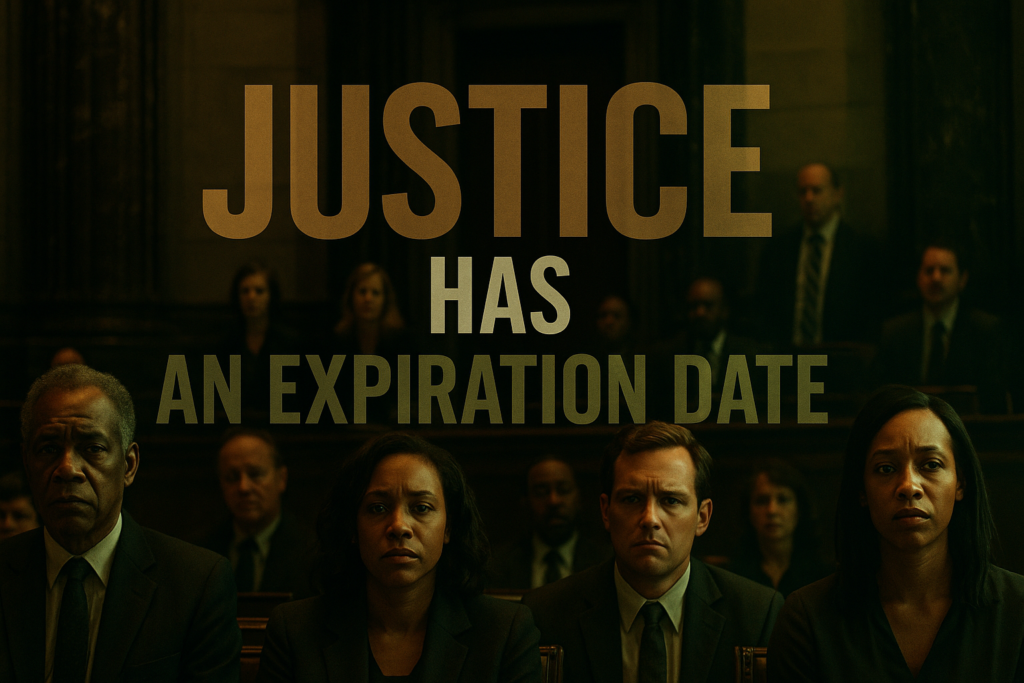
On May 25, 2025, the Louisiana Senate made a significant decision impacting countless lives. State lawmakers rejected Senate Bill 218, a proposed law that would have allowed individuals convicted by non-unanimous juries to seek new trials. This vote, 9-26, effectively maintains the existing state of affairs, leaving many convictions from the Jim Crow era unchallenged (ground.news). The racial implications of this legislative choice are profound, as split jury laws historically targeted Black defendants and diluted the power of Black jurors.
Introduced by Democratic State Senator Royce Duplessis, Senate Bill 218 represented a crucial step towards rectifying historical injustices. This bill aimed to address convictions obtained under Louisiana’s former non-unanimous jury system, a practice deeply rooted in the state’s Jim Crow past (blackfacts.com). The failure of this bill means that a clear path to justice remains closed for many who were convicted without the full agreement of a jury.
The Vote Against Justice
The Louisiana Senate’s vote on Senate Bill 218 was a stark example of political division. The bill failed with a 9-26 vote, largely falling along party lines (ground.news). Most Republican senators opposed the proposal, while Democrats supported it. This outcome underscores the deep ideological differences in Louisiana’s approach to criminal justice reform. The rejection of this legislation means that existing split jury convictions continue to be ineligible for post-conviction relief based solely on the non-unanimous verdict (legis.la.gov).
Although current law provides limited post-conviction relief under certain circumstances, Senate Bill 218 would have clarified and expanded this avenue for retrial (legis.la.gov). Furthermore, the bill’s defeat ensures that strict limitations on retrial rights for split jury convictions continue to apply. This specific legislative setback reflects the ongoing political polarization concerning criminal justice reform within Louisiana. It stands as a reminder of how challenging it can be to move forward with changes aimed at rectifying historical legal errors.
How Louisiana Senators Voted on SB 218
Legacy of Jim Crow
Understanding the true weight of this decision requires looking back at the Jim Crow era (Counselstack.com). This period, stretching from the late 19th century through the mid-20th century, saw the institutionalization of racial segregation and discrimination against African Americans across the southern United States. Within this oppressive framework, non-unanimous jury laws emerged as a specific tool to reinforce racial control within the legal system (Harvard Law Review). These laws allowed convictions to be secured even if some jurors disagreed, effectively sidelining Black jurors and making it easier to convict Black defendants.
Split jury convictions are indeed a direct relic of this era. They were designed specifically to weaken the influence of Black jurors and to secure convictions against Black defendants, often unfairly (blackfacts.com). This practice diluted the power of Black jurors to act as a check on racial bias in trials. Consequently, the bill, had it passed, would have added split jury convictions to the list of grounds for which incarcerated people could seek a retrial, helping to right wrongs rooted in systemic racism (blackfacts.com). The ongoing presence of such laws reflects the historical disparities ingrained in the legal system from the Jim Crow era.
The Racist Roots of Split Jury Laws

Split jury convictions originate from the Jim Crow era, crafted to mute Black jurors’ voices and hasten convictions of Black defendants—entrenching racial injustice in the courts.
The Supreme Court’s Ruling
A pivotal moment in the fight against non-unanimous juries came with the 2020 landmark U.S. Supreme Court decision, *Ramos v. Louisiana* (Wikipedia). This ruling declared that the Sixth Amendment’s guarantee of a unanimous jury verdict in criminal trials applies to state courts, thereby overturning the precedent that had permitted non-unanimous verdicts. This decision specifically invalidated the practice of non-unanimous juries for felony convictions in Louisiana and Oregon (Counselstack.com). The *Ramos* case corrected a long-standing source of injustice rooted in racial discrimination within these jury rules.
However, the impact of the *Ramos* ruling has a critical limitation. The decision does not apply retroactively to convictions that were finalized before the ruling (scotusblog.com). This means that thousands of past non-unanimous verdicts in Louisiana and Oregon remain legally intact, unless specific state laws are enacted to change this (Counselstack.com). Therefore, separate legislation, like the recently defeated Senate Bill 218, is required to provide retrial opportunities or expand post-conviction relief rights for those already convicted under this discriminatory system. The continued legal validity of these prior verdicts highlights the pressing need for legislative action at the state level.
Ramos v. Louisiana: A Call to Action
Ramos Ruling (2020)
The U.S. Supreme Court required unanimous jury verdicts in state criminal trials. This ended the practice of non-unanimous juries but did not apply retroactively to all past convictions.
Needed State Legislation
Because the Ramos ruling was not fully retroactive, states like Louisiana must pass specific laws to allow retrials or expand post-conviction relief for affected individuals who were convicted under the old non-unanimous system.
What is Post-Conviction Relief?
Central to the debate around Senate Bill 218 is the concept of post-conviction relief. This is a legal process that allows individuals who have been convicted of crimes to challenge their convictions or sentences after their trials have concluded (scotusblog.com). Claims for such relief often stem from new evidence, procedural errors, or violations of constitutional rights. In the case of split jury convictions, a primary argument for relief would be that the conviction violated the defendant’s Sixth Amendment right to a unanimous jury, a right affirmed by the *Ramos* decision.
The importance of post-conviction relief cannot be overstated in the context of criminal justice reform. It provides a vital legal avenue to correct wrongful convictions or unjust sentences. For instance, many people convicted by non-unanimous juries before the *Ramos* ruling may not currently have clear legal recourse for relief without specific legislation (Counselstack.com). Expanding or clarifying the grounds for post-conviction relief can help address systemic injustices and offer a path to correct historical wrongs, ensuring that justice is truly served for all.
The Path Forward
The partisan vote on Senate Bill 218 highlights the challenging nature of criminal justice reform in Louisiana. A vote of 9-26 along party lines suggests that the majority political party strongly opposed the bill, while the minority largely supported it. This indicates sharp political disagreement over issues such as rehabilitation, the fairness of past convictions, and the allocation of resources (ground.news). Such divisions can make it immensely difficult to pass legislation that addresses systemic issues, especially when those issues touch upon historical injustices and racial disparities.
Despite this setback, efforts to address historic split jury convictions continue. Civil rights organizations and legal experts advocate for broader reform, pushing for expanded definitions of post-conviction relief and explicit authorization for retrials. Many people, particularly African Americans, have been affected by these discriminatory laws (Counselstack.com). The defeat of bills like Senate Bill 218 indicates that political resistance continues to be a substantial barrier to comprehensive fixes within the Louisiana legal system. It becomes clear that the fight for justice remains a long and arduous journey for those seeking to rectify these long-standing wrongs.
ABOUT THE AUTHOR
Darius Spearman has been a professor of Black Studies at San Diego City College since 2007. He is the author of several books, including Between The Color Lines: A History of African Americans on the California Frontier Through 1890. You can visit Darius online at africanelements.org.
