

Listen & Share
Africa’s Shifting Sands: Ghana and Western Sahara
By Darius Spearman (africanelements)
Support African Elements at patreon.com/africanelements and hear recent news in a single playlist. Additionally, you can gain early access to ad-free video content.
A New Chapter for West Africa
For many years, the Western Sahara conflict has simmered, a deeply complex issue stemming from colonial legacies and the pursuit of self-determination. The territory, once a Spanish colony, became a flashpoint after Spain’s withdrawal in the mid-1970s. Mauritania and Morocco both laid claim to the land, which quickly escalated into a conflict between Morocco and the Polisario Front (What Does the Western Sahara Conflict Mean for Africa?). This dispute has had wide-ranging implications for regional stability, impacting diplomatic relations and creating divides among African nations, including those within the African Diaspora who watch these developments unfold intently.
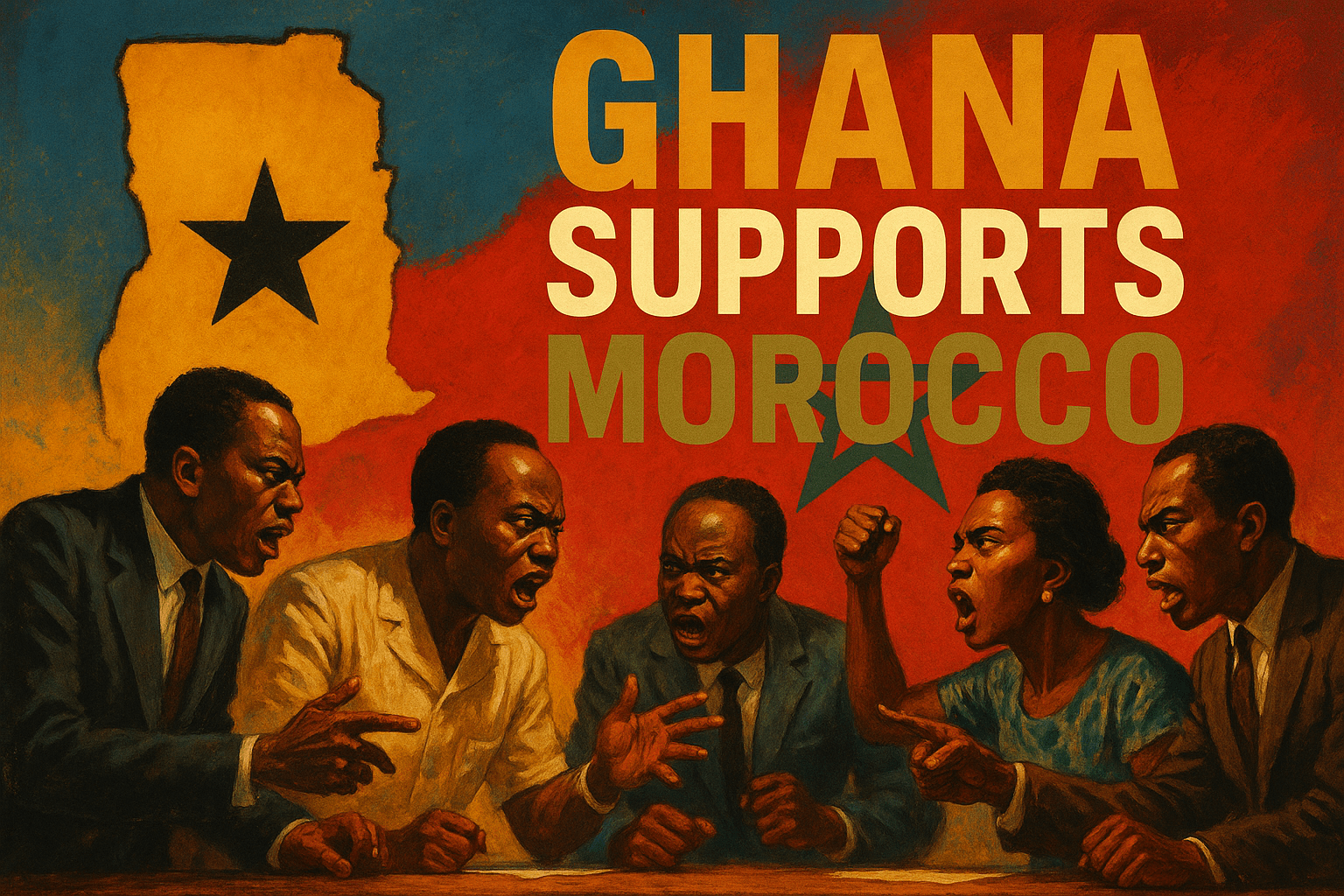
Recently, Ghana, a respected voice in African affairs, announced a significant shift in its foreign policy regarding this long-standing dispute. Ghana has firmly reaffirmed its support for Morocco’s Autonomy Plan, recognizing it as the solitary credible and realistic solution to the Western Sahara conflict (Algeria Faces Major Setback as Ghana Reaffirms Autonomy Plan). This pivotal decision stands as a testament to Ghana’s earlier move on January 7, 2025, when it withdrew its recognition of the self-proclaimed “Sahrawi Arab Democratic Republic” (SADR) (Morocco’s autonomy plan for the Sahara gains global support). Such a shift by a nation like Ghana sends ripples across the continent, prompting questions about the future of regional alliances and the path toward lasting peace in North Africa.
Understanding the Western Sahara Question
To fully grasp the magnitude of Ghana’s decision, it is essential to understand the core elements of the Western Sahara conflict. Western Sahara is a disputed territory located in Northwest Africa. It was annexed by Morocco following Spain’s departure in the mid-1970s (What Does the Western Sahara Conflict Mean for Africa?). The Polisario Front, a liberation movement, has been fighting for the independence of the territory. They established the Sahrawi Arab Democratic Republic (SADR) in 1976, which currently controls approximately 25 percent of the territory (What Does the Western Sahara Conflict Mean for Africa?).
The SADR, while a key player in the conflict, holds limited international recognition as a sovereign state (Western Sahara conflict – Wikipedia). The Polisario Front, enjoying significant support from Algeria, champions full independence for the Sahrawi people. In contrast, Morocco proposes an autonomy plan that involves limited self-governance for the people of Western Sahara under Moroccan sovereignty (Trump’s Lesser-Known Deal of the Century? Resolving the Western Sahara Conflict). This plan does not offer complete independence. Instead, it seeks a compromise where local governance is allowed while Moroccan control is maintained (What Does the Western Sahara Conflict Mean for Africa?). The United Nations has also been deeply involved, deploying a peacekeeping mission (MINURSO) in 1991 to oversee a ceasefire and facilitate negotiations for a self-determination referendum (What Does the Western Sahara Conflict Mean for Africa?). These ongoing efforts highlight the international community’s desire for a peaceful resolution.
Key Elements of the Western Sahara Conflict
Western Sahara
A disputed territory claimed by Morocco, with the Polisario Front fighting for its independence since Spain’s withdrawal in the 1970s.
Sahrawi Arab Democratic Republic (SADR)
Self-proclaimed state by the Polisario Front in 1976, claiming sovereignty over Western Sahara with limited international recognition.
Morocco’s Autonomy Plan
Morocco’s proposal for the region to have limited self-governance under Moroccan sovereignty, without full independence.
Ghana’s Pivotal Geopolitical Turn
Ghana’s decision to back Morocco’s Autonomy Plan is not a minor policy adjustment. It represents a significant diplomatic shift with far-reaching implications. For decades, Ghana had been an ally of the SADR, aligning with other African nations that supported the Polisario Front’s independence claims. This new stance reinforces Ghana’s support for Morocco’s sovereignty over its southern provinces.
Moreover, this pivot is widely viewed as a major diplomatic setback for Algeria (Algeria Faces Major Setback as Ghana Reaffirms Autonomy Plan). Algeria has historically been a staunchest supporter of the SADR and the Polisario Front’s quest for full independence (What Does the Western Sahara Conflict Mean for Africa?). The move by Ghana complicates Algeria’s position, potentially isolating it further on this issue within the African Union. This shift in recognition affects regional dynamics and alliances, creating new geopolitical landscapes (Trump’s Lesser-Known Deal of the Century? Resolving the Western Sahara Conflict). For Africans across the diaspora, these moves signify the continuous evolution of diplomacy on the continent and the delicate balance of power.
This decision aligns with a growing international consensus and reflects a broader trend of increasing global support for Morocco’s Autonomy Plan (Morocco’s autonomy plan for the Sahara gains global support). Many countries are increasingly viewing Morocco’s proposal as a pragmatic and viable path to stability in the region. France’s recognition of Moroccan sovereignty serves as an example of this broader international shift (World Report 2025: Morocco and Western Sahara). Ghana’s motivations for this diplomatic reorientation are likely multifaceted; they could stem from strategic alliances, economic considerations, or even subtle international pressures.
Navigating Regional Instability and Sovereignty
Ghana’s decision unfolds within a wider context of political instability plaguing West Africa. The region has recently witnessed several military coups that have profoundly affected both political stability and diplomatic relations (Why West Africa and the Sahel are Witnessing a Resurgence in Instability). Such internal upheavals can often spur nations to re-evaluate their foreign policy alignments, seeking greater stability or new strategic partnerships. Ghana’s move could be an attempt to align with prevailing regional shifts and secure its interests in a rapidly changing environment.
The concept of sovereignty, a cornerstone of international law, is central to understanding this conflict. Sovereignty refers to a state’s inherent authority over its territory and its people (Trump’s Lesser-Known Deal of the Century? Resolving the Western Sahara Conflict). In the Western Sahara dispute, Morocco’s claim to sovereignty over the territory is directly challenged by the Polisario Front and the SADR. Ghana’s endorsement of the Autonomy Plan effectively recognizes Moroccan sovereignty over the region, a stance that could embolden or influence other African nations to follow suit. This shift contributes to broader ideological discussions within the African Union regarding territorial integrity versus self-determination.
Shifting International Support Trends in Western Sahara
Past Trend
Current Trend
The United Nations and the Road Ahead
The United Nations has been actively involved in mediating the Western Sahara dispute for decades. Ghana has expressed its welcome for the ongoing efforts by the United Nations to mediate the long-standing dispute. This continued engagement by international bodies is crucial for finding a viable, lasting solution. The UN peacekeeping mission, MINURSO, remains in place, attempting to facilitate dialogue and prevent further escalation (World Report 2025: Morocco and Western Sahara).
However, despite these persistent efforts, the peace process has faced significant challenges. The failure to hold a promised referendum on self-determination has left many frustrated and prolonged the conflict (What Does the Western Sahara Conflict Mean for Africa?). Ghana’s shift in policy may inject new momentum into these discussions, perhaps pushing toward a resolution centered on the autonomy plan. The implications for African unity are palpable; changes in diplomatic recognition can highlight deeper ideological and strategic shifts within the African continent, affecting how African nations cooperate on other issues (Trump’s Lesser-Known Deal of the Century? Resolving the Western Sahara Conflict).
Global Reactions and African Identity
Ghana’s decision is not an isolated event; it is part of a larger international movement that supports Morocco’s sovereignty and autonomy plan for the Western Sahara region. This growing international support suggests a collective move towards a solution that seeks to balance regional stability with the rights of the Sahrawi people. This reflects a changing understanding of how disputes inherited from colonial times should be resolved in the modern era. The Spanish colonial withdrawal directly sparked the conflict, showcasing how past actions continue to shape present realities (What Does the Western Sahara Conflict Mean for Africa?).
For individuals of the African Diaspora, this shift in Ghana’s stance represents a moment of reflection on the aspirations of self-determination and the complexities of African nation-building. The continent’s history is full of struggles for true independence and the establishment of stable, sovereign states. As African nations continue to define their paths, changes in long-held diplomatic positions are not just political maneuvers; they reflect evolving identities and strategic choices in a globalized world. The future of Western Sahara will be closely watched, as it offers a microcosm of the challenges and opportunities facing the African continent.
Ghana’s Shift: From Western Sahara Support to Morocco’s Autonomy Plan
ABOUT THE AUTHOR
Darius Spearman has been a professor of Black Studies at San Diego City College since 2007. He is the author of several books, including Between The Color Lines: A History of African Americans on the California Frontier Through 1890. You can visit Darius online at africanelements.org.
