
Listen & Share
Black Teachers Allege Racial Hostility in Beverly Hills
By Darius Spearman (africanelements)
Support African Elements at patreon.com/africanelements and hear recent news in a single playlist. Additionally, you can gain early access to ad-free video content.
Fighting for Justice in Beverly Hills Schools
Two Black educators, Natonda “Bella” Ivory and Jarvis Turner, have bravely stepped forward. They filed a lawsuit against the Beverly Hills Unified School District. Their court filing also names ten unnamed district employees. This legal action, initiated on April 25, 2025, in Los Angeles Superior Court, brings serious allegations. It speaks of racial discrimination, ongoing harassment, and sharp retaliation faced over many years (Atlanta Black Star). Such allegations highlight a pressing concern. They suggest that systemic issues might exist within educational institutions.
The core of the teachers’ claims rests on a troubling accusation. They assert that district officials consistently failed to address multiple racist incidents. These alleged failures created a racially hostile environment. This negative atmosphere affected both Black teachers and Black students (Atlanta Black Star). The lawsuit even suggests that the district and its staff collaborated. They reportedly worked together in discriminating against and retaliating against these dedicated educators (Beverly Hills Courier). This situation underlines the critical importance of creating equitable school environments for all.
Key Allegations in the Beverly Hills Teacher Lawsuit
Teachers allege years of racial bias and targeted mistreatment.
Claims include racial slurs, threats, and verbal abuse from students, parents, and staff.
Punitive actions allegedly taken against teachers after voicing complaints.
District officials allegedly failed to address incidents, fostering an unsafe space.
Enduring Racial Slurs and Threats
The detailed allegations from Ms. Ivory and Mr. Turner are deeply distressing. They paint a picture of a school environment where racial slurs and threats became commonplace. Mr. Jarvis Turner endured a particularly disturbing incident in 2019. He received an email to his school account containing the N-word. When he complained, his supervisor’s response was described as “nonchalant” (Beverly Hills Courier). This dismissive attitude can be devastating. It suggests a lack of urgency or recognition of the severity of such an offense.
Mr. Turner also reported receiving phone calls from students using racial epithets. These were not isolated incidents. He also faced in-person verbal mistreatment. Derogatory racial stereotypes were also used by parents (Beverly Hills Courier). Ms. Natonda Ivory faced a terrifying encounter in February 2025. A student announced in class her hatred for Ivory and expressed a desire to stab her. Astonishingly, no action was taken following this explicit threat (Beverly Hills Courier). These accounts highlight how Black educators often carry a heavy burden. They battle not merely academic challenges, but also outright threats and harassment which can chip away at one’s sense of safety and belonging.
Allegations of Systemic Inaction and Disparity
The teachers’ lawsuit extends beyond individual acts of malice. It targets systemic issues within the district. They allege they were underpaid compared to their peers (Atlanta Black Star). Such pay discrepancies, when combined with discriminatory practices, can feel like a direct attack on one’s worth. More importantly, the district and its staff allegedly failed to take corrective action (Atlanta Black Star). This failure allowed harassment to persist instead of stopping it in its tracks.
A particularly telling incident occurred in 2018. A group Snapchat post referred to Black students as “monkeys” (Atlanta Black Star). The disciplinary action for this severe offense was minimal. The student received only a one-day suspension (Atlanta Black Star). The district’s response to such serious incidents is described as ineffectual. They offered promises of “promoting healing within the school community” but little substantive action actually followed (Atlanta Black Star). This pattern highlights a failure in addressing systemic issues. It allows entrenched norms to inadvertently or even intentionally harm certain groups (Institutional Resistance – Foundations of Education).
Understanding Institutional Inaction in Schools
This refers to the failure of an organization to address deep-seated issues. It is often caused by established norms or a reluctance to change. This means policies continue that might hurt certain groups, even when complaints are made. Governance structures may also fail due to a lack of accountability or transparency. This makes it hard to fix problems that disproportionately affect Black teachers and students.
The Harm of “Meek” Directives
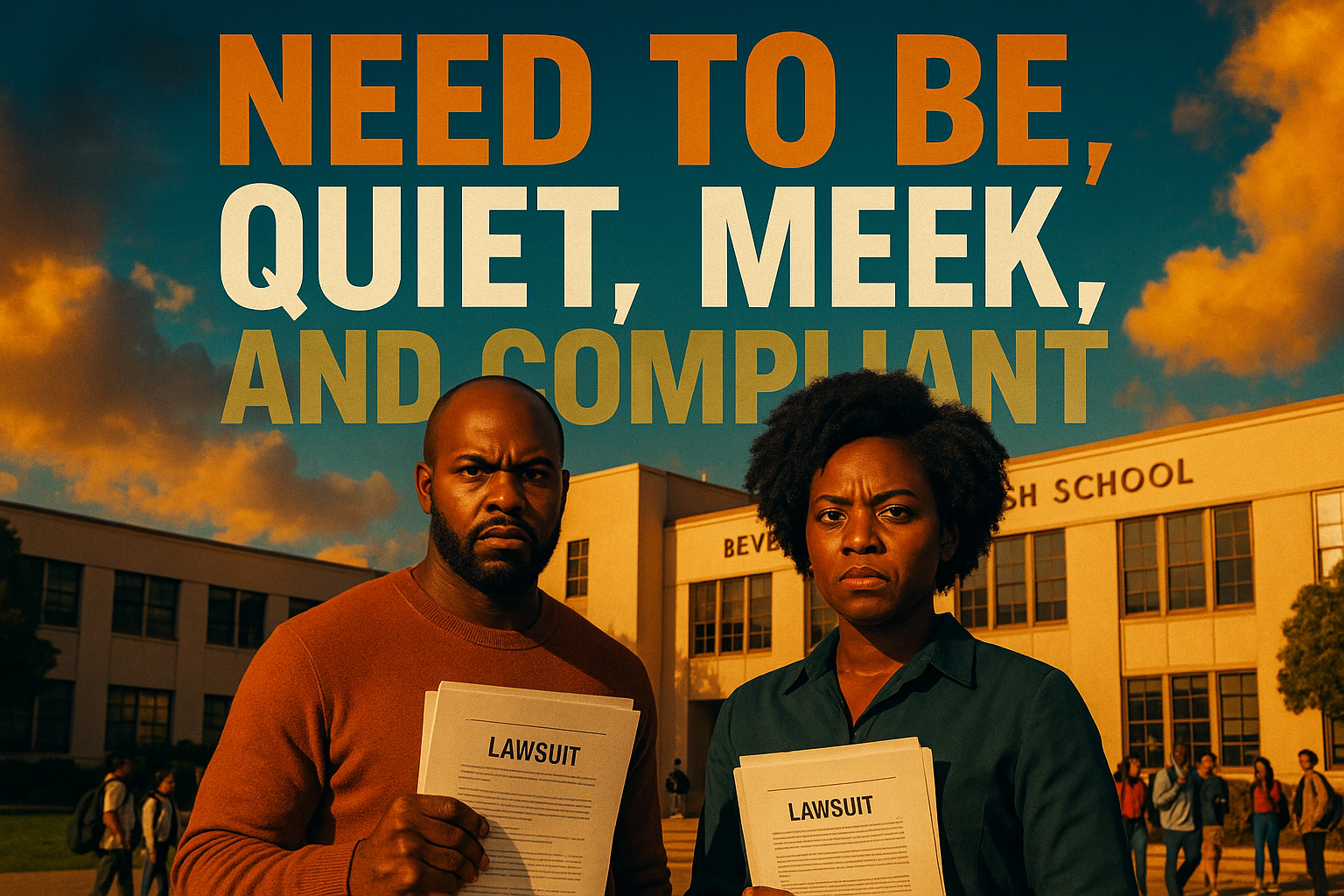
One of the most striking allegations involves Ms. Natonda Ivory being told she needed to be “quiet, meek, passive and compliant with white counterparts” (Patch). This type of directive is not merely advice. It is a problematic instruction that reflects deep-seated power dynamics. For Black individuals, such words can feel like an oppressive demand to conform. They stifle individuality and cultural expression. This suggests that the institution rewards compliance with dominant group expectations (Institutional Resistance – Foundations of Education).
Such pressure to suppress one’s identity in an educational setting is often a form of microaggression. Microaggressions, though subtle, can have a profound impact. They can reinforce institutional racism (Institutional Resistance – Foundations of Education). Institutional bias operates through procedures and practices that favor certain groups, like white individuals, while disadvantaging others (Recognizing Schools’ Institutional Bias). This type of ingrained bias also makes it extremely difficult to implement inclusive reforms. It perpetuates systemic racism and can lead to a hostile environment for Black educators.
Black Students Also Targeted
The lawsuit powerfully emphasizes that the discrimination was not limited to teachers. Black students attending Beverly Hills High School were also subjected to racial slurs. They were reportedly called “monkeys” (Atlanta Black Star). The lawsuit also notes that these students faced threats of violence (Atlanta Black Star). Such incidents deeply affect the mental and emotional well-being of young people. They disrupt their ability to learn and thrive in an academic setting.
The alleged targeting of Black students underscores a broader issue. When schools fail to protect their most vulnerable populations, the entire educational community suffers. The repeated incidents, including the Snapchat post that referred to Black students with racial slurs, are deeply concerning. These actions point to an entrenched problem. It forces us to demand more proactive and effective responses from institutional leadership. Educational institutions are expected to ensure equitable treatment for all, which involves vigorously addressing and correcting such harmful behaviors (Glossary | The Higher Learning Commission).
The Harm of Demands for “Meekness”
Directives to be “meek” or “compliant” reinforce procedures that favor certain groups, disadvantaging others.
Such language compels individuals to suppress their identity. It subtly reinforces systemic racism and microaggressions.
Demands for conformity reduce the ability of Black educators to express themselves fully, impacting their well-being.
Understanding Legal Frameworks and Retaliation
The lawsuit also mentions the failure to provide reasonable accommodations. This concept is typically defined under federal law, specifically the Americans with Disabilities Act (ADA), though its principles can extend to ensure equal opportunity more broadly (Glossary | The Higher Learning Commission). While some legal definitions of reasonable accommodation mainly apply to disabilities, institutions also have a responsibility to ensure equitable treatment for all individuals. This would encompass situations involving protected statuses like race (Glossary | The Higher Learning Commission).
The allegations of retaliation also fall under specific legal frameworks. Workplace retaliation is a serious legal concern. It refers to adverse actions taken against an employee. These negative actions can include things like demotion or unreasonable work assignments. Such actions are illegal when carried out because an employee engaged in protected activity, such as filing a complaint about discrimination (Glossary | The Higher Learning Commission). The filing of this lawsuit signals a significant challenge. It forces the Beverly Hills Unified School District to confront its purported failures in protecting its Black teachers and students. The outcome of this legal proceeding will be closely watched. It could set a precedent for how school districts address deep-seated issues of racial discrimination and institutional accountability.
ABOUT THE AUTHOR
Darius Spearman has been a professor of Black Studies at San Diego City College since 2007. He is the author of several books, including Between The Color Lines: A History of African Americans on the California Frontier Through 1890. You can visit Darius online at africanelements.org.
