
Juneteenth and the Cost of Freedom: A Shifting Narrative
By Darius Spearman (africanelements)
Support African Elements at patreon.com/africanelements and hear recent news in a single playlist. Additionally, you can gain early access to ad-free video content.
Understanding Juneteenth
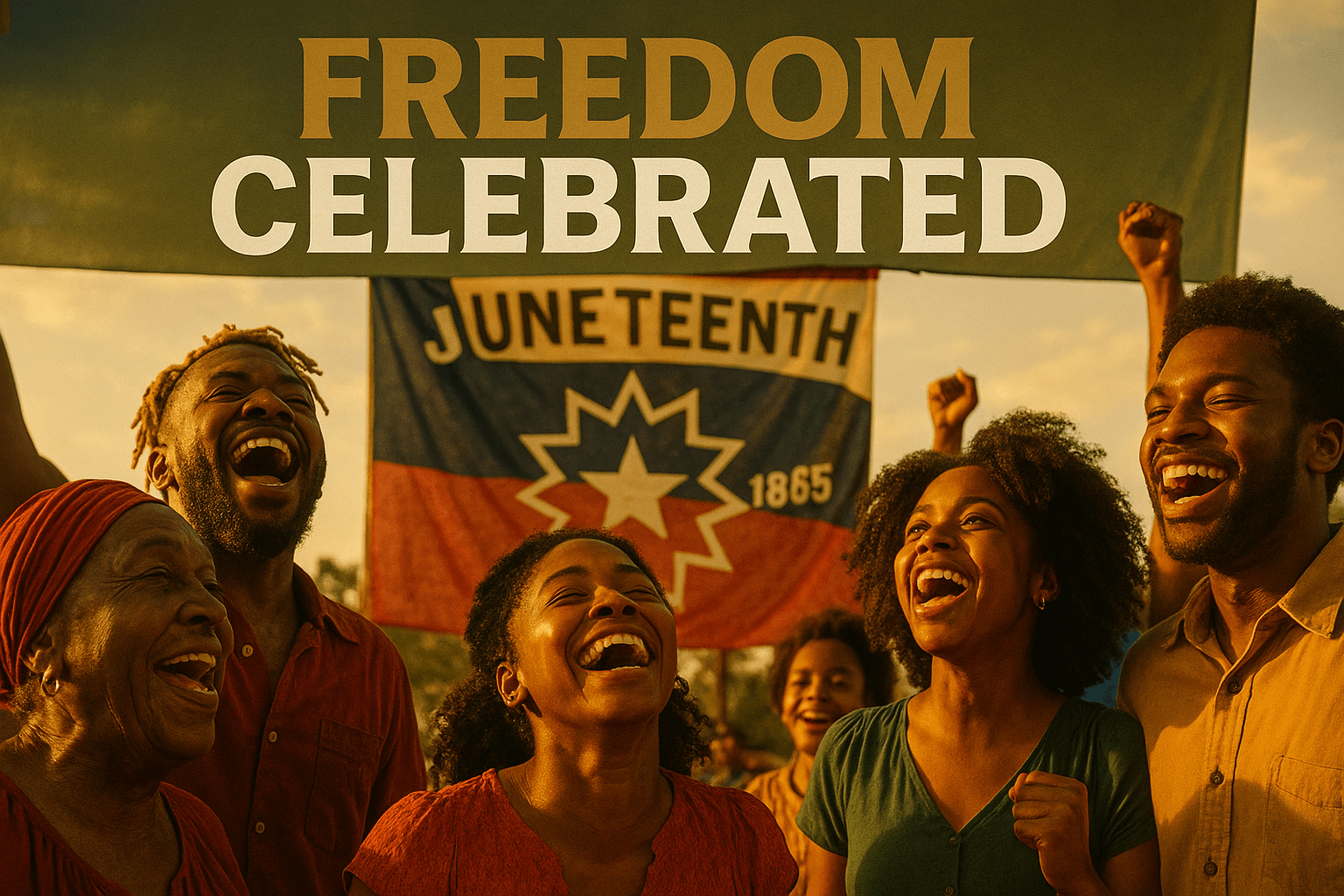
Juneteenth holds a profound place in the hearts of Black Americans. It is a day that commemorates the true end of slavery in the United States (spectrumlocalnews.com). Specifically, it pays tribute to June 19, 1865, when Union General Gordon Granger arrived in Galveston, Texas. On that day, enslaved Black people in Texas finally learned of their freedom, more than two years after the Emancipation Proclamation had been issued (spectrumlocalnews.com).
This date signifies a pivotal moment in American history, marking the effective liberation of all enslaved people across the Confederate states. For generations, Black communities have celebrated Juneteenth, recognizing it as a day of liberation and resilience. It became a federal holiday in 2021, signed into law by former President Joe Biden (spectrumlocalnews.com). This elevation to a national observance brought wider recognition to a day that had long been cherished within Black culture.
Federal Holidays Defined
Federal holidays are special days off legally designated for federal employees in the United States. These holidays are established by federal law, specifically outlined in Title 5 of the U.S. Code, Section 6103(a) (opm.gov). They differ significantly from state holidays, which are determined by individual state governments and can vary widely across the nation.
Federal employees receive paid time off on these days as a benefit of their employment, as federal regulations outline (opm.gov). If a federal holiday falls on a Sunday, the following Monday is typically observed as the holiday for most federal employees for pay and leave purposes (opm.gov). Examples of these holidays include Martin Luther King, Jr.’s Birthday and Washington’s Birthday (opm.gov). Private businesses, however, are not legally required to observe federal holidays or provide paid time off for them, although many choose to do so.
Federal Holiday Observance
Trump’s Shifting Stance
On Juneteenth this year, former President Donald Trump made headlines with a Truth Social post that sparked considerable controversy. He stated there are “too many non-working holidays in America,” claiming they cost the country “billions of dollars” and that workers “don’t want it” (wcax.com). His post on Thursday, June 19th, further elaborated, “It is costing our Country $BILLIONS OF DOLLARS to keep all of these businesses closed. The workers don’t want it either! Soon we’ll end up having a holiday for every once working day of the year. It must change if we are going to, MAKE AMERICA GREAT AGAIN!” (al.com).
This statement was particularly striking because it came on the federal holiday of Juneteenth itself (spectrumlocalnews.com). The criticism of federal holidays, which typically provide paid time off for federal workers, marked a significant departure from his previous actions regarding Juneteenth (yahoo.com). In his first term, Trump issued statements to mark Juneteenth in each of his four years in office, even before it became a federal holiday (spectrumlocalnews.com). In 2020, he even asserted that he made Juneteenth “famous” (spectrumlocalnews.com).
This year, however, there was no similar recognition from Trump, his first back in the White House for his second term (spectrumlocalnews.com). According to the Associated Press, Trump had initially planned to sign a Juneteenth proclamation this year, but those plans changed (wcax.com). This shift in tone and action raises questions about the consistency of his approach to national holidays, especially those with deep historical significance for Black Americans.
Trump’s Juneteenth Stance: A Timeline
The “Too Many Holidays” Argument
Trump’s recent comments about “too many non-working holidays” suggest a focus on the economic impact of these observances. He claimed that closing businesses for holidays costs the country “billions of dollars” and that workers do not desire these days off (wcax.com). However, the provided data does not offer specific figures or studies to support these economic claims. It is important to remember that private companies are not mandated to close on federal holidays like Juneteenth (yahoo.com). This means the direct economic impact of federal holidays primarily affects government operations and federal employees, not necessarily the entire private sector.
Interestingly, while criticizing the number of federal holidays, Trump has not shied away from other holiday proclamations in the past (yahoo.com). This creates a perceived contradiction in his stance: on one hand, he expresses concern about the economic cost of non-working days, and on the other, he has supported the creation of new observances. The term “non-working holidays” in his statement appears to refer to federal holidays, given the context of his Juneteenth post and his criticism of paid time off for federal workers.
The Backlash on Truth Social
Trump’s Juneteenth message received a largely negative response, even from some of his supporters on Truth Social (newsweek.com). Truth Social is a social media platform often associated with a user base that is generally supportive of Donald Trump. Despite this, the reaction to his holiday comments was surprisingly negative (newsweek.com).
One user on Truth Social directly replied to Trump’s post, stating, “You lost me here, Americans are already overworked and in many cases underpaid” (newsweek.com). This particular comment highlights a sentiment among some Americans that more time off, rather than less, is needed. The backlash from within his own online community underscores the sensitivity surrounding federal holidays, especially one as historically significant as Juneteenth.
Truth Social User Sentiment (Juneteenth Post)
Broader Implications and Historical Context
The recent comments by Donald Trump on Juneteenth and federal holidays fit into a broader pattern of his administration’s approach to civil rights and Black history. His shift from acknowledging Juneteenth to criticizing federal holidays, particularly on the day itself, has raised concerns within the African American community. This change in tone is especially notable when considering his past actions, such as his claim of making Juneteenth “famous” in 2020 (spectrumlocalnews.com).
Furthermore, this stance aligns with other instances where his administration has been perceived as downplaying or reinterpreting aspects of Black history. For many, Juneteenth is not merely a day off; it is a profound recognition of the struggle for freedom and the enduring legacy of slavery. To criticize such a day as an unnecessary “non-working holiday” can be seen as dismissive of its deep cultural and historical importance to millions of Americans. The controversy surrounding these comments highlights the ongoing national conversation about how the United States acknowledges its past and celebrates its diverse heritage.
ABOUT THE AUTHOR
Darius Spearman has been a professor of Black Studies at San Diego City College since 2007. He is the author of several books, including Between The Color Lines: A History of African Americans on the California Frontier Through 1890. You can visit Darius online at africanelements.org.
