

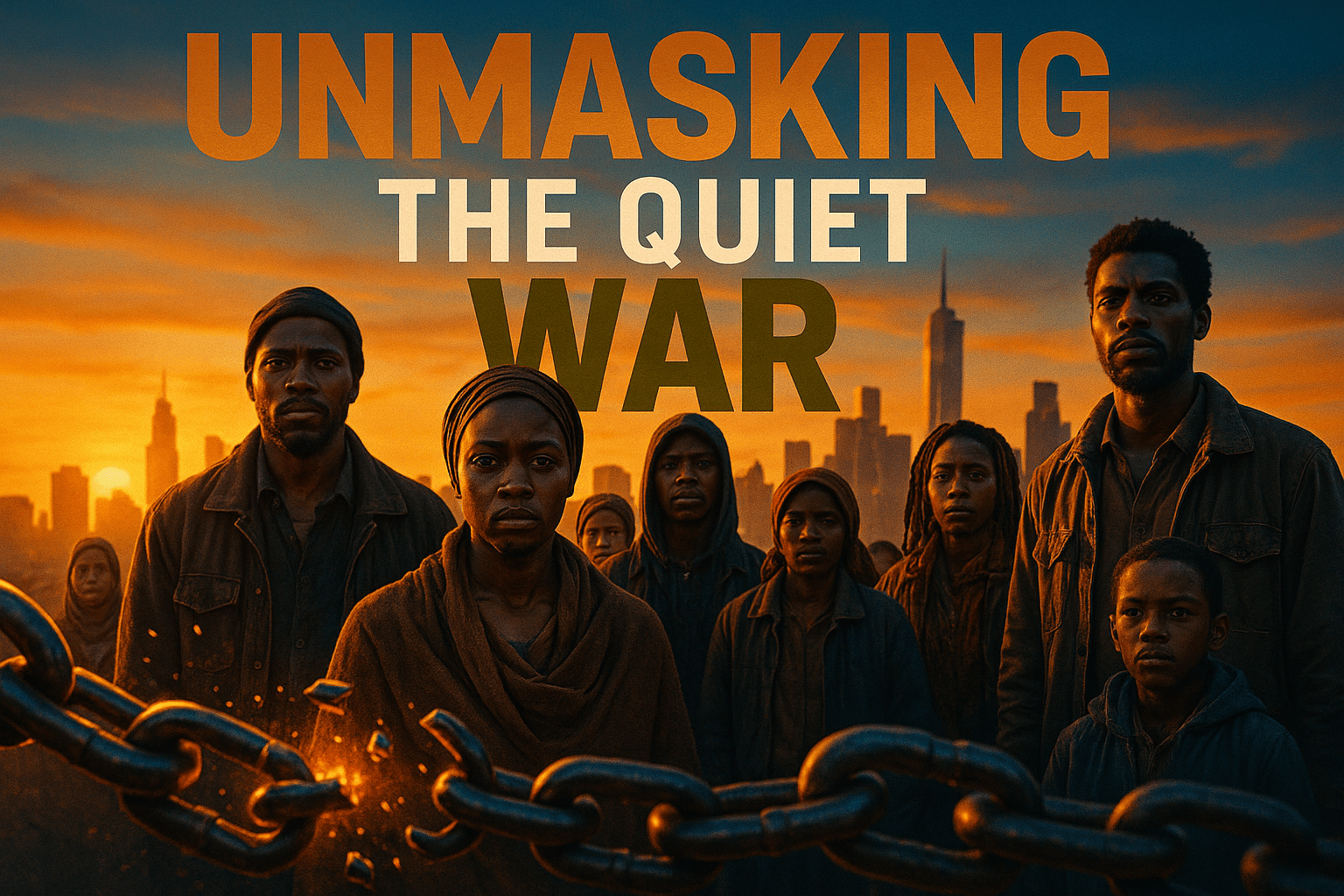
Unmasking the Quiet War on Black Migrants
By Darius Spearman (africanelements)
Support African Elements at patreon.com/africanelements and hear recent news in a single playlist. Additionally, you can gain early access to ad-free video content.
Trump’s Policies Target Black Migrants
The story of a close friend, an Ethiopian woman who has called New York City home since she was sixteen, highlights a deeply troubling reality. Now in her mid-thirties, she faces the threat of deportation, a stark reminder of how immigration policies can uproot lives built over decades. Her struggle is not isolated; it reflects a broader pattern where Trump’s immigration agenda quietly impacts Black migrants, often escaping widespread media attention (NewsOne).
A critical element often missing from the national conversation about immigration is the disproportionate targeting of Black migrants. This includes individuals from Haiti, various African nations, and Caribbean countries. These communities face a range of restrictive measures, including travel bans, the shutdown of asylum processes, and increased deportations. This systematic targeting represents a hidden front in Trump’s broader crackdown on immigrants (NewsOne).
Understanding Travel Bans and Visa Restrictions
President Trump recently announced a new travel ban, which closely mirrors the one implemented during his first term. This ban primarily targets nations in Africa and Asia. Specifically, it fully bars entry to nationals from Afghanistan, Myanmar, Chad, the Republic of the Congo, Equatorial Guinea, Eritrea, Haiti, Iran, Libya, Somalia, Sudan, and Yemen (NewsOne). Some countries, such as Sudan and Somalia, were designated due to alleged inadequate cooperation with U.S. counterterrorism screening protocols. Furthermore, seven additional countries face partial visa restrictions: Burundi, Cuba, Laos, Sierra Leone, Togo, Turkmenistan, and Venezuela (NewsOne). Many of these nations are Black African countries, a fact that is not coincidental.
A travel ban is a government order that restricts people from certain countries from entering another country. Visa restrictions, on the other hand, limit the types of visas available or make it harder for citizens of specific countries to obtain them. These policies have significant practical effects, preventing family reunification, limiting access to education and work opportunities, and forcing individuals to remain in dangerous situations in their home countries. The Supreme Court also ruled in May that the Trump administration could revoke the temporary legal status of hundreds of thousands of Haitian, Venezuelan, Cuban, and Nicaraguan immigrants (NewsOne). These individuals had been granted humanitarian parole under the Biden administration. Humanitarian parole is a temporary permission to enter the United States granted to individuals who do not meet the strict requirements for a visa but have urgent humanitarian reasons or a significant public benefit for being in the country. Losing this status means individuals lose their legal right to remain in the U.S., making them vulnerable to deportation and disrupting their lives and communities.
Disproportionate Harm in Detention
The harsh treatment of Black migrants has continued consistently since Trump’s first term. For instance, Title 42, implemented in March 2020 during the COVID-19 pandemic, allowed Border Patrol to prevent migrants from seeking asylum. This policy led to Black migrants experiencing racial profiling and discrimination by Border Patrol Officers. They were routinely deported without access to legal counsel or support, highlighting a pattern of systemic injustice.
Data further illuminates the stark reality of disproportionate harm. Black undocumented migrants, who make up only 5.4% of the undocumented population in the U.S., account for a staggering 20.3% of migrants facing removal based on criminal convictions (NewsOne). An undocumented migrant is a person residing in a country without legal authorization. Removal based on criminal convictions refers to the deportation of individuals who have been found guilty of certain crimes. This disparity exists despite evidence showing that all migrant populations commit crimes at similar rates. This situation places millions of Black migrants at a heightened risk of detention and deportation, creating immense insecurity and fear within their communities.
Black Migrants: Population vs. Removal
Once in federal custody, Black migrants face even more severe conditions. One study revealed that 24% of people held in solitary confinement were Black migrants (NewsOne). This is alarming, considering they make up less than 4% of all detainees in U.S. Immigration and Customs Enforcement (ICE) custody. Solitary confinement involves isolating a person in a cell for extended periods, often with minimal human contact, leading to severe psychological distress. Furthermore, Black migrants are twice as likely to experience abuse inside detention facilities compared to non-Black migrants (NewsOne).
Black Migrants in Solitary Confinement
The organization Freedom For Immigrants (FFI) found that 28% of all abuse-related reports made to their hotline come from Black migrants (NewsOne). This is especially concerning because Black migrants account for only 6% of the total ICE detention population. These numbers paint a clear picture of disproportionate harm, where Black migrants remain among the most vulnerable, yet often the most invisible, within the immigration system.
Abuse Reports from Black Migrants
Trump’s Rhetoric and Its Roots
Trump’s rhetoric and policies have consistently targeted non-white immigrants, creating a climate of fear and hostility. He has repeatedly used dehumanizing language, comparing migrants to “Hannibal Lecter” and calling them “animals” who are “not human” (NewsOne). He has even suggested that their “genes” predisposed them to commit violent crimes. This language is not merely inflammatory; it echoes historical narratives used to justify discrimination and violence against marginalized groups.
Furthermore, Trump has falsely claimed that migrants cause a surge in violent crime and bring “tremendous infectious disease” to the U.S. (NewsOne). He has also used the phrase “poisoning the blood” of the country, a deeply disturbing echo of white supremacist ideology. In stark contrast, he has explicitly stated a desire for the U.S. to receive more white immigrants from “nice” European countries like Denmark, Switzerland, or Norway (NewsOne). This preference underscores a racial bias that underpins many of his immigration policies.
The Overlooked Crisis: Media’s Blind Spot
Despite the clear evidence of disproportionate targeting, the national conversation around immigration often fails to acknowledge the specific challenges faced by Black migrants under Trump-era policies (NewsOne). This oversight means that the “war on Black migrants” has largely remained a “hidden front” in Trump’s immigrant crackdown. Most of the media has turned a blind eye to this critical issue, leaving these communities to suffer in silence (NewsOne).
This lack of media attention is particularly problematic from an African Diaspora perspective. It perpetuates a cycle of invisibility, where the unique struggles of Black people, even when they are immigrants, are marginalized or ignored. When the media fails to highlight these disparities, it limits public understanding and reduces the pressure on policymakers to address systemic injustices. It is crucial for media outlets to shine a light on this quiet war, ensuring that Black migrants receive the attention and support they deserve.
Historical Roots of Disproportionate Targeting
The disproportionate targeting of Black migrants in the U.S. immigration system is not a new phenomenon; it is deeply rooted in a long history of anti-Black racism. This racism has shaped immigration policies from the colonial era to the present day (Anti-Black Racism and the Nativist State). This systemic bias has led to policies and practices that specifically exclude, detain, and repatriate Black individuals. Often, Black people are rendered “foreign” even when born in the United States, denying them full citizenship rights (Anti-Black Racism and the Nativist State).
A significant example of this historical pattern is the use of mass immigration detention. This practice began with the detention of Haitian migrants in the 1980s and 1990s (civilrights.org). This highlights how anti-Blackness can serve as a precursor for broader restrictive policies that eventually affect all immigrant communities. Understanding this historical context is essential for recognizing that current disparities are not accidental but are instead the result of deeply embedded systemic racism within the immigration framework (urban.org).
The Human Cost: Daily Lives and Communities
These discriminatory policies profoundly affect the daily lives and communities of Black migrants. They create significant barriers to accessing the U.S. asylum system, often leading to treatment akin to criminals, even when individuals are fleeing severe persecution in their home countries (Human Rights First). Black migrants from countries such as Uganda, Kenya, Senegal, Cameroon, and Cuba face unique and often overwhelming challenges within the immigration system (Human Rights First).
The systemic anti-Blackness embedded in these policies means that Black migrants are disproportionately subjected to detention and enforcement measures. This impacts their ability to integrate into society, secure stable employment, and live securely within their communities. The U.S. border and asylum policies specifically harm Black asylum seekers, leading to discrimination within U.S. immigration, detention, and enforcement systems (Human Rights First). This constant threat of detention and deportation creates immense psychological stress and instability, preventing individuals from building a stable future.
Pathways to Support: Legal and Advocacy Resources
Despite the immense challenges, legal and advocacy resources are available to Black migrants navigating the U.S. immigration system. These resources primarily come from organizations dedicated to defending their legal rights and challenging anti-Black immigration policies. The goal of these efforts is to ensure fair and just access to the asylum system and to combat the systemic injustices that Black migrants encounter (Human Rights First).
Attorneys play a crucial role in defending Black immigrants’ legal rights, working tirelessly to ensure they have fair access to the asylum system (Human Rights First). Legal advocates also challenge deeply rooted anti-Black immigration policies, striving to dismantle the discriminatory structures that harm these communities. Organizations such as Human Rights First urge support for honoring Black migrants and refugees, valuing their contributions, and supporting organizations that fight injustice on their behalf (Human Rights First). These resources address anti-Black discrimination within U.S. immigration, detention, and enforcement systems, including at the border, providing a beacon of hope and support for those most affected (Human Rights First).
The disproportionate impact of Trump-era immigration policies on Black migrants is a critical issue that demands immediate attention. From targeted travel bans and visa restrictions to alarming rates of detention, solitary confinement, and abuse, the data paints a grim picture. This systemic targeting is not random; it is deeply rooted in a history of anti-Black racism that has long shaped U.S. immigration policies. The media’s oversight of this “quiet war” further exacerbates the problem, leaving Black migrants vulnerable and their struggles largely invisible.
ABOUT THE AUTHOR
Darius Spearman has been a professor of Black Studies at San Diego City College since 2007. He is the author of several books, including Between The Color Lines: A History of African Americans on the California Frontier Through 1890. You can visit Darius online at africanelements.org.
