
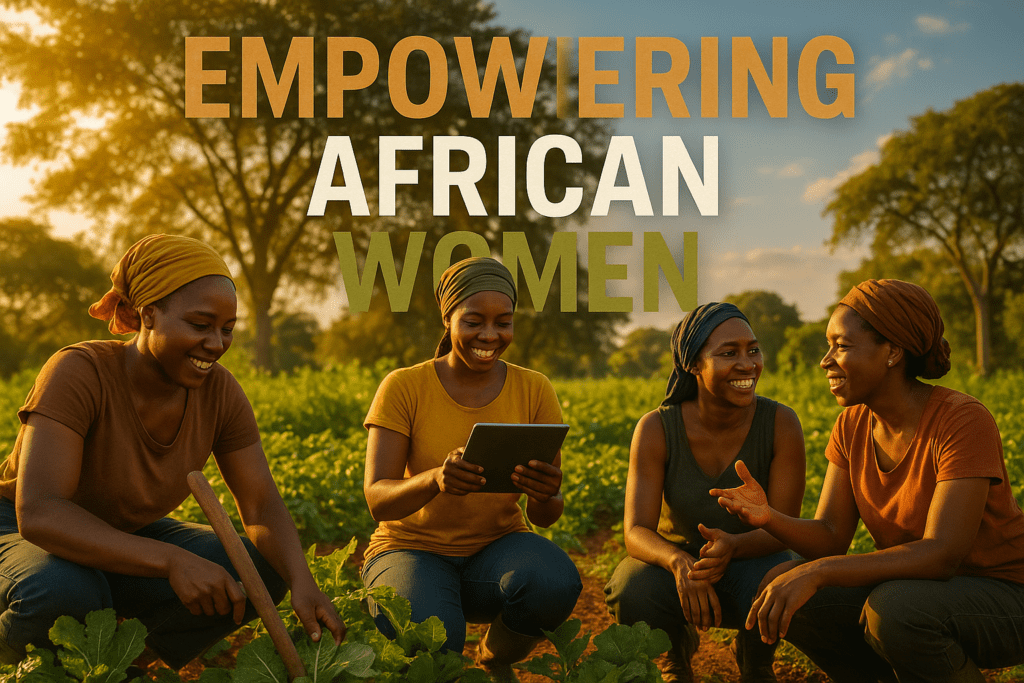
Empowering African Women for Green Economy Growth
By Darius Spearman (africanelements)
Support African Elements at patreon.com/africanelements and hear recent news in a single playlist. Additionally, you can gain early access to ad-free video content.
African Women: Pillars of Climate Action
African women are central to climate action and sustainable development. They hold a crucial position in the fight against environmental challenges. Historically, however, these women have faced significant barriers to fully participating in the green economy. Limited access to land, finance, education, and decision-making platforms have hindered their involvement (theconversation.com).
Despite these long-standing challenges, African women often take the lead in managing climate risk within their households. They are also leading the way in actions that build climate resilience (theconversation.com). Empowering African women is essential for achieving the United Nations’ 2030 Sustainable Development Goals. These goals include vital areas such as poverty reduction, improved health, education, gender equality, and economic growth (link.springer.com). The shift toward a green economy in sub-Saharan Africa offers opportunities for women to secure higher-paid, more stable jobs, provided strong policies are put into place (africa.unwomen.org).
Understanding the Green Economy
The term “green economy” is often used, but its meaning is not always clear. A green economy is an economic model that aims for sustainable development. It promotes environmental protection, social fairness, and economic growth. This approach focuses on reducing environmental risks and ecological shortages. It also works to improve human well-being and social equality.
Key sectors within a green economy include renewable energy, sustainable agriculture, eco-tourism, waste management, and green building. The green economy is important because it provides a path to address climate change. It also helps conserve natural resources, create new jobs, and build more inclusive and strong societies. This economic model is a vital step towards a sustainable future for all.
What is a Green Economy?
A Green Economy is an economic model that aims to achieve sustainable development by promoting environmental protection, social equity, and economic growth. It focuses on reducing environmental risks and ecological scarcities, while also improving human well-being and social equity.
Cultivating Green Skills for a Sustainable Future
Green skills are essential for African women to thrive in the continent’s climate transition. These skills have the potential to triple their productivity in key sectors (theconversation.com). Green skills refer to the knowledge, abilities, values, and attitudes necessary for living in, developing, and supporting a sustainable and resource-efficient society. They differ from general skills by specifically adding environmental considerations and sustainability principles to various jobs and tasks. For example, a construction worker with green skills would understand sustainable building materials, energy efficiency, and waste reduction.
With access to these specialized skills, women’s productivity in the green economy is likely to increase significantly. This is especially true in agriculture, energy, manufacturing, and processing (theconversation.com). Green skills include natural asset management, which involves identifying, assessing, and conserving resources like forests, water bodies, and soil. They also encompass support for low-carbon industries, such as working in renewable energy or reducing environmental impacts in transportation. Climate-resilient skills, like growing drought-resistant crops or building flood-resistant infrastructure, are also crucial. Resource-efficient skills, such as recycling and water-saving techniques, complete this vital set (theconversation.com).
What are Green Skills?
Green skills are the knowledge, abilities, values, and attitudes needed to live in, develop, and support a sustainable and resource-efficient society. They specifically incorporate environmental considerations and sustainability principles into various professions and tasks.
Bridging the Digital Divide with Green Technology
Digital green skills are also vital for African women. These include digital marketing for eco-friendly products and digital monitoring using sensors and data analytics (theconversation.com). Digital agricultural skills, such as using weather apps and precision agriculture, are crucial for farmers. Digital communication for environmental awareness and digital design for sustainable tools are also important. Furthermore, green mobile technological skills are becoming increasingly relevant (theconversation.com).
However, a significant digital divide exists in Africa. Differences in access to internet connectivity, digital devices, and digital literacy mark this divide. This is particularly true in rural areas and among marginalized communities. African women often face additional challenges in accessing digital technologies. These challenges stem from lower income levels, cultural norms that limit their mobility, and a lack of digital literacy training tailored to their needs. This divide directly impacts their ability to acquire “digital green skills.” These skills are essential for many modern green economy jobs. Without addressing these fundamental access issues, efforts to promote digital green skills among African women will be limited (World Bank Document).
Inclusive Education and Gender-Responsive Policies
Investing in inclusive green education and training programs, alongside gender-responsive policies, is crucial for empowering African women in climate action. Governments and development partners must design inclusive programs that prioritize gender equity. This is especially important for rural, disabled, and marginalized women, as it helps them access green skills (theconversation.com). Policymakers need to integrate green reskilling into national climate strategies, education reforms, and employment plans. This ensures a just transition that includes women (theconversation.com).
A gender-responsive policy explicitly recognizes and addresses the different needs, roles, and vulnerabilities of women, men, girls, and boys. It aims to promote gender equality and empower all genders. This approach goes beyond simply acknowledging gender differences. It actively designs interventions that reduce inequalities and ensure fair outcomes. Examples include policies that provide adaptive social safety nets and livelihood diversification, tailored to gender-specific vulnerabilities (World Bank Document). They also analyze gender commitments and identify conditions for implementing gender-responsive climate actions (UNDP Climate Promise).
What are Gender-Responsive Policies?
A gender-responsive policy explicitly recognizes and addresses the different needs, roles, and vulnerabilities of women, men, girls, and boys in a given context, aiming to promote gender equality and empower all genders.
Overcoming Implementation Hurdles
While many African countries have adopted gender-sensitive climate policies, their implementation is often hampered. This is due to limited funding, weak institutional frameworks, and poor coordination (theconversation.com). Specific obstacles include insufficient funding allocated for gender-responsive climate actions. This leaves policies on paper without the necessary resources for execution (UNDP Climate Promise). Institutional weaknesses also play a role, such as a lack of coordination among government ministries. There is also limited technical capacity within relevant agencies to integrate gender perspectives. A shortage of trained personnel further complicates matters (UNDP Climate Promise).
New and inclusive training models are needed. These should combine digital access, local language delivery, and practical, community-based learning (theconversation.com). The onus lies on governments to provide incentives for full and effective implementation to guarantee success (link.springer.com). A lack of strong monitoring and evaluation frameworks also makes it difficult to track gender-disaggregated data and assess the actual impact of policies on women and men (UNDP Climate Promise). The UNDP is committed to supporting women in African countries in increasing their resilience to climate change impacts and utilizing their knowledge and skills in climate action (climatepromise.undp.org).
Building Resilience and Driving Economic Growth
Empowering women in climate action not only enhances community resilience but also drives inclusive economic growth and sustainable development. When African women acquire green skills, it boosts the entire community’s resilience to climate change and accelerates adaptation efforts (theconversation.com). Climate resilience refers to the capacity of social, economic, and environmental systems to cope with a hazardous event or disturbance. This means responding or reorganizing in ways that maintain their essential function and identity. It also means maintaining the capacity for adaptation, learning, and transformation. At the household level, this might involve diversified livelihoods or building homes with climate-resistant materials. At the community level, it could mean developing early warning systems for extreme weather or restoring natural ecosystems that act as buffers (World Bank Document).
Climate adaptation, on the other hand, involves adjusting to actual or expected climate and its effects. It aims to lessen harm or take advantage of beneficial opportunities. This can include implementing drought-resistant farming techniques, developing new water management strategies, or relocating communities from flood-prone areas. Both resilience and adaptation are critical for minimizing the negative impacts of climate change and ensuring long-term sustainability (UNDP Climate Promise). Women’s entrepreneurship is key to development outcomes in Africa. They are strategic actors in inclusive adaptation action (theconversation.com). Women should be active co-creators and leaders in shaping climate solutions, not merely beneficiaries (theconversation.com).
The Power of Shared Responsibility and Intersectionality
Involving men in the journey toward gender equality and promoting shared responsibility will benefit entire communities (theconversation.com). Strategies for effective male involvement include engaging men as allies and advocates. This involves educating men on the benefits of gender equality for society as a whole, including improved community resilience and economic development (Open Knowledge Repository). Promoting shared responsibilities encourages men to take on more equitable roles in household duties and caregiving. This can free up women’s time for education, training, and participation in green economy activities (Open Knowledge Repository).
Challenging harmful gender norms through awareness campaigns and community dialogues is also vital. This promotes respectful relationships and fair power dynamics (World Bank Document). Involving men in policy development and implementation ensures their perspectives are included in the design of gender-responsive climate and green economy policies. It also engages them in their practical application (UNDP Climate Promise). Efforts to empower women address cross-cutting issues such as climate change, agriculture, land rights, education, health, and financial inclusion. All these contribute to sustainable human development (link.springer.com).
Addressing Unique Challenges and Measuring Impact
Intersecting identities significantly compound the barriers faced by African women in accessing opportunities in the green economy. For example, a rural woman may face not only gender-based discrimination but also geographical isolation, limited infrastructure, and a lack of access to information and training centers. A disabled woman might experience additional physical barriers to accessing workplaces or training facilities, coupled with societal biases and a lack of inclusive policies (Open Knowledge Repository). Furthermore, women from specific ethnic minorities or those living in conflict-affected regions may face unique challenges related to displacement, cultural norms, or security concerns. These intersecting vulnerabilities mean that a one-size-fits-all approach to promoting green skills and opportunities is insufficient. Targeted interventions are needed to address the specific needs and challenges of these diverse groups (Open Knowledge Repository).
Measuring the impact of empowering African women with green skills is crucial for demonstrating effectiveness and guiding future interventions. This typically involves tracking a range of indicators. These include the number of women trained in specific green skills and their subsequent employment rates in green sectors (World Bank Document). Changes in income levels and economic stability for women who have acquired green skills indicate improved livelihoods (World Bank Document). The establishment and growth of women-led green enterprises, including their revenue, job creation, and market reach, are also important metrics (oecd.org). Qualitative assessments of women’s increased agency, decision-making power within households and communities, and their participation in climate action initiatives provide further insight (Open Knowledge Repository).
ABOUT THE AUTHOR
Darius Spearman has been a professor of Black Studies at San Diego City College since 2007. He is the author of several books, including Between The Color Lines: A History of African Americans on the California Frontier Through 1890. You can visit Darius online at africanelements.org.
