

Listen to this article
Download AudioGuinea’s Disappeared Activists
By Darius Spearman (africanelements)
Support African Elements at patreon.com/africanelements and hear recent news in a single playlist. Additionally, you can gain early access to ad-free video content.
A Year of Silence: Guinea’s Missing Voices
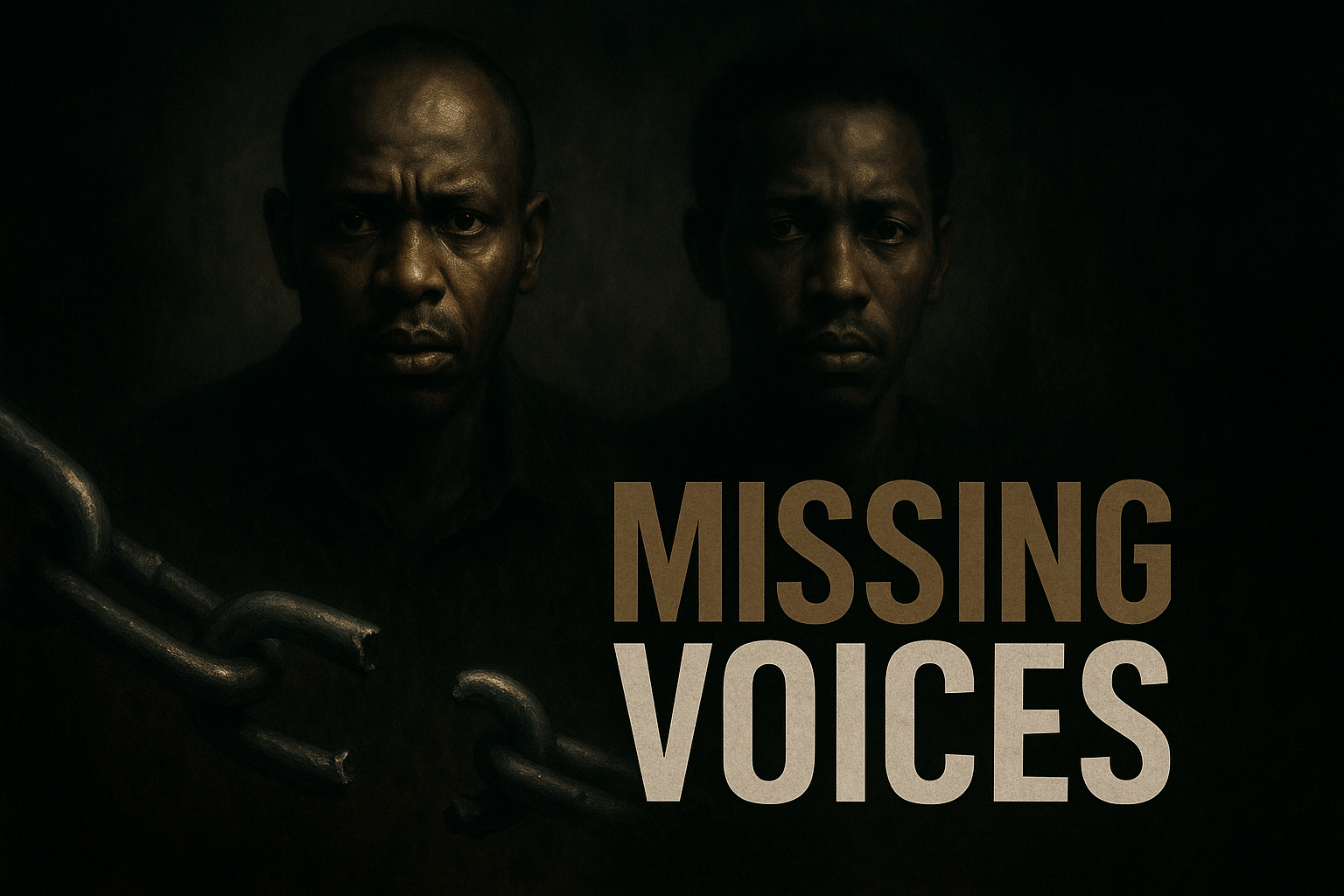
For an entire year, the whereabouts of Oumar Sylla, known widely as Foniké Menguè, and Mamadou Billo Bah have remained unknown. These two prominent Guinean activists vanished after their alleged abduction by special forces in July 2024 (africacenter.org). Their disappearance casts a long shadow over the human rights situation in Guinea, a nation grappling with political instability and a military government.
The activists, both members of the now-dissolved National Front for the Defence of the Constitution (FNDC), were reportedly arrested on July 9, 2024, at Menguè’s home in Conakry (africacenter.org). They were then allegedly taken to a detention facility on Kissa, an island off Conakry, where reports suggest they endured torture (africacenter.org). While a third individual arrested alongside them, Mohamed Cissé, was eventually released, Menguè and Bah have not been accounted for, leaving their families and supporters in agonizing suspense.
Understanding Enforced Disappearance
What is Enforced Disappearance?

Enforced disappearance refers to the arrest, detention, or abduction of a person by state agents, or by individuals acting with state support, followed by a refusal to acknowledge the deprivation of liberty or to reveal the person’s fate or whereabouts. This act places the disappeared person outside the protection of the law. (Civicus Monitor)
The term “enforced disappearance” carries significant legal and human rights implications. It is not simply an abduction; it is a specific act under international law. This means that when state agents, or those acting with state approval, take someone into custody and then refuse to acknowledge their detention or reveal their location, it constitutes an enforced disappearance (Civicus Monitor). This act leaves individuals vulnerable and without legal protection.
Guinea has a history of such practices. For instance, prior to the constitutional referendum in 2020, Amnesty International reported that authorities conducted raids and arbitrarily detained young people who later disappeared (Civicus Monitor). Human rights organizations, including Avocats sans Frontières de Guinée (Lawyers without Borders Guinea), have condemned these “abductions” of individuals suspected of opposing government actions (Civicus Monitor). These patterns highlight a deeply troubling environment for political activists and ordinary citizens alike.
The FNDC: A Beacon of Opposition
Oumar Sylla and Mamadou Billo Bah were members of the National Front for the Defence of the Constitution (FNDC), a crucial opposition coalition in Guinea. The FNDC emerged as a powerful force against attempts to change the 2010 Constitution, which limited presidential terms to two five-year terms (Civicus Monitor). This constitutional safeguard aimed to prevent then-President Alpha Condé from seeking a third term.
The FNDC has been at the forefront of numerous protests and campaigns against these constitutional changes and the possibility of a third term for President Condé (Civicus Monitor). Their activism, however, has often been met with severe repression. Protests against the constitutional changes have resulted in excessive use of force, leading to the deaths of dozens of protesters, as well as arbitrary arrests and prosecutions of human rights defenders (Civicus Monitor). The targeting of FNDC members like Menguè and Bah underscores the risks faced by those who dare to challenge the status quo in Guinea.
The Junta’s Tightening Grip
The current political landscape in Guinea is dominated by a military junta, which seized power through a coup d’état in September 2021 (hrw.org). Colonel Mamady Doumbouya leads this military government, which overthrew then-President Alpha Condé. Since taking control, the junta has faced widespread criticism for its crackdown on social and political rights.
The military government has taken drastic measures to consolidate its power. For example, in May 2022, the junta indefinitely banned demonstrations, a move that violates both national and international laws protecting the right to protest (hrw.org). Furthermore, the military junta intensified its repression by dissolving the country’s opposition coalition on political grounds (hrw.org). This systematic suppression of dissent creates an environment where activists operate under constant threat.
A Climate of Fear and Repression
Amnesty International has powerfully described the situation in Guinea as a “climate of terror” imposed by the military junta (africacenter.org). This phrase captures a human rights environment marked by widespread fear and repressive tactics employed by the authorities. It includes the excessive use of force against protesters, arbitrary arrests, detentions, and the chilling practice of forced disappearances.
The abductions of Menguè and Bah are not isolated incidents. They represent a disturbing pattern of escalating harassment, jailings, and trials against critics of the junta (africacenter.org). Other documented cases include Abdoul Sacko, national coordinator of the Forum of Social Forces of Guinea, who was abducted in February 2025 and found in a critical state (africacenter.org). Additionally, lawyer Mohamed Traoré testified to abuse after being abducted in June 2025 (africacenter.org). These incidents paint a grim picture of the risks faced by those who speak out against the government.
Transparency and Accountability Concerns
The lack of transparency and accountability from Guinean authorities regarding these disappearances is a significant concern. Souleymane Sow, director of the Guinean branch of Amnesty International, expressed deep frustration, stating that there has been no communication from the Guinean state or the prosecutor regarding investigations into these disappearances (africacenter.org). This silence leaves families and human rights advocates in the dark, with little hope for justice.
Guinea’s low score on the 2024 Corruption Perception Index further highlights this issue. The country scored 28 out of 100, indicating a high level of perceived corruption and a significant lack of transparency in governance (peacenews.com). A score this low suggests that public institutions are seen as highly susceptible to corruption, which can undermine the rule of law and accountability for human rights abuses. This environment makes it incredibly difficult to hold perpetrators of enforced disappearances and other abuses responsible.
Guinea’s Transparency Score (2024)
Guinea scored 28 out of 100 on the 2024 Corruption Perception Index, indicating a significant lack of transparency and high levels of perceived corruption in its governance.
International Community’s Response
The international community, particularly human rights organizations, has actively monitored and responded to the human rights situation in Guinea. Organizations such as Amnesty International and Human Rights Watch have consistently issued reports, condemned abuses, and called for accountability (hrw.org). For example, Amnesty International released a comprehensive report ahead of Guinea’s UN Universal Periodic Review in January 2020, assessing the human rights situation since 2015 (amnesty.org).
These organizations play a vital role in spotlighting abuses and advocating for justice. Human Rights Watch, for instance, works to defend the rights of people in nearly 100 countries worldwide, aiming to bring perpetrators to justice (hrw.org). Despite these efforts, the direct impact on the ground, particularly in securing the release or accountability for disappeared individuals, remains a significant challenge.
Guinea’s Legal Framework and Dissent
Guinea’s legal framework regarding political dissent has become a major point of concern for human rights advocates. While national and international laws are supposed to safeguard the right to protest, the military junta has openly violated these rights (hrw.org). In May 2022, the junta banned demonstrations indefinitely, effectively criminalizing public expressions of opposition (hrw.org).
There have also been numerous reports of arbitrary arrests and prosecutions targeting human rights defenders and protesters (Civicus Monitor). This suggests a legal environment that is increasingly being manipulated to suppress opposition and silence critical voices. The government’s actions create a chilling effect, discouraging citizens from exercising their fundamental rights to freedom of assembly and expression.
The Looming Constitutional Referendum
The political situation in Guinea remains highly volatile, with the military junta aiming to consolidate its power despite international pressure for a return to democracy. The junta has set a September 2025 date for a referendum on a new constitution (apnews.com). This move is intended to launch a return to democracy, following a missed deadline for a transition (rfi.fr).
The significance of this upcoming constitutional referendum cannot be overstated. It aims to replace the 2010 Constitution, which limited presidential terms to two five-year terms (Civicus Monitor). This previous attempt to change the constitution was widely seen as a way for then-President Alpha Condé to seek a third term, sparking widespread protests and strong opposition from groups like the FNDC (Civicus Monitor). The outcome of such referendums directly impacts political freedoms and the situation of activists, as those who oppose them often face severe repression.
The Path Ahead for Guinea
The disappearance of Oumar Sylla and Mamadou Billo Bah is a stark reminder of the challenges facing human rights and democracy in Guinea. The military junta’s continued crackdown on dissent, coupled with a lack of transparency and accountability, creates a precarious environment for activists and ordinary citizens. The international community’s calls for justice, while important, must be met with concrete action from Guinean authorities.
Ethnic tensions and divisions have historically been exploited by political parties and leaders in Guinea to consolidate power, further eroding national unity (peacenews.com). This complex backdrop adds another layer of difficulty to the nation’s path toward stability and genuine democratic governance. The appointment of Mamadou Oury Bah as Prime Minister in February 2024 (bbc.com) represents a political shift, yet the fundamental issues of human rights and accountability for disappeared individuals remain unresolved. The hope for finding the missing activists dwindles with each passing day, underscoring the urgent need for a prompt and transparent investigation.
Pattern of Alleged Abductions in Guinea
- Oumar Sylla (Foniké Menguè) & Mamadou Billo Bah: Missing since July 2024 after alleged abduction by special forces.
- Abdoul Sacko: Abducted in February 2025, found in critical state.
- Mohamed Traoré: Abducted in June 2025, testified to abuse.
ABOUT THE AUTHOR
Darius Spearman has been a professor of Black Studies at San Diego City College since 2007. He is the author of several books, including Between The Color Lines: A History of African Americans on the California Frontier Through 1890. You can visit Darius online at africanelements.org.
