

Listen to this article
Download AudioSudan’s Crisis: A Call for Action
By Darius Spearman (africanelements)
Support African Elements at patreon.com/africanelements and hear recent news in a single playlist. Additionally, you can gain early access to ad-free video content.
The Unfolding Tragedy in Sudan
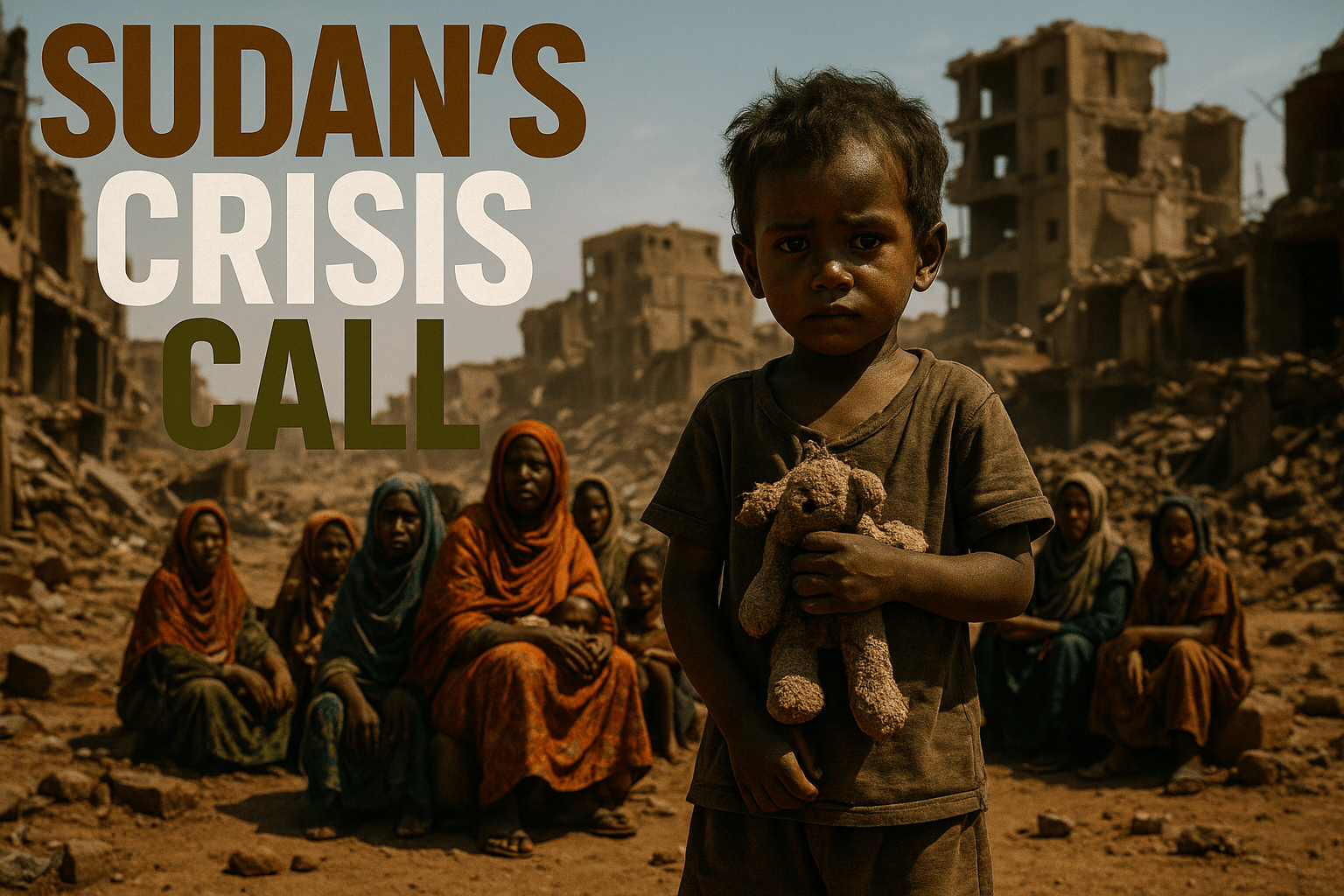
The nation of Sudan is currently gripped by a humanitarian crisis of immense proportions, a situation aid agencies describe as suffering of “industrial proportions” (news.un.org). This devastating conflict began in April 2023, stemming from deep-seated tensions between the Sudanese Armed Forces (SAF) and the paramilitary Rapid Support Forces (RSF). These two powerful military factions, once allies in the overthrow of former President Omar al-Bashir, saw their relationship sour. The war erupted after a critical breakdown in the transition to civilian rule, a promise made to the Sudanese people following years of authoritarian leadership (news.un.org).
The fighting has been brutal, leading to the leveling of towns and cities across the country. Tragically, tens of thousands of lives have been lost in the violence (news.un.org). Aid officials describe the crisis as the world’s “most devastating,” a stark reminder of the immense human cost of this conflict (reuters.com). The United Nations warns that the humanitarian situation continues to worsen, with displacement, hunger, and disease escalating rapidly (news.un.org). This ongoing turmoil deeply impacts the lives of millions of African people, pushing communities to the brink of survival.
A Spreading Hunger Catastrophe
Famine is not just a threat in Sudan; it is widespread and intensifying across the nation, leaving millions facing severe food insecurity. The UN World Food Programme (WFP) has expressed profound concern for the 25 million Sudanese people who are now confronting famine (news.un.org). Leni Kinzli, a WFP Communications Officer for Sudan, starkly stated that “Two years of war has turned Sudan into the world’s largest hunger catastrophe and famine is spreading” (news.un.org). This assessment highlights the dire reality on the ground.
In some parts of the country, famine has already been officially declared, placing millions of lives at immediate risk (news.un.org). The Darfur region, in particular, is experiencing an escalating famine. UNICEF reported that between January and May 2025, more than 40,000 children were admitted for treatment due to severe acute malnutrition. This number represents more than double the admissions during the same period last year, indicating a rapid deterioration of the food situation (bbc.com). The widespread food insecurity is a direct consequence of the conflict, which has disrupted farming, destroyed livelihoods, and made food distribution incredibly difficult. The compounded effects of conflict, displacement, disease outbreaks, and natural disasters are driving this catastrophic hunger crisis (unocha.org).
Hunger and Malnutrition in Sudan
Mass Displacement and Regional Strain
The conflict has unleashed a massive wave of displacement, forcing millions of Sudanese people to abandon their homes in search of safety. More than 12 million individuals have been displaced since the war began (news.un.org). This staggering number includes approximately four million people who have sought refuge in neighboring countries, placing immense strain on already fragile resources in those nations (news.un.org).
The impact of this conflict extends far beyond Sudan’s borders, creating broader regional instability. Neighboring countries, many of which already face their own economic and social challenges, are struggling to cope with the influx of refugees. This situation contributes to increased humanitarian needs across the region. For instance, an estimated 30.4 million people will require assistance in 2025, a significant increase of 5.6 million from 2024 (unocha.org). The devastating conflict, the resulting displacement, ongoing disease outbreaks, natural disasters, and the complete destruction of livelihoods drive this surge in demand. The ripple effect of Sudan’s crisis threatens to destabilize an entire region, impacting the lives of countless African families.
Mass Displacement in Sudan
Obstacles to Aid and Systemic Blockades
The delivery of humanitarian aid in Sudan is severely hampered, with civilians facing systematic obstruction and attacks. Sudanese authorities are actively blocking the delivery of aid to some of the most desperate areas (cnn.com). Additionally, the Rapid Support Forces (RSF) have engaged in widespread looting of health facilities and essential supplies, further crippling the ability to provide life-saving assistance (cnn.com). These actions have a devastating impact, making it nearly impossible for organizations like the International Federation of Red Cross and Red Crescent Societies to provide humanitarian services around Khartoum (en.wikipedia.org).
The scale of need is immense, with the UN estimating that nearly two-thirds of Sudan’s population, more than 30 million people, will require aid this year (reuters.com). Despite this overwhelming demand, the humanitarian response remains severely underfunded. Only 5 percent of the UN’s aid appeal for Sudan has been funded, leaving a staggering $2.56 billion gap (gh.bmj.com). Doctors Without Borders has urgently called for an immediate scaling up of the humanitarian response, citing a “chronic lack of response from humanitarian organizations and the UN” (cnn.com). This critical funding shortfall means that essential aid, from food to medical supplies, is simply not reaching those who need it most, exacerbating the suffering of the Sudanese people.
UN Humanitarian Aid Appeal for Sudan
Human Rights Abuses and War Crimes
Severe human rights abuses, including credible allegations of war crimes and forced recruitment have marked the conflict in Sudan. The International Criminal Court (ICC) has stated its belief that war crimes are being committed in the Darfur region, a place that has historically suffered immense violence (bbc.com). These allegations point to a pattern of atrocities against civilians, including attacks on healthcare facilities, which are considered grave violations of international law. The Deputy Prosecutor for the International Criminal Court, Nazhat Shameem Khan, reported to the United Nations Security Council about the deteriorating situation and the mass atrocities being committed (news.un.org).
Further evidence of these abuses comes from a CNN investigation, which uncovered a chilling pattern of forced recruitment by the Rapid Support Forces (RSF). Over a mere three-month period, almost 700 men and 65 children were forcibly recruited by the RSF in Jazira state alone (cnn.com). The recruitment of children into armed groups is a particularly heinous war crime, robbing young people of their innocence and future. These acts underscore the brutal nature of the conflict and the profound disregard for human life and dignity by the warring parties. The systematic nature of these abuses demands urgent international attention and accountability.
The Collapse of Healthcare and Disease Outbreaks
Sudan’s healthcare system has suffered a catastrophic collapse, a direct consequence of the ongoing conflict. This breakdown has left communities struggling to survive, as the compounded effects of violence and environmental instability push them to the brink (news.un.org). The long-term implications of this collapse are dire, including a fragile health information infrastructure, severely limited and unstable resources, and a critical shortage of healthcare workers (gh.bmj.com). These systemic weaknesses will hinder recovery and public health efforts for many years to come.
Within six months of the conflict’s start, a staggering 70 percent of hospitals and medical centers were out of service (conflictandhealth.biomedcentral.com). Even medical institutions far from the direct engagement areas have been severely affected, with 20 percent experiencing significant disruptions (conflictandhealth.biomedcentral.com). The World Health Organization (WHO) has verified 60 attacks on healthcare facilities in conflict areas, resulting in the deaths of 34 people and injuries to 38 others (conflictandhealth.biomedcentral.com). This destruction and targeting of medical infrastructure have led to widespread disease outbreaks, including cholera, which remains incredibly difficult to contain due to the non-existent healthcare system. The health system in Sudan is indeed at risk of “total collapse,” a tragedy for the nation’s people (en.wikipedia.org, pubmed.ncbi.nlm.nih.gov).
International Response and Diplomatic Efforts
International organizations are working to address the humanitarian crisis in Sudan, but they face immense challenges beyond simply securing funding. Obstruction of aid delivery and direct attacks on healthcare facilities make it incredibly difficult to provide assistance on the ground (gh.bmj.com). Despite these obstacles, efforts are being made to deliver aid, though the humanitarian response remains severely underfunded, as previously noted. The global community has an implicit role to play, and there is a strong call for international investment in Sudan’s health system during this war (gh.bmj.com).
Diplomatic efforts to resolve the conflict have been complex and often frustrating. Sudan’s military accepted a United Nations proposal for a week-long ceasefire in El Fasher, intended to facilitate aid delivery (news.un.org). However, the Rapid Support Forces did not explicitly agree to this truce, and renewed clashes quickly followed in the southern part of the city. This highlights the difficulty in achieving lasting peace through negotiation when one party remains unwilling to commit. In a broader international context, Dorothy Shea, the United States representative to the United Nations, expressed concern for the violence in Sudan. However, her comments were made while simultaneously condemning the ICC for filing an arrest warrant for Israeli Prime Minister Benjamin Netanyahu and former Israeli Minister of Defense Yoav Gallant. This stance aligns with the Trump administration’s recent actions, including issuing sanctions against Francesca Albanese, an independent investigator probing human rights abuses in the Palestinian territories. These actions represent the latest efforts by the United States to punish critics of Israel’s 21-month war in Gaza, showcasing how global political dynamics can intersect with and sometimes overshadow the urgent needs of crises like that in Sudan.
ABOUT THE AUTHOR
Darius Spearman has been a professor of Black Studies at San Diego City College since 2007. He is the author of several books, including Between The Color Lines: A History of African Americans on the California Frontier Through 1890. You can visit Darius online at africanelements.org.
