

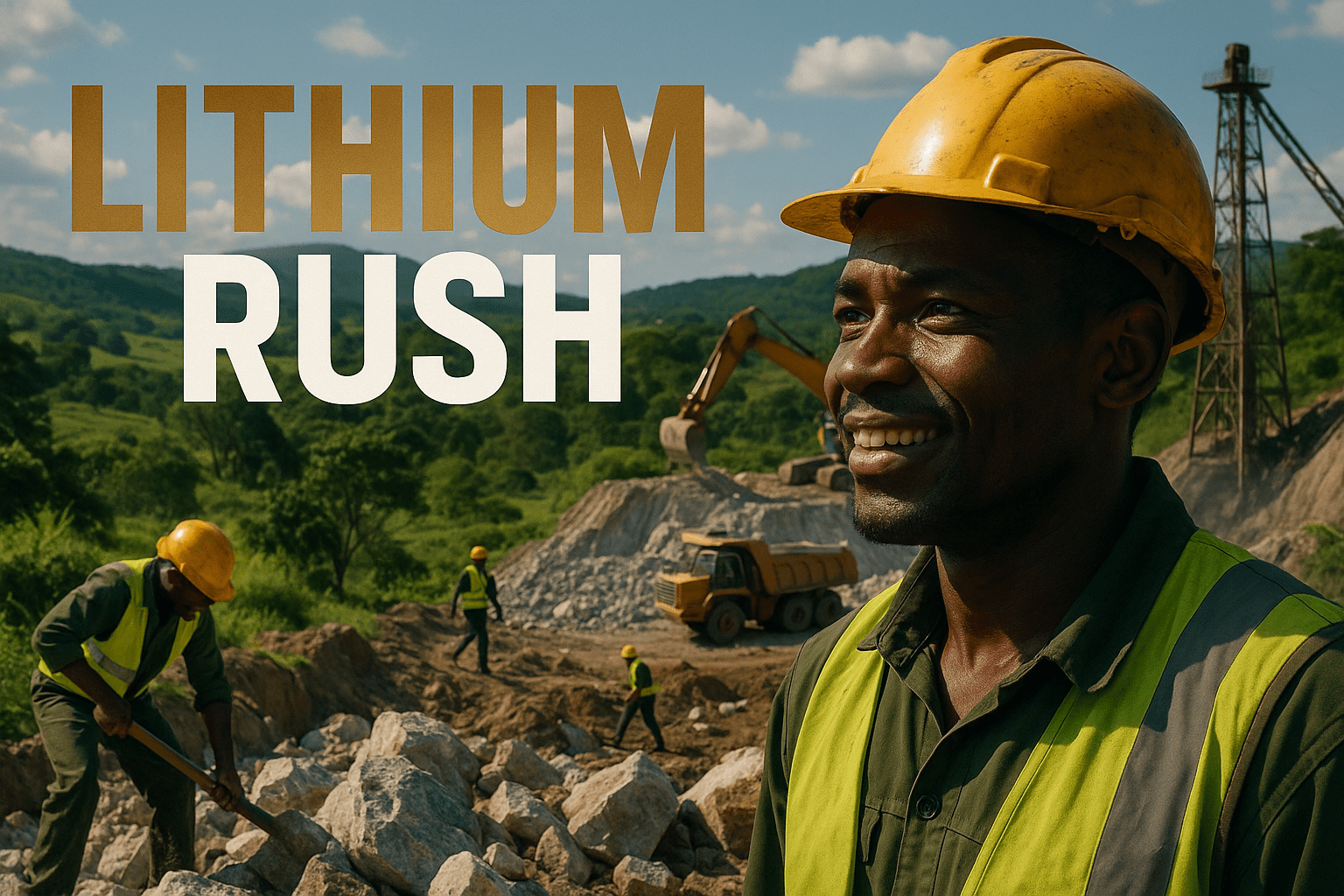
Zimbabwe’s Lithium Industry: Challenges and Opportunities
By Darius Spearman (africanelements)
Support African Elements at patreon.com/africanelements and hear recent news in a single playlist. Additionally, you can gain early access to ad-free video content.
Zimbabwe holds Africa’s largest lithium reserves, a mineral vital for the global electric vehicle industry. This abundance presents a significant opportunity for the nation to transform its economic future. However, maximizing these benefits has proven challenging, as the country grapples with issues of resource control, foreign investment, and local community welfare. The story of Zimbabwe’s lithium is a complex narrative of potential wealth, policy shifts, and the enduring struggle for equitable development.
For decades, Zimbabwe has faced economic underdevelopment and poverty. The global demand for lithium, which is plentiful across the nation, has ignited hopes that its mining, processing, and export could uplift millions of Zimbabweans (afripoli.org). This mineral, a critical component of rechargeable lithium-ion batteries, is central to the rapidly expanding electric vehicle market. The global lithium-ion battery market, valued at US$78.9 billion, is projected to reach US$349.6 billion by 2034. This surge in demand has sparked a new “lithium rush” in Zimbabwe, drawing significant international attention and investment.
Zimbabwe’s Lithium Potential
Zimbabwe stands as Africa’s largest lithium producer and ranks among the top ten globally (theconversation.com). Large deposits of this valuable mineral are found not only in Zimbabwe but also in other nations such as Argentina, Chile, Brazil, Bolivia, Canada, the United States, Australia, Portugal, Namibia, and Ghana (theconversation.com). The presence of such vast reserves positions Zimbabwe uniquely in the global supply chain for green energy technologies.
Despite its significant reserves and production capacity, Zimbabwe has struggled to fully capitalize on its lithium wealth. The nation has faced difficulties in ensuring that the economic benefits from its mining operations truly reach its citizens. This challenge underscores a broader issue for resource-rich African nations: how to translate mineral wealth into sustainable national development and improved livelihoods for their populations.
Driving Value Addition
Zimbabwe has taken decisive steps to ensure more of its lithium wealth remains within the country. In 2022, the government banned the export of raw lithium ore (reuters.com). This move aimed to curb illicit exports and encourage domestic processing. Furthermore, Zimbabwe plans to ban the export of lithium concentrates starting in 2027 (reuters.com; africa.businessinsider.com).
This policy reflects a strong desire for “beneficiation” and “value addition.” These terms are crucial for understanding Zimbabwe’s economic strategy. Beneficiation refers to the process of separating valuable lithium minerals from raw ore to produce a higher-grade concentrate. Value addition involves further refining this concentrate into products like lithium chemicals, which are essential for battery manufacturing. By engaging in these processes, a country can generate more revenue, create skilled jobs, and develop related industries, thereby boosting its overall economic development (ipisresearch.be). The ban on concentrate exports is intended to compel miners to invest in domestic processing facilities, shifting the nation from exporting raw materials to higher-value processed goods.

What is Lithium Concentrate?
Lithium concentrate is a refined form of lithium ore, where valuable lithium-bearing minerals have been separated from waste rock through a process called beneficiation. This differs from raw ore, which is directly extracted from the ground and contains a much lower percentage of lithium. Processed lithium products, such as battery-grade lithium carbonate or lithium hydroxide, are further refined from concentrates and are ready for use in manufacturing. The export of lithium concentrate is significant because it represents a step up in value addition compared to raw ore, but it still leaves a substantial portion of the processing and economic benefit to be captured by the importing country. Zimbabwe’s ban on lithium concentrate exports aims to encourage further domestic processing to capture more of this value. Source: Foreign Policy
Artisanal Mining’s Complex Role
The 2022 ban on raw lithium ore exports was partly driven by concerns over artisanal mining. Artisanal mining refers to small-scale, often informal, mining operations typically carried out by individuals or small groups using basic tools and methods. These operations often lack formal permits, safety regulations, and environmental controls. In Zimbabwe’s lithium sector, artisanal mining led to uncontrolled extraction and export of raw ore, bypassing official channels and resulting in significant loss of potential revenue (reuters.com).
This informal extraction also raised concerns about environmental degradation, unsafe working conditions, and the inability to track the origin and quantity of exported minerals. The government’s decision to ban raw lithium exports was a direct response to these issues. However, the ban disproportionately affected artisanal miners, who were already on the margins of the industry. When the market for unprocessed lithium shrank, these miners were left with raw lithium and a rapidly declining market price, further disempowering them.

What is Artisanal Mining?
Artisanal mining refers to small-scale, often informal, mining operations typically carried out by individuals or small groups using basic tools and methods. It is often characterized by a lack of formal permits, safety regulations, and environmental controls. In the context of Zimbabwe’s lithium, artisanal mining was problematic because it led to the uncontrolled extraction and export of raw lithium ore, bypassing official channels and resulting in significant loss of potential revenue and control over the resource. This informal extraction also raised concerns about environmental degradation, unsafe working conditions, and the inability to track the origin and quantity of exported minerals, contributing to the government’s decision to ban raw lithium exports. Source: Reuters
Chinese Investment’s Impact
The influx of Chinese investment has profoundly shaped Zimbabwe’s lithium mining sector. In recent years, numerous Chinese companies have acquired lithium mine claims across Zimbabwe and have already commenced mining operations (afripoli.org). This significant capital injection has led to increased production capacity and the establishment of local processing facilities, pushing Zimbabwe towards greater value addition.
For the local economy, this investment brings foreign currency and some job creation, particularly in the mining sector. However, the specific effects on local communities are often mixed. While there are potential benefits from employment and infrastructure development, there are also risks related to environmental impact, land displacement, and the equitable distribution of benefits. Concerns about the transparency and accountability of these investments also persist. Chinese minerals giant Zhejiang Huayou Cobalt, for example, opened a $300 million lithium processing plant at its Arcadia mine, which it acquired for $422 million (foreignpolicy.com). This plant has the capacity to process around 450,000 metric tons of lithium concentrate annually. Similarly, Chengxin Lithium Group commissioned a concentrator at the Sabi Star mine with a capacity of 300,000 metric tons per year, and Sinomine Resource Group completed a $300 million lithium plant after acquiring Bikita Minerals for $180 million (foreignpolicy.com). These developments signify a major shift towards domestic processing, moving Zimbabwe from primarily exporting raw ore to exporting concentrates.
Chinese Investment in Zimbabwe’s Lithium Sector
Key Chinese Investments in Zimbabwe’s Lithium Sector
Community and Environmental Toll
Despite the economic potential, lithium mining in Zimbabwe has brought significant negative social and environmental impacts to local communities. New mining operations have led to devastating effects, including the displacement of communities from their ancestral lands (theconversation.com). Environmental justice groups highlight that these communities often bear the brunt of pollution and land grabs, becoming what are known as “sacrifice zones.”
Mining operations can cause extensive environmental harm through land disturbance, deforestation, and water pollution from chemical runoff. Increased dust and noise pollution also affect the health and well-being of residents. Social impacts include the loss of livelihoods, changes in traditional land use, and potential conflicts over resources. Vulnerable groups, including women, children, and artisanal miners, have been particularly disempowered by these changes. It is crucial that the urgency to acquire critical minerals does not become an excuse for African governments and foreign mining companies to bypass essential mining and environmental regulations (theconversation.com). The rapid expansion of mining, especially without stringent oversight, can exacerbate these issues, leading to contaminated freshwater sources, toxic dust from blasting, and unsafe working conditions for mineworkers.
Navigating Economic Hurdles
Zimbabwe faces several complex challenges in maximizing the economic benefits from its lithium mining sector. One primary hurdle is attracting sufficient capital and investment for advanced processing and refining facilities that can produce finished products like batteries, rather than just concentrates (ipisresearch.be). Achieving this requires substantial financial outlay and specialized technological expertise.
Another significant challenge involves ensuring transparency and accountability within the lithium mining sector to prevent illicit activities and guarantee that revenues genuinely benefit the nation (ipisresearch.be). The fluctuating global prices of lithium also pose a considerable risk, as demonstrated when Zimbabwe softened its stance on local processing requirements after prices collapsed (reuters.com). Furthermore, the country needs to develop the necessary infrastructure and a skilled workforce to support a more sophisticated lithium processing industry. The presence of “lithium barons” and corrupt deals further complicates the equitable distribution of wealth from this valuable resource.
Zimbabwe’s Lithium Export Ban Timeline
To truly uplift the country, the government of Zimbabwe must establish local plans that prioritize community development and improved livelihoods for mining communities. This can be achieved through pro-poor development policies that create employment opportunities for local people in lithium mining areas. Additionally, compelling mines to purchase locally made goods and fresh produce would further integrate local economies into the mining value chain. Bringing artisanal miners into formal value chains, similar to practices in gold, diamond, and chrome mining, would also help these informal miners become part of the formal economy. The government must ensure total monopoly of its lithium reserves, reducing over-reliance on foreign investments and setting a precedent for resource sovereignty.
The ban on the exports of lithium concentrates is crucial for stimulating local beneficiation and value addition. However, some argue that the government should implement this ban immediately rather than waiting for the 2027 timeline. Between now and 2027, it is estimated that about 1.6 million additional tonnes of raw lithium could be extracted and sent overseas, potentially depleting reserves before the full benefits of local processing can be realized. For Zimbabwe to use its lithium reserves to uplift the country, there must be incentives for local companies to mine and process lithium before exporting it (theconversation.com). The government must consider how to govern minerals in a people-centered way, ensuring that lithium truly benefits ordinary Zimbabweans and that resource communities are consulted and included in decisions about their future.
ABOUT THE AUTHOR
Darius Spearman has been a professor of Black Studies at San Diego City College since 2007. He is the author of several books, including Between The Color Lines: A History of African Americans on the California Frontier Through 1890. You can visit Darius online at africanelements.org.
