

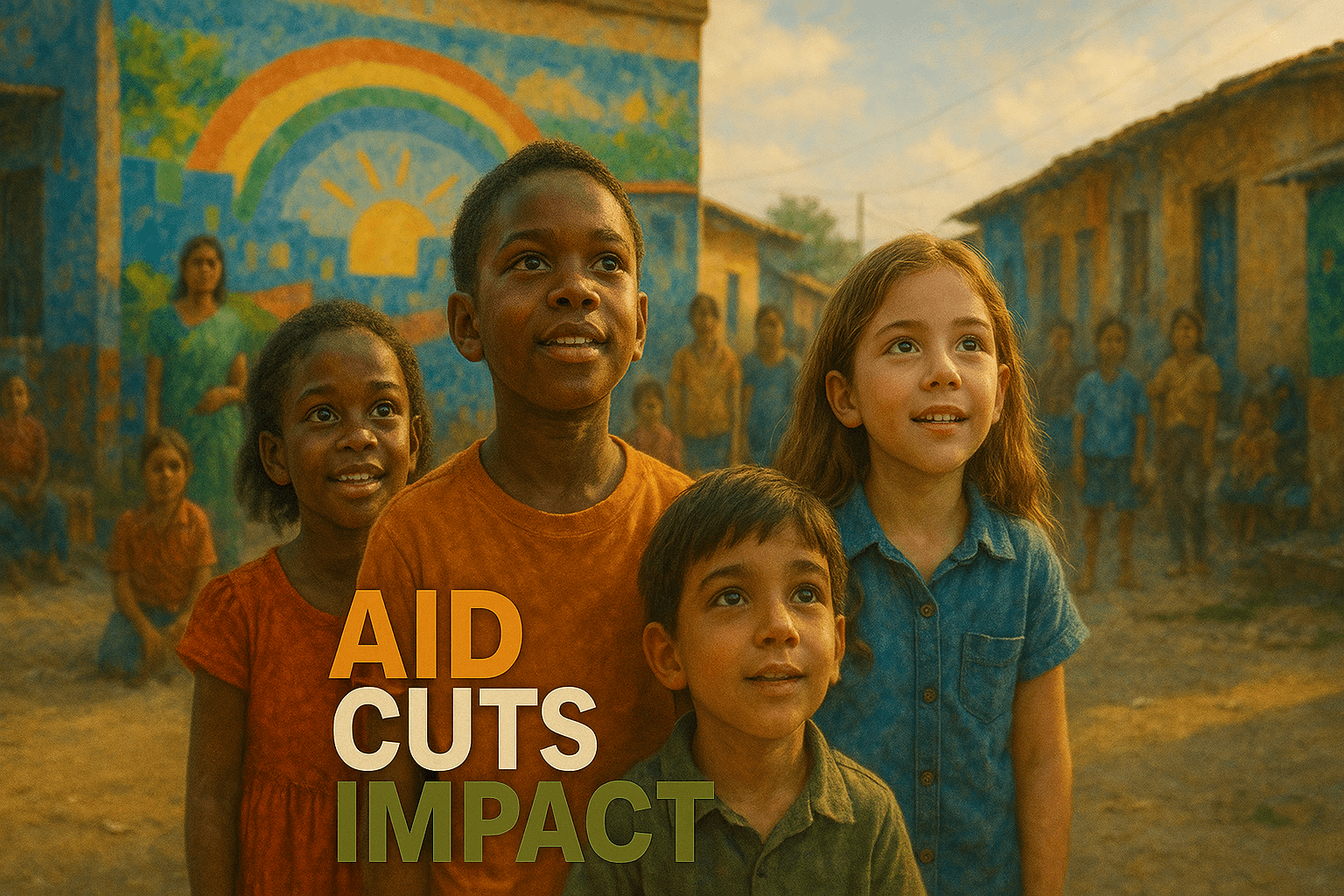
UK Aid Cuts: A Critical Look
By Darius Spearman (africanelements)
Support African Elements at patreon.com/africanelements and hear recent news in a single playlist. Additionally, you can gain early access to ad-free video content.
Modernizing Aid: A New Approach
The UK government has announced a significant shift in its approach to international aid for 2025/2026. This modernized strategy prioritizes impact, value for money, and transparency (gov.uk). The goal is to focus on areas where Britain can make the biggest difference globally. New figures released on July 22, 2025, detail how the aid budget will be spent in the upcoming fiscal year (gov.uk).
Furthermore, this new approach will prioritize spending through impactful multilateral organizations. These include the World Bank and Gavi, the vaccine alliance (gov.uk). The UK also plans to work towards reforming these institutions. Development Minister Baroness Chapman confirmed UK support for the World Bank’s International Development Association (IDA), which is expected to benefit 1.9 billion people in the next three years (gov.uk). This strategic shift aims to ensure every penny counts, especially as the aid budget faces significant reductions.
Understanding GNI and Aid Budgets
Gross National Income (GNI) is a measure of a country’s income. It includes all income earned by its residents and businesses, regardless of where the income is generated. GNI is frequently used as a benchmark for aid budgets. Many countries, including the UK, set their aid spending as a percentage of their GNI. The UK’s aid spending, as a proportion of GNI, is projected to reach its lowest level since 1999 (commonslibrary.parliament.uk).
The Foreign, Commonwealth & Development Office (FCDO) annual report, expected in summer 2025, will detail spending plans for 2025/26 (commonslibrary.parliament.uk). The government will consider impact assessments for future spending. This focus on GNI highlights the scale of the upcoming cuts and the need for careful allocation of remaining funds.
What is Gross National Income (GNI)?
Gross National Income (GNI) is a measure of a country’s income. It includes all the income earned by its residents and businesses, regardless of where the income is generated. It is a key economic indicator used to understand the overall economic activity and wealth of a nation.
In relation to aid budgets, GNI serves as a benchmark. Many countries, including the UK, commit to spending a certain percentage of their GNI on foreign aid. This percentage reflects the country’s commitment to international development relative to its economic capacity.
Multilateral vs. Bilateral Aid
Multilateral organizations are international bodies that receive funding from multiple governments. They work on global issues such as development, health, or humanitarian aid. Organizations like the World Bank and Gavi are prioritized because of their proven track record of impact (gov.uk). They also demonstrate an ability to deliver results for taxpayers and the world’s poorest people. The UK government aims to maximize the impact of its aid by working with multilateral development banks (commonslibrary.parliament.uk). Underperforming multilateral organizations will face funding cuts in the future (gov.uk).
In contrast, bilateral aid is provided directly from one country’s government to another country’s government. While bilateral support for some countries will drop, the UK will increasingly share expertise (gov.uk). Projections of bilateral Official Development Assistance (ODA) flows are used to visualize how donors are shifting their approach. This also shows which low- and lower-middle-income countries (LMICs) will be most affected by aid cuts (cgdev.org). The specific countries or regions affected by decreased bilateral support are not detailed, but the UK will continue to play a key humanitarian role in Gaza, Ukraine, and Sudan (gov.uk).
Value for Money and Transparency
The UK government’s modernized aid budget emphasizes impact, value for money, and transparency (gov.uk). While specific metrics are not fully detailed, this involves a strategic review of aid. The review focuses on prioritization, efficiency, and responsible exit from underperforming programs (gov.uk). The FCDO is leading a cross-government review of UK aid to ensure value for money and “strategic coherence” (commonslibrary.parliament.uk). The government will consider impact assessments when determining future spending plans.
The commitment to transparency is crucial, especially with the planned budget cuts. The “Budget Cuts Tracker” closely follows cuts in ODA and will be regularly updated (donortracker.org). This tracker will include information on how these cuts will affect different sectors and priorities. This ongoing monitoring aims to provide clarity on how aid funds are being utilized and where reductions are occurring.
The Impact of Aid Cuts
Despite the modernized approach, the UK’s aid budget is set for significant cuts. It will reach its lowest proportion of GNI since 1999 by 2027 (commonslibrary.parliament.uk). The aid budget will be cut from 0.5% of GNI to 0.3% of GNI from 2027. This represents approximately a 40% cut in current prices (data.one.org). This reduction is partly to offset an increase in defense spending from 2.3% to 2.5% of GNI (data.one.org). The rationale behind this trade-off and its broader implications are not fully explored in the available information.
These cuts are projected to have severe negative impacts, particularly on vulnerable populations. Cuts to health spending risk an increase in disease burden and ultimately deaths (theguardian.com). This disproportionately affects those in poverty, women, children, and people with disabilities. Aid cuts to vaccines could lead to half a million child deaths, according to warnings given to Members of Parliament (jerseyeveningpost.com). The government’s own impact assessment indicates that 11 of 13 current or future programs earmarked for closure were “equalities focused” (theguardian.com).
UK Aid Budget Reduction
Consequences for Vulnerable Populations
In-year reductions to education spending are expected in Ethiopia, Sierra Leone, Nigeria, and Zimbabwe (theguardian.com). A girls’ education program in the Democratic Republic of Congo (DRC) will close early in 2025-2026. This will negatively impact 170,000 children (theguardian.com). The provided information notes that there will be a “responsible exit from programming where necessary.” Specific details on the scope, scale, or criteria for these decisions, beyond the general principle of underperformance, are not provided (gov.uk).
The term “Equality Impact Assessment” (EIA) is mentioned in relation to aid program closures. An EIA is a systematic process of assessing the likely or actual effects of a policy, plan, program, or service on people with different protected characteristics. While the specific criteria for aid program closures are not detailed, the mention of EIAs suggests a consideration of how these closures might disproportionately affect certain groups. However, the exact methodology or criteria for these assessments are not clearly defined in the available information. The terms “vulnerable populations,” “marginalized communities,” and “equalities focused” programs are used without clear definitions, which leaves ambiguity regarding who specifically is affected by aid decisions and the criteria for these programs.
Criticism and Global Reputation
Critics argue that these cuts will undermine the UK’s global reputation and have devastating consequences for the world’s most vulnerable. Lisa Wise, director of global policy at Save the Children UK, stated that the cuts will result in deaths of the world’s most vulnerable, including children (theguardian.com). Gideon Rabinowitz of Bond, an umbrella group for development NGOs, emphasized that the world’s most marginalized communities, particularly those in conflict and women and girls, will bear the highest cost of these political choices (theguardian.com).
The UK’s decision to slash foreign aid puts its long-standing reputation as a powerful force in global development at risk of “irreparable harm” (globalcitizen.org). Conflict prevention is significantly less costly than crisis response. Every $1 spent on activities that spur economic growth and political stability can avert spending of up to $103 on a future conflict (data.one.org). This highlights the potential long-term costs of reducing aid in critical areas. While the immediate negative impacts of aid cuts are highlighted, a detailed discussion of the potential long-term effects on development and global stability is not provided. However, some sources note that these cuts will have major negative impacts and call for a more coordinated approach to foreign assistance (cgdev.org).
Cost-Effectiveness: Aid vs. Conflict Response
Investing in Aid for Stability
Spending on activities that promote economic growth and political stability.
Averting Future Conflict Costs
Potential savings on future conflict response by investing in prevention.
Humanitarian Aid Prioritization
The UK will continue to play a key humanitarian role supporting those in crisis. This includes regions such as Gaza, Ukraine, and Sudan (gov.uk). The government will also hold a reserve fund to respond to future crises at pace. This indicates a prioritization of humanitarian aid, even amidst overall cuts. However, the specific mechanisms for protection amid overall cuts are not detailed. This commitment to humanitarian support aims to mitigate some of the most immediate and severe impacts of the reduced aid budget.
The FCDO’s annual report, published alongside the impact assessment, provides more details on how the diminished aid budget will be spent (miragenews.com). While the government states it will protect planned humanitarian support, the overall reduction in the aid budget means every penny must count. This is especially true if the UK is to make progress on its biggest development priorities: tackling humanitarian, health, and climate crises (gov.uk).
ABOUT THE AUTHOR
Darius Spearman has been a professor of Black Studies at San Diego City College since 2007. He is the author of several books, including Between The Color Lines: A History of African Americans on the California Frontier Through 1890. You can visit Darius online at africanelements.org.
