

Ta’Kiya Young: History Behind Ohio’s Police Killings
By Darius Spearman (africanelements)
Support African Elements at patreon.com/africanelements and hear recent news in a single playlist. Additionally, you can gain early access to ad-free video content.
A Tragic Acquittal and Unanswered Cries
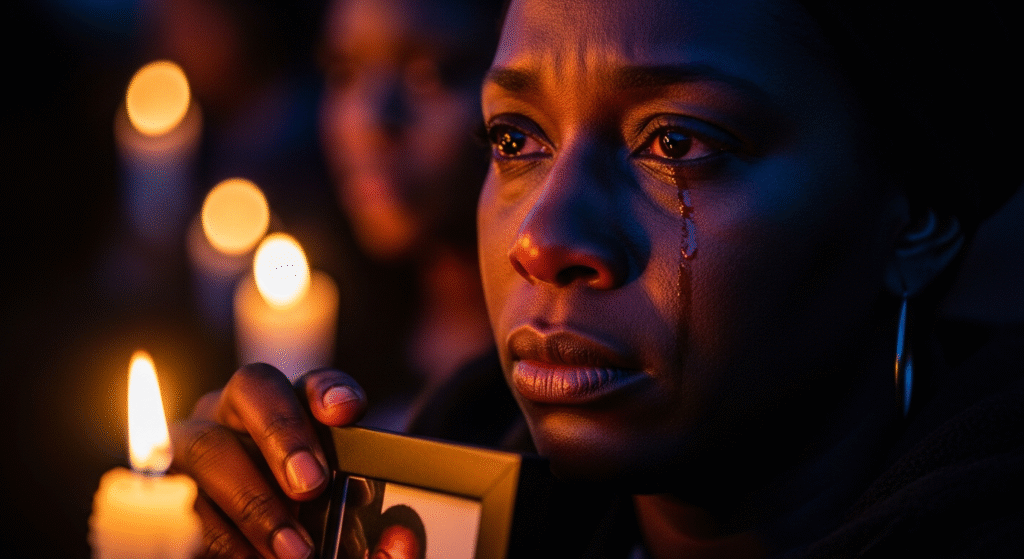
The acquittal of an Ohio police officer in the fatal shooting of Ta’Kiya Young has sparked a renewed fight for justice. Ta’Kiya Young was a pregnant Black woman. Community members in Blendon Township continue to demand federal charges. They also want stronger rules for how police use force (19thnews.org). This ongoing struggle is deeply connected to a long history. It reflects systemic issues of policing and racial injustice in the United States (19thnews.org).
On August 24, 2023, 21-year-old Ta’Kiya Young was tragically killed by Blendon Township police officer Connor Grubb. She was approximately seven months pregnant at the time. The incident occurred in a Kroger parking lot near Columbus, Ohio (19thnews.org). Her unborn daughter also died. Officer Grubb approached Young’s vehicle because she was suspected of shoplifting alcohol (19thnews.org). Body camera footage shows Young refusing repeated orders to leave her car. Subsequently, she slowly moved her vehicle forward. Officer Grubb, standing in front of the car with his weapon drawn, fired a single shot through the windshield. The bullet struck and killed Young (19thnews.org). In August 2024, Officer Grubb faced serious charges. He was indicted on murder, involuntary manslaughter, and felonious assault (19thnews.org). An indictment means a grand jury formally accused him of these crimes. This formal accusation led to criminal charges (wikipedia.org). However, on November 21, 2025, a jury found him not guilty on all counts. An acquittal means a defendant is found not guilty of the charges (wikipedia.org). Charges related to her unborn child were dismissed earlier. The judge cited a lack of evidence that Grubb knew Young was pregnant when the shooting happened (19thnews.org). This decision caused anguish. Young’s grandmother reportedly collapsed in sobs, exclaiming her disbelief (19thnews.org).
Marsy’s Law and the Pursuit of Justice
The outcome of this trial prompted strong reactions. Sean Walton, the family’s attorney, called it “an American tragedy” (19thnews.org). He pledged to pursue a civil lawsuit against Blendon Township and its police chief (19thnews.org). A civil lawsuit is different from criminal charges. It seeks monetary damages for harm, rather than criminal punishment like imprisonment (wikipedia.org). Even if an officer is acquitted in a criminal case, they can still be held responsible in a civil court (wikipedia.org). This is because the legal standards and goals are distinct (wikipedia.org).
Racial Disparity in US Police Killings (Population vs. Fatalities)
This chart illustrates the disproportionate rate at which Black Americans are killed by police compared to their share of the U.S. population (19thnews.org).
This case also highlighted the controversial use of Marsy’s Law. Officer Grubb and his department initially used this law to keep his identity secret (19thnews.org). Marsy’s Law is a victims’ rights amendment. It aims to protect crime victims with rights such as privacy and protection from the accused (fingerlakesdailynews.com). The officer claimed he was a “victim” in the incident (ohio.edu). However, the Ohio Supreme Court later disagreed. The court ruled that Marsy’s Law does not apply to police officers who use deadly force while on duty ((19thnews.org), (ohio.edu)). The law’s purpose is to protect crime victims, not individuals who are potentially subjects of a criminal investigation (ohio.edu). Community members and activists have since pushed for federal intervention. They want federal charges against Grubb and much stricter policies on police use of force (19thnews.org). Federal charges are brought by federal prosecutors for violations of federal laws. State charges, on the other hand, are for breaking state laws (house.gov). A state acquittal does not stop federal authorities from bringing charges, especially if civil rights were violated (house.gov). A primary federal law used in such cases is 18 U.S. Code § 242. This law makes it a crime to willfully deprive someone of their constitutional rights while acting as an officer (house.gov).
Police Killings in Ohio (2013-2023)
This visualization highlights that in Ohio, from 2013-2023, a Black person was 4.5 times more likely to be killed by police than a White person (19thnews.org).
The Shadow of Slave Patrols: Policing’s Racist Roots
The deep pain and ongoing activism after Ta’Kiya Young’s death are not isolated events. Instead, they are part of a continuous fight against police brutality and racial injustice (19thnews.org). These issues have harmed Black communities for centuries. Policing in the United States has troubling origins. It can be traced back to 18th-century “Slave Patrols” in the Carolinas (19thnews.org). These patrols had a clear mission. They were to use extreme force to control enslaved people. They also suppressed uprisings (19thnews.org). This early history set the stage for how law enforcement interacts with Black people today. It created a foundation where policing often acts as a tool of racial control (19thnews.org).
Historically, these systemic issues show how racial bias is deeply woven into law enforcement’s practices. This bias leads to unfair outcomes for racial minorities (brookings.edu). It is about how the system itself is designed, in addition to individual officers acting badly (brookings.edu). Racial profiling is one example of this systemic issue. Aggressive patrolling in Black neighborhoods is another (brookings.edu). Harsher sentences for similar crimes committed by Black people also demonstrate this bias (brookings.edu). These patterns show that racism is ingrained in the system’s operation (brookings.edu).
Modern Movements and the Call to “Say Her Name”
Black liberation movements have consistently challenged police misconduct throughout history. The modern civil rights movement, for example, fought for basic rights. These movements are broad social efforts by Black people. They seek self-determination, racial dignity, and an end to oppression (britannica.com). Furthermore, the Black Lives Matter (BLM) movement revitalized national conversations about police accountability. It was founded in 2013 after George Zimmerman’s acquittal in the shooting death of Trayvon Martin (19thnews.org). The BLM movement gained significant attention. This happened with widespread protests in 2014 following police killings of Michael Brown, Eric Garner, and Tamir Rice (19thnews.org). The movement pushes for comprehensive police reform. This includes better training and holding officers accountable (19thnews.org).
While many cases involving Black men receive significant media attention, Black women also face violence. The “Say Her Name” campaign started to highlight these often forgotten stories (19thnews.org). Black women are disproportionately affected by police violence. Cases like Tanisha Anderson, who died during an encounter with Cleveland police in 2014, show the risks Black women face (19thnews.org). Police violence against pregnant Black individuals is especially troubling. There are documented cases of mistreatment. Malaika Brooks, a seven-months pregnant Black woman, was tasered multiple times in 2004 for refusing to sign a traffic ticket (19thnews.org). This illustrates a careless disregard for the well-being of pregnant Black women (19thnews.org). The stress and fear of potential police brutality deeply affect the health of pregnant Black people. This can even lead to adverse outcomes like preterm birth (19thnews.org). This systemic devaluation of Black motherhood continues to appear in current acts of state violence (19thnews.org).
The Systemic Devaluation of Black Motherhood
The systemic devaluation of Black motherhood is a powerful concept. It means that societal structures undermine Black mothers’ health and autonomy (ucsf.edu). This extends beyond direct police violence. Historically, Black women faced forced reproduction during slavery. Their roles as mothers were denied. Children were often separated from them for economic reasons (ucsf.edu). This painful past created lasting effects.
In today’s world, Black mothers experience major differences in maternal health. They have higher rates of preventable deaths and illnesses (nih.gov). This is due to systemic racism within the healthcare system. It includes unconscious bias and inadequate care (nih.gov). Black mothers are also unfairly targeted by the criminal justice system. They are often criminalized for minor offenses. This leads to separation from their children. It also worsens cycles of poverty (aaihs.org). Furthermore, the child welfare system frequently targets Black families. This results in more investigations, child removals, and termination of parental rights (aaihs.org). These actions stem from racial biases and a lack of proper support for Black families (aaihs.org).
Stark Realities: Statistics on Police Violence
The numbers around police violence in the United States show clear racial disparities. Police kill over 1,000 people annually. In 2024, at least 1,270 people died by police hands. This was the highest number in a decade (19thnews.org). Although Black Americans make up about 14 percent of the U.S. population, police kill them at more than twice the rate of White Americans (19thnews.org). Black men are about 2.5 times more likely to be killed by police than white men (19thnews.org). In addition, Black women are about 1.4 times more likely than white women (19thnews.org). A 2015 study found that unarmed Black individuals were 3.49 times more likely to be shot by police than unarmed white individuals (19thnews.org).
Police Accountability in Fatal Shootings (US)
Convicted: <1%
This visualization shows that nationally, less than 3% of police killings result in officers being charged, and less than 1% result in a conviction (19thnews.org).
Ohio’s numbers are especially concerning. From 2013 to 2023, a Black person in Ohio was 4.5 times more likely to be killed by police than a White person (19thnews.org). There were 334 total police killings during this period (19thnews.org). Franklin County, where Ta’Kiya Young was killed, shows a particularly high rate. It accounts for 33 percent of African-American fatalities in Ohio between 2015 and 2020. This is despite being home to only 20 percent of the state’s Black population (19thnews.org). The Columbus Police Department has a controversial record. It has killed the third-highest number of children in the U.S. since 2013 (19thnews.org). In this statistic, “children” means individuals under the age of 18 (policeviolencereport.org). The Los Angeles Police Department and the Chicago Police Department rank higher than Columbus in this grim count (policeviolencereport.org).
The Accountability Gap and Calls for Reform
A crucial issue is the severe lack of accountability for officers. Nationally, less than 3 percent of police killings result in officers being charged with a crime (19thnews.org). From 2005 onwards, 98 non-federal law enforcement officers were arrested for fatal on-duty shootings. Only 35 of them were convicted, often for lesser offenses like manslaughter. A mere three murder convictions still stand (19thnews.org). This low rate of charges and convictions highlights systemic barriers to justice.
Several factors contribute to this accountability gap. Qualified immunity protects government officials, including police officers, from civil lawsuits. This protection applies unless their conduct violates clearly established constitutional rights (brookings.edu). This makes it extremely difficult to sue them successfully. The grand jury process often favors police officers. Prosecutors typically guide proceedings, and grand juries may side with officers due to the dangers of their job (washingtonpost.com). Furthermore, legal standards for use of force grant officers much leeway. The “objective reasonableness” standard judges actions from the officer’s perspective in the moment (pnas.org). This makes it hard to prove unlawful force. Police unions also play a significant role. They offer strong legal defense and political backing (brookings.edu). Union contracts can include rules that complicate investigations or discipline for officers (brookings.edu).
Demands for Systemic Change
Activists and community members are calling for much stronger use-of-force regulations. They want rules that prioritize de-escalation and restrict certain types of force (police1.com). Current policies follow an “objective reasonableness” standard (police1.com). Activists advocate for a “necessity” standard, requiring force only when truly needed (police1.com). They also demand a “proportionality” standard. This would ensure the force used matches the threat (police1.com). Specific changes include mandatory de-escalation training. They also want to ban chokeholds and carotid restraints (naacp.org). Restricting lethal force to situations of imminent threat is another key demand. They also prohibit shooting at moving vehicles (naacp.org).
Beyond these use-of-force changes, there are calls for comprehensive police reform. This includes more than just improved training and accountability (19thnews.org). It involves demilitarization, which restricts military-grade equipment and training for police departments (brookings.edu). This aims to reduce aggressive tactics. Strong community oversight mechanisms are also vital. Independent civilian review boards with real power to investigate and discipline are sought (naacp.org). The concept of reallocating funds is also gaining traction. This means redirecting police budgets to social services, mental health support, and community-led safety programs (blmgrassroots.org). The community’s continuous fight in Ohio, even after the acquittal, powerfully shows the lasting demand for justice and systemic reform (19thnews.org).
The Path Forward in Ohio and Beyond
The Ta’Kiya Young case has intensified calls for police accountability in Ohio. However, concrete reforms directly implemented by Blendon Township, Franklin County, or the state of Ohio in immediate response to this specific case are not widely documented (ohio.edu). Community activists continue to push for greater transparency. They also advocate for independent investigations (ohio.edu). There have been legislative efforts in Ohio to address broader police reform. These discussions include de-escalation training and banning chokeholds (ohio.edu). However, specific new laws directly tied to the Young case are not widely reported (ohio.edu). The Ohio Supreme Court’s ruling on Marsy’s Law, while significant, is a judicial interpretation. It is not a legislative or departmental policy reform (ohio.edu).
The family of Ta’Kiya Young has declared its intention to pursue a civil lawsuit (19thnews.org). This lawsuit would be against the officer and possibly Blendon Township. Such lawsuits often take a long time to proceed. Details about the official filing, its progress, or any settlements are not yet widely publicized (19thnews.org). These civil cases typically seek monetary damages. They aim to cover wrongful death, pain, suffering, and other losses (19thnews.org). The journey for justice for Ta’Kiya Young and her family continues. It highlights the persistent struggle for Black lives and equitable policing in the United States.
About the Author
Darius Spearman is a professor of Black Studies at San Diego City College, where he has been teaching for over 20 years. He is the founder of African Elements, a media platform dedicated to providing educational resources on the history and culture of the African diaspora. Through his work, Spearman aims to empower and educate by bringing historical context to contemporary issues affecting the Black community.
