

Jury Selection and Race in Mississippi Case
By Darius Spearman (africanelements)
Support African Elements at patreon.com/africanelements and hear recent news in a single playlist. Additionally, you can gain early access to ad-free video content.
The U.S. Supreme Court is set to hear a pivotal case from Mississippi that cuts to the heart of America’s promise of a fair trial. The case, Pitchford v. Cain, involves death row inmate Terry Pitchford, a Black man who argues that prosecutors deliberately removed Black citizens from his jury pool because of their race. This legal battle is not just about one man; it shines a spotlight on a prosecutor with a documented history of such practices and forces a national reckoning with the persistent issue of racial discrimination in jury selection. As the court prepares for spring arguments, the outcome could reshape how death penalty cases are reviewed across the country, making this a critical moment in the long struggle for equal justice.
A Long History of Unequal Juries
The fight for a truly impartial jury is deeply woven into American history. Following the Civil War, the Fourteenth Amendment was ratified in 1868 to grant citizenship and equal rights to formerly enslaved African Americans (constitutioncenter.org). A key part of this amendment is the Equal Protection Clause, which guarantees that no state can “deny to any person within its jurisdiction the equal protection of the laws” (billofrightsinstitute.org). Its purpose was to stop states from passing discriminatory laws, and it became a cornerstone for challenging racial injustice (teachingamericanhistory.org). This principle was tested early on in the context of jury service.
In 1880, the Supreme Court addressed this issue in Strauder v. West Virginia. The court struck down a state law that explicitly limited jury service to “white male persons,” declaring it a violation of the Equal Protection Clause (wvencyclopedia.org). The ruling recognized that excluding Black citizens from juries was a “brand upon them, affixed by law; an assertion of their inferiority.” However, this victory was short-lived. Southern states quickly devised new, non-explicit methods to keep Black people out of the jury box. These tactics included poll taxes and literacy tests that disenfranchised Black voters, from which jury pools were often drawn, and “key man” systems where commissioners hand-picked “respectable” white citizens for jury duty (wikipedia.org). This was part of a broader rollback of rights; even the Civil Rights Act of 1875, which outlawed race-based jury discrimination, was overturned by the Supreme Court in 1883, which argued the Fourteenth Amendment only barred state-sponsored discrimination, not acts by private individuals (wikipedia.org).
The Batson Standard and Its Shortcomings
For nearly a century, prosecutors could use peremptory challenges—the ability to dismiss a potential juror without giving a reason—to systematically remove Black individuals from juries. The original intent of these challenges was to allow attorneys to remove jurors they suspected of bias but could not prove it, helping to form an impartial panel (wikipedia.org). In practice, however, they became a tool for racial exclusion. This changed in 1986 with the landmark Supreme Court case Batson v. Kentucky. The court ruled that using peremptory challenges to exclude jurors solely based on race was unconstitutional (ebsco.com).
The Batson decision created a three-step framework to challenge potential discrimination. First, the defense must make a “prima facie showing,” which means providing enough initial evidence to suggest that racial discrimination occurred (findlaw.com). Second, the burden shifts to the prosecutor to offer a “race-neutral” explanation for striking the juror. Third, the trial judge must decide if that explanation is genuine or simply a “pretext for discrimination”—a false justification used to hide a discriminatory motive (uky.edu). Despite its goals, the Batson standard has proven difficult to enforce. Prosecutors often provide vague, subjective reasons like “poor eye contact” or “inattentiveness,” which judges frequently accept without deep scrutiny (eji.org). As Justice Thurgood Marshall predicted in his concurring opinion, Batson has not ended racial discrimination in jury selection; it has only forced it to become more subtle (wikipedia.org).
Terry Pitchford and a Prosecutor’s Pattern
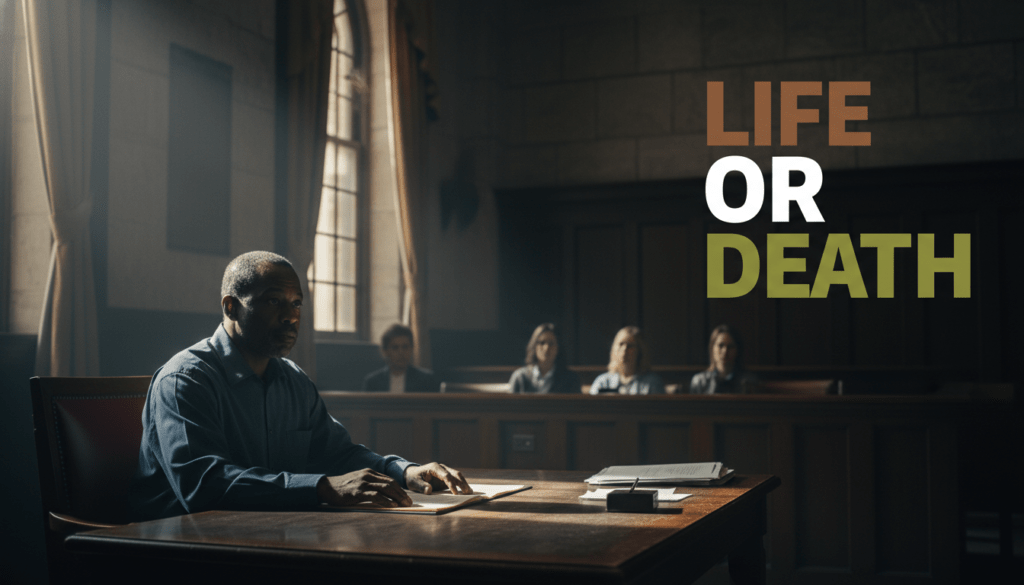
The case of Terry Pitchford brings these historical struggles into the present. In 2006, Pitchford, a Black man, was convicted and sentenced to death in Mississippi for his role in an armed robbery where a store owner was killed (courthousenews.com). During jury selection, the initial pool was over half Black. Yet, prosecutors used their peremptory strikes to remove four Black prospective jurors, resulting in a final jury with only one Black member (davisvanguard.org). Pitchford’s lawyers immediately raised a Batson challenge, but the trial court accepted the prosecutor’s race-neutral explanations.
A central figure in this case is former District Attorney Doug Evans, who prosecuted Pitchford. Evans has a well-documented history of excluding Black jurors. His conduct was famously scrutinized by the Supreme Court in the 2019 case Flowers v. Mississippi. Curtis Flowers was tried six times for the same crime by Evans’s office. In overturning Flowers’s conviction, Justice Brett Kavanaugh wrote that Evans had engaged in a “relentless, determined effort to rid the jury of black individuals” (supremecourt.gov). Furthermore, a class-action lawsuit filed in 2019 by the NAACP Legal Defense Fund and the MacArthur Justice Center, prominent civil rights organizations, alleged that Evans’s office struck Black prospective jurors at 4.4 times the rate of white jurors, a disparity described as “unparalleled” (cbsnews.com).
A Convoluted Path to the Supreme Court
Terry Pitchford’s journey through the legal system highlights the deep divisions in how courts apply the Batson standard. In 2023, a federal judge reviewed Pitchford’s case and found that the “race-neutral” reasons offered by prosecutors were improper and served as a cover for racial discrimination (davisvanguard.org). Common pretextual reasons in such cases include vague claims about a juror’s demeanor or life circumstances, such as living in a “high-crime area,” that are applied inconsistently and disproportionately to Black individuals. The judge ordered a new trial for Pitchford, a significant victory against systemic bias (nacdl.org).
However, this victory was temporary. The U.S. Court of Appeals for the 5th Circuit reversed the federal judge’s decision, reinstating Pitchford’s conviction and death sentence (courthousenews.com). The 5th Circuit’s reasoning was based on a legal standard of deference. It argued that under the Anti-Terrorism and Effective Death Penalty Act (AEDPA), federal courts must give great deference to the original state court’s findings unless they were “unreasonable” (courthousenews.com). The appellate court concluded that the federal judge had overstepped by re-evaluating the prosecutor’s credibility, effectively ruling that the state court’s acceptance of the race-neutral reasons was not unreasonable enough to be overturned. This legal conflict—between a federal judge who saw clear evidence of pretext and an appellate court that deferred to the original trial court—is what has brought Pitchford’s case to the Supreme Court.
The Numbers Behind the Injustice
The problem of racial bias in jury selection is not just anecdotal; it is backed by stark statistical evidence. Studies consistently show that prosecutors use peremptory strikes disproportionately against Black prospective jurors. For example, a study of North Carolina capital cases found that prosecutors struck 53% of eligible Black jurors, nearly double the rate for other jurors (deathpenaltyinfo.org). Similarly, a South Carolina study found prosecutors were more than twice as likely to strike Black potential jurors than white ones (deathpenaltyinfo.org).
Next 53% sits near double 26% which signals a lopsided exclusion pattern.
Another systemic issue is “death qualification.” This process requires potential jurors in capital cases to be willing to impose a death sentence. Because Black Americans are more likely to oppose the death penalty, partly due to its racist history and application, they are disproportionately excluded from capital juries through this process (aclu.org). This creates juries that are not only less diverse but also more prone to convict. The racial composition of the jury has a direct impact on trial outcomes. A Duke University study of felony cases found that all-white jury pools convicted Black defendants 16% more often than white defendants. This conviction gap was almost eliminated when at least one Black person was included in the jury pool (duke.edu).
These disparities are most severe in death penalty cases. Black people make up about 13% of the U.S. population but account for 42% of inmates on death row (deathpenaltyinfo.org). The victim’s race also plays a significant role. A Georgia study revealed that cases involving white victims were 11 times more likely to result in a death sentence than those involving Black victims (wa.gov). This data paints a grim picture of a system where justice is not administered equally, and the shadow of racial bias looms large, particularly when a defendant’s life is at stake. These systemic issues are a continuation of historic efforts to deny Black people the opportunity to accumulate wealth and participate fully in civic life.
All-white jury pool
At least one Black juror
What Is at Stake in Pitchford v. Cain
The Supreme Court’s decision in Terry Pitchford’s case carries profound implications for the future of the American justice system. The ruling could fundamentally alter how Batson challenges are handled in courtrooms nationwide. If the Court rules in Pitchford’s favor, it could establish a higher bar for what constitutes a “race-neutral” explanation, compelling prosecutors to provide more credible and consistently applied reasons for striking jurors. Such a decision would likely require trial judges to apply stricter scrutiny when evaluating these claims instead of simply accepting them at face value. This could lead to new trials for other death row inmates whose cases were marred by similar evidence of discriminatory jury selection, impacting countless lives touched by a flawed system (washingtonpost.com).
Conversely, a ruling against Pitchford could reinforce the existing high barrier for proving racial discrimination, making it even more difficult for defendants to win Batson challenges, particularly in federal appeals where deference to state courts is paramount (scotusblog.com). For Terry Pitchford, the stakes are life and death. A favorable ruling would overturn his conviction and sentence, granting him a new trial with an impartial jury. An unfavorable ruling would reinstate his death sentence, pushing him closer to execution after his federal appeals on this claim are exhausted. The case is a reminder that the historical struggle against systems of involuntary servitude and discrimination continues in modern courtrooms. The Court’s decision will signal whether the nation is prepared to strengthen the safeguards against racial bias or allow the legacy of the all-white jury to persist.
About the Author
Darius Spearman is a professor of Black Studies at San Diego City College, where he has been teaching for over 20 years. He is the founder of African Elements, a media platform dedicated to providing educational resources on the history and culture of the African diaspora. Through his work, Spearman aims to empower and educate by bringing historical context to contemporary issues affecting the Black community.
