

Pan-African Climate and Health Consortium Impact: Fixing History
By Darius Spearman (africanelements)
Support African Elements at patreon.com/africanelements and hear recent news in a single playlist. Additionally, you can gain early access to ad-free video content.
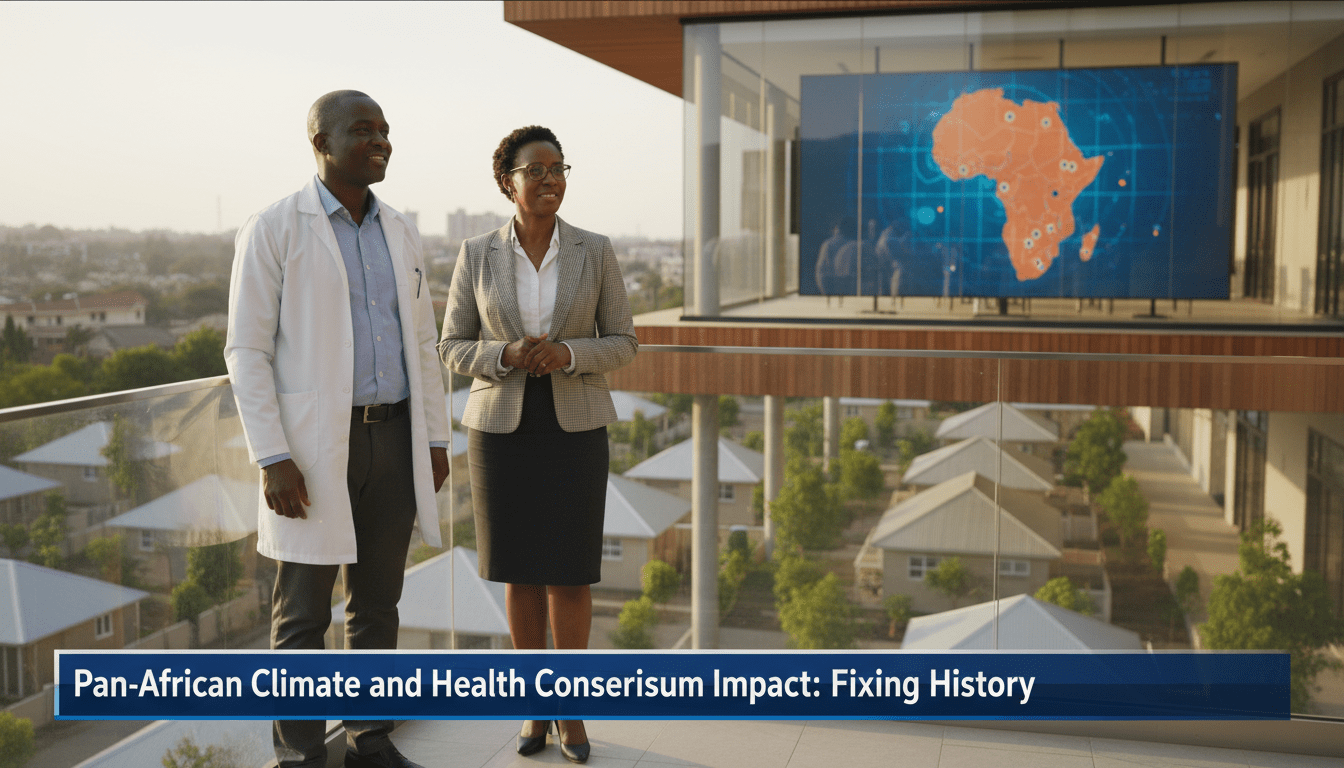
On March 5, 2026, a massive project began to change the future of health in Africa. Two major universities lead a £60 million effort to fight the climate crisis. The University of the Witwatersrand in South Africa and the Kwame Nkrumah University of Science and Technology in Ghana are the anchors. This new group wants to stop a growing public health disaster. Climate change hurts marginalized Black communities in Africa more than anyone else. This project looks deep into the history of this pain. It is a story of survival and a search for justice (theguardian.com).
The crisis is not a sudden accident of nature. It comes from hundreds of years of unfair treatment and power struggles. For a long time, outsiders took what they wanted from the land. They did not care about the people living there. This history created a gap that still exists today. Therefore, the new consortium is about more than just science. It is about fixing the mistakes of the past while building a safer future. This work is a crucial step in embracing African-centric education to solve local problems (ecofinagency.com).
The Roots of Environmental Injustice
The health problems Africa faces today started with a system called extractivism. During the colonial era, powerful nations viewed Africa as a source of raw materials. They took oil, gold, and timber to make the Global North rich. This process left local people with toxic air and ruined land. These areas became “sacrificial zones.” In these zones, the health of Black residents was traded for corporate profit. These practices created a relationship of domination that lasts to this day (britannica.com).
The damage did not stop when colonial rule ended. In South Africa, the apartheid regime made things worse through the Group Areas Act of 1950. This law forced Black, Coloured, and Indian families into specific neighborhoods. These areas were often located near dangerous mines and industrial sites. The government chose to put pollution in Black neighborhoods on purpose. This is the definition of environmental racism. It ensured that the majority population lived in the most dangerous environments (sahistory.org.za).
These historical choices mean that Black communities now have fewer tools to fight climate change. They often lack clean water and green spaces. Many of these neighborhoods are “urban heat islands.” They trap more heat than wealthier areas. This is a direct result of decades of neglect. This systemic harm is a key part of the history of colonialism that the consortium must address (preachinclusion.com).
Rising Heat-Related Mortality Surge
Increase in heat-related deaths since the 1990s
Source: Lancet Countdown Report 2025
A New Era of African Leadership
The consortium represents a major change in how research happens in Africa. For a long time, Western scientists led most studies. They would collect data and leave without helping the local community. This is known as “helicopter research.” The new £60 million fund ensures that African experts are in charge. African universities will own the data and lead the search for solutions. This model is called “science equity” (theyouthcafe.com).
This shift is supported by the Africa CDC Climate Change and Health Strategic Framework. This plan covers the years 2025 to 2029. It has a budget of over $482 million. The goal is to move from simply reacting to disasters to planning for them. It focuses on building health systems that can handle heat and disease. By putting African leaders first, the continent can find solutions that actually work for its people (africacdc.org).
The consortium uses ideas like Ubuntu to guide its work. Ubuntu means that everyone is connected. It emphasizes collective effort and shared success. This approach is different from the competitive models used in the Global North. Under the current global climate, this African-led leadership is more important than ever. Even with changes in leadership in the United States under President Donald Trump, Africa is taking its own path (africaclimateinsights.org).
The Deadly Cost of Rising Heat
Heat is a silent killer that is getting worse every year. Since the 1990s, heat-related deaths have gone up by 23 percent. Africa is warming faster than the rest of the world. The interior of the Sahara is a specific hotspot. It warms three times faster than the global average. This happens because the dry desert cannot cool itself through evaporation. Furthermore, global weather patterns are shifting, making the dry areas even hotter (geographical.co.uk).
This heat causes massive health problems for those who have no way to cool down. Air pollution from fires and fossil fuels kills 2.5 million people every year. Many of these deaths happen in places with weak health systems. People living in informal settlements suffer the most. They often live in homes made of metal or scrap that trap heat. Without air conditioning or green spaces, the temperature inside can become deadly (theguardian.com).
The history of segregation makes this heat more dangerous for Black families. The resilience of Black families is constantly tested by these conditions. Historical laws put these families in the hottest parts of the city. Therefore, heat is not just a weather problem. It is a social justice problem. The consortium will study these “urban heat islands” to find ways to cool them down (agu.org).
Protecting the Most Vulnerable
The Southern Africa Hub is led by Wits University. It focuses on the most vulnerable people, especially pregnant women and newborns. Professor Matthew Chersich has done important research on this topic. He found that extreme heat increases the risk of early birth. It also leads to more health complications for mothers. This is a critical issue because it affects the next generation (washingtonpost.com).
The researchers are testing new ways to help. One method is called “anticipatory cash transfers.” This means giving money to families before a disaster happens. If a heatwave is predicted, families get funds to prepare. They can buy food or find cooler places to stay. This is better than waiting until after a disaster to help. Studies show that this method helps people survive without losing everything they own (dt-global.com).
They are also looking at “complex-cooling interventions.” This involves using nature and smart building designs. For example, they use special white paint on roofs to reflect the sun. They also plant trees and create “cool corridors” in cities. These solutions do not use a lot of electricity. Therefore, they are affordable for people living in poverty. These projects show that science can serve the people who need it most (physicsworld.com).
Food Security and Western Africa
The Western Africa Hub is led by KNUST in Ghana. This region faces different challenges like dust storms and long droughts. Professor Philip Antwi-Agyei leads the research here. He focuses on how climate change disrupts food supplies. When crops fail, people go hungry. Malnutrition is a serious threat that kills 1.7 million people in Africa every year. Drought makes this problem much worse (environewsnigeria.com).
The consortium promotes “Climate-Smart Agriculture.” This is a way of farming that handles weather changes. It uses seeds that can grow with very little water. It also helps farmers save water and protect their soil. This approach aims for “triple wins.” It helps farmers grow more food, stay strong against climate change, and reduce pollution. This is vital for a region where most people rely on farming (theyouthcafe.com).
This work is a response to a history of Africa’s rising debt crisis. Many nations cannot afford to build better farms because they owe money to foreign banks. This debt makes it hard to invest in the future. Therefore, the £60 million grant is important because it provides funding that does not need to be paid back. It allows local experts to focus on feeding their communities (ecofinagency.com).
The Funding Gap and Economic Reality
Climate change is an economic disaster as well as a health one. Experts predict that the world will lose $12.5 trillion by 2050 because of climate change. African nations are at a huge disadvantage. They face a financing gap of $7 to $15 billion every year. This is the money they need to build resilient health systems. Currently, they do not have enough funds to protect their citizens (theguardian.com).
This economic burden is unfair. Africa contributes only 2 to 3 percent of global carbon emissions. However, the continent pays the highest price. This is a form of global environmental injustice. The consortium is one way to start closing this gap. It provides the resources needed to train local scientists and build better data systems. Without this support, many African nations would struggle to keep up with the crisis (africacdc.org).
The initiative also helps prevent the “scarring effects” of disaster. When a family loses everything to a flood or drought, it takes years to recover. They might have to pull children out of school or skip meals. These choices harm people for the rest of their lives. By providing early aid and better health care, the consortium helps families stay stable. This is a long-term investment in the prosperity of the continent (dt-global.com).
Projected Economic Losses (2050)
$12.5 Trillion
Total Global Economic Impact
Looking Toward a Just Future
The consortium is planning to expand soon. A third hub will open in Eastern Africa with £20 million in funding. This hub will focus on rising sea levels and diseases spread by insects. For example, malaria and dengue have become more dangerous. The potential for these diseases to spread has increased by 49 percent since the 1950s. This is because warmer weather allows mosquitoes to live in more places (physicsworld.com).
The work of Wits and KNUST shows that Africa is ready to lead. They are moving away from being victims of history to being masters of their own destiny. This project is a model for how the world should handle climate justice. It puts resources in the hands of the people who are most affected. It also respects the knowledge and expertise of African scientists (africaclimateinsights.org).
The “human element” is the most important part of this data. Behind every statistic is a person struggling to breathe or a mother worried about her child. True environmental wellbeing will only exist when there is human wellbeing. This consortium is a major step toward that goal. It proves that by addressing the history of injustice, we can create a healthier and more equitable world for everyone (preachinclusion.com).
About the Author
Darius Spearman is a professor of Black Studies at San Diego City College, where he has been teaching for over 20 years. He is the founder of African Elements, a media platform dedicated to providing educational resources on the history and culture of the African diaspora. Through his work, Spearman aims to empower and educate by bringing historical context to contemporary issues affecting the Black community.
