

Will Caribbean-American Medical Solidarity with Cuba Survive U.S. Pressure?
By Darius Spearman (africanelements)
Support African Elements at patreon.com/africanelements and hear recent news in a single playlist. Additionally, you can gain early access to ad-free video content.
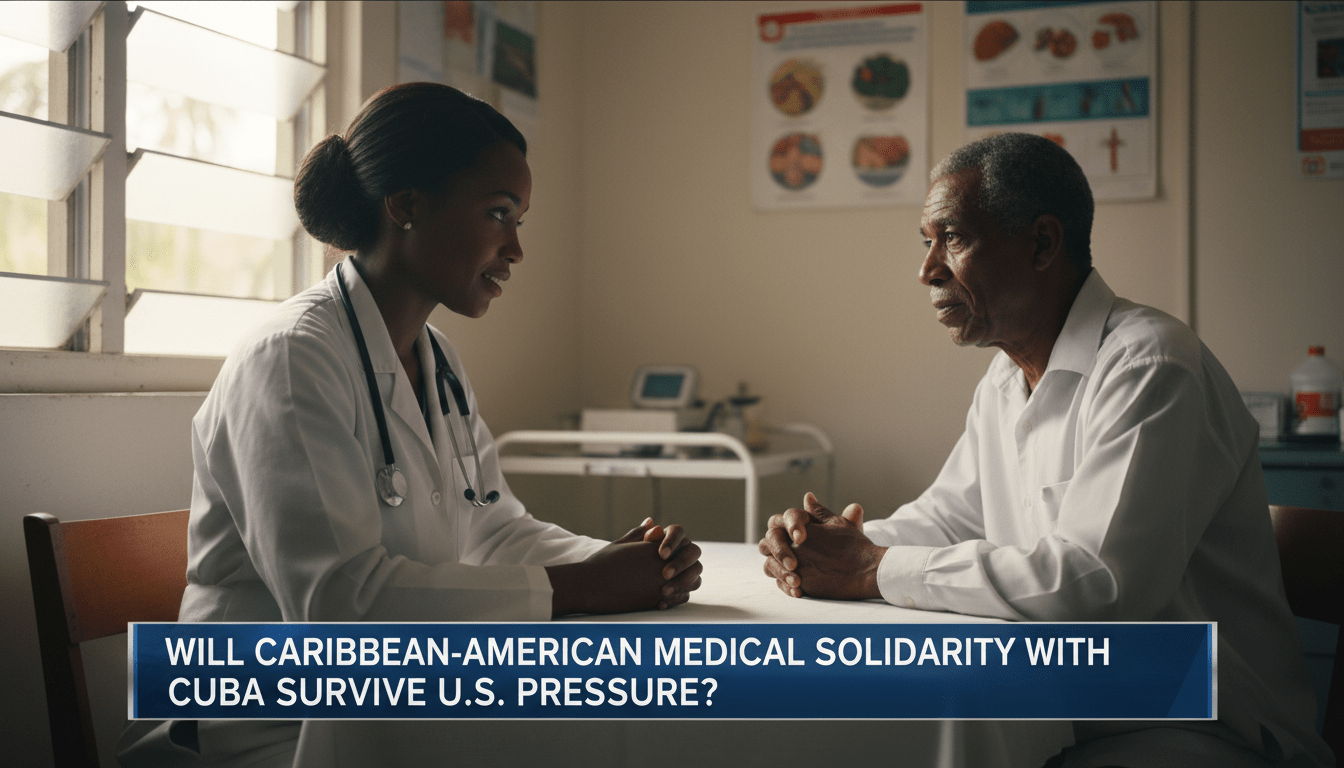
A massive shift in healthcare is happening across the Caribbean right now. Within the last 24 hours, activists and leaders have raised an alarm about a growing medical void. Famous actress and activist Sheryl Lee Ralph recently asked a difficult question. She wondered if the United States would step up to help Jamaica. This comes after Jamaica ended its long medical partnership with Cuba. The island of Cuba is currently struggling with extreme fuel and food shortages. These problems make it hard for Cuba to keep its doctors abroad. Many people in the African Diaspora are watching this situation closely. They see a long history of shared struggles against oppression between these nations.
The situation became very tense on March 11, 2026. Jamaica decided to stop its 50-year medical agreement with its neighbor. Because of this, Cuba began to pull out over 270 medical workers from the country. This withdrawal leaves many rural clinics without any doctors. The United Nations has now called this a humanitarian crisis. A fuel blockade has stopped many hospitals from working properly in Cuba. This energy crisis affects thousands of cancer patients who cannot get treatment. People are now questioning if American help will replace the lost Cuban care (nycaribnews.com, jamaicaobserver.com).
Cuban Medical Presence (2026 Projections)
Global Personnel: 50,000
Jamaica Withdrawal: 277 Professionals
Untreated Cancer Patients (Cuba): 16,000
The Roots of the White Coat Army
The story of Cuban medical aid did not start yesterday. It began in the early 1960s. After a massive earthquake in Chile in 1960, Cuba sent emergency help. A few years later, they sent doctors to Algeria in 1963. Algeria had just gained independence and needed a health system. This started what people call “medical internationalism.” Cuba believes in sharing what they have with others. They do not just give away what is left over. This philosophy has made Cuba a medical superpower for the developing world (wikipedia.org, wikipedia.org).
In 1972, four Caribbean nations took a bold step. Barbados, Guyana, Jamaica, and Trinidad and Tobago broke their isolation of Cuba. They established formal ties despite pressure from other countries. This created a bridge for medical cooperation. For decades, Cuban doctors filled gaps in rural clinics. These were places where local doctors often did not want to work. This alliance became a core part of regional identity. It was a way for small nations to support each other without relying on the West (nycaribnews.com, wikipedia.org).
This cooperation grew even stronger in 1999. After a terrible hurricane, Cuba opened the Latin American School of Medicine, or ELAM. This school provides free training to thousands of students. Many of these students come from poor backgrounds in the Caribbean and Africa. They even take students from the United States. In exchange, these doctors promise to serve their home communities. This program has trained over 29,000 doctors from 105 countries. It is a major part of the history of historical exploitation that these nations try to overcome through education (scienceopen.com, harvard.edu).
The Impact of Operation Miracle
Another major program was Operation Miracle. It started in 2004 to help people with vision problems. Millions of people across the Caribbean received free eye surgeries. Many of these patients would have stayed blind without this help. The program was a joint effort between Cuba and Venezuela. It showed how nations in the Global South could solve their own problems. This kind of work built deep trust between Cuba and its neighbors. It was a form of soft power that won the hearts of many people (nycaribnews.com, wikipedia.org).
The program did more than just perform surgeries. it also built clinics and trained local staff. This helped countries improve their own health systems. For many Caribbean families, a Cuban doctor was the first medical professional they ever saw. These doctors lived in the same villages as their patients. They learned the local culture and language. This made the care feel more personal and respectful. This relationship is a key part of the current solidarity calls from activists (nycaribnews.com, scienceopen.com).
The current crisis threatens to erase these gains. The United States government has increased its pressure on Cuba. President Donald Trump has kept strict sanctions in place. These sanctions target the ships that bring oil to Cuba. Without fuel, Cuba cannot run its power grid. This makes it impossible for hospitals to function correctly. The energy crisis is a direct result of these “maximum pressure” tactics. It forces Cuba to make hard choices about its medical teams abroad (news.cn, mondediplo.com).
The Collapse of Water & Power
80%
Water Infrastructure Failing
100%
Power Grid Instability
Geopolitics and the “Forced Labor” Debate
The U.S. State Department sees these medical missions differently. They label the program as a form of human trafficking. They claim the Cuban government takes too much of the doctors’ salaries. Usually, Cuba keeps between 75 and 90 percent of the money paid by host countries. The Cuban government says this money pays for its free healthcare at home. Secretary of State Marco Rubio has pushed for sanctions against countries that use these doctors. This puts Caribbean leaders in a very difficult position (nycaribnews.com, counterpunch.org).
Many doctors who participate tell a different story. They often see it as a patriotic duty. They believe their work helps pay for the education they received for free. However, there are also reports of strict rules. Some doctors have had their passports taken away. They are also warned not to leave the mission. If they do, they might not be allowed to return to Cuba for years. This debate over labor rights is at the center of the current tension between the U.S. and the Caribbean (counterpunch.org, foreignanalysis.com).
Caribbean leaders have defended the program for years. Prime Minister Mia Mottley of Barbados has spoken out about sovereignty. She argues that nations should be free to choose their own partners. She believes that the U.S. sanctions interfere with the right to provide healthcare. These leaders see the Cuban doctors as a lifeline for their people. They argue that the “forced labor” label is a political tool. It ignores the actual benefits the doctors bring to poor communities (nycaribnews.com, newsday.co.tt).
Replacing the Cuban Medical Model
As Cuban doctors leave, Jamaica is looking for other options. They have started to talk to countries like Ghana and the Philippines. These nations have many trained nurses and doctors who need work. Ghana has over 80,000 health workers looking for jobs. They are ready to send teams to the Caribbean. This is a new way to fill the gap without angering the United States. It allows countries to follow international labor standards while still getting help (jamaicaobserver.com, ghanaweb.com).
However, there are concerns about this shift. Cuban doctors were deeply integrated into local communities. They often spoke the local language and understood the culture. New doctors from other countries may face a learning curve. There is also the issue of cost. Hiring individual doctors on contracts can be more expensive than the Cuban government agreements. Critics worry that the poorest citizens will lose access to care during this transition. This change might increase the gap in medical services for Black rural populations (jamaicaobserver.com, newsday.co.tt).
The history of educational resources shows that training local staff is the best long-term solution. But many Caribbean doctors move to the U.S. or UK for better pay. This “brain drain” makes it hard to keep a local workforce. Without the Cuban missions, the healthcare system faces a major challenge. The U.S. model focuses on profit and insurance. Many people wonder if that model can ever serve the poor as well as the Cuban system did (nycaribnews.com, voa.gov).
ELAM Global Impact
Countries Served
Doctors Trained
U.S. Students
The Role of Black Activism in America
In the United States, Black activists have long supported Cuba. Groups like the Interreligious Foundation for Community Organization, or IFCO, are very active. They help U.S. students apply for the ELAM scholarship. They believe that Cuba’s medical model is a form of social justice. They see it as a way to provide care to underserved Black and Brown communities. These activists work closely with the Congressional Black Caucus to protect these ties. They argue that healthcare is a human right that should be above politics (ifconews.org, ifconews.org).
The Congressional Black Caucus has visited Cuba many times. They have seen the focus on preventative care firsthand. They were the ones who negotiated the original scholarships for American students. These leaders often point out that the U.S. embargo hurts regular people. It stops life-saving medicines from reaching the island. They believe that ending the embargo would help both Cuba and the wider Caribbean. This advocacy is part of a larger effort to ensure historical exploitation does not continue in the medical field (ifconews.org, themountaintopuu.org).
Sheryl Lee Ralph’s recent comments have renewed this conversation. She used her platform to highlight the vulnerability of the Caribbean. Her voice represents the many people in the Diaspora who care about the island nations. They want to see a future where medical aid is based on need rather than ideology. As the U.S. continues its pressure, the solidarity between these communities remains strong. They are waiting to see if the U.S. government will offer a real alternative to the Cuban doctors (nycaribnews.com, youtube.com).
Conclusion: A Uncertain Future for Regional Health
The Caribbean is at a crossroads. The loss of Cuban medical teams is a major blow to public health. For fifty years, these doctors provided essential services to the most vulnerable. Now, political pressure and energy shortages have broken that bond. Jamaica’s search for new partners in Ghana and the Philippines shows a move toward new alliances. Yet, the cultural and historical ties to Cuba are hard to replace. The “White Coat Army” was more than just a medical program; it was a symbol of unity (nycaribnews.com, jamaicaobserver.com).
The U.S. government now has a chance to show its commitment to the region. If they want to replace Cuban influence, they must provide a better model. This would mean sending doctors to the same rural areas that Cuba served. It would also mean supporting the training of local professionals. Until then, activists will continue to call for medical solidarity. The health of millions of people depends on how these nations navigate this crisis. The history of the Caribbean shows that solidarity is the only way to survive such difficult times (newsday.co.tt, youtube.com).
About the Author
Darius Spearman is a professor of Black Studies at San Diego City College, where he has been teaching for over 20 years. He is the founder of African Elements, a media platform dedicated to providing educational resources on the history and culture of the African diaspora. Through his work, Spearman aims to empower and educate by bringing historical context to contemporary issues affecting the Black community.
