

Why Is Black Unemployment Rising Despite a Stable National Economy?
By Darius Spearman (africanelements)
Support African Elements at patreon.com/africanelements and hear recent news in a single playlist. Additionally, you can gain early access to ad-free video content.
The Sudden Crisis of 2026
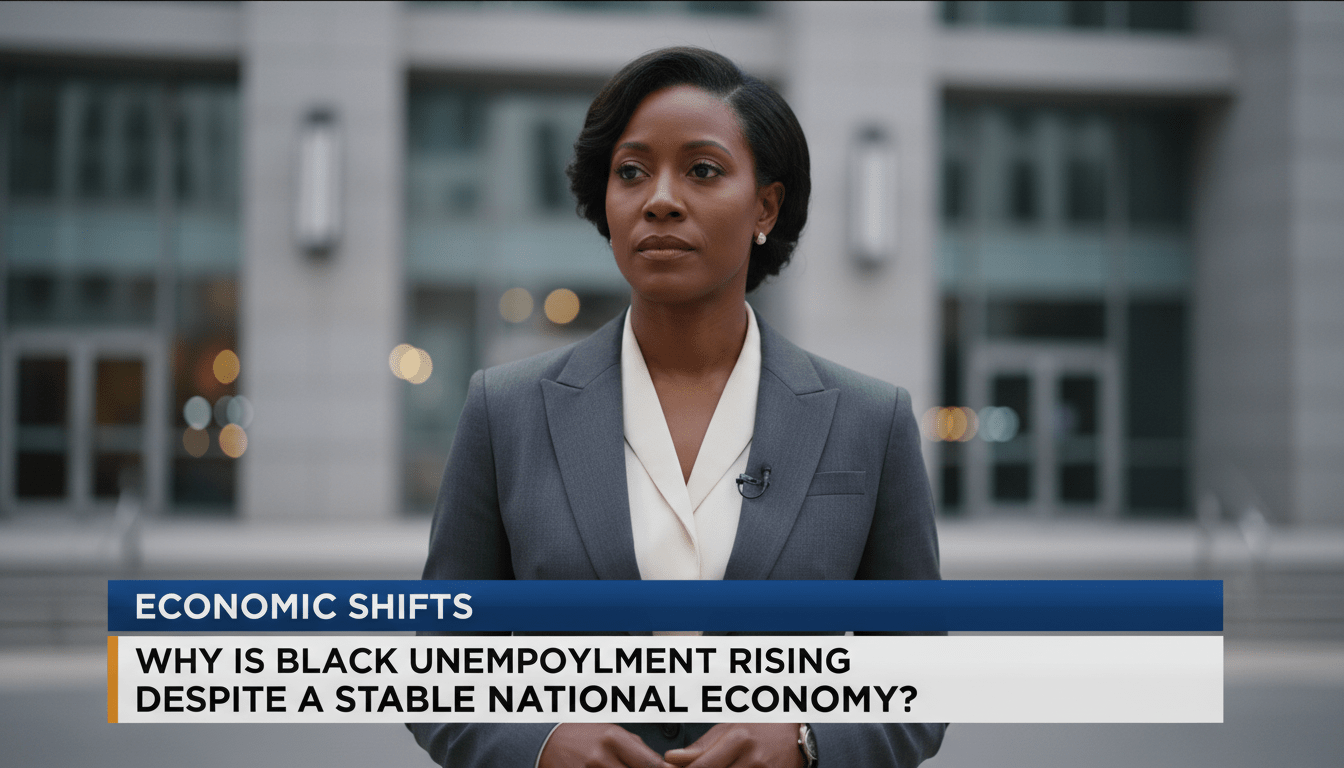
The economic landscape for Black Americans changed rapidly as the year 2025 came to a close. A recent report from the Joint Center for Political and Economic Studies titled “State of the Dream 2026” delivers a sobering message. While the broader United States economy appears to be on stable ground, the Black unemployment rate has climbed to 7.5 percent (ncrc.org). This shift marks a significant departure from previous years where job growth seemed more inclusive across racial lines. The report identifies this trend as a “Black Recession” occurring within a larger period of national growth (ncrc.org).
The primary driver behind this sudden spike is the elimination of 271,000 federal jobs over the past year. Because Black workers are disproportionately represented in the federal workforce, these cuts hit the community with unusual force. The federal government has long served as a source of stability for African American families. When those roles vanish, the impact ripples through neighborhoods and local economies. This current crisis is not a random event. It is a reversal of a century-long effort to secure economic fairness through public service (time.com).
Unemployment Rates: Late 2025
The History of the Federal Shield
To understand why federal job losses hurt so much today, one must look at the history of Black labor. For over a hundred years, the public sector acted as a “racial safe haven.” In the private sector, discrimination was often the rule rather than the exception. Corporate managers could hire and fire based on personal bias without much fear of consequence. However, the federal government eventually adopted merit-based systems that made it easier for Black workers to find a seat at the table (americanbar.org). These roles provided better pay equity and stronger protections through unions than what was available in the private marketplace (nber.org).
The Joint Center, often called “America’s Black Think Tank,” notes that the federal government became the largest single employer of Black Americans by 1960. The United States Postal Service was especially important. It allowed many families to move from poverty into the middle class (usps.com). This history of labor struggles for fairness shows that government jobs were more than just paychecks. They were symbols of citizenship and economic participation. For decades, the civil service was the primary path for Black professionals to escape the “Private Sector Barrier” where bias frequently capped their earnings and advancement (ebsco.com).
The Wilsonian Regression
The journey toward federal employment was not always a steady climb. Before 1913, the federal government was actually a rare site of racial integration. Black Americans held professional and even supervisory roles over white employees during this era. Many worked as diplomats, auditors, and customs officials (archives.gov). This progress was largely possible because of the Pendleton Civil Service Act of 1883. That law required jobs to be awarded based on merit through competitive exams rather than political favors. By 1912, Black workers made up at least 10 percent of the federal workforce (ebsco.com).
However, the inauguration of President Woodrow Wilson brought a period known as the “Wilsonian Regression.” Wilson mandated the formal re-segregation of the federal workforce. Offices that were once integrated were partitioned by screens or moved to separate buildings. This policy led to the immediate demotion or dismissal of many Black civil servants. It increased the earnings gap between Black and white federal workers by roughly 20 percent (archives.gov). This dark chapter stunted early progress and proved that even government protections could be stripped away by shifts in political leadership (wikipedia.org).
Fighting for the Right to Work
Real change returned during the buildup to World War II. Labor leader A. Philip Randolph recognized that the booming defense industry was excluding Black workers. He threatened to lead a massive “March on Washington” to protest this exclusion. To prevent the march, President Franklin D. Roosevelt signed Executive Order 8802 in 1941. This was the first presidential directive on race since the Reconstruction era. It created the Fair Employment Practice Committee, or FEPC (wikipedia.org). The function of the FEPC was to investigate complaints of job discrimination in the defense industry and government agencies (nps.gov).
The FEPC was instrumental in opening skilled industrial positions to Black men and women. By the end of the war, the number of Black government employees had tripled. This era established the precedent that the federal government should be a model for fair employment (wikipedia.org). The order required all government contracts to include non-discrimination clauses. This laid the early groundwork for what would eventually become modern affirmative action and federalism and central authority. It proved that organized political pressure could force the government to act as a protector of economic rights.
Impacted Black Women
A disproportionate burden on the breadwinners.
Civil Rights and Title VII
The push for equality reached its legal peak during the 1960s. President John F. Kennedy issued Executive Order 10925 in 1961, which used the term “affirmative action” for the first time. Later, Lyndon B. Johnson signed the landmark Civil Rights Act of 1964. Title VII of this act is the specific provision that makes it illegal for employers to discriminate based on race, color, religion, sex, or national origin (britannica.com). This law covers almost every aspect of employment, including hiring, firing, and training opportunities. It also created the Equal Employment Opportunity Commission (EEOC) to enforce these new standards (britannica.com).
Title VII also forbids policies that seem neutral but unfairly harm protected groups. This is known as “disparate impact.” These protections transformed the public sector into a place where the resilience of Black families could be supported by stable wages. By 1963, Black workers held about 13 percent of federal jobs, a figure that eventually rose to 18.7 percent in the modern era (bls.gov). These jobs provided a buffer against the volatility of the private market, where Black workers often face “last hired, first fired” patterns during economic downturns (mn.gov).
The Impact of the DOGE Mandate
The current rise in unemployment is directly linked to the 2025 inauguration of President Donald Trump. His administration established the Department of Government Efficiency, known as DOGE. While it functions as an advisory body, its “DOGE Teams” have coordinated mass layoffs across various federal agencies (dsimian.com). The mandate of this organization is to modernize technology and cut “wasteful” spending. However, the data reveals that these efficiency measures have targeted specific agencies where Black workers are highly concentrated (bls.gov).
Of the 271,000 federal jobs eliminated, a staggering 74 percent were held by Black women. This translates to roughly 200,000 women losing their livelihoods in less than a year. Many of these jobs were in the Department of Education and Health and Human Services (HHS). Black women are often concentrated in these agencies because care-oriented roles like teaching and social work were historically more accessible to them (bls.gov). Because Black women are the primary breadwinners in over half of Black households with children, these cuts threaten the economic foundation of the entire community.
The One Big Beautiful Bill
Economic policy changes beyond job cuts are also creating pressure. The “One Big Beautiful Bill Act of 2025” made permanent tax cuts for the wealthy while reducing funds for poverty-alleviating programs (mecep.org). This legislation changed the requirements for the Supplemental Nutrition Assistance Program (SNAP), also known as food stamps. It expanded work requirements for adults up to age 64. It also reduced federal support for state administration of these benefits from 50 percent down to 25 percent. These changes often slow down the delivery of aid to those who need it most (whitehouse.gov).
Furthermore, the dismantling of the Consumer Financial Protection Bureau (CFPB) has removed a key watchdog. The CFPB was designed to protect borrowers from “Predatory Lending.” This involves deceptive loan terms that trap families in debt. Predatory lenders often target Black neighborhoods through “reverse redlining,” flooding them with high-interest payday loans and subprime mortgages (ftc.gov). Without federal oversight, Black families are once again more vulnerable to financial products that drain liquid savings and extract equity from their homes.
Key Drivers of the 2026 Regression
The Double the Rate Rule
Economists often point to the “Double the Rate” rule to explain structural inequality. Historically, Black unemployment stays roughly twice as high as white unemployment, regardless of how well the economy is performing (nber.org). When the national unemployment rate is a low 4 percent, it often masks a “recession-level” 8 percent rate for Black Americans. This persistent gap is driven by systemic factors such as hiring bias and a lack of generational wealth. Families without savings cannot weather long periods of joblessness as easily as those with inherited assets (mn.gov).
Because of this rule, a jump to 7.5 percent is an emergency signal. It suggests that the progress made over the last decade is rapidly dissolving. The Joint Center argues that the economy is only truly healthy when the ratio between Black and white unemployment reaches parity. Achieving that goal would currently require the creation of over 1.5 million new jobs for Black workers. Instead, the country is moving in the opposite direction. The removal of safeguards like Diversity, Equity, and Inclusion (DEI) programs further complicates the path to recovery for those entering the private sector (theeduledger.com).
The Scarring of the Youth
Perhaps the most alarming statistic in the Joint Center report is the spike in youth unemployment. For Black Americans between the ages of 16 and 24, the unemployment rate reached 29.8 percent in late 2025 (bls.gov). The Bureau of Labor Statistics measures this by looking at individuals who are out of school and actively seeking work. High unemployment during these formative years causes “economic scarring.” This means that young people who struggle to find work early in life often have lower lifetime earnings and delayed wealth accumulation (bls.gov).
When young workers cannot find entry-level positions, they miss out on critical experience. This makes them less competitive for better jobs in the future. The spike in youth joblessness is a warning sign that the current economic shift could have long-term consequences. It is not just about the jobs lost today. It is about the careers that may never begin. This generational loss of opportunity threatens to widen the racial wealth gap for decades to come. Without the federal government acting as a stable employer, the path to the middle class for the next generation looks increasingly uncertain.
Restoring the Economic Shield
The “State of the Dream 2026” report serves as a wake-up call for policymakers. It highlights how the systematic removal of federal protections can quickly unravel decades of economic progress. The public sector was more than just a source of employment. it was a tool for social mobility. When DEI programs are rolled back and federal agencies are downsized, the “racial safe haven” disappears. Black workers are then forced into a private sector that still harbors significant wage gaps and hiring biases (dsimian.com).
Addressing this crisis requires more than just waiting for the market to correct itself. It requires a commitment to the principles established by the FEPC and the Civil Rights Act. The federal government must remain a leader in fair employment practices if the Black middle class is to survive these turbulent times. As the 2026 report concludes, 7.5 percent unemployment is not an isolated number. It is a symptom of a broader regression. Restoring the economic shield of the federal government is essential to ensuring that the dream of financial stability does not become a memory for millions of African American families.
About the Author
Darius Spearman is a professor of Black Studies at San Diego City College, where he has been teaching for over 20 years. He is the founder of African Elements, a media platform dedicated to providing educational resources on the history and culture of the African diaspora. Through his work, Spearman aims to empower and educate by bringing historical context to contemporary issues affecting the Black community.
