


Why Is the 2026 Mail-In Voting Lawsuit Defending Black Rights?
By Darius Spearman (africanelements)
Support African Elements at patreon.com/africanelements and hear recent news in a single playlist. Additionally, you can gain early access to ad-free video content.
On April 3, 2026, Delaware Attorney General Kathy Jennings led a group of twenty-four states and the District of Columbia. They filed a federal lawsuit. This case challenges President Trump’s Executive Order No. 14399. The order is titled “Ensuring Citizenship Verification and Integrity in Federal Elections.” It was signed on March 31, 2026. The coalition says this order hurts millions of voters. Specifically, it threatens Black citizens. It happens right before the 2026 primary elections (accidentlawyerhenderson.com, democracydocket.com).
The Executive Order attempts to change how elections work. It moves power from states to the federal government. It tells the U.S. Postal Service to only deliver ballots to “federally pre-authorized” voters. Additionally, it requires states to ask for proof of citizenship from everyone who registers. Attorneys General argue this is an unconstitutional overreach. They say it violates the Elections Clause and the 10th Amendment. These parts of the Constitution give states the power to manage elections (accidentlawyerhenderson.com, brennancenter.org).
The Long Tradition of Mail-In Voting
Mail-in voting is not a new idea. It has been a part of American democracy for over one hundred and sixty years. The first large use of this system happened in 1864. During the Civil War, President Abraham Lincoln let Union soldiers vote from the battlefield. This ensured that men fighting for the country still had a voice. This post-Civil War era helped establish that access is vital for freedom (time.com, mit.edu).
Over time, the system grew. In 1901, Kansas allowed railroad workers to vote by mail. Later, states let any civilian with an illness or travel plans use an absentee ballot. California became the first state to allow “no-excuse” mail voting in 1978. By the year 2020, forty-five states and D.C. used this method. Oregon even started “all-mail” elections in 1998. These states often see the highest number of people voting (time.com, mit.edu).
Mail-In Voting Growth (Percent of Voters)
Historical usage of mail ballots in major elections (mit.edu, mit.edu).
The Barrier of Citizenship Documents
The new order requires Documentary Proof of Citizenship, or DPOC. This is a very high barrier for many people. About twelve percent of registered voters do not have these papers ready. This equals roughly twenty-eight million citizens. They may lack a passport or an original birth certificate. This problem hits low-income people the hardest. It also creates a massive obstacle for Black voters (tufts.edu, racism.org).
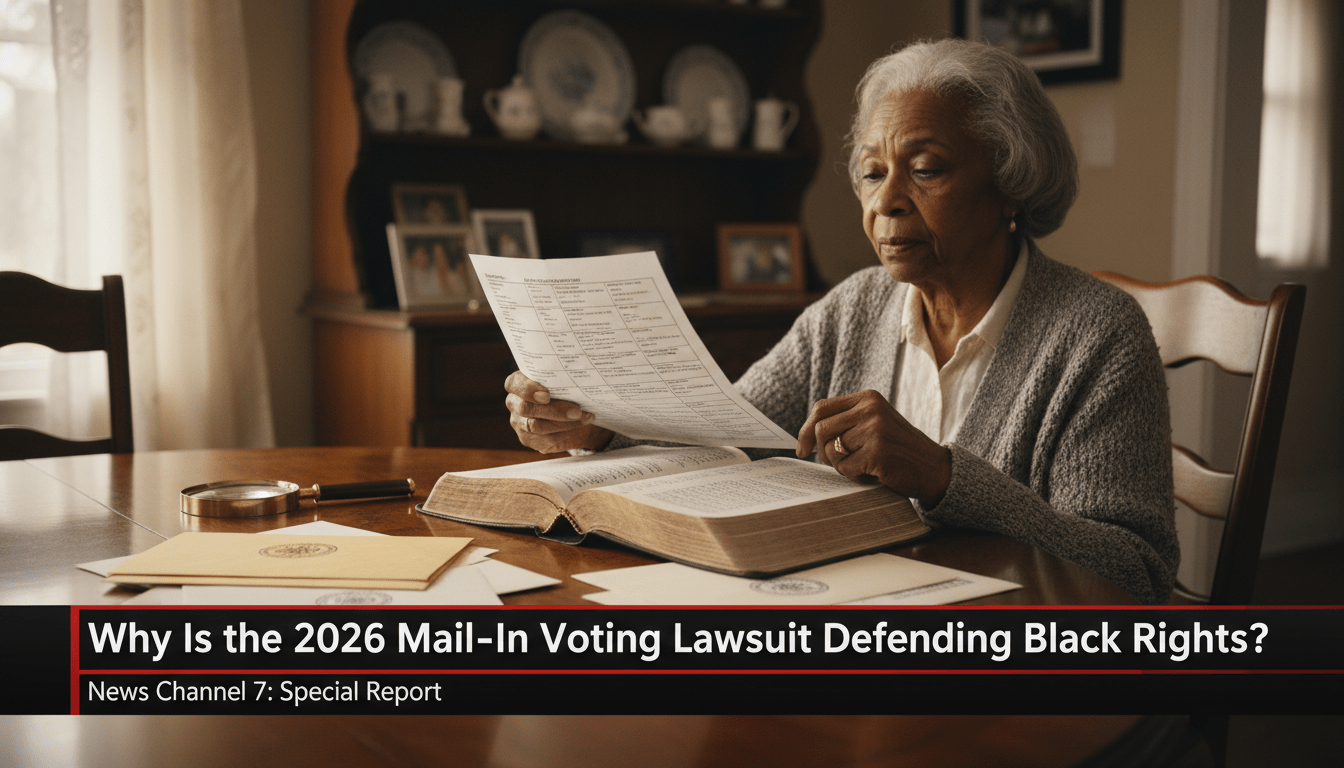
Historical barriers are the reason for this documentation gap. Many older Black Americans were born in the Jim Crow South. During that time, segregated hospitals refused to admit Black mothers. These women gave birth at home with the help of midwives. Local governments often failed to record these births. Instead, families wrote the dates in Bibles. Now, these elders cannot find the “high-barrier” documents required to register. This struggle for representation continues today (ebsco.com, racism.org).
Getting these documents later in life is very hard. A certified birth certificate can cost thirty dollars. A passport costs over one hundred and thirty dollars. These fees act like a modern poll tax. For someone living in poverty, this is a large amount of money. Many citizens must choose between food and the right to vote. Furthermore, government offices are often far away. Over one million Black voters live more than ten miles from an ID office (accidentlawyerhenderson.com, aclu.org).
The Legacy of Voter Disenfranchisement
The current lawsuit points to a century of exclusion. After the 15th Amendment passed in 1870, many states resisted. Southern states used Jim Crow laws to stop Black men from voting. They used poll taxes and literacy tests. They claimed these laws were for “voter integrity.” In reality, they were tools for suppression. This history explains why current laws are viewed with caution (naacp.org, racism.org).
The Voting Rights Act of 1965 changed the landscape. It is often called the “crown jewel” of civil rights. It stopped discriminatory practices across the nation. It also required certain states to get “preclearance” from the government. This meant they could not change voting laws without federal approval. This system protected voters for almost fifty years. It helped many people gain a voice in federalism and voting (carnegie.org, naacp.org).
In 2013, the Supreme Court changed the rules. The case was Shelby County v. Holder. The court struck down the preclearance formula. Immediately, states began passing restrictive laws. They closed polling places in minority neighborhoods. They added strict ID requirements. The burden of proof shifted back to the voters. Now, citizens must file expensive lawsuits after a law is already in place. This decision opened the door for orders like the one from President Trump (naacp.org, brennancenter.org).
Data from the Kansas DPOC experiment (tufts.edu).
The Danger of Shadow Voter Rolls
The federal lawsuit highlights a new threat called “shadow voter rolls.” The Executive Order creates a secondary list of voters. This list is managed by federal agencies. It exists alongside the official state registries. Critics worry this will cause chaos at the polls. If a voter is on the federal list but not the state list, confusion follows (bipartisanpolicy.org, utah.edu).
Federal agencies like the USPS are now acting as gatekeepers. They are using “federal pre-authorization” to decide who gets a ballot. This bypasses the systems that states have used since the founding. Opponents say this is a federal takeover of elections. They believe it creates two different sets of rules for voters. This parallel system makes certifying election results much harder for state officials (responsivegov.org, democracydocket.com).
If a voter is not on the list, they must use a provisional ballot. Federal law requires this under the Help America Vote Act. However, these ballots have a high rejection rate. Almost half are discarded in some areas. If a voter cannot prove their status within a few days, their vote is lost. This is the physical consequence of conflicting registration lists. It leaves many citizens without a voice (bipartisanpolicy.org, uscourts.gov).
Black Youth and the Knowledge Gap
Young Black voters face a specific challenge known as the “knowledge gap.” Research shows they use mail-in voting at much lower rates. In 2016, only eight percent of Black youth voted by mail. In contrast, twenty percent of white youth used mail ballots. This gap is not about interest. It is about access and information (tufts.edu).
Many young Black people live in states with strict rules. About forty percent live in places that require a “qualifying excuse” to vote by mail. They are twice as likely to report they did not have enough information. Additionally, residential instability makes receiving mail ballots difficult. Frequent moving is common among young adults. This makes a physical mail-in system less reliable for them (tufts.edu, aclu.org).
History also plays a role in this gap. There is a deep distrust of government institutions in marginalized communities. Many people prefer in-person voting because it feels more secure. They want to see their ballot go into the machine. The new federal order adds more complexity to a process that is already confusing. This could further distance young voters from the democratic process. Leaders must address these structural barriers to ensure everyone is included (tufts.edu, racism.org).
The Purcell Principle and Legal Timing
The timing of this lawsuit is critical because of the “Purcell Principle.” This is a legal doctrine from the Supreme Court. It says federal courts should not change election rules close to an election. The goal is to prevent confusion for voters and workers. However, this principle often hurts civil rights cases. It can stop a court from blocking a bad law (uscourts.gov, utah.edu).
If a lawsuit moves too slowly, the court might leave a discriminatory law in place. This happened in Arizona in 2006. Even if a law is unconstitutional, the court may prioritize “administrative stability.” This creates a “blackout period” before elections. Civil rights groups must act fast to get help. The coalition led by AG Jennings is fighting to win before this principle takes effect for the 2026 primaries (bipartisanpolicy.org, uscourts.gov).
This legal hurdle shows why the current fight is so intense. The states in the coalition include many with large Black populations. Alabama, Florida, Georgia, and Mississippi are all involved. These are places where every vote can change the outcome. The lawsuit argues that the federal government is trying to spend taxpayer money on a partisan effort. They cite the Antideficiency Act to support this claim. They want to protect their constitutional right to manage their own systems (accidentlawyerhenderson.com, democracydocket.com).
History Repeating Itself in 2026
The 2026 lawsuit is the latest chapter in a long struggle. It is a tension between federal oversight and state power. President Trump frames the order as a way to ensure “election integrity.” However, the twenty-four states see it as a return to “gatekeeping.” They believe it mimics the tactics used during the Jim Crow era. This is a battle over who gets to participate in American life (accidentlawyerhenderson.com, brennancenter.org).
Claims of widespread fraud are often used to justify these rules. Yet, data shows that mail-in fraud is very rare. It happens in about 0.00006 percent of all ballots. Most concerns about fraud are not supported by evidence. Instead, the focus remains on controlling who can register. By mandating DPOC, the order targets the most vulnerable citizens. This includes the elderly, the poor, and the youth (brennancenter.org, mit.edu).
The outcome of this case will shape the future of American elections. It will decide if the federal government can override state voting laws. For the Black community, the stakes are very high. History shows that when voting is made harder, minority voices are silenced. The coalition of Attorneys General aims to stop this from happening again. They are standing up for the right of every citizen to have their vote counted. Through these legal efforts, they hope to preserve the progress made since the Civil Rights Movement (accidentlawyerhenderson.com, naacp.org, democracydocket.com).
About the Author
Darius Spearman is a professor of Black Studies at San Diego City College, where he has been teaching for over 20 years. He is the founder of African Elements, a media platform dedicated to providing educational resources on the history and culture of the African diaspora. Through his work, Spearman aims to empower and educate by bringing historical context to contemporary issues affecting the Black community.
