

Why a U.S. Ebola Facility in Kenya Sparked Fury
By Darius Spearman (africanelements)
Support African Elements at patreon.com/africanelements and hear recent news in a single playlist. Additionally, you can gain early access to ad-free video content.
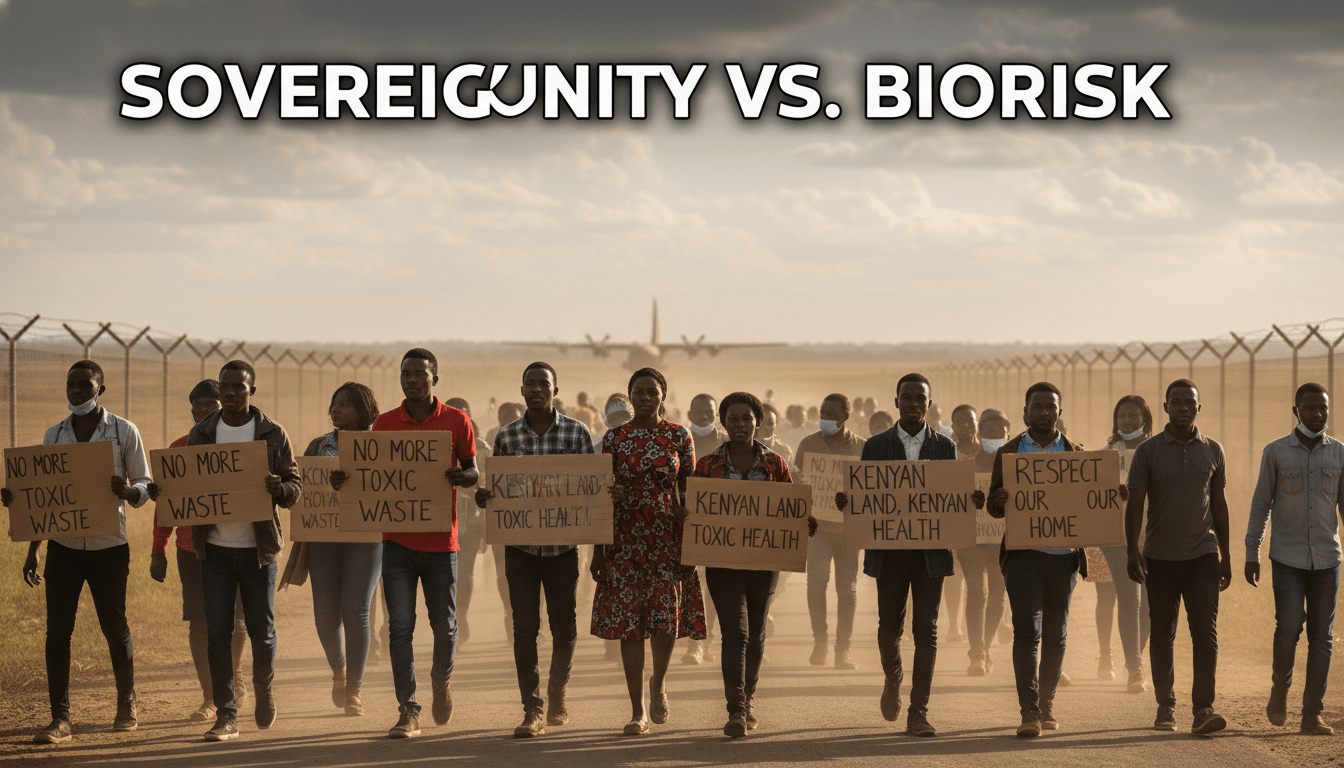
On Monday, June 1, 2026, the streets of Nanyuki, Kenya erupted in protest (dailyherald.com). Hundreds of local youths marched toward the Laikipia Air Base (dailyherald.com). They carried signs protesting against a new U.S. Ebola facility (dailyherald.com). They chanted slogans against the quarantine center (kenyainsights.com). This facility isolates Americans exposed to the virus in the Democratic Republic of the Congo (kenyainsights.com, thekenyatimes.com).
Just two days earlier, the High Court of Kenya suspended the opening of the center (kenyainsights.com). The Law Society of Kenya filed the legal challenge to protect the public (thekenyatimes.com). This legal standoff highlights deep tensions over sovereignty and global health. Local communities refuse to accept foreign biological risks on their own land (kenyainsights.com). They see this as a violation of their rights (thekenyatimes.com).
The Bundibugyo Strain: A Threat Without a Cure
In mid-May 2026, the Democratic Republic of the Congo declared its seventeenth Ebola outbreak (who.int, doctorswithoutborders.org). The World Health Organization quickly flagged the epidemic as a global emergency (who.int). This specific outbreak is driven by the Bundibugyo ebolavirus strain (who.int). Unlike the more common Zaire strain, the Bundibugyo strain has no approved vaccines (doctorswithoutborders.org). It also lacks licensed therapeutic treatments (doctorswithoutborders.org). This strain has a historical fatality rate of thirty to fifty percent (who.int).
To prevent the pathogen from reaching American soil, the United States built a facility in Kenya (dailyherald.com, thekenyatimes.com). They placed the quarantine unit inside the Laikipia Air Base in Nanyuki (dailyherald.com). Over thirty officers from the United States Public Health Service arrived to staff it (dailyherald.com, dailyherald.com). The United States government also pledged thirteen point five million dollars to Kenya for preparedness (dailyherald.com). However, local leaders and residents strongly object to this setup (dailyherald.com). They feel their home is being used as a shield (kenyainsights.com).
Biosecurity Neocolonialism and the Sanitary Shield
This dynamic introduces the concept of biosecurity neocolonialism, which is also known as medical neocolonialism. This practice occurs when wealthy Western nations outsource biological hazards to developing nations (theguardian.com). They do this to protect their own domestic borders and populations (georgetown.edu). Instead of managing high-risk containment on their own soil, Western governments leverage historical post-colonial dependencies (bu.edu). They establish high-risk bio-facilities in regions with weaker regulatory systems (georgetown.edu). This setup treats sovereign African nations as disposable waiting rooms for dangerous pathogens (bu.edu). This behavior often sparks a strong desire for reclaiming local control and postcolonial identity to resist foreign encroachment.
Under this asymmetric relationship, reciprocity does not exist (georgetown.edu). For example, a Kenyan citizen infected with Ebola would never be flown to the United States for advanced treatment (bu.edu). Yet, the United States sends its own citizens to Kenyan soil to isolate them (dailyherald.com, thekenyatimes.com). Furthermore, local medical professionals criticize the double standard (thekenyatimes.com). The Kenya Medical Practitioners and Dentists Union noted that if the virus is too dangerous for America, it is too dangerous for Kenya (thekenyatimes.com). They argue that using a developing nation as a quarantine shield represents a modern form of biosecurity exploitation (bu.edu).
United States Standards
State-of-the-Art Facilities
Kenyan Quarantine Facility
Fragile Local Infrastructure Shield
Kano to Nanyuki: How the Pfizer Scandal Destroyed Trust
To understand the deep distrust of local communities, one must examine the history of Western medical trials in Africa. In 1996, a devastating bacterial meningitis epidemic hit Kano, Nigeria (theguardian.com, punchng.com). The United States pharmaceutical giant Pfizer conducted unapproved clinical trials of an experimental drug called Trovan (punchng.com, miami.edu). Pfizer researchers tested this antibiotic on two hundred critically ill children (punchng.com). They failed to obtain proper informed consent from the parents (miami.edu). They also administered the experimental drug alongside a knowingly under-dosed comparator drug (miami.edu).
The clinical trial resulted in severe consequences (punchng.com). Several children died during the trial, and dozens of others suffered permanent physical or cognitive disabilities (punchng.com, miami.edu). This tragedy led to a seventy-five million dollar legal settlement in 2009 (punchng.com). More importantly, the scandal deeply eroded trust in public health across the continent (theguardian.com). It directly fueled a regional boycott of polio vaccination campaigns in northern Nigeria in 2003 (theguardian.com, wikipedia.org). This history explains why Nanyuki residents fear being treated as medical testing grounds today (kenyainsights.com). The historical resilience of African communities shines through when they stand up to these abuses (bu.edu). To learn more about this resilience, read about how communities protect African families from systemic exploitation.
Garrison Town Grievances: The Painful Past of Nanyuki
The choice of Laikipia Air Base as a quarantine hub reopened old historical wounds (dailyherald.com, eastleighvoice.co.ke). Nanyuki is a garrison town with a long history of foreign military presence (standardmedia.co.ke). British forces established the town in the 1920s as a white settler frontier (standardmedia.co.ke). This occurred after the forced expulsion of the indigenous Maasai from their fertile lands (standardmedia.co.ke, wikipedia.org). Today, Nanyuki hosts the British Army Training Unit Kenya, also known as BATUK (standardmedia.co.ke).
For years, BATUK has faced severe allegations of environmental damage and human rights abuses (standardmedia.co.ke, eastleighvoice.co.ke). Most infamously, the 2012 murder of Agnes Wanjiru sparked massive outrage (standardmedia.co.ke, eastleighvoice.co.ke). Her body was found in a hotel septic tank after she was last seen with British soldiers (standardmedia.co.ke). British military authorities allegedly covered up the crime for nearly a decade (standardmedia.co.ke, eastleighvoice.co.ke). A late 2025 Kenyan parliamentary report condemned BATUK as behaving like an occupying force with structural impunity (youtube.com, standardmedia.co.ke). Therefore, when massive U.S. military aircraft began landing in Nanyuki with quarantine gear, residents saw it as another violation of their sovereignty (dailyherald.com, kenyainsights.com).
Cooperative Security Locations and the Threat to Sovereignty
The United States maintains a footprint at Laikipia Air Base through a Cooperative Security Location, or CSL (dailyherald.com). A CSL is a host-nation facility with minimal permanent United States military personnel (sipri.org, sup.org). Instead of a large base, it functions as a temporary staging area or lily pad (sipri.org, sup.org). The United States prepositions equipment there to ensure rapid contingency access during regional crises (sipri.org, sup.org). This allows the United States to project military power globally without the political costs of permanent bases (sipri.org, sup.org).
However, these agreements compromise the national sovereignty of the host nation (sup.org). The legally binding cooperation agreements grant the United States government sweeping control over specific projects on host territory (georgetown.edu). This creates quasi-sovereign foreign military enclaves inside existing host airfields (georgetown.edu). These enclaves operate with very limited transparency or oversight by local courts (kenyainsights.com, georgetown.edu). This division of power mirrors historical debates about the sharing of power between central authorities and local communities. The citizens of Nanyuki feel they have no say in how these foreign enclaves operate (kenyainsights.com).
Militarized Medicine: The Public Health Service in Uniform
The deployment of the United States Public Health Service Commissioned Corps has also raised concerns (dailyherald.com). The Commissioned Corps is one of the nation’s uniformed services (nih.gov). It consists of non-military public health professionals who wear naval-style uniforms and hold corresponding ranks (nih.gov). Members of the corps can be militarized by executive or legislative action (nih.gov). Officers are highly trained in rapid deployment, biosecurity, and emergency response (nih.gov). The current Ebola deployment team underwent emergency medical and biosafety training at Joint Base Andrews in Maryland (uab.edu).
When the government deploys these officers to foreign bases to run exclusive facilities, it shapes perceptions of militarized medicine (georgetown.edu). Local populations see uniformed foreign officers running a closed-off medical unit for Americans only (dailyherald.com, kenyainsights.com). This blurs the line between humanitarian healthcare and foreign military occupation (georgetown.edu). It fuels local suspicions that clinical operations are used to enforce security borders rather than deliver equitable care (georgetown.edu, bu.edu). This dynamic alienates local medical professionals who view the deployment as an occupying force (thekenyatimes.com).
The Human Face of the Quarantine: Who Are the Responders?
The individuals designated for potential quarantine at the Kenyan facility are not soldiers (dailyherald.com). They are American healthcare professionals, humanitarian aid workers, and other response personnel (dailyherald.com, doctorswithoutborders.org). These workers operate on the front lines of the deadly Ebola outbreak in the eastern Democratic Republic of the Congo (doctorswithoutborders.org). They include clinical staff from organizations such as Doctors Without Borders (doctorswithoutborders.org). These responders face potential exposure to the Bundibugyo strain in active outbreak zones (who.int, doctorswithoutborders.org).
Historically, the United States government flew exposed aid workers back to domestic biocontainment units (celinegounder.com). Facilities like Emory University Hospital provided world-class isolation and care (celinegounder.com). However, the current policy bans these exposed citizens from entering the United States homeland (dailyherald.com, thekenyatimes.com). Critics argue this policy devalues the labor and lives of these humanitarian responders (georgetown.edu). The government isolates them on African soil while keeping standby aircraft ready to medevac them away from the United States (dailyherald.com).
Why Kenya? Geopolitics Over Humanity
The decision to select Kenya over other locations was highly strategic (dailyherald.com). The Democratic Republic of the Congo is the epicenter of the outbreak (who.int). However, the eastern region of the Congo suffers from active armed conflict and fragile infrastructure (doctorswithoutborders.org). Kenya serves as East Africa’s primary economic and transit hub (dailyherald.com). It offers a highly developed, stable logistical base that is insulated from conflict (dailyherald.com, standardmedia.co.ke).
Furthermore, the United States already maintains a significant military presence in Kenya (dailyherald.com). The selection of Kenya was also driven by financial agreements (dailyherald.com). The United States government committed thirteen point five million dollars to Kenya’s health budget (dailyherald.com). This funding helped secure the consent of President William Ruto’s administration (dailyherald.com, thekenyatimes.com). By establishing the facility in Kenya, the United States created a geographical firewall (georgetown.edu). This keeps the biological risk completely outside United States borders (georgetown.edu).
Strained Water and Overburdened Doctors: Local Risks in Nanyuki
The proposed facility poses severe biosafety and public health risks to the local population of Nanyuki (kenyainsights.com, thekenyatimes.com). Local health facilities, such as the Nanyuki Teaching and Referral Hospital, are severely overburdened (thekenyatimes.com). They suffer from chronic shortages of critical resources, including intensive care unit beds and personal protective equipment (thekenyatimes.com). Local doctors warn that they lack dedicated Ebola ambulances and specialized containment transport (thekenyatimes.com).
Furthermore, Nanyuki’s water and sanitation infrastructure is fragile and water-stressed (standardmedia.co.ke). The community relies on local rivers and community-led water groups (standardmedia.co.ke). An accidental breach of bio-waste from the base could contaminate these vital water supplies (kenyainsights.com). Many Nanyuki residents also work inside the Laikipia Air Base (dailyherald.com). These workers could easily expose the surrounding community if a leak occurs (dailyherald.com, kenyainsights.com). The local health system is simply not equipped to handle such a catastrophic outbreak (thekenyatimes.com).
Evading the Law: Offshore Quarantines and Human Rights
The policy of offshore quarantine also raises serious legal and human rights concerns (georgetown.edu, aclu.org). Under international human rights law, citizens have an absolute right to return to their home country (aclu.org). Article twelve of the International Covenant on Civil and Political Rights protects this right (aclu.org). By blocking its own citizens from returning, the United States government is violating international standards (georgetown.edu).
This offshore strategy is an attempt to bypass domestic civil rights protections (georgetown.edu). In the wake of the 2014 Ebola outbreak, high-profile lawsuits established strict protections (cbsnews.com, aclu.org). Nurse Kaci Hickox was forcibly quarantined in New Jersey after returning from Sierra Leone (cbsnews.com). She sued, and successive legal rulings established that quarantines must be narrow and subject to judicial review (cbsnews.com, aclu.org). Holding citizens in an offshore facility strips away these constitutional due process rights (georgetown.edu). Legal and epidemiological experts condemn the move as unprecedented, reckless, and unethical (georgetown.edu).
Dismantling the Double Standard
The protests outside the gates of Laikipia Air Base on June 1, 2026, represent a deep struggle for dignity (dailyherald.com). For the youth of Nanyuki, this quarantine facility is a physical reminder of historic inequality (kenyainsights.com). A wealthy superpower is offloading its biological risks onto a community still healing from colonial exploitation (kenyainsights.com, standardmedia.co.ke). The community refuses to be treated as a containment colony for Western interests (kenyainsights.com).
True global health security cannot be achieved through policies of exclusion and geographical firewalls (georgetown.edu). It requires genuine collaboration, mutual respect, and the dismantling of neocolonial power structures (georgetown.edu, bu.edu). As the High Court of Kenya reviews the legal challenge, the world is watching (kenyainsights.com). The lesson is clear: true security must protect everyone, rather than shielding the few at the expense of the many (thekenyatimes.com).
About the Author
Darius Spearman is a professor of Black Studies at San Diego City College, where he has been teaching for over 20 years. He is the founder of African Elements, a media platform dedicated to providing educational resources on the history and culture of the African diaspora. Through his work, Spearman aims to empower and educate by bringing historical context to contemporary issues affecting the Black community.
