


Why a Teen’s Sentence Ignited a National Racial Justice Debate
By Darius Spearman (africanelements)
Support African Elements at patreon.com/africanelements and hear recent news in a single playlist. Additionally, you can gain early access to ad-free video content.
On June 9, 2026, a jury in Collin County, Texas, made a decision that caught national attention (keranews.org). The jury convicted nineteen-year-old Karmelo Anthony of murder (keranews.org). They sentenced him to thirty-five years in a state prison (keranews.org). The conviction followed a tragic incident on April 2, 2025, in Frisco, Texas (keranews.org). During a rainy high school track meet, a physical fight ended in the death of seventeen-year-old Austin Metcalf (keranews.org).
What started as a local fight between teenagers quickly became a nationwide issue. The debate grew heated after a viral video surfaced online. Jeff Metcalf, the father of the deceased teen, spoke on a podcast (youtube.com). His highly offensive, racially charged comments angered many people across the country (youtube.com). His raw anger exposed deep racial tensions within the community and the legal system.
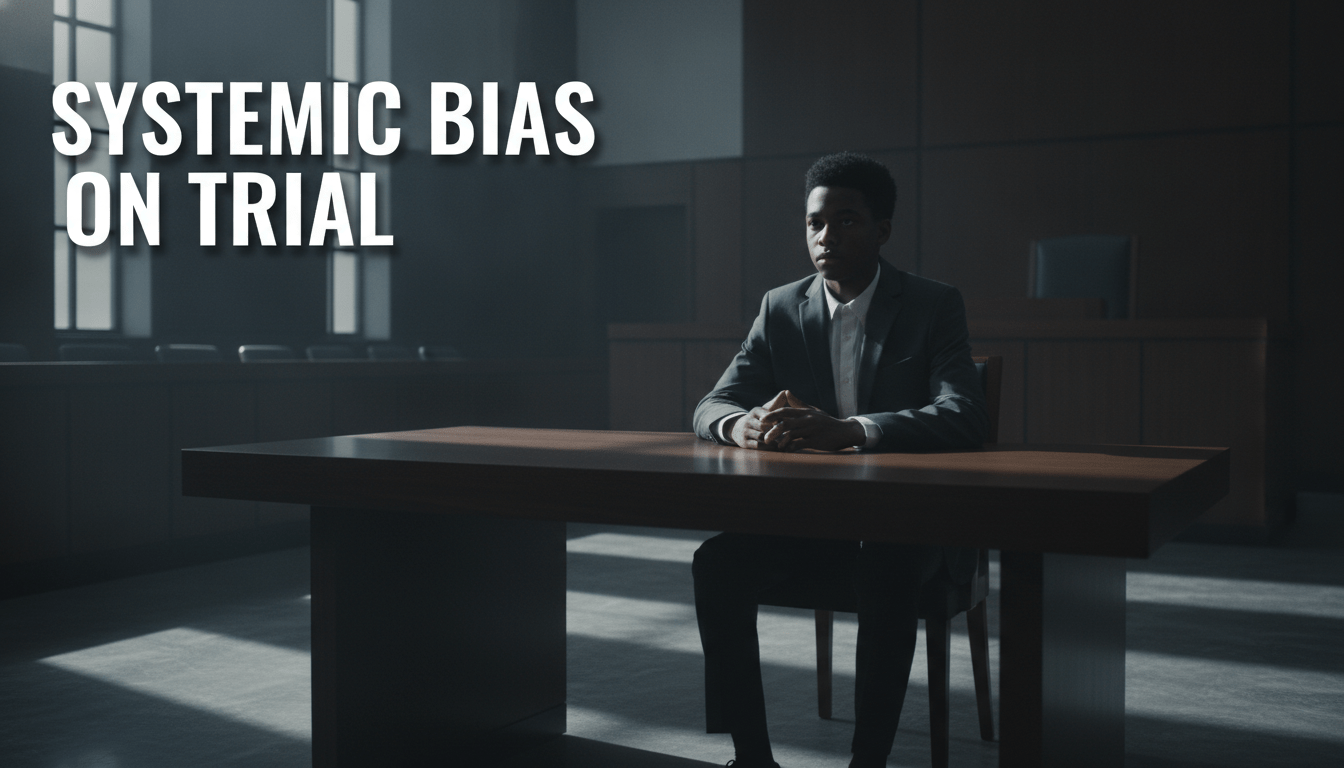
This outcome forces a closer look at the American justice system. It reveals how race, youth, and the law intersect in Texas. Many civil rights advocates argue that systemic bias influenced every step of the trial. They believe that a white teenager in the same situation would have received a different outcome. To understand this outrage, one must examine the history behind the legal structures. This deep look reveals the systemic hurdles that young Black defendants face in courtrooms today.
The Rainy Stadium Confrontation: Tracing the Frisco Tragedy
The conflict began on a rainy afternoon at David Kuykendall Stadium (keranews.org). Track athletes sought shelter as heavy rain poured down on the field (keranews.org). Centennial High School did not have a team tent at the event (keranews.org). Therefore, seventeen-year-old Karmelo Anthony sought cover under the tent of Memorial High School (keranews.org). This simple action sparked a physical confrontation with Memorial students (keranews.org).
A group of teenagers, including Austin Metcalf and his twin brother Hunter, confronted Anthony (keranews.org). The defense lawyers argued that Anthony acted in self-defense (keranews.org). Anthony weighed one hundred and thirty pounds and stood five feet eight inches tall (keranews.org). The Metcalf brothers were much larger, standing over six feet tall and weighing over two hundred pounds (keranews.org). The defense argued that Anthony reacted to sudden fear and physical shoving in the crowded tent (keranews.org).
However, the prosecution presented a different story to the jury. They noted that Anthony brought a folding knife to the sports event (keranews.org). One witness claimed Anthony made threats before executing a surprise attack (keranews.org). The knife wound pierced the chest of Austin Metcalf, leading to his death (keranews.org). The jury deliberated for less than three hours before rejecting the self-defense argument (keranews.org). They convicted Anthony of murder and sentenced him to thirty-five years in prison (keranews.org). The defense team filed a notice of appeal immediately after the sentencing occurred (keranews.org).
Unmasking the Anger: The Viral Podcast Controversy
The trial officially ended, but the emotional storm grew much larger the next day. On June 10, 2026, Jeff Metcalf appeared on the JinxedSip podcast (youtube.com). Sarah Fields hosted the online show (youtube.com). A strict court gag order had kept Metcalf silent for over a year (theguardian.com). The judge lifted this order immediately after the jury announced the sentence (theguardian.com). Free to speak, the grieving father expressed his thoughts without filter.
His comments on the podcast shocked viewers and quickly spread across social media (youtube.com). Metcalf used harsh racial slurs to describe the teenager who killed his son (youtube.com). He openly stated that he wanted to use offensive language to make the clip go viral (youtube.com). Furthermore, he attacked critics who pointed out the lack of diversity on the jury panel (youtube.com). He used broad, hurtful stereotypes about Black families and government benefits (youtube.com).
The viral video brought swift condemnation from national figures and civil rights lawyers. Attorney Lee Merritt stated that the remarks showed Anthony did not receive a fair trial (youtube.com). Representative Jasmine Crockett and musical artist Cardi B also criticized the verdict (cbsnews.com, youtube.com). They argued that racial animus polluted the entire atmosphere surrounding the case. This public outcry turned a local criminal trial into a major symbol of racial injustice. The controversy highlights how personal bias can affect the public perception of crime.
Peremptory Strike Rates by State Prosecutors
Research shows prosecutors strike Black candidates at twice the rate of white candidates.
The Illusion of Neutrality: Modern Jury Selection Challenges
A major source of frustration for civil rights activists was the jury’s racial makeup (theguardian.com). The final twelve-person jury had zero Black members (theguardian.com). This demographic lack of representation occurred despite Black residents making up twelve percent of the county (theguardian.com). During jury selection, prosecutors used peremptory strikes to dismiss the last three Black candidates (theguardian.com). These prospective jurors were all Black women who worked in education (theguardian.com).
The defense team immediately objected to these strikes (theguardian.com). They raised a Batson challenge, claiming the strikes were racially motivated (theguardian.com). The landmark Supreme Court case Batson v. Kentucky forbids striking jurors based on race (theguardian.com). However, prosecutors can bypass this rule by providing a simple, race-neutral explanation (theguardian.com). In this case, the state claimed they struck the women because they worked with children (theguardian.com).
Judge John Roach Jr. accepted the state’s reasoning and denied the challenge (theguardian.com). This decision left Anthony facing a jury that did not reflect his community. Many legal experts argue that the Batson framework is too weak to stop discrimination. Prosecutors can easily invent neutral excuses to hide racial bias during jury selection. This structural loophole often leaves Black defendants facing all-white juries in critical trials. It makes a fair trial very difficult to achieve.
A Century of Exclusion: The Historical Legacy of Juries
The struggle over jury representation has deep historical roots in the American South. During the Jim Crow era, local courts systematically excluded Black citizens from jury service. This practice ensured that white authorities maintained complete control over the legal system. Even after the Supreme Court ruled this practice unconstitutional, jurisdictions found procedural workarounds to keep juries white.
These historical tactics directly connect to modern civil rights struggles. In the past, the legal system used various tools to force Black Americans into systems of involuntary servitude long after emancipation. Keeping Black people off juries was essential to protecting those unjust systems. Today, statistical data shows that these biases remain active in the courts. This legacy of discrimination continues to affect contemporary cases.
For example, academic studies show that state prosecutors strike Black jurors at twice the rate of white jurors (deathpenaltyinfo.org, duke.edu). Research from Wake Forest University shows that the racial makeup of a jury pool directly influences conviction rates. Jury pools with more white men are statistically much more likely to convict Black defendants. This historical pattern continues to affect courtroom outcomes for young Black men today. It reinforces a deep-seated distrust of the legal process.
Fear and Danger in the Law: Disparities in Self-Defense
The rejection of Anthony’s self-defense claim highlights another systemic issue in the courts. Under Texas law, a person can stand their ground without retreating if they face immediate threat (findlaw.com). However, the legal definition of “reasonable fear” is often shaped by racial stereotypes. Society has historically associated Black teenagers with violence and aggression. This association makes it very difficult for juries to view a Black person’s fear as reasonable.
Conversely, the legal system routinely validates the fear that white individuals feel toward Black people. This double standard produces highly unequal outcomes in self-defense cases. The Urban Institute conducted a large study on how these laws work across the country (urban.org). The data shows a shocking racial disparity in justifiable homicide rulings (urban.org).
According to the study, homicides with white shooters and Black victims are ruled justified far more often than the reverse (urban.org). A white shooter is ten times more likely to have their actions ruled justified by the court (urban.org). In cases involving strangers, the justifiable rate for white shooters is thirty-four percent (urban.org). For Black shooters, that rate drops to only three percent (urban.org). Activists engaged in unapologetic racial justice campaigns point to these numbers as proof of systemic inequality. They argue that self-defense is not applied equally under the law.
Justifiable Homicide Rulings by Race
Percentage of cases ruled justifiable by race of shooter and victim in stranger interactions.
Juvenile Lives and Adult Prisons: The Texas Legal Framework
The age of the defendant at the time of the stabbing raised additional serious concerns. Karmelo Anthony was seventeen years old when the fight occurred (keranews.org). Under Texas law, the state automatically treats seventeen-year-olds as adults (texascjc.org, naswtx.org). Texas is one of only three states that maintains this strict age policy (texascjc.org, naswtx.org). Most states direct teenagers of this age into the juvenile justice system.
The juvenile system focuses primarily on rehabilitation, counseling, and education. By contrast, the adult system subjects teenagers to extreme prison sentences and adult facilities. Advocacy groups in Texas have spent years fighting to raise the age of criminal responsibility (fastdemocracy.com). They supported measures like the George Foreman Justice Act to change the law (fastdemocracy.com). Despite their efforts, political opposition has repeatedly blocked these reforms.
This failure to reform the law disproportionately harms Black children in Texas. Black youth are over five times more likely to face incarceration than their white peers (sentencingproject.org). They are also twice as likely to stand trial as adults (sentencingproject.org). This legal framework exposes young people to adult punishments before their brains are fully developed. This policy ignores modern scientific consensus on adolescent development. It creates a cycle of incarceration that is hard to break.
Automatic Prosecution of 17-Year-Olds as Adults
Texas remains one of the very few outlier states treating seventeen-year-olds as adults.
The Ongoing Campaign for Fair Courtroom Outcomes
The national outrage over the Karmelo Anthony trial shows no signs of slowing down. The combination of a harsh sentence, an all-white jury, and a viral podcast created a powerful storm. For many, this case is not an isolated incident. It is a clear reminder of how the legal system continues to fail young Black men. The ongoing fight for economic justice must address these deep disparities in the courts.
Meanwhile, Anthony’s legal team has already taken steps to fight the verdict. They filed a notice of appeal immediately after the trial ended (keranews.org). They plan to challenge the jury selection process and the court’s rejection of key defense arguments (keranews.org, theguardian.com). This appeal represents a crucial political struggle for a fairer judicial process. The public will continue to watch this case as it moves through the appeals court. These efforts are essential for achieving real change in the system.
About the Author
Darius Spearman is a professor of Black Studies at San Diego City College, where he has been teaching for over 20 years. He is the founder of African Elements, a media platform dedicated to providing educational resources on the history and culture of the African diaspora. Through his work, Spearman aims to empower and educate by bringing historical context to contemporary issues affecting the Black community.
