

Why Are Sudan Drone Strikes Killing Innocent Civilians?
By Darius Spearman (africanelements)
Support African Elements at patreon.com/africanelements and hear recent news in a single playlist. Additionally, you can gain early access to ad-free video content.
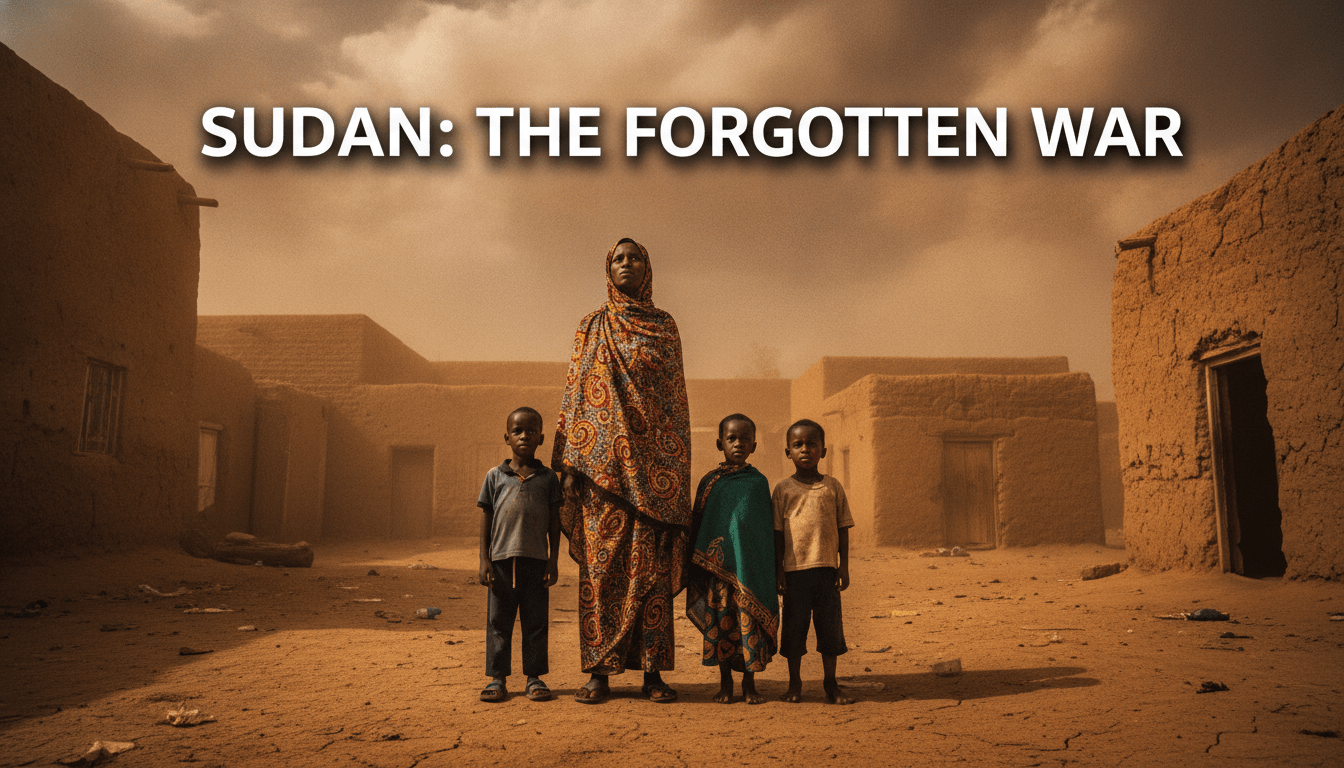
On June 15, 2026, the United Nations delivered a devastating briefing in Geneva (ohchr.org). The report confirmed that more than one thousand civilians died in Sudan drone strikes during early 2026 alone (ohchr.org, ohchr.org). High-tech unmanned aerial vehicles have turned markets and residential neighborhoods into remote-controlled killing fields (ohchr.org). This new development represents a horrific escalation in a forgotten conflict (pbs.org).
Consequently, the Sudanese civil war has transformed from a localized struggle into a mechanized proxy war (uclpimedia.com). The Sudanese Armed Forces and the paramilitary Rapid Support Forces continue their struggle for complete control (wikipedia.org). International powers are sending highly advanced weaponry into the nation (amnesty.org, turkishminute.com). This illegal flow of arms violates a long-standing United Nations embargo (amnesty.org, amnesty.org). To comprehend this modern nightmare, one must examine the dark historical forces that shaped the nation (wikipedia.org).
Civilian Drone Strike Casualties (Jan-May 2026)
Humanitarian data reports a terrifying spike in remote-controlled warfare civilian deaths (ohchr.org).
From Darfur Janjaweed to Paramilitary Power
The roots of this modern crisis trace back decades to marginalized regions like Darfur (wikipedia.org). In 2003, non-Arab rebel groups rose up against the centralized government in Khartoum (britannica.com). The state responded by organizing, arming, and funding Arab nomadic militias known as the Janjaweed (britannica.com, darfurwomenaction.org). These militias carried out systematic ethnic cleansing campaigns against non-Arab communities (ushmm.org, britannica.com). The International Criminal Court subsequently indicted President Omar al-Bashir for genocide (ushmm.org, coalitionfortheicc.org).
In 2013, President al-Bashir restructured these brutal militias into a formal security force (wikipedia.org, wikipedia.org). This new entity was named the Rapid Support Forces, led by Mohamed Hamdan Dagalo, commonly known as Hemedti (wikipedia.org). The dictator designed this force to protect his own regime from internal military coups (wikipedia.org). Ultimately, this decision laid the foundation for the current conflict (wikipedia.org). The state-sanctioned arming of militias mirrored a broader history of historical exploitation in Africa, where local labor and resources were violently extracted (wikipedia.org).
The Broken Promise of Sudanese Democracy
In 2019, millions of Sudanese citizens took to the streets to demand democratic reforms (wikipedia.org). The leaders of both the regular military and the Rapid Support Forces joined hands to oust al-Bashir (wikipedia.org). A fragile power-sharing transitional government emerged under civilian Prime Minister Abdalla Hamdok (wikipedia.org, utoronto.ca). However, this democratic path was fragile and short-lived (wikipedia.org). In October 2021, General Abdel Fattah al-Burhan and Hemedti orchestrated another military coup (wikipedia.org, wikipedia.org). They ousted the civilian leadership and dissolved the transitional cabinet (wikipedia.org, wikipedia.org).
This betrayal of the popular revolution left civilian aspirations crushed (wikipedia.org). These events echo the broken promises of freedom historically seen in other global struggles for civil rights. By April 2023, the uneasy military alliance between the regular army and the paramilitary collapsed completely (wikipedia.org). They disagreed intensely over how quickly the paramilitary forces should integrate into the regular army (wikipedia.org). The resulting violence quickly engulfed Khartoum and spread across the entire nation (wikipedia.org).
The Silent Weaponization of Catastrophic Famine
As the military conflict intensifies, a silent weapon has emerged in Sudan (hrw.org, ipcinfo.org). Starvation has become a deliberate strategy employed by both fighting factions (hrw.org). It is vital to distinguish between acute food insecurity and a state of actual famine (ipcinfo.org). Famine is a highly technical, catastrophic designation defined by the Integrated Food Security Phase Classification (ipcinfo.org). It requires specific scientific thresholds to be met before a declaration is issued (ipcinfo.org).
To declare a famine, at least twenty percent of local households must face an absolute lack of food (ipcinfo.org). In addition, thirty percent of local children must suffer from acute wasting (ipcinfo.org). Finally, the daily mortality rate must exceed two deaths per ten thousand people (ipcinfo.org). Millions of Sudanese citizens face acute food insecurity, with areas already descending into actual famine (ipcinfo.org). The Sudanese Armed Forces systematically block foreign humanitarian aid from entering paramilitary territory (hrw.org). Simultaneously, the Rapid Support Forces systematically loot agricultural crops and critical food warehouses (hrw.org). This manufactured crisis highlights the shared struggles against oppression linking marginalized populations globally.
IPC Phase 5 Famine Declaration Criteria
A famine is declared only when all three of these extreme thresholds are breached simultaneously (ipcinfo.org).
One in five households faces an absolute lack of food.
Nearly one third of children suffer from wasting.
Two out of ten thousand people die every single day.
High-Tech Proxy Networks Supplying the Drones
The introduction of advanced combat drones has radically altered the nature of the Sudanese civil war (uclpimedia.com). Previously, the seasonal heavy rains brought a natural pause to active military operations on the ground (consiliointernational.se). Now, remote-controlled aerial vehicles allow combatants to launch deadly strikes year-round without interruption (consiliointernational.se). This technology has caused a massive increase in civilian casualties in places like Kordofan and Darfur (ohchr.org). The conflict has drawn in multiple foreign actors seeking to secure their own strategic interests (policycenter.ma).
The Sudanese Armed Forces obtained advanced Mohajer-6 combat drones directly from Iran (iranintl.com, greydynamics.com). In addition, they purchased sophisticated Bayraktar TB2 drones from Turkish manufacturers (turkishminute.com, adf-magazine.com). In exchange, Turkey secured rights to develop infrastructure on the strategic Suakin Island (north-africa.com). Meanwhile, the Rapid Support Forces acquired advanced Chinese-made FH-95 drones (amnesty.org, amnesty.org). Human rights investigators confirmed that these weapons are funded and supplied by the United Arab Emirates (amnesty.org, amnesty.org). These shipments often enter through neighboring Chad disguised as international humanitarian assistance (amnesty.org, amnesty.org).
Sudan Proxy Drone Arsenals
Both fighting factions rely heavily on foreign suppliers to sustain their deadly aerial combat campaigns (amnesty.org, turkishminute.com, iranintl.com).
Sudanese Armed Forces (SAF)
- 🚀 Iran: Mohajer-6 Combat Drones
- 🚀 Turkey: Bayraktar TB2 & Akinci UAVs
- ⚓ Strategic Trade: Red Sea naval access
Rapid Support Forces (RSF)
- 🚀 UAE: FH-95 & Modified Quadcopters
- 🚀 Russia: Africa Corps (Wagner) supplies
- 💰 Strategic Trade: Smuggled gold reserves
Russia Africa Corps and Extractive Warfare
Russia has also established a massive presence in the Sudanese proxy landscape (thesoufancenter.org, globalinitiative.net). Following the death of Wagner founder Yevgeny Prigozhin, the Russian government rebranded these mercenary forces (thesoufancenter.org, globalinitiative.net). The group is now known as the Africa Corps (thesoufancenter.org, globalinitiative.net). This private military force operates under the direct supervision of the Russian Ministry of Defence (thesoufancenter.org, globalinitiative.net). They maintain a dual strategy inside Sudan to maximize their strategic and economic gain (thesoufancenter.org, globalinitiative.net).
The Africa Corps maintains official diplomatic relations with the regular military government in Port Sudan (thesoufancenter.org, globalinitiative.net). Simultaneously, they supply advanced weaponry to the paramilitary forces in the Darfur region (thesoufancenter.org, globalinitiative.net). This mercenary operations network is designed to trade security assistance for valuable African resources (thesoufancenter.org, globalinitiative.net). Russia heavily utilizes these operations to smuggle gold out of Sudan to finance its foreign conflicts (policycenter.ma, thesoufancenter.org). Consequently, the wealth of the Sudanese nation is stolen while its people suffer from violence (policycenter.ma).
The Tragedy of the Forgotten War
Despite the massive scale of human displacement, Sudan is often described as a forgotten war (pbs.org, visionofhumanity.org). Over fourteen million people have been forced to flee their homes (unrefugees.org). This makes Sudan the largest civilian displacement crisis on earth today (unrefugees.org, refugees.org). However, media coverage of this suffering remains extraordinarily low compared to other conflicts (pbs.org). Western nations do not view Sudan as a central threat to their immediate geopolitical interests (pbs.org).
This lack of interest has resulted in a massive deficit in humanitarian aid funding (pbs.org). The international community has failed to supply even half of the requested emergency aid (pbs.org). Global news outlets dedicate very little coverage to the ongoing massacres and sexual violence (pbs.org). Investigations confirm that the Rapid Support Forces use gender-based violence as a weapon (hrw.org). They systematically target civilian women to humiliate communities and seize valuable land (hrw.org). This systematic silence reflects how African conflicts are routinely marginalized by global institutions (pbs.org).
Grassroots Survival Through Emergency Response Rooms
In the face of total government collapse, ordinary citizens have created their own survival networks (chathamhouse.org, rightlivelihood.org). The localized pro-democracy groups that led the 2019 revolution have adapted to the war (chathamhouse.org). They have transformed into a decentralized network of Emergency Response Rooms (chathamhouse.org, rightlivelihood.org). More than seven hundred of these grassroots groups operate across all eighteen Sudanese states (chathamhouse.org). They utilize unpaid volunteers to coordinate medical clinics and communal kitchens (chathamhouse.org, rightlivelihood.org).
These organizations represent the true backbone of civilian survival in Sudan (chathamhouse.org). They have received international acclaim, including the prestigious Right Livelihood Award (rightlivelihood.org). These groups demonstrate a highly decolonized model of community-led mutual aid (chathamhouse.org). These local networks embody the intense ideological struggles for self-determination that have historically defined global liberation movements. Despite their strictly neutral humanitarian posture, volunteers face extreme danger (chathamhouse.org, rightlivelihood.org). Both the regular military and the paramilitary forces systematically target, torture, and execute these activists (chathamhouse.org).
The Geopolitical Roadblock to Regional Peace
Achieving a lasting peace agreement in Sudan remains a difficult task due to foreign interference (chathamhouse.org, chathamhouse.org). Former Prime Minister Abdalla Hamdok lives in exile, leading a civilian democratic coalition (jurist.org). He has traveled extensively to negotiate peace declarations with various political factions (jurist.org). However, the military government in Port Sudan has issued orders for his arrest (jurist.org). They falsely accuse Hamdok of serving as the political wing of the paramilitary (jurist.org).
The continuous flow of foreign arms completely undermines all diplomatic peace efforts (amnesty.org, turkishminute.com). Observers warn that the conflict is rapidly threatening the stability of the Horn of Africa (chathamhouse.org). Cross-border drone strikes into neighboring Chad could easily pull other nations into the fighting (ohchr.org, chathamhouse.org). Without a global effort to enforce the arms embargo, the violence will continue (amnesty.org, amnesty.org). The international community must disrupt the corporate drone networks that profit from Sudanese civilian blood (amnesty.org, uclpimedia.com).
About the Author
Darius Spearman is a professor of Black Studies at San Diego City College, where he has been teaching for over 20 years. He is the founder of African Elements, a media platform dedicated to providing educational resources on the history and culture of the African diaspora. Through his work, Spearman aims to empower and educate by bringing historical context to contemporary issues affecting the Black community.
