


Uncovering the Hidden Stories in America National Parks
By Darius Spearman (africanelements)
Support African Elements at patreon.com/africanelements and hear recent news in a single playlist. Additionally, you can gain early access to ad-free video content.
The Battle of June 2026
In June 2026, the United States federal court system intervened in a major political battle over the preservation of public memory. U.S. District Judge Angel Kelley issued a sixty-three-page preliminary injunction in National Parks Conservation Association et al. v. Department of the Interior et al. (democracyforward.org). This decisive court order mandated the immediate restoration of all altered or removed historical displays within twenty-one days (democracyforward.org). The ruling aimed to complete restorations before the nation’s upcoming 250th anniversary celebrations (npca.org).
The legal dispute began with an executive order titled “Restoring Truth and Sanity to American History,” which President Donald Trump signed in March 2025 (democracyforward.org). This policy ordered federal land managers to review and remove exhibits that supposedly disparaged past historical figures (democracyforward.org). Consequently, the Interior Department moved to eliminate what it classified as partisan ideology on federal lands (npca.org). Under these federal guidelines, workers altered or removed over one thousand public history items across the country (democracyforward.org). Historians strongly criticized this policy, arguing that it attempted to erase essential, complex narratives of marginalized groups (democracyforward.org).
Preserving Truth: The President House Memorial
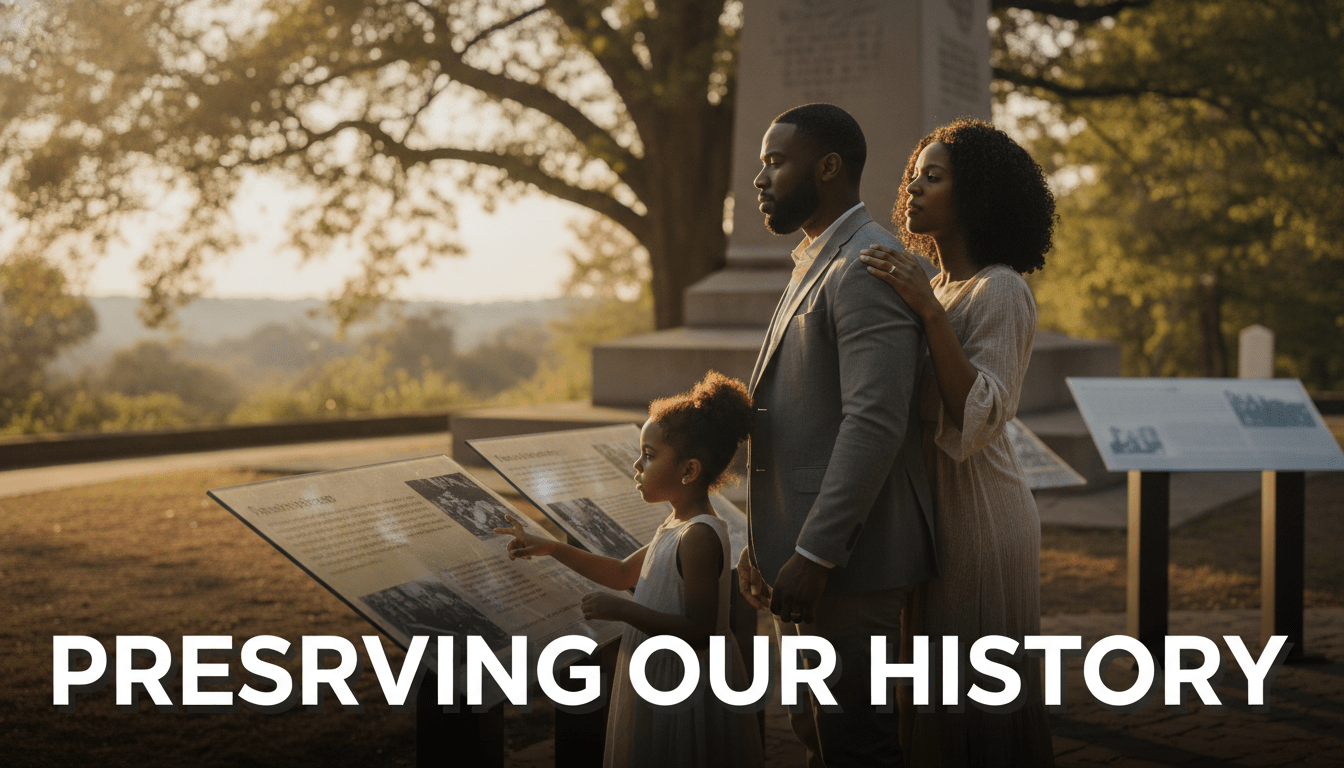
One of the most notable targets of these rollbacks was the President’s House Memorial in Philadelphia (visitphilly.com). In early 2026, park workers dismantled an exhibition titled “Freedom and Slavery in the Making of a New Nation” (whyy.org). This exhibition documented the lives of nine enslaved African descendants whom George Washington held in bondage at the site (ushistory.org). This memorial represents a vital milestone for African American public history. It is the first slave memorial built on federal property, directly confronting early American slaveholding practices (independencehall-americanmemory.com).
The memorial physically juxtaposes the birth of American liberty with the stark reality of presidential enslavement (ushistory.org). Located mere steps from the Liberty Bell Center in Independence National Historical Park, it places the reality of slavery alongside primary symbols of democracy (visitphilly.com). Visitors can view the excavated archaeological foundations of the executive mansion where George Washington lived (independencehall-americanmemory.com). The displays specifically highlight the names, lives, and escape attempts of enslaved individuals like Ona Judge and Hercules (ushistory.org). The open-air display forces visitors to confront the historical paradox of early American freedom.
Community Voices and Grassroots Advocacy
Local advocates and Black historians worked for years to ensure the creation of this memorial (philasun.com). The Avenging the Ancestors Coalition, founded by Philadelphia attorney Michael Coard, successfully pushed the National Park Service to include a prominent slavery monument at the site (whyy.org). Another prominent advocacy organization, Generations Unlimited, mobilized community members under the leadership of local activists (philasun.com). Scholars known as the Ad Hoc Historians partnered with digital archivist Doug Heller to compile historical documents (ushistory.org). Their collective efforts generated the public support necessary to force federal recognition of these ancestors.
These historical groups fought against initial park plans that downplayed the presence of enslaved laborers (whyy.org). By using digital archives, advocates brought the story of Washington’s enslaved household into public consciousness (ushistory.org). The physical memorial now serves as a permanent testament to their resistance. This site represents how grassroots community organizing can successfully preserve ancestral spaces within national landmarks.
2025 NPS Cultural Site Visitation Declines
Percentage of sites experiencing reduced attendance after programmatic rollbacks.
Understanding Social History in Public Spaces
This conflict highlights a broader debate about the use of social history in public spaces (lsu.edu). Social history is a public history methodology that shifts focus from elite leaders to the lived experiences of everyday citizens (researchgate.net). This approach highlights marginalized groups, enslaved populations, and systemic injustices (escholarship.org). By teaching history from the bottom up, this methodology directly challenges traditionally sanitized, white-centric narratives of the American past (researchgate.net).
Traditionally, public monuments presented historical narratives that downplayed racial violence and systemic oppression (lsu.edu). Social history actively combats this sanitization (researchgate.net). It demands that institutions present difficult truths as factual history rather than mere conjecture (escholarship.org). Through this lens, the struggles of Black and Indigenous communities become central to the American story. This methodology provides a much more complete and honest narrative for all visitors (lsu.edu).
The Sweet Auburn Sanctuary: Martin Luther King Jr Park
Another critical cultural landmark is the Martin Luther King, Jr. National Historical Park (ajc.com). Located in Atlanta, Georgia, this park spans approximately thirty-five acres within the historic Sweet Auburn neighborhood (fox5atlanta.com). This area served as a crucial cradle for the modern civil rights movement (ajc.com). The park is historically significant because it preserves physical spaces that shaped the life and legacy of Dr. King (nps.gov).
The park encompasses several vital landmarks of Black history (fox5atlanta.com). Visitors can view Dr. King’s boyhood home, which is a Queen-Anne style frame house built in 1895 (nps.gov). The site also preserves the historic Ebenezer Baptist Church (ajc.com). This church is where Dr. King was baptized and later served as a co-pastor (fox5atlanta.com). The park also houses the tombs of Dr. King and Coretta Scott King, making it a sacred site for visitors worldwide (nps.gov). This space represents the ongoing struggle for racial justice and the power of grassroots organizing.
Martin Luther King, Jr. National Historical Park Visitation
Comparison of annual recreation visits before and after rehabilitation closures and shutdowns.
Behind the Declining Numbers at Sacred Places
Despite its historical importance, the Martin Luther King, Jr. National Historical Park faced severe challenges in 2025 (fox5atlanta.com). Park records show a staggering 44.2 percent drop in visitation (11alive.com). Attendance fell from over one million visitors in 2024 to just under 650,000 in 2025 (11alive.com). This drop was caused by several coinciding administrative and structural factors (11alive.com).
First, the park underwent massive, multi-year rehabilitation projects (fox5atlanta.com). The historic boyhood home closed in late 2023 for extensive electrical, HVAC, and safety upgrades (nps.gov). This closure suspended popular public tours of the home (fox5atlanta.com). Additionally, the primary visitor center closed for extensive renovations, forcing staff to operate out of a temporary station (ajc.com).
Furthermore, a historic federal government shutdown in October 2025 completely closed federal facilities at the site (11alive.com). Tourists who traveled long distances were turned away at the gates (11alive.com). Finally, new administrative policies removed free entry days on MLK Day and Juneteenth (11alive.com). These days historically generated the highest community engagement and visitation numbers (11alive.com).
Broad Erasure of Black Legacy Across the Land
The rollbacks targeted numerous other prominent African American historical sites across the country (democracyforward.org). At the Selma to Montgomery National Historic Trail, federal managers flagged eighty items for removal (democracyforward.org). These items documented voting-rights milestones and marches led by John Lewis (newsone.com). Such removals directly threatened to sanitize the history of racial violence in Alabama (democracyforward.org).
At Fort Pulaski National Monument in Georgia, officials ordered the removal of “The Scourged Back” photograph (democracyforward.org). This famous Civil War-era image displays the horrific whipping scars of a self-emancipated man (democracyforward.org). Meanwhile, administrators altered the history of the Underground Railroad on the official park service website (democracyforward.org). They deleted photographs and references to the famous abolitionist Harriet Tubman (newsone.com).
Other targeted locations included Harpers Ferry National Historical Park (democracyforward.org). There, officials flagged over thirty signs detailing the aftermath of John Brown’s raid and post-slavery discrimination (democracyforward.org). At the Brown v. Board of Education National Historical Park, exhibits were flagged simply for mentioning the word “equity” (newsone.com). These combined actions represented a systematic effort to erase the histories of Black Americans from public view.
Federal Rollback Impact Metric
Scale of interpretive materials flagged or removed before the June 2026 injunction.
Over one thousand distinct historical panels, films, books, and interpretive signs were ordered for alteration or removal across the National Park System.
The Fight for the Truth in National Parks Act
In response to these historical rollbacks, federal legislators introduced protective measures (house.gov). Representatives Sharice Davids and Dan Goldman introduced the Truth in National Parks Act on April 28, 2026 (house.gov). This proposed law aims to limit the ability of any administration to unilaterally alter park narratives (democracyforward.org). It seeks to protect the integrity of public history exhibits (democracyforward.org).
This legislation requires all educational park materials to remain historically accurate (house.gov). Any changes must be backed by credible, peer-reviewed research (democracyforward.org). In addition, the act mandates formal consultation with Tribal Nations before updating exhibits about Indigenous history (house.gov). It also promotes co-stewardship agreements, integrating Native communities into the direct management of their ancestral lands (nativenewsonline.net).
This legal and legislative battle reminds us that public lands are central to the struggle for cultural identity (npca.org). When the state attempts to rewrite public memory, it affects how marginalized groups view their place in the nation (npca.org). The protection of these sites is closely linked to the broader history of the struggles of Black workers and their fight for economic and social justice. These spaces must remain preserved to tell the full story of America.
Defending Ancestral Spaces and Cultural Integrity
The effort to protect these landmarks is also linked to the legacy of the civil rights movement. Activists continue to argue that preserving physical spaces is a form of cultural resistance. When ancestral spaces are erased, the historical contributions of Black and Indigenous peoples are minimized. Therefore, maintaining these physical exhibits is necessary to protect the historical truth.
Ultimately, the clash over national park narratives reflects a debate over national versus state power in shaping public memory. The federal courts have provided a critical check on the executive branch’s attempt to sanitize history. By maintaining these landmarks, the public can continue to learn from the complex, unvarnished truth of the past. The preservation of these sites ensures that future generations will understand the full scope of American history.
This defense of memory is essential for fostering a deeper connection to ancestral lands (npca.org). When historic exhibits are preserved, they serve as a powerful tool for cultural identity and education. Public lands should not be used to promote sanitized historical narratives. Instead, they must remain spaces that reflect the diverse, painful, and triumphant realities of the entire nation.
About the Author
Darius Spearman is a professor of Black Studies at San Diego City College, where he has been teaching for over 20 years. He is the founder of African Elements, a media platform dedicated to providing educational resources on the history and culture of the African diaspora. Through his work, Spearman aims to empower and educate by bringing historical context to contemporary issues affecting the Black community.
