


Why Tupac Shakur’s Alleged Killer Faces Trial After 30 Years
By Darius Spearman (africanelements)
Support African Elements at patreon.com/africanelements and hear recent news in a single playlist. Additionally, you can gain early access to ad-free video content.
A Night in Las Vegas That Echoed for Decades
On September 7, 1996, heavy gunfire shattered the calm near the Las Vegas Strip (wikipedia.org). Cultural icon Tupac Shakur sat in the passenger seat of a black BMW driven by Death Row Records founder Marion “Suge” Knight (wikipedia.org). While stopped at a red light at Flamingo Road and Koval Lane, a white Cadillac pulled alongside the vehicle (wikipedia.org). An occupant inside opened fire into the passenger side (wikipedia.org). Four bullets struck Shakur, causing catastrophic internal injuries (wikipedia.org). Shakur was rushed to University Medical Center, where he underwent emergency surgery before dying six days later at age twenty-five (wikipedia.org, crimemuseum.org).
The lethal shooting followed a violent altercation inside the MGM Grand hotel earlier that evening (wikipedia.org). Shakur and his Death Row associates had attended the Mike Tyson heavyweight championship boxing match (wikipedia.org). In the hotel lobby, Shakur confronted Orlando “Baby Lane” Anderson, a known member of the South Side Compton Crips (wikipedia.org). Security cameras captured Shakur and his entourage physically assaulting Anderson (wikipedia.org). Police investigators believe that hotel brawl directly triggered a swift and deadly retaliatory strike hours later (wikipedia.org, apnews.com).
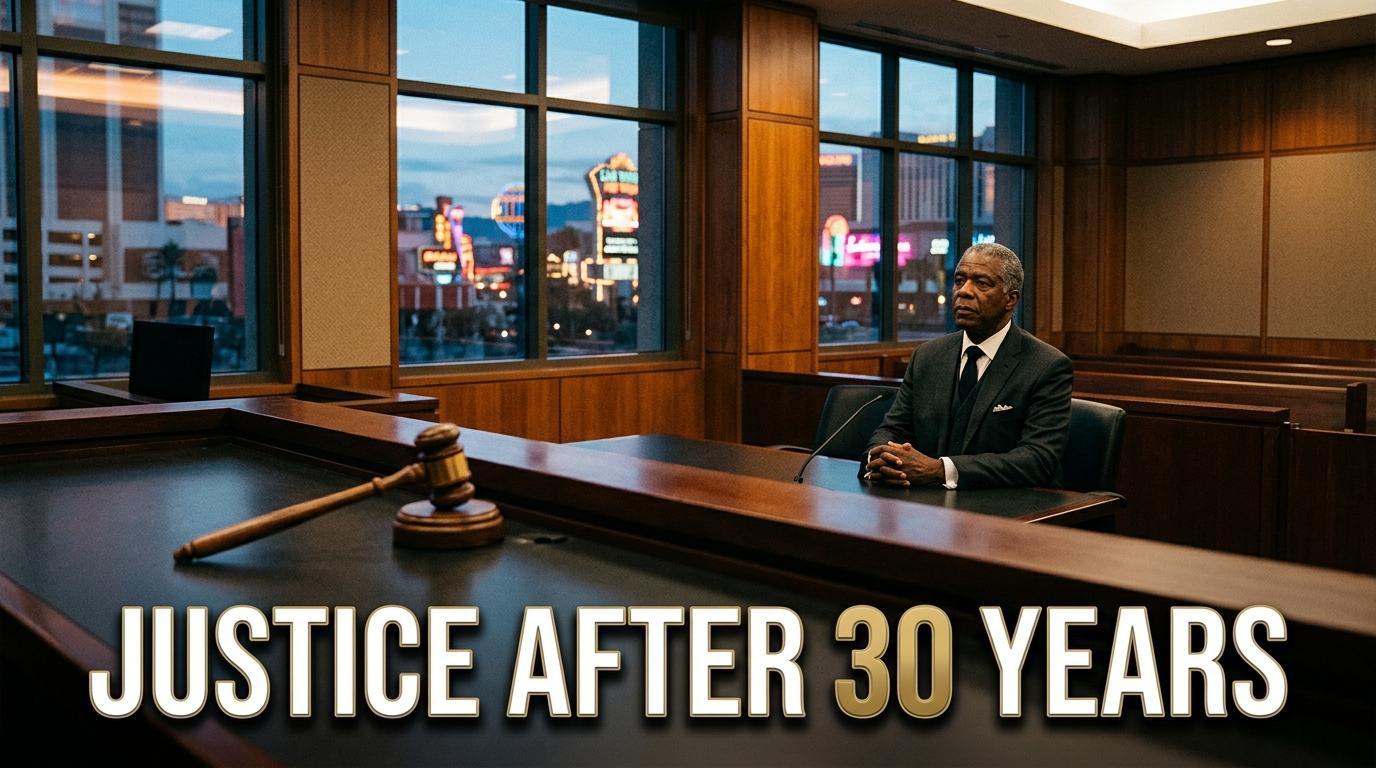
For nearly thirty years, no individual faced formal criminal charges for the assassination (theguardian.com, apnews.com). That silence ended when Nevada prosecutors indicted Duane “Keffe D” Davis in September 2023 (apnews.com). Davis is the uncle of Orlando Anderson and remains the sole living occupant of the white Cadillac (wikipedia.org, theguardian.com). In August 2026, jury selection began in Clark County District Court in Las Vegas for Davis’s murder trial (courthousenews.com, apnews.com). The proceedings mark the very first criminal prosecution for the death of Tupac Shakur (courthousenews.com, apnews.com).
-
September 1996
Tupac Shakur is shot in Las Vegas and dies six days later at age 25.
-
May 1998
Suspected gunman Orlando Anderson is killed in an unrelated gang shootout.
-
2008
Duane “Keffe D” Davis provides proffer statements to joint federal and local investigators.
-
2019
Davis publishes a memoir outlining his role as on-site commander during the shooting.
-
September 2023
LVMPD search Davis’s residence; a Clark County grand jury indicts Davis for murder.
-
August 2026
Jury selection begins for the murder trial of Duane “Keffe D” Davis in Las Vegas.
When Corporate Rap Feuds Merged With Street Warfare
By 1996, a intense rival feud dominated the American music industry (wikipedia.org). West Coast giant Death Row Records engaged in a tense confrontation with East Coast opponent Bad Boy Records (wikipedia.org). Record label executives escalated commercial competition far beyond aggressive lyrics (wikipedia.org). Both music companies embedded active street gang factions directly into corporate security structures (wikipedia.org, wikipedia.org).
Death Row Records CEO Marion “Suge” Knight maintained close ties with the Mob Piru Bloods (wikipedia.org). Knight employed gang members as bodyguards, venue security, and label staff (wikipedia.org). To counter Death Row’s physical intimidation while working in Southern California, Bad Boy Records founder Sean Combs hired members of the South Side Compton Crips for personal protection (wikipedia.org, wikipedia.org). This corporate alignment absorbed a thirty-year territorial gang conflict directly into the commercial hip-hop business (wikipedia.org).
These violent street connections created highly volatile conditions (wikipedia.org). Record label disputes instantly triggered street gang rivalries (wikipedia.org). Consequently, internal group rivalries converted corporate arguments into deadly real-world violence. When Shakur assaulted Orlando Anderson in the MGM Grand lobby, he entered a violent territorial feud (wikipedia.org, apnews.com). The assault transformed a personal dispute over a stolen Death Row chain into an immediate gang retaliation order (wikipedia.org, apnews.com).
The Mechanics of Gang Leadership and Nevada Conspiracy Law
Law enforcement officials identify Duane “Keffe D” Davis as a senior leader within the South Side Compton Crips (wikipedia.org, apnews.com). In gang hierarchy, a “shot caller” functions as an operational commander who directs street strategy (apnews.com). Such leaders manage lower-ranking members and issue directives for retaliatory violent strikes (apnews.com). Prosecutors charge that Davis acted as the “on-site commander” during the drive-by ambush (wikipedia.org, apnews.com). He allegedly obtained the .40-caliber Glock handgun and handed it to the backseat passengers with instructions to fire (wikipedia.org, apnews.com).
Nevada legal doctrine does not require prosecutors to prove that Davis physically pulled the trigger (justia.com, apnews.com). Under state law, any individual who aids, abets, encourages, or hires another person to commit a felony is legally defined as a principal actor (justia.com). Accomplices bear identical criminal liability to the gunman who fires the fatal shot (justia.com). Therefore, acquiring the firearm and directing the vehicle during the ambush satisfies every legal requirement for a first-degree murder conviction (justia.com, apnews.com).
In addition, prosecutors attached mandatory statutory enhancements to the core murder charge (justia.com, thedefensefirm.com, 702defense.com). Nevada Revised Statute 193.165 mandates an additional consecutive sentence if a deadly weapon is used in a felony (justia.com, thedefensefirm.com). Nevada Revised Statute 193.168 adds mandatory consecutive prison time if the offense was committed to further gang activities (justia.com, 702defense.com). These enhancements effectively double potential prison terms and eliminate probation options (thedefensefirm.com, 702defense.com). If convicted, Davis faces potential life imprisonment without the possibility of parole (justia.com, 702defense.com).
Why a Federal Proffer Failed to Protect Keffe D in Nevada
In 2008, Duane Davis participated in a detailed police interview with federal and local law enforcement officers (wikipedia.org, apnews.com). At the time, a joint task force investigated federal drug trafficking charges and the 1997 murder of Christopher Wallace (wikipedia.org, apnews.com). Before answering questions, Davis signed a written proffer agreement (justia.com, apnews.com). A standard proffer offers limited protection known as “use immunity” (justia.com, thedefensefirm.com). This contract prevents investigators from introducing those specific statements directly against the speaker in that specific court proceeding (justia.com, thedefensefirm.com).
However, a limited proffer agreement does not grant total transactional immunity from all future prosecutions (justia.com, thedefensefirm.com). Under the United States legal doctrine of dual sovereignty, federal and state governments maintain independent judicial powers (justia.com). An agreement brokered with federal prosecutors in California does not automatically bind local prosecutors in the State of Nevada (justia.com, apnews.com). Nevada law enforcement agencies were not party to the 2008 federal contract (justia.com, apnews.com). Consequently, Nevada authorities retained full constitutional authority to initiate state murder charges against Davis (justia.com, apnews.com).
Defense attorneys attempted to dismiss the admissions prior to trial (courthousenews.com, apnews.com). They argued that federal law enforcement promises shielded Davis from state murder charges (courthousenews.com, justia.com). District Judge Carli Kierny rejected those motions in July 2026 (courthousenews.com, apnews.com). The judge ruled that Davis failed to produce any evidence of an enforceable immunity agreement with Nevada authorities (courthousenews.com, justia.com). Therefore, the court ruled his 2008 police statements and subsequent public admissions completely admissible at trial (courthousenews.com, apnews.com).
From Public Confession to the 2023 Henderson Raid
For several years, Davis spoke openly about his presence during the drive-by shooting (wikipedia.org, apnews.com). He appeared in numerous YouTube interviews and television documentaries describing his leadership role (wikipedia.org, apnews.com). In 2019, Davis co-authored a memoir titled Compton Street Legend (wikipedia.org, apnews.com). In the book, he detailed how he obtained the weapon and sat in the front passenger seat during the shooting (wikipedia.org, apnews.com). Despite these public admissions, law enforcement made no immediate arrest for four full years (wikipedia.org, apnews.com).
Under United States constitutional standards, public confessions alone cannot justify a criminal conviction (justia.com, apnews.com). Prosecutors must present independent corroborating evidence to prove a crime occurred as described (justia.com, apnews.com). Defense attorneys frequently argue that public statements contain exaggerated or completely fictional stories made to profit off hip-hop media attention (courthousenews.com, apnews.com). Therefore, homicide detectives needed concrete physical and documentary evidence to build an unassailable court case (kvia.com, apnews.com).
The investigative breakthrough occurred on July 17, 2023 (kvia.com, apnews.com). Las Vegas Metropolitan Police executed a search warrant at Davis’s suburban home in Henderson, Nevada (kvia.com, apnews.com). Officers recovered desktop computers, hard drives, cellphones, .40-caliber ammunition, historical photographs, and signed copies of his memoir (kvia.com, apnews.com). This physical evidence corroborated historical grand jury witness testimony (kvia.com, apnews.com). Armed with this corroboration, prosecutors secured a grand jury indictment on September 29, 2023 (apnews.com).
Systemic Failures and the Cold Case Epidemic in Hip-Hop
The murder of Tupac Shakur reflects a widespread systemic crisis across the music industry (xxlmag.com). Academic music studies indicate that homicide accounts for approximately fifty percent of all artist deaths within hip-hop (xxlmag.com). Furthermore, industry studies show that over fifty percent of all rap homicides remain completely unsolved (xxlmag.com). Hip-hop artists experience a homicide rate five to thirty-two times higher than performers in any other music genre (xxlmag.com). These troubling figures highlight how violence consistently targets Black artists (xxlmag.com).
Multiple social justice factors contribute to this low case clearance rate (nih.gov, nih.gov). Historically, profound distrust separates Black communities from urban law enforcement agencies (nih.gov, nih.gov). Decades of systemic misconduct created deep reluctance among witnesses to cooperate with police investigations (nih.gov, nih.gov). In addition, inadequate witness protection infrastructure exposes informants to violent gang retaliation (nih.gov, nih.gov). Consequently, street codes against informing strictly enforce silence across neighborhoods (nih.gov, nih.gov).
Furthermore, investigative apathy historically hindered cases involving Black victims and gang-adjacent artists (nih.gov, nih.gov). Police departments often categorized rap homicides as unsolvable street violence, allowing critical evidentiary windows to close (nih.gov, nih.gov). This historical neglect links directly to broader issues like systemic institutional failures. The decades-long journey toward legal accountability for Shakur reflects an ongoing struggle for freedom and systemic justice. Resolving these cold cases remains essential to confronting long-standing patterns of violence that continue to impact Black communities.
About the Author
Darius Spearman is a professor of Black Studies at San Diego City College, where he has been teaching for over 20 years. He is the founder of African Elements, a media platform dedicated to providing educational resources on the history and culture of the African diaspora. Through his work, Spearman aims to empower and educate by bringing historical context to contemporary issues affecting the Black community.
