


Namibia Aid Cuts: Why Is a Model African Health System at Risk?
By Darius Spearman (africanelements)
Support African Elements at patreon.com/africanelements and hear recent news in a single playlist. Additionally, you can gain early access to ad-free video content.
The Sudden Alarm in Windhoek
Public health leaders and community organizers in Namibia recently issued a startling warning. The United States government is ending two decades of direct financial assistance for the national HIV response (namibian.com.na). Bilateral health funding will cap at $45 million for fiscal year 2027 before terminating direct monetary support completely (namibian.com.na). Both governments officially describe this transition as an earned graduation because the country reached historic epidemic benchmarks (usembassy.gov). However, grassroots clinic leaders warn that the rapid withdrawal threatens to trigger a devastating public health collapse (namibian.com.na).
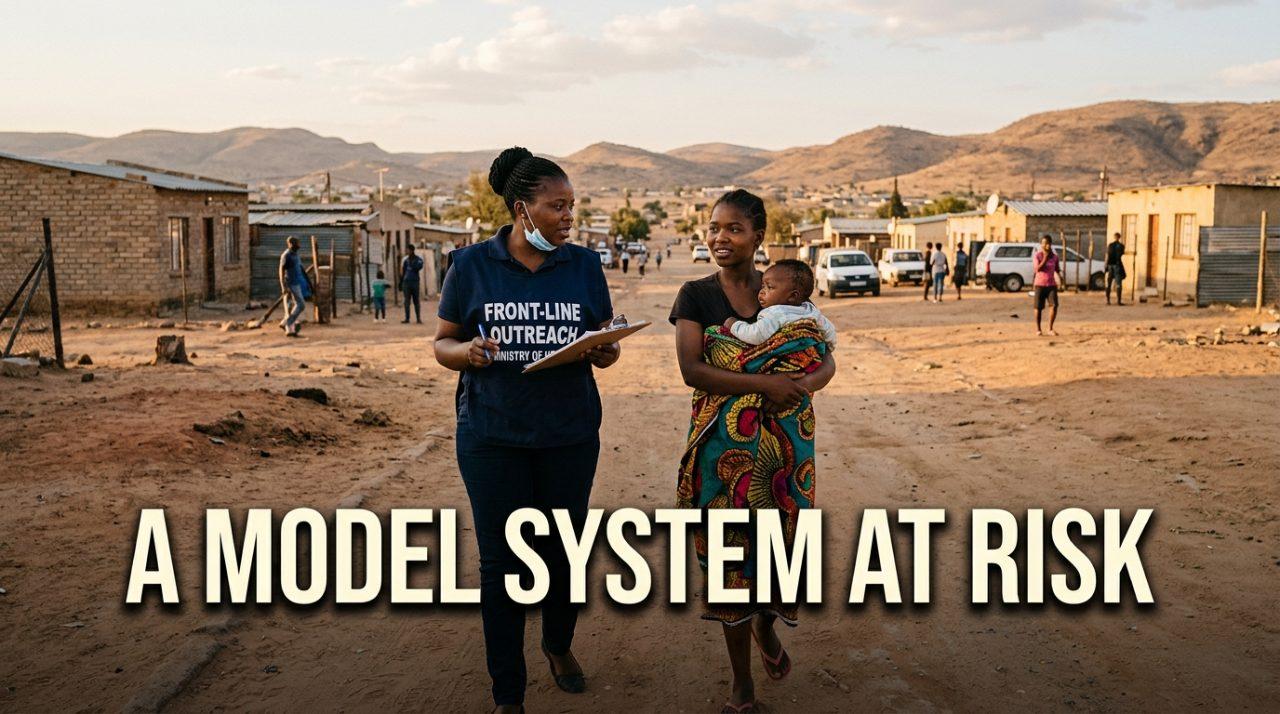
Namibia is widely celebrated as one of the greatest success stories in modern global public health (theglobalfight.org). Decades of investment created a world-class clinical care network (healthpolicy-watch.news). Even so, non-governmental organizations provide the essential community groundwork that keeps clinical programs running (amfar.org). Local clinics provide doorstep treatment delivery, peer counseling, and maternal monitoring in poor urban settlements (washingtonpost.com). Community advocates caution that removing this financial foundation without a domestic replacement puts thousands of vulnerable lives in immediate jeopardy (namibian.com.na).
Apartheid Roots and the Broken Health System
The roots of Namibia’s modern health vulnerabilities stretch deep into the colonial past (nih.gov). Between 1915 and 1990, the apartheid regime of South Africa occupied Namibia illegally (nih.gov). The occupation authorities enforced rigid racial segregation across all civic institutions (nih.gov). Healthcare was deliberately fractured into eleven separate ethnic administrations (nih.gov). Modern hospitals were reserved for white urban residents, while Black citizens were forced into impoverished rural reserves (nih.gov).
Colonial laws also tore Black families apart to satisfy commercial labor demands (nih.gov). The state-run contract labor system forced Black men to migrate far from their families to work in mines and ports (africabib.org). These men lived in crowded, single-sex barracks for months at a time (nih.gov). These unnatural migration patterns created rapid transmission routes for sexually transmitted infections (nih.gov). When Namibia finally won independence in 1990, the new government inherited a racially fractured health system with almost no rural infrastructure (nih.gov).
The Rise of PEPFAR and Epidemic Turnaround
By the late 1990s, the newly independent nation faced an overwhelming health catastrophe (healthpolicy-watch.news). National HIV prevalence among adults surged past 15 percent, climbing even higher in northern transport corridors (mdpi.com, nih.gov). Regional hospitals overflowed, and tuberculosis wards were overwhelmed (nih.gov). The virus quickly became the leading cause of premature death across the country (healthpolicy-watch.news). In response, the United States launched the President’s Emergency Plan for AIDS Relief in 2003 (usembassy.gov).
Namibia was selected as one of the original focus nations for this landmark initiative (usembassy.gov). Over the next twenty-two years, external grants delivered more than $1.1 billion into national health systems (usembassy.gov). A unique division of labor formed between the state and foreign donors (namibian.com.na, devex.com). The Namibian government funded over 70 percent of core medical care, buying its own antiretroviral medications (namibian.com.na, namibian.com.na). Meanwhile, foreign grants funded the frontline community outreach, youth centers, and prevention programs managed by local charities (namibian.com.na, amfar.org).
Namibia Clinical Cascade vs. UNAIDS 2030 Targets
Comparing national performance against global targets for epidemic control.
Source: UNAIDS & Namibia Ministry of Health Surveillance (unaids.org)
Viral Suppression and Epidemic Control
Through this steady partnership, Namibia achieved what once seemed impossible (unaids.org). Global health organizations set target thresholds known as the 95-95-95 benchmarks (unaids.org). These goals require 95 percent of people living with HIV to know their status, 95 percent of those diagnosed to receive treatment, and 95 percent of those on treatment to achieve viral suppression (unaids.org). Namibia exceeded all three markers years ahead of schedule, reaching an extraordinary 96-98-98 cascade (unaids.org).
Viral suppression occurs when daily medication lowers the level of virus so dramatically that laboratory tests cannot detect it (unaids.org, unaids.org). Clinicians celebrate this milestone because of a proven medical reality: undetectable equals untransmittable (unaids.org). An individual with an undetectable viral load cannot transmit the virus to sexual partners (unaids.org). Over 220,000 citizens now live healthy, productive lives on free state-funded therapies (namibian.com.na, usembassy.gov). However, maintaining viral suppression requires uninterrupted medication and continuous adherence tracking (washingtonpost.com).
The Maternal Health Miracle on the Brink
The achievement in maternal health remains one of Namibia’s proudest public accomplishments (unaids.org, bignewsnetwork.com). Vertical transmission describes the passage of the virus from an expectant mother to her baby during pregnancy, delivery, or breastfeeding (cdc.gov). Historically, up to 45 percent of infants born to mothers with HIV contracted the infection without medical interventions (cdc.gov). To combat this tragedy, health workers deployed comprehensive prevention protocols (cdc.gov).
Expectant mothers receive immediate antiretroviral therapy, and newborns receive protective antiviral syrups at birth (cdc.gov). Consequently, mother-to-child transmission rates plunged from more than 30 percent down to below 3 percent (bignewsnetwork.com). Today, 97 percent of infants born to HIV-positive mothers test negative (namibian.com.na, bignewsnetwork.com). Yet, this shield depends entirely on community outreach workers (washingtonpost.com). Organizations like the Lidar Community Foundation mentor adolescent mothers in dense settlements like Katutura (washingtonpost.com). When funding abruptly stopped during previous grant pauses, adolescent mothers missed follow-ups, increasing the risk of viral rebound during infant nursing (washingtonpost.com).
Vertical HIV Transmission Rates: Historic vs. Present
Drop in mother-to-child transmission following national community-based interventions.
(Pre-Intervention)
(97% Infants Uninfected)
Source: UNAIDS & CDC Global PMTCT Reporting (bignewsnetwork.com, cdc.gov)
Colonial Laws and the Peril for Key Populations
Criminalizing marginalized communities presents another severe hurdle to health justice (humandignitytrust.org). Namibia inherited Roman-Dutch common law from South Africa, which outlawed consensual same-sex intimacy under colonial sodomy statutes (humandignitytrust.org). In June 2024, the High Court delivered a landmark ruling in Dausab v. The Minister of Justice, striking down sodomy laws as unconstitutional violations of human dignity (amnesty.org, humandignitytrust.org). However, government ministers quickly appealed the ruling, and conservative lawmakers introduced hostile legislation to limit civil rights (amnesty.org, hrw.org). Throughout history, state-sponsored homophobia has undermined liberation struggles by fracturing solidarity and marginalizing vulnerable groups.
Sex work also remains heavily criminalized under the colonial Combating of Immoral Practices Act of 1980 (hrw.org). Because of this legacy, marginalized groups frequently encounter harassment and moral condemnation at state clinics (hrw.org). Gay men, transgender women, and sex workers face rates of HIV acquisition up to twenty-three times higher than the general public (state.gov). Instead of visiting public hospitals, these individuals depend on safe, confidential drop-in centers operated by non-profit groups (state.gov). If foreign grants disappear, these specialized community clinics will close, driving vulnerable citizens away from care entirely (namibian.com.na).
The Impasse Over Biological Extractivism
The decision to end direct grant funding did not stem from clinical numbers alone (devex.com). Instead, it reflects a transactional diplomatic shift known as the “America First Global Health Strategy” (devex.com, healthpolicy-watch.news). Under this framework, long-standing humanitarian grants are replaced by direct bilateral agreements with strict biosecurity mandates (devex.com, healthpolicy-watch.news). U.S. negotiators demanded direct, proprietary access to national epidemiological data and pathogen samples within ten days of detection (devex.com, southcentre.int).
Windhoek rejected these specimen-sharing demands to defend national biological sovereignty (healthpolicy-watch.news, southcentre.int). African leaders pointed out that historic medical extractivism routinely exploits Global South resources (southcentre.int, healthpolicy-watch.news). For decades, Western corporations gathered viral samples from developing countries to produce expensive patented drugs (southcentre.int). Those lifesaving treatments were then hoarded by wealthy nations while originating populations suffered without access (southcentre.int, healthpolicy-watch.news). Namibia stood firm during negotiations under the World Health Organization Pandemic Agreement, refusing to hand over dangerous biological materials without binding guarantees of shared medical benefits (southcentre.int, southcentre.int).
The PEPFAR Direct Assistance Cliff
Direct annual U.S. financial assistance dropping to permanent termination.
Full Bilateral Grant Funding
Mandatory Funding Ceilings Applied
Termination of Direct Financial Aid
Source: U.S. State Department & Ministry of Health Communiqué (namibian.com.na, usembassy.gov)
The Gendered Frontline: Who Bears the Burden?
The workers bearing the heaviest burden of foreign aid reductions are local women (lastmilehealth.org, who.int). Across Sub-Saharan Africa, women make up more than 70 percent of the social care and community health workforce (who.int). In Namibia, thousands of peer educators and “Mentor Mothers” deliver medications on foot and lead community wellness classes (chwcentral.org). Many of these healthcare workers live openly with HIV themselves, using their personal journeys to guide neighbors through diagnosis and treatment (intrahealth.org).
These vital community jobs provide small stipends that serve as critical financial lifelines in impoverished settlements (chwcentral.org, joinchic.org). When aid drying up eliminates these positions, female workers lose their financial independence and slip into severe poverty (nkafu.org). A profound historical pattern of unrecognized female labor underpins both global liberation efforts and community healthcare systems. Terminating these frontline workers destabilizes neighborhood economies and dismantles the patient follow-up system that keeps viral suppression rates high (lastmilehealth.org, chwcentral.org).
The Bureaucratic Trap: Why Social Contracting Stalls
Health officials often argue that domestic national budgets must absorb community healthcare programs (healthpolicy-watch.news, hri.global). Yet, African governments face intense legal and structural bottlenecks when attempting this change (hri.global). The process of funding non-profit groups directly with state treasury funds is known as social contracting (hri.global). Unfortunately, national Public Procurement Acts were drafted to buy physical goods like pharmaceuticals, hospital beds, and clinic bricks (healthpolicy-watch.news, hri.global).
Public financial management regulations mandate extensive corporate auditing, commercial performance bonds, and competitive bidding (hri.global). Small community-led non-profits rarely have the capital or bureaucratic machinery to navigate these corporate bidding processes (hri.global). Furthermore, conservative state bodies resist directing public tax revenue to groups that serve stigmatized demographics like sex workers (hri.global). Hampered by crushing national debts, African treasuries struggle to create new domestic grants before international donors terminate their programs (un.org).
Global Parallels: From Southern Africa to Black America
The looming health crisis in Namibia bears an unsettling resemblance to systemic health disparities inside the United States (nih.gov). African Americans make up approximately 13 percent of the American population, yet account for nearly 40 percent of new HIV diagnoses (nih.gov). The vast majority of these infections are concentrated in southern states among Black women and gay men (nih.gov). Both populations battle the exact same social drivers of disease: residential segregation, pervasive poverty, and systemic underinvestment in primary care (nih.gov, nih.gov).
Many conservative southern state governments consistently refuse to expand Medicaid coverage, shutting millions of working poor citizens out of basic medical access (nih.gov). The political indifference driving foreign aid cuts overseas mirrors the political indifference threatening domestic safety-net programs like the Ryan White CARE Act (nih.gov). Reducing health funding harms Black communities on both sides of the Atlantic (nih.gov). When governments slash public health budgets, systemic racial inequities guarantee that vulnerable people of African descent suffer first (nih.gov, nih.gov).
Can Regional African Institutions Fill the Void?
Many observers hope that continental bodies can quickly step in to replace withdrawn American funding (un.org). The Africa Centres for Disease Control and Prevention and the African Union are promoting an ambitious “New Public Health Order” (globalbiodefense.com). This framework prioritizes regional medicine manufacturing and joint medical procurement (globalbiodefense.com). Regional health leaders correctly point out that Africa cannot rely permanently on unpredictable foreign generosity for baseline survival (un.org, globalbiodefense.com).
However, regional institutions currently lack the financial resources to replace billions of dollars in lost bilateral aid (un.org). PEPFAR spent roughly $4 billion to $5 billion every year across the African continent (amfar.org). Meanwhile, the annual operational budgets of African regional bodies remain comparatively modest (un.org). Most member nations remain far below the 2001 Abuja Declaration target of allocating 15 percent of domestic spending to public health (un.org). Continental agencies can offer technical guidance and negotiate drug costs, but they cannot write checks to replace community grants immediately (un.org, globalbiodefense.com).
The True Price of Abandoning Community Care
The looming public health crisis in Namibia demonstrates a fundamental rule of global medicine: clinical treatments cannot succeed without community trust (namibian.com.na, amfar.org). The state can purchase millions of antiretroviral pills, but those medicines are useless if fear and isolation keep vulnerable patients away from the clinic door (state.gov). Grassroots organizations and peer advocates build the vital human connections that link vulnerable citizens with modern medical treatment (amfar.org, chwcentral.org).
Phasing out foreign aid before establishing domestic replacement mechanisms risks unraveling twenty years of miraculous progress (namibian.com.na, namibian.com.na). If community peer networks disintegrate, transmission rates among youth and marginalized groups will predictably rebound (namibian.com.na, washingtonpost.com). A public health strategy that focuses solely on laboratory milestones while defunding grassroots community workers is destined to fail (amfar.org). Genuine health sovereignty requires supporting the local community workers who turn lifesaving science into daily survival (lastmilehealth.org, chwcentral.org).
About the Author
Darius Spearman is a professor of Black Studies at San Diego City College, where he has been teaching for over 20 years. He is the founder of African Elements, a media platform dedicated to providing educational resources on the history and culture of the African diaspora. Through his work, Spearman aims to empower and educate by bringing historical context to contemporary issues affecting the Black community.
