

Alabama DEI Ban: A Fight with Deep Historical Roots
By Darius Spearman (africanelements)
Support African Elements at patreon.com/africanelements and hear recent news in a single playlist. Additionally, you can gain early access to ad-free video content.
A battle is unfolding in Alabama’s public universities. It is a conflict that reaches far beyond the state’s borders. Professors and students are pushing an appeal against a statewide ban on Diversity, Equity, and Inclusion (DEI) initiatives (naacpldf.org). This legal fight centers on fundamental questions of free speech in the classroom and what educational programs universities can fund. For educators who teach subjects related to race and gender, the law creates a chilling effect on open discussion and campus life. The outcome of this appeal could set a powerful precedent, influencing similar legislative battles across the United States (uclawreview.org).
This situation is not a sudden development. It represents the latest flashpoint in a long history of struggle over academic freedom, civil rights, and state power. For decades, social justice movements have fought to make higher education more reflective of a diverse American society. Conversely, counter-movements have sought to limit these changes. Understanding the clash in Alabama requires looking back at the history behind the headlines, tracing the evolution of diversity initiatives and the enduring fight for educational equity.
The Long Road to Diversity in Higher Education
The concept of diversity in American universities has deep roots in the Civil Rights Movement of the 1960s. During this era, activists demanded that college curricula and student bodies reflect the nation’s democratic ideals (uclawreview.org). Early efforts focused on increasing Black student enrollment through new admissions considerations. This led to a significant rise in the number of Black students on campus by the end of the decade. A landmark moment came in 1968 at San Francisco State College, where a student strike led to the creation of the first Black Studies department (uclawreview.org). Consequently, this period also saw the emergence of affirmative action policies designed to address the legacy of historical discrimination (wikipedia.org).
The push for inclusion expanded in the following decades. The 1970s brought Title IX, a federal law prohibiting gender-based discrimination in education. This reshaped academia by ensuring fairer treatment in admissions and coursework, opening doors for women in previously male-dominated fields (wikipedia.org). The LGBTQ+ rights movement of the 1980s led to the creation of Gay and Lesbian Studies departments. Furthermore, the Americans with Disabilities Act of 1990 mandated accessibility and protections against disability-based discrimination. By the 2000s, these efforts evolved into a broader focus on creating a sense of belonging for all students, a core goal of modern DEI work.
Defining the Battleground: DEI, CRT, and “Divisive Concepts”
Diversity, Equity, and Inclusion initiatives refer to the policies and programs universities use to create a welcoming environment for all students and staff (umich.edu). These can include multicultural centers, support services for underrepresented students, and training for faculty. However, opponents have recently targeted these programs, often conflating them with Critical Race Theory (CRT). CRT is an academic framework asserting that racism is not merely individual prejudice but is embedded in legal systems and policies ((cornell.edu), (edweek.org)). This theory challenges the idea that society is “colorblind,” arguing that systematic racism continues to produce unequal outcomes (uic.edu).
This backlash against CRT fueled a broader legislative push against DEI. Lawmakers in states like Alabama began crafting laws to ban what they term “divisive concepts.” According to Alabama’s law, this includes teaching that any race is inherently superior or inferior, or that individuals bear responsibility for the past actions of others from the same racial group (legislature.state.al.us). The law also prohibits “compelling assent,” meaning professors cannot force a student to agree with these ideas or penalize them for disagreeing (ua.edu). This vague language has created confusion and fear among educators who discuss complex topics like slavery, Jim Crow, and their lasting impact on American society.
Alabama’s SB 129 and Its Chilling Effect
Alabama’s Senate Bill 129, which took effect in October 2024, is one of the most sweeping anti-DEI laws in the country. It prohibits public universities from funding DEI offices or programs. It also bans teaching “divisive concepts” unless it is done “in an objective manner without endorsement” (aclualabama.org). The law’s impact was immediate. Major institutions like the University of Alabama and Auburn University shut down or rebranded their DEI offices to comply (alreporter.com). The consequences have rippled across campuses, creating what many describe as a “chilling effect” on academic discourse.
Faculty members report self-censoring their lessons to avoid investigations or repercussions. For example, a political science professor at the University of Alabama at Birmingham altered a course on poverty because of its perceived focus on systemic racism (latimes.com). Others have stopped assigning readings or facilitating classroom discussions on topics they fear could be labeled “divisive.” Student organizations have also been affected, with some affinity groups losing university funding. The climate of fear is tangible, as educators and students navigate a landscape where discussing race and gender has become a professional risk.
Student Response to DEI Elimination
Percentage of students who would consider transferring if DEI initiatives were eliminated.
Overall
Black
Hispanic
LGBTQ+
Source: BestColleges.com 2022 Survey
Academic Freedom on Trial
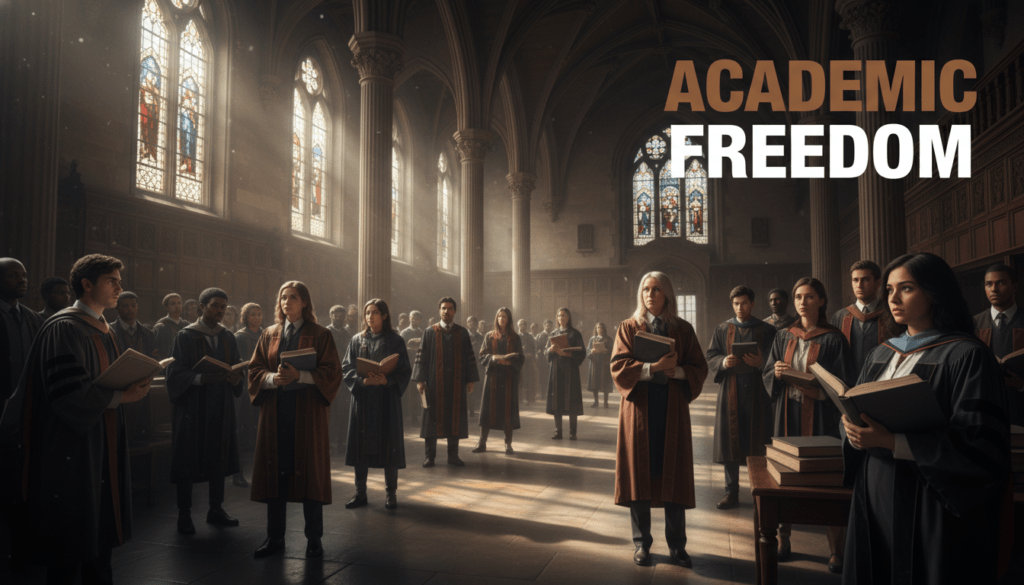
At the heart of the legal challenge to SB 129 is the principle of academic freedom. Formalized in the early 20th century, academic freedom gives faculty the right to teach and research without undue government or institutional interference (aaup.org). The Supreme Court has recognized it as a First Amendment right, allowing universities to determine “what may be taught” and “how it should be taught” (mtsu.edu). The plaintiffs in the Alabama case, represented by the NAACP Legal Defense Fund and the ACLU, argue that SB 129 violates this principle by imposing viewpoint-based restrictions on what they can say in the classroom (naacpldf.org).
An initial ruling from a district judge allowed the law to stand. The judge stated that a professor’s academic freedom does not automatically override a university’s decisions about curriculum (newsfromthestates.com). This ruling sets up a critical confrontation in the appeals court. The case forces a re-examination of the sharing of power between national and state governments over public education. Furthermore, it questions the role of tenure protections, which are designed to shield professors from being fired for teaching controversial subjects (aaup.org). The appeal will test how far a state legislature can go in dictating academic content on ideological grounds.
The National Ripple Effect
Alabama is not alone in this fight. The push to dismantle DEI is a coordinated national movement, with between 14 and 22 states having passed similar laws (highereddive.com). States like Florida and Texas have enacted legislation that eliminates DEI offices, bans mandatory diversity training, and prohibits the use of diversity statements in hiring (highereddive.com). This legislative trend is having a measurable impact on higher education nationwide. A 2024 study found that 30% of academics in Southern states considered DEI issues and tenure protections as primary reasons for seeking employment elsewhere (bestcolleges.com).
The damage extends to faculty mental health and student well-being. The same study revealed that 74% of LGBTQ+ faculty reported negative effects on their mental health, and nearly half considered relocating (bestcolleges.com). Students are also deeply concerned. A 2022 survey showed that 88% of college students believe universities should fund programs that support historically marginalized groups (bestcolleges.com). If those programs are cut, 55% of all students would consider transferring. That number is even higher for Black (59%) and LGBTQ+ (69%) students, who often rely on these programs for support and community (bestcolleges.com).
Impact on Faculty in Anti-DEI States
Percentage of faculty reporting significant personal and professional concerns.
Considered Leaving State (Overall)
Negative Mental Health (LGBTQ+)
Considered Relocating (LGBTQ+)
Source: BestColleges.com 2024 Study
The Stakes of the Appeal
The ongoing appeal in Alabama is more than a regional dispute. It is a bellwether for the future of public education in America. The court’s decision will have profound implications for academic freedom and the ability to teach a full and accurate history. This includes difficult subjects like the quest for reparations and the ongoing effects of racial injustice. A ruling in favor of the professors could reinforce First Amendment protections and empower challenges to similar laws in other states. It would affirm that state legislatures cannot impose ideological gag orders on university classrooms.
However, a decision upholding the ban could embolden other states to enact even more restrictive measures. This would further chill free speech and academic inquiry. It could make it harder for universities to recruit and retain diverse faculty, and it could alienate students who value an inclusive campus environment. Ultimately, the battle in Alabama is about who gets to shape the educational narrative and whether public universities will remain places of open inquiry or become instruments of political ideology. The outcome will resonate for years to come, defining the balance between state power and the fundamental freedoms of educators and students.
The National Landscape of Anti-DEI Legislation
As of late 2025, a significant number of states have enacted laws restricting DEI initiatives in higher education.
At least 22 states have passed anti-DEI laws, with many more introducing similar legislation.
Source: Higher Ed Dive
About the Author
Darius Spearman is a professor of Black Studies at San Diego City College, where he has been teaching for over 20 years. He is the founder of African Elements, a media platform dedicated to providing educational resources on the history and culture of the African diaspora. Through his work, Spearman aims to empower and educate by bringing historical context to contemporary issues affecting the Black community.
