

Chicago Police Discipline: A Fight for Transparency
By Darius Spearman (africanelements)
Support African Elements at patreon.com/africanelements and hear recent news in a single playlist. Additionally, you can gain early access to ad-free video content.
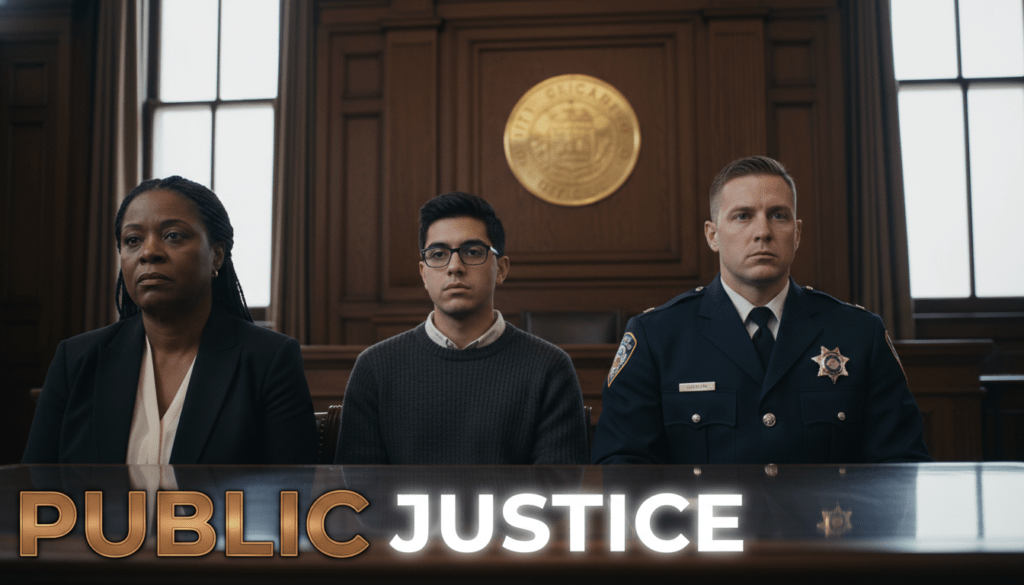
For more than sixty years, the city of Chicago has held public hearings when police officers face accusations of severe misconduct. These hearings act as a window for residents to see how the government handles those who abuse their power. However, a significant legal battle now threatens to close those curtains. The dispute centers on whether these critical disciplinary cases will remain open to the public or move behind closed doors into private arbitration. The Illinois Supreme Court stands poised to review the matter, and the outcome will determine who gets to watch when the police are on trial.
This conflict places two powerful forces against one another: the collective bargaining rights of labor unions and the public demand for police accountability. On one side, the Fraternal Order of Police Lodge 7 argues that officers deserve the same arbitration rights as other public employees. On the other side, city officials and activists argue that police officers hold unique power over life and death, requiring a higher standard of transparency. With over twenty serious cases currently stalled in limbo, including the officer involved in the fatal shooting of thirteen-year-old Adam Toledo, the stakes remain incredibly high for communities seeking justice.
The Roots of the Divide
To understand the current courtroom battle, one must look at the history of how Chicago manages police discipline. The system currently in place emerged from a scandal in 1960. Following significant corruption within the department, the city established the Chicago Police Board. This civilian body received the authority to decide the fate of officers facing “severe” discipline. The definition of severe discipline includes firing or suspensions lasting longer than thirty days. For decades, the Board has conducted these hearings in public, operating much like a civil trial where evidence is presented openly (illinoispolicy.org).
Parallel to this system, the city entered into its first collective bargaining agreement with the police union in 1981. This contract allowed officers facing minor discipline to appeal through a grievance arbitration process. Unlike the Police Board hearings, these arbitration sessions take place privately before a third-party arbitrator. Over time, the union sought to expand the scope of arbitration. This effort creates a tension between the established civilian oversight and the protections afforded by union contracts (lris.com).
The distinction between the Police Board and arbitration is not merely procedural; it affects outcomes. The Police Board consists of civilians appointed by the Mayor, intended to represent the community. Conversely, an arbitrator is selected through a mutual process where the union and the city take turns striking names from a list until one person remains. Critics argue this selection method encourages arbitrators to reach compromise verdicts rather than strictly upholding termination recommendations (franczek.com).
The Battle for Transparency
The current crisis ignited during contract negotiations in 2023. The Fraternal Order of Police argued that under the Illinois Public Labor Relations Act, police officers are entitled to arbitration for all disputes. Because police cannot legally strike, the law provides arbitration as a substitute mechanism for resolving conflicts. In late 2023, independent arbitrator Edwin Benn ruled in favor of the union. He determined that officers facing severe misconduct charges, including those recommended for firing, had the right to bypass the Police Board and choose arbitration instead (franczek.com).
This ruling fundamentally threatened the transparency of the disciplinary process. Benn decided that these hearings should be private, consistent with standard labor arbitration practices. Such a move would effectively place the most high-profile police misconduct cases behind a veil of secrecy. This shift would prevent journalists, victims’ families, and the general public from observing the proceedings or accessing the evidence presented against an officer. The Chicago City Council voted twice to reject this ruling, setting the stage for the current legal confrontation (wttw.com).
The city argues that transparency acts as a vital check on police power. Without public hearings, the community cannot track patterns of abuse or ensure that the department holds officers accountable. This debate touches on broader themes of sharing of power between national and state governments and local municipalities, as state labor laws conflict with local mandates for civilian oversight. The outcome will decide if the “Blue Wall of Silence” receives legal reinforcement through private arbitration.
A Question of Accountability
The move to private arbitration has stalled numerous cases, leaving families without closure. As of late 2024, approximately twenty severe misconduct cases remain in limbo, waiting for the Supreme Court’s ruling. Among these is the case of Officer Eric Stillman, who shot and killed thirteen-year-old Adam Toledo in 2021. Disciplinary charges recommending his firing were filed in April 2023. However, his hearing has been on hold for over a year because he requested arbitration (cbsnews.com).
These delays exacerbate the pain felt by communities of color, who disproportionately suffer from police violence. The Adam Toledo case became a rallying point for Black and Brown solidarity in Chicago, linking his death to a long history of police violence against Black residents. Activists argue that transparency is essential for both communities to track systemic issues. The inability to resolve these cases mirrors other historical instances where the government appeared to silence political prisoners and activists, delaying justice indefinitely.
The Police Board data reveals why the venue matters. Between 2021 and mid-2024, the Board voted to fire the officer in 36 percent of the cases it decided. In 30 percent of cases, the officer was found not guilty. The remaining cases often resulted in suspensions. Reform advocates fear that arbitrators, who rely on being selected by both the union and the city for future work, will be less likely to impose the ultimate penalty of termination (lris.com).
*Data represents decided cases. Does not include resignations prior to verdict.
The Legal Showdown
The dispute eventually reached the Cook County Circuit Court, leading to a unique “split decision” that satisfied neither side completely but set a new legal precedent. Judge Michael Mullen ruled that while the union was correct that officers have a right to arbitration, the city’s interest in transparency was paramount. He ordered that officers could choose arbitration, but the hearings must be open to the public (wttw.com).
The Illinois Appellate Court later upheld this decision in August 2024. The court cited a “well-defined and dominant public policy” favoring transparency in police misconduct matters. This legal concept of “dominant public policy” is a narrow exception that allows courts to overturn arbitration rules if they violate fundamental social values or laws. The court referenced a 2020 Illinois Supreme Court ruling that struck down a union contract provision allowing the destruction of disciplinary records, reinforcing the idea that police records belong to the public (franczek.com).
Now, the Illinois Supreme Court has agreed to review the case. The central question remains: can the hybrid “public arbitration” model exist legally? The union argues that arbitration is inherently private and that making it public undermines the process. The city contends that the public’s right to know overrides the procedural preferences of the police union. This legal battle echoes the complexities found in high court decisions regarding affirmative action, where the interpretation of established laws can drastically alter the landscape of social justice.
Impact on Black and Brown Communities
The shift to secrecy would have a profound impact on Black and Brown Chicagoans. Data from the Chicago Office of Inspector General consistently shows that Black residents are subjected to police use-of-force at rates more than 2.5 times higher than white residents (chicago.gov). The “limbo” cases currently awaiting arbitration involve officers accused of fatal shootings and other severe acts of misconduct. Removing these cases from public view disproportionately hides violence committed against minority communities.
Historically, open hearings have allowed the public to identify patterns of abuse. During the era of Jon Burge, a Chicago police commander who oversaw the torture of Black suspects, public scrutiny eventually played a role in exposing the systemic nature of the crimes. If future cases move to private arbitration, identifying such patterns becomes significantly harder. The “Blue Wall of Silence” protects officers regardless of the victim’s race, making transparency essential for accountability.
The outcome of this case will send a message about who the system is designed to protect. If the Supreme Court rules in favor of private arbitration, it prioritizes the employment privacy of public servants over the community’s right to oversee those servants. This potential shift creates anxiety among activists who have fought for decades to bring police misconduct into the light.
Over 20 major cases, including fatal shootings, are currently on hold waiting for the Supreme Court’s ruling on public transparency.
What Comes Next?
The Illinois Supreme Court’s upcoming decision will serve as the final word in this saga. If the court upholds the “public arbitration” compromise, it will create a new model for police discipline that balances union rights with public oversight. This would mean that while officers can choose their venue, they cannot hide from the community. However, if the court rules that the union contract overrides the public’s right to know, Chicago could see a return to an era where police discipline happens in the dark.
Until the ruling arrives, the families involved in the stalled cases remain in a difficult position. They cannot move forward with their lives, and the officers accused of misconduct remain on the force, albeit often in a stripped capacity. The city faces a pivotal moment that will define its relationship with law enforcement for years to come. The decision will determine whether the progress made since the creation of the Police Board in 1960 continues or if the clock turns back on transparency.
Conclusion
The fight over police discipline secrecy in Chicago is more than a legal technicality; it is a battle for the soul of public accountability. The history of the Police Board and the union contract reveals a long-standing tension between protecting officers and protecting the public. As the Illinois Supreme Court prepares to review the case, the eyes of the city—and the nation—are watching. Open hearings have long helped residents track patterns of misconduct and demand fair outcomes. Whether that window remains open or slams shut depends on how the court interprets the balance between labor rights and the dominant public policy of transparency.
About the Author
Darius Spearman is a professor of Black Studies at San Diego City College, where he has been teaching for over 20 years. He is the founder of African Elements, a media platform dedicated to providing educational resources on the history and culture of the African diaspora. Through his work, Spearman aims to empower and educate by bringing historical context to contemporary issues affecting the Black community.
