
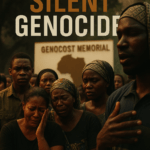


DRC’s Silent Genocide: A Call to Action
By Darius Spearman (africanelements)
Support African Elements at patreon.com/africanelements and hear recent news in a single playlist. Additionally, you can gain early access to ad-free video content.
A Nation in Mourning: Remembering the Victims
On August 2, the Democratic Republic of Congo (DRC) observed a national day of remembrance for the millions of Congolese lives lost in the conflicts that have ravaged the country for over three decades. The official ceremony took place in Kinshasa at the Genocost Memorial, drawing numerous political, cultural, and diaspora figures. Among those present were artists Innos B, Youssoupha, and Werrason, as well as influencer Didi Stone. This event, organized by the Congolese government and the National Reparations Fund for Victims (FONAREV), aimed to highlight the immense scale of violence committed across the nation’s territory.
The term “Genocost” describes economically motivated massacres linked to the illegal exploitation of the DRC’s natural resources, particularly in the eastern provinces (africanews.com). Several United Nations reports, including the 2010 Mapping Project, suggest that these crimes may qualify as acts of genocide. During the ceremony, documentaries were screened, recounting the atrocities committed since the 1990s. Many survivors bravely shared their stories anonymously, their faces covered for security reasons. Their accounts detailed killings, systematic rape, and forced displacement, all endured in near-total global silence. One survivor from Ituri recounted, “When the war started in my village, there were many killings and atrocities. We had to flee to a neighboring village.”
Understanding the “Silent Genocide”
The Catholic Church and the DRC government have consistently called for international recognition of the atrocities unfolding in the eastern regions, often referring to it as a “silent genocide” (OSV News). This term describes a prolonged and underreported campaign of violence, characterized by massacres, beheadings, and kidnappings, which many believe amounts to genocide but has largely been ignored by the international community (detroitcatholic.com). This differs from other forms of mass violence due to its sustained nature, the specific targeting of certain populations, and the lack of widespread international condemnation or intervention. Church sources have drawn chilling parallels to the 1994 Rwandan genocide, noting the international community’s silence over the past three decades (detroitcatholic.com).
The Allied Democratic Forces (ADF) are a significant contributor to this “silent genocide,” known for attacking churches, beheading Christians, and kidnapping people for use as slaves or fighters (OSV News). A recent massacre near Maiba village in North Kivu Province saw 70 people, including women, children, and the elderly, beheaded (OSV News). The victims were found with their hands tied behind their backs, highlighting the brutality of the violence (ncronline.org). These horrific acts underscore the severity of the ongoing violence and the urgent need for global attention.
Key Terms in the DRC Conflict
A prolonged and underreported campaign of violence, characterized by massacres, beheadings, and kidnappings, that church sources and others believe amounts to genocide but has largely been ignored by the international community. It differs from other forms of mass violence by its sustained nature, specific targeting of populations, and lack of widespread international intervention.
A term used to describe economically motivated massacres linked to the illegal exploitation of the Democratic Republic of Congo's natural resources, particularly in the eastern provinces.
The M23 Rebel Group and External Support
The M23 rebel group, which includes the Alliance Fleuve Congo (AFC), is a primary perpetrator of violence in eastern DRC (CNN). This group has called for a humanitarian ceasefire after weeks of intense fighting with the Congolese military, which resulted in hundreds of deaths. The M23's stated mission is to protect the Tutsi population and fight for their rights, particularly in response to allegations that the DRC government had failed to uphold its promises regarding political integration and security (english.news.cn). However, the conflict in the DRC is complex and involves a “wider range of conflict drivers” beyond just minerals, with many different actors and their own agendas contributing to the violence (reliefweb.int).
There are significant allegations of external support for the M23. United Nations experts estimate that up to 3,000-4,000 Rwandan soldiers are supervising and supporting M23 fighters in eastern DRC, outnumbering the rebel group's forces (CNN). The Rwandan army has provided direct military and financial support to M23 (Genocide Watch). Rwanda's motivation for supporting M23 is attributed to its weariness of anti-Tutsi militias massacring Congolese Tutsis and forcing them into Rwanda (genocidewatch.com). Despite this, the UN has not sanctioned Rwanda for this support (Genocide Watch). The M23 has made significant territorial gains, seizing strategic towns such as Kanyabayonga (Genocide Watch).
A Deepening Humanitarian Crisis
The conflict has led to a severe humanitarian crisis, marked by widespread displacement and horrific reports of war crimes. The ongoing escalation of conflict has displaced around half a million more people (Reuters). Since 2022, the Tutsi-led M23 rebel group has committed numerous war crimes in Eastern DRC, including unlawful killings and mass rape (Genocide Watch). Survivors have recounted stories of killings, systematic rape, and forced displacement (africanews.com). The fall of eastern Congo's largest city, Goma, has sent thousands fleeing from their homes, once again leaving the Great Lakes region on the brink of a wider war (english.news.cn).
Congolese citizens have fled from renewed clashes between M23 rebels and the armed forces of the Democratic Republic of the Congo (FARDC) (OSV News). While detailed information on the overall conditions of displaced populations or comprehensive humanitarian aid efforts is limited, we know that Burundian volunteers are serving food to displaced families at Rugombo Stadium in Burundi (OSV News). The severity of these acts is highlighted by the massacre near Maiba village, where 70 people, including women, children, and the elderly, were beheaded (ncronline.org). These accounts paint a grim picture of the lived experiences of civilians caught in the conflict, who face unimaginable horrors and displacement.
Humanitarian Impact: Displacement in Eastern DRC
A Call for International Justice
President Félix Tshisekedi has urged the international community to recognize the ongoing tragedy as a “creeping genocide” (africanews.com). In his speech, President Tshisekedi made a powerful plea to the international community, stating, “If the world still hesitates to recognize this tragedy for what it is—a creeping genocide—we will not wait for others to validate our pain. We are the first witnesses; we will be the first to pursue justice” (africanews.com). The ceremony concluded with the lighting of the Genocost flame, a symbol of remembrance and resistance. Congo's communications minister has stated that the international community must take concrete action and impose sanctions on Rwanda to curb the M23 rebel conflict (Reuters).
Foreign powers, including the United States and the European Union, have condemned Rwanda's involvement in the fighting (Reuters). However, previous interventions and truce agreements have failed to cease hostilities (CNN). The international community has been “silent” regarding the ongoing violence, which church sources consider a “silent genocide” (detroitcatholic.com). This lack of decisive action raises questions about the effectiveness of international legal frameworks for genocide recognition and the challenges faced in applying them to the DRC situation. The DRC has endured constant warfare since 1996, resulting in six million deaths (genocidewatch.com). The First and Second Congo Wars (1996–2003) directly followed the 1994 Rwandan Genocide against the Tutsis, which left nearly one million Tutsis and moderate Hutus dead (genocidewatch.com). In the first Congo war, Rwanda invaded Zaire (now Congo) in pursuit of Hutu ethnic extremists who had fled there after committing a genocide in neighboring Rwanda (ncronline.org).
The Path Forward: Addressing Root Causes
The conflict in the DRC is not solely about minerals; it involves a wider range of conflict drivers (reliefweb.int). While the illegal exploitation of natural resources undoubtedly plays a role, the historical context of the Congo wars following the Rwandan genocide suggests complex underlying issues beyond simple resource extraction. The international community must move beyond mere condemnation and implement concrete actions, including targeted sanctions against those who fuel the conflict. This requires a deeper understanding of the motivations of all actors involved, including the M23 and its alleged external supporters.
Furthermore, addressing the humanitarian crisis demands more than just acknowledging displacement. Information is needed on the conditions of displaced populations, comprehensive humanitarian aid efforts, and the obstacles to relief. The lived experiences of civilians, including survivors of war crimes, must be brought to light to ensure accountability and provide necessary support systems. The international community's continued silence on what many describe as a “silent genocide” is unacceptable. It is imperative to break this silence and ensure that the atrocities in the DRC receive the global attention and intervention they desperately need.
Historical Context of the DRC Conflict
-
1994Rwandan Genocide against the Tutsis, leaving nearly one million dead.
-
1996-2003First and Second Congo Wars directly follow the Rwandan Genocide, leading to six million deaths. Rwanda invades Zaire (DRC) in pursuit of Hutu extremists.
-
Since 1996DRC endures constant warfare, contributing to the “silent genocide.”
-
Since 2022M23 rebel group commits numerous war crimes in Eastern DRC, including unlawful killings and mass rape.
ABOUT THE AUTHOR
Darius Spearman has been a professor of Black Studies at San Diego City College since 2007. He is the author of several books, including Between The Color Lines: A History of African Americans on the California Frontier Through 1890. You can visit Darius online at africanelements.org.
