

Environmental Defenders Face Deadly Attacks
By Darius Spearman (africanelements)
Support African Elements at patreon.com/africanelements and hear recent news in a single playlist. Additionally, you can gain early access to ad-free video content.
A Perilous Fight on the Front Lines
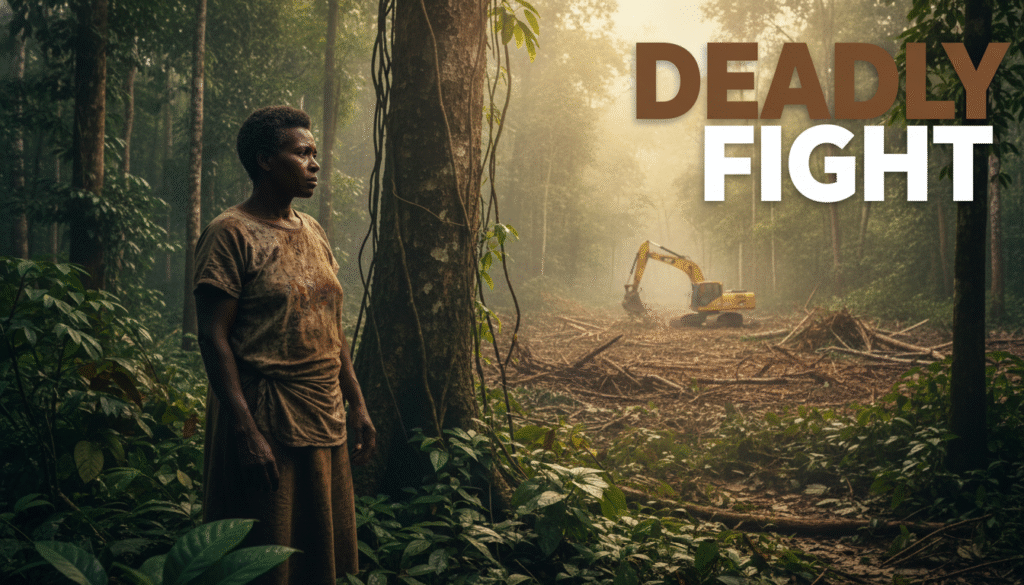
The global struggle to protect the environment has become a deadly battleground. Those standing on the front lines, the land and environmental defenders, face escalating violence. In 2024 alone, at least 146 defenders were killed or forcibly disappeared across the globe (counterpunch.org). This alarming figure is part of a larger, devastating trend that has seen at least 2,253 defenders killed since 2012 (srdefenders.org). These are not just numbers; they represent individuals who fought to protect their communities and the planet.
This crisis disproportionately harms Indigenous and Afro-descendant communities, who are often the primary guardians of the world’s most vital ecosystems (mongabay.com). Their fight is not only for the environment but also for their very existence. Recognizing this severe situation, the Inter-American Court of Human Rights issued a landmark advisory opinion in 2025. Consequently, the court affirmed that states have a legal duty to protect these defenders, paying special attention to the unique risks faced by Black and Indigenous communities in climate fights (iisd.org).
The Historical Roots of Today’s Violence
The violence against environmental defenders is not a new phenomenon; it has deep historical roots. For centuries, Indigenous peoples have defended their ancestral lands against exploitation and invasion (counterpunch.org). This long history is deeply connected to settler colonialism, a system where colonizers replace the original population to permanently seize their land (hrw.org). This process involves the violent dispossession and cultural destruction of the original inhabitants, creating a foundation of conflict that persists today.
The legacy of settler colonialism continues to fuel modern-day environmental injustice. It created legal and social structures that prioritize corporate and state control over ancestral land rights (hrw.org). For Afro-descendant communities, this history is intertwined with the legacy of slavery, where stolen land was worked by stolen people. Therefore, their struggles for land rights and environmental protection are also a fight for racial justice and self-determination. They are not merely protecting the environment; they are defending their entire “lifeworlds”—their culture, spirituality, and holistic way of life that is inseparable from their land (frontlinedefenders.org).
From the Americas to “Cancer Alley”
While much of the reported lethal violence occurs in Latin America, the crisis of environmental justice is profoundly relevant to Black communities in the United States (insideclimatenews.org). The same systemic forces that endanger Afro-descendant communities in Colombia or Brazil also create “sacrifice zones” in the U.S. This reality is a direct result of environmental racism, where polluting industries and hazardous waste sites are intentionally placed in or near Black neighborhoods (insideclimatenews.org). This pattern leads to severe health crises and diminishes the quality of life.
Historical policies like redlining locked African American populations into areas with high environmental risks (insideclimatenews.org). The consequences are devastating, with Black communities suffering from higher rates of asthma, cancer, and other serious illnesses. The fight against this injustice has a long history, deeply connected to the civil rights movement. For example, grassroots movements led by African American activists have brought global attention to places like “Cancer Alley” in Louisiana, where a dense concentration of petrochemical plants poisons predominantly Black communities (insideclimatenews.org). Similarly, Black communities across the African diaspora, from the Niger Delta to urban centers in Europe, face their own battles against pollution and land degradation, making this a truly global struggle (srdefenders.org).
The Grim Statistics of a Global War
The data on attacks against environmental defenders paints a stark and disturbing picture of a worldwide crisis. Latin America has consistently been the most dangerous region, accounting for approximately 82% of all killings and disappearances in 2024 (mongabay.com). The violence is concentrated in several key countries. Colombia recorded the highest number of deaths with 48, making it the deadliest nation for defenders (downtoearth.org.in). Following Colombia, Guatemala saw a horrifying five-fold increase in killings, reaching 20 deaths (counterpunch.org). Mexico and Brazil also remained hotspots, with 18-19 and 12 killings respectively (downtoearth.org.in).
Indigenous peoples bear a massively disproportionate burden. Although they make up only about 6% of the global population, they accounted for roughly one-third of all defenders killed in 2024 (counterpunch.org). While specific global statistics for Afro-descendant defenders are harder to find due to systemic underreporting, reports confirm they face extreme levels of violence, particularly in countries like Colombia and Brazil (business-humanrights.org). This lack of precise data itself reflects the marginalization these communities endure. Furthermore, these defenders are not just murdered; four long-term disappearances were also documented in Chile, Honduras, Mexico, and the Philippines in 2024 (counterpunch.org).
Lethal Attacks on Environmental Defenders by Country (2024)
Recorded killings of land and environmental defenders
Global Witness data show Colombia remains the deadliest country for environmental defenders in 2024; bars reflect recorded killings by country. Source: downtoearth.org.in.
Profits, Pollution, and Perpetrators
The violence against environmental defenders is overwhelmingly driven by conflicts over land and resources. More than 62% of all documented cases in 2024 were linked to disputes over land or land reform (srdefenders.org). Powerful economic interests see the Earth’s natural resources as commodities for profit, putting them in direct conflict with communities who view these territories as their homes and the basis of their cultural survival. These industries operate with devastating consequences for both people and the planet.
Among these industries, mining was the deadliest sector in 2024, linked to at least 29 killings (counterpunch.org). The relentless pursuit of minerals and metals often leads to deforestation, water contamination, and the displacement of local populations. Logging operations were connected to eight deaths, while agribusiness contributed to four (counterpunch.org). The perpetrators of this violence are frequently hired gunmen, private military forces, and organized crime groups acting on behalf of corporate or private interests (mongabay.com). They use terror to silence opposition and clear the way for destructive projects.
Attacks by Sector Driving Violence (2024)
Extractive industries like mining are linked to the highest number of lethal attacks against defenders (counterpunch.org).
When the State Becomes the Threat
One of the most disturbing findings is the frequent involvement of state actors in attacks against defenders. Globally, police, military, and other public officials were directly or indirectly involved in nearly half of all recorded incidents (srdefenders.org). Instead of protecting their citizens, these state forces often align with powerful commercial interests, framing destructive projects as essential for “national development.” This complicity creates a climate where violence can flourish with impunity.
Beyond direct violence, states increasingly use the legal system as a weapon. This trend, known as “criminalization,” involves filing bogus charges and abusive lawsuits to silence activists (frontlinedefenders.org). Governments misuse anti-protest and even anti-terrorism laws to intimidate and imprison defenders. For example, in the United States, new “critical infrastructure” laws impose felony charges on protestors near pipelines (insideclimatenews.org). Strategic Lawsuits Against Public Participation, or SLAPPs, are another common tactic, designed to drain activists of their time and financial resources, effectively stifling their work (ftbchambers.co.uk). Ultimately, this state-sanctioned harassment is a powerful tool to suppress dissent.
Landmark Agreements and Lingering Dangers
In response to the growing crisis, important legal frameworks have been established to protect environmental defenders. The Escazú Agreement, adopted in Latin America and the Caribbean on March 4, 2018, is a crucial example (latinamericareports.com). It is the first international treaty to include explicit provisions to protect environmental human rights defenders (ciel.org). The agreement is built on three core pillars: ensuring public access to environmental information, guaranteeing public participation in environmental decision-making, and providing access to justice in environmental matters (ciel.org).
Despite this landmark treaty, its promise remains unfulfilled for many. Since the agreement’s adoption, almost 1,000 defenders have been murdered or disappeared in Latin America, the very region it was designed to protect (counterpunch.org). The primary obstacles to its effectiveness are a severe lack of political will from governments, coupled with the immense power of corporate interests in the extractive and agribusiness sectors (pbicanada.org). Weak rule of law, widespread corruption, and a pervasive culture of impunity mean that perpetrators are rarely held accountable, undermining the agreement’s goals and leaving defenders dangerously exposed (pbicanada.org).
Key Protections in the Escazú Agreement
The Escazú Agreement is the first treaty to explicitly mandate protection for environmental defenders (ciel.org).
A Ruling for Justice, A Call for Action
A major step toward greater accountability came on July 3, 2025, when the Inter-American Court of Human Rights issued a groundbreaking Advisory Opinion on the climate emergency (iisd.org). The court’s ruling was clear and powerful: states have a legal obligation under human rights law not only to prevent climate damage but also to actively protect the environmental defenders who work to stop it (apnews.com). This decision formally recognizes the vital role these individuals and communities play in addressing the global climate crisis.
Crucially, the opinion highlighted the differentiated impacts on specific groups, calling for special attention to the dangers faced by Indigenous Peoples, Afro-descendants, women, youth, and LGBTI+ activists (iisd.org). The court also directly addressed the weaponization of the law, asserting that states must stop hindering defense work through censorship, protest repression, or SLAPPs (ishr.ch). It reinforced the state’s duty to investigate and punish all crimes against defenders, including those committed by corporations or other private actors. This ruling is not just a legal document; it is a powerful call for urgent action from governments to end the impunity that has cost so many lives and to safeguard those who defend our shared planet.
About the Author
Darius Spearman is a professor of Black Studies at San Diego City College, where he has been teaching for over 20 years. He is the founder of African Elements, a media platform dedicated to providing educational resources on the history and culture of the African diaspora. Through his work, Spearman aims to empower and educate by bringing historical context to contemporary issues affecting the Black community.
