
Listen to this article
Download AudioGreece’s Migrant Crisis: A Diaspora Perspective
By Darius Spearman (africanelements)
Support African Elements at patreon.com/africanelements and hear recent news in a single playlist. Additionally, you can gain early access to ad-free video content.
Greece’s Migrant Influx
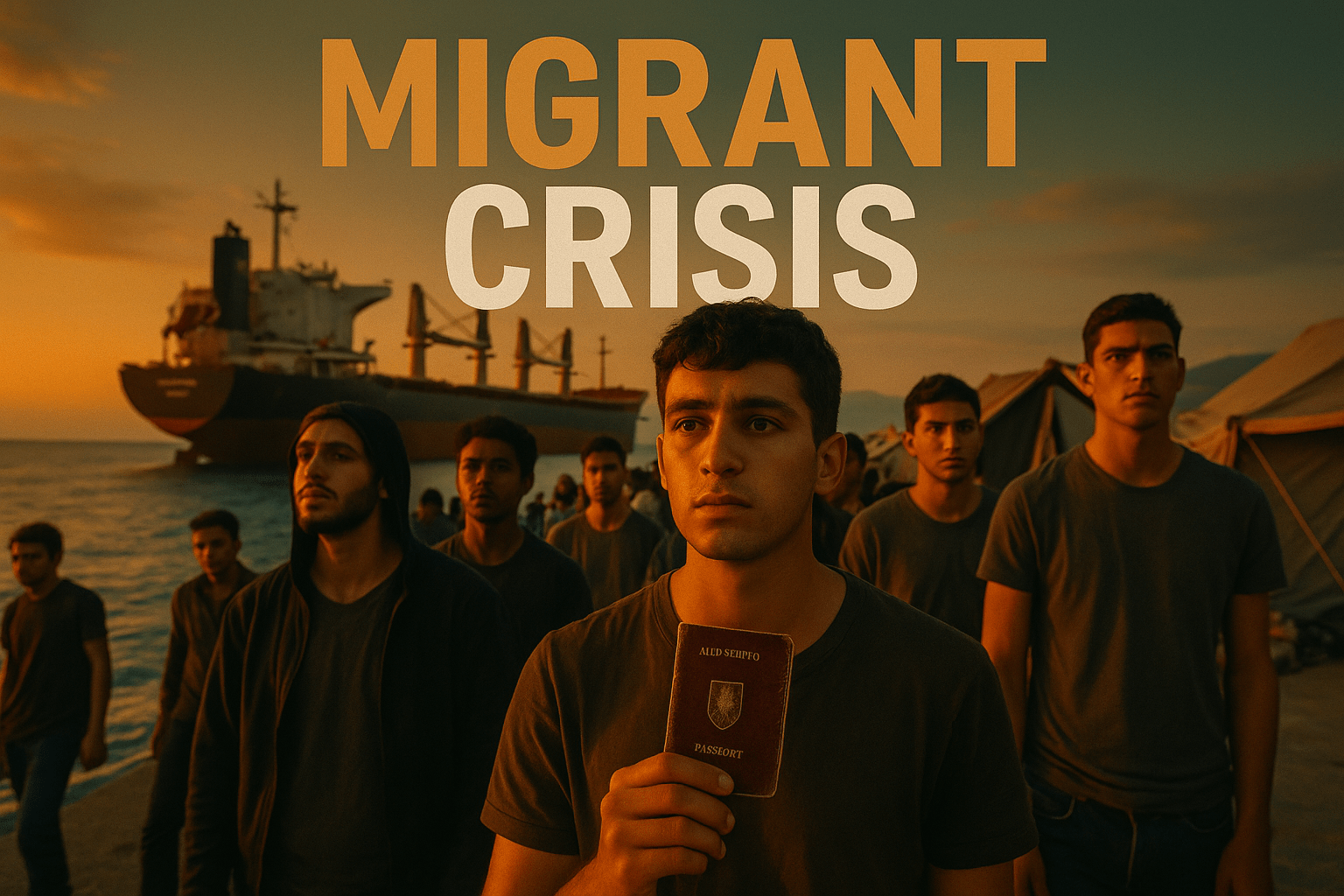
Greece is currently grappling with a significant increase in migrant arrivals, particularly from North Africa. This surge has placed immense pressure on the nation’s resources and infrastructure. Over 500 migrants recently arrived at the Port of Lavrio near Athens, intercepted south of the island of Crete (Africanews). These individuals, mostly young men, were transferred overnight aboard a bulk carrier after Greek authorities intercepted their fishing trawler (Africanews).
The transfer to mainland Greece became necessary because makeshift reception centers on the island of Crete have reached their maximum capacity (Africanews). Crete has seen roughly 500 new arrivals per day since the weekend, totaling an estimated 2,000 migrants and refugees landing on the island (Al Jazeera). This rapid influx has caused considerable anger among local authorities and tourism operators, who are struggling to provide basic services (Al Jazeera).
Recent Migrant Arrivals in Greece
Asylum Processing Pause
In response to the overwhelming number of arrivals, Prime Minister Kyriakos Mitsotakis announced a significant policy shift. Greece will suspend asylum processing for migrants arriving by sea from North Africa for three months (Africanews). This measure specifically targets arrivals on Crete and aims to manage the current crisis (Africanews). The decision means a temporary halt to the formal review of protection claims for these individuals (Al Jazeera).
The suspension of asylum processing raises important questions about the rights of migrants and the legal frameworks governing asylum. While the immediate implications for migrants are not fully detailed, it suggests a period of uncertainty for those seeking refuge. This situation highlights the complex challenges faced by nations on the front lines of global migration, particularly when dealing with large-scale arrivals from regions experiencing instability.
Legal and Humanitarian Concerns
The decision to suspend asylum processing brings to light ongoing debates about Greece’s compliance with international and European Union law. The provided information does not explicitly state how this suspension aligns with existing legal frameworks (U.S. Department of State). However, past reports indicate that Greece has faced scrutiny regarding its treatment of migrants and asylum seekers (U.S. Department of State).
Non-governmental organizations (NGOs) have consistently argued that Greece has not effectively investigated claims of “pushbacks,” where migrants and asylum seekers are allegedly returned without due process (U.S. Department of State). Some reports even claim authorities have left migrants and asylum seekers stranded in the Aegean Sea or along the Evros land border without access to essential provisions like food, water, or medical care (U.S. Department of State). Furthermore, official data shows that Greek authorities continue to systematically detain asylum seekers and irregular migrants (RSA Aegean). This practice is viewed by some as a severe violation of the duty to use deprivation of liberty only as a last resort (RSA Aegean).
The conditions within these detention and reception centers are a significant humanitarian concern. While specific details on current conditions are not available, previous reports from NGOs and international organizations have raised alarms (U.S. Department of State). These reports include allegations of authorities beating migrants and asylum seekers, confiscating identity documents, personal effects, and money (U.S. Department of State). The systematic detention of migrants, particularly when coupled with such reported abuses, underscores the urgent need for transparency and adherence to human rights standards. For many within the African diaspora, these accounts resonate deeply with historical struggles against systemic oppression and the fight for basic human dignity.
Understanding Migrant Demographics and Drivers
The majority of migrants arriving in Greece are young men, primarily from Somalia, Sudan, Egypt, and Morocco (Africanews). This demographic trend is not accidental; it reflects the profound challenges and instabilities in their home countries. For example, Somalia is experiencing ongoing conflict, with a recent suicide bombing in Mogadishu claiming several lives and injuries (LegibleNews.com). The Somali militant group al-Shabaab claimed responsibility for this attack on the Jaalle Siyaad military academy (LegibleNews.com).
Such violence and instability are powerful “push factors” that compel individuals to seek safety and better opportunities elsewhere. The broader geopolitical landscape in the Middle East and Africa remains volatile, contributing significantly to these migration flows (Africanews). When people face daily threats to their lives, livelihoods, and futures, the decision to embark on a perilous journey becomes a desperate act of survival. This narrative of displacement and the search for a secure future is a familiar one across the African diaspora, reflecting centuries of forced and voluntary migration driven by conflict, economic hardship, and the pursuit of freedom.
Primary Countries of Origin for Migrants in Greece
- Somalia
- Sudan
- Egypt
- Morocco
EU-Libya Diplomatic Strain
The suspension of asylum processing also comes amid diplomatic strain between the European Union and Libya over migration cooperation (Africanews). EU officials were recently turned away from eastern Libya following a disagreement on the format of planned talks to curb crossings (Africanews). A visit by the EU’s migration commissioner and ministers from Greece, Italy, and Malta to eastern Libya was unsuccessful, with officials being denied entry and declared “persona non grata” (Reuters).
Authorities in eastern Libya accused the EU delegation of a “flagrant breach of diplomatic norms” and instructed them to “leave Libyan territory immediately” (France24). This diplomatic breakdown has sparked concern in Greece about potentially thousands of additional migrant arrivals from Libya (France24). Greece’s Prime Minister Mitsotakis stated that Greece’s navy and coastguard are willing to work with Libyan authorities to prevent migrant boats from leaving or to turn them back (France24). The inability to cooperate effectively with key transit countries like Libya complicates efforts to manage migration flows, placing a greater burden on frontline states like Greece.
Broader Geopolitical Instability
The challenges in Greece are part of a larger picture of geopolitical volatility across the Middle East and Africa. These regional instabilities contribute significantly to migration flows (Africanews). For instance, a ship attacked by Yemen’s Houthi rebels sank in the Red Sea, highlighting ongoing maritime security concerns in the region (The Hindu). Satellite images show new damage at Yemen’s rebel-controlled port at Hodeida after it was targeted by Israeli airstrikes (The Hindu).
Israel stated that the Houthis used the port to smuggle military equipment, a growing concern for analysts (The Hindu). Hodeida is also a crucial entry point for food and humanitarian aid for millions of Yemenis (The Hindu). Such conflicts and disruptions, whether from direct attacks or the breakdown of diplomatic relations, create environments where people cannot safely remain. The ripple effects of these events extend far beyond their immediate locations, pushing individuals and families to seek refuge in more stable regions, including Europe. This interconnectedness of global events means that instability in one part of the world can directly impact the migration patterns seen in another.
The Human Cost of Crisis
The immediate humanitarian consequences for migrants following the suspension of asylum processing are not explicitly detailed in the most recent reports. However, past accounts paint a concerning picture of the treatment of migrants and asylum seekers in Greece (U.S. Department of State). NGOs and international organizations have reported instances where authorities allegedly beat migrants and asylum seekers (U.S. Department of State). They also reportedly took identity documents, personal effects, and money from these vulnerable individuals (U.S. Department of State).
Some reports claim authorities left migrants and asylum seekers stranded in dangerous conditions, such as in the Aegean Sea or the Evros land border region, without access to food, water, or medical care (U.S. Department of State). The systematic detention of asylum seekers and irregular migrants by Greek authorities continues to be a documented practice (RSA Aegean). These conditions highlight the severe human toll of migration crises, particularly for those who have already endured immense hardship in their home countries. The struggle for basic human rights and dignified treatment for migrants, many of whom are people of color fleeing desperate situations, is a critical concern that resonates deeply with the ongoing fight for justice within the African diaspora.
Reported Humanitarian Concerns for Migrants in Greece
The EU’s Broader Response
The European Union’s broader response to the migrant crisis, particularly concerning arrivals from North Africa, involves attempts at cooperation with countries like Libya to manage migration flows (Reuters). However, recent events, such as the diplomatic incident where EU officials were denied entry to eastern Libya, indicate significant challenges in these efforts (Reuters). The EU’s approach also includes initiatives that link financial aid to African countries’ willingness to accept deported citizens (Africanews).
This strategy aims to create incentives for cooperation on migration management. Nevertheless, the effectiveness of such policies is often debated, especially when faced with complex political realities on the ground. The current situation in Greece underscores the urgent need for comprehensive, humane, and sustainable solutions to global migration challenges. These solutions must address the root causes of displacement, ensure the protection of human rights, and foster genuine cooperation between nations, rather than simply focusing on deterrence or externalization of borders. For the African diaspora, the call for equitable and just treatment of migrants, particularly those of African descent, remains a paramount concern.
Navigating a Complex Landscape
The migrant situation in Greece is a microcosm of a larger, complex global challenge. It involves a confluence of factors: geopolitical instability, humanitarian concerns, international law, and the sovereign decisions of nations. The recent surge in arrivals, coupled with Greece’s decision to suspend asylum processing, highlights the immense pressure on frontline states. The diplomatic strain between the EU and Libya further complicates efforts to manage these flows effectively.
The stories of migrants, many of whom are young men from African nations, are deeply intertwined with the broader narrative of the African diaspora. They represent individuals seeking safety, dignity, and opportunity in the face of conflict and hardship. Addressing this crisis requires a multifaceted approach that extends beyond border control. It must include robust humanitarian aid, diplomatic engagement to foster stability in regions of origin, and a commitment to upholding international human rights standards for all individuals, regardless of their migratory status. The path forward demands empathy, cooperation, and a shared commitment to human dignity.
ABOUT THE AUTHOR
Darius Spearman has been a professor of Black Studies at San Diego City College since 2007. He is the author of several books, including Between The Color Lines: A History of African Americans on the California Frontier Through 1890. You can visit Darius online at africanelements.org.
