

Haiti Child Gang Recruitment Solutions and The Long Shadow of Debt
By Darius Spearman (africanelements)
Support African Elements at patreon.com/africanelements and hear recent news in a single playlist. Additionally, you can gain early access to ad-free video content.
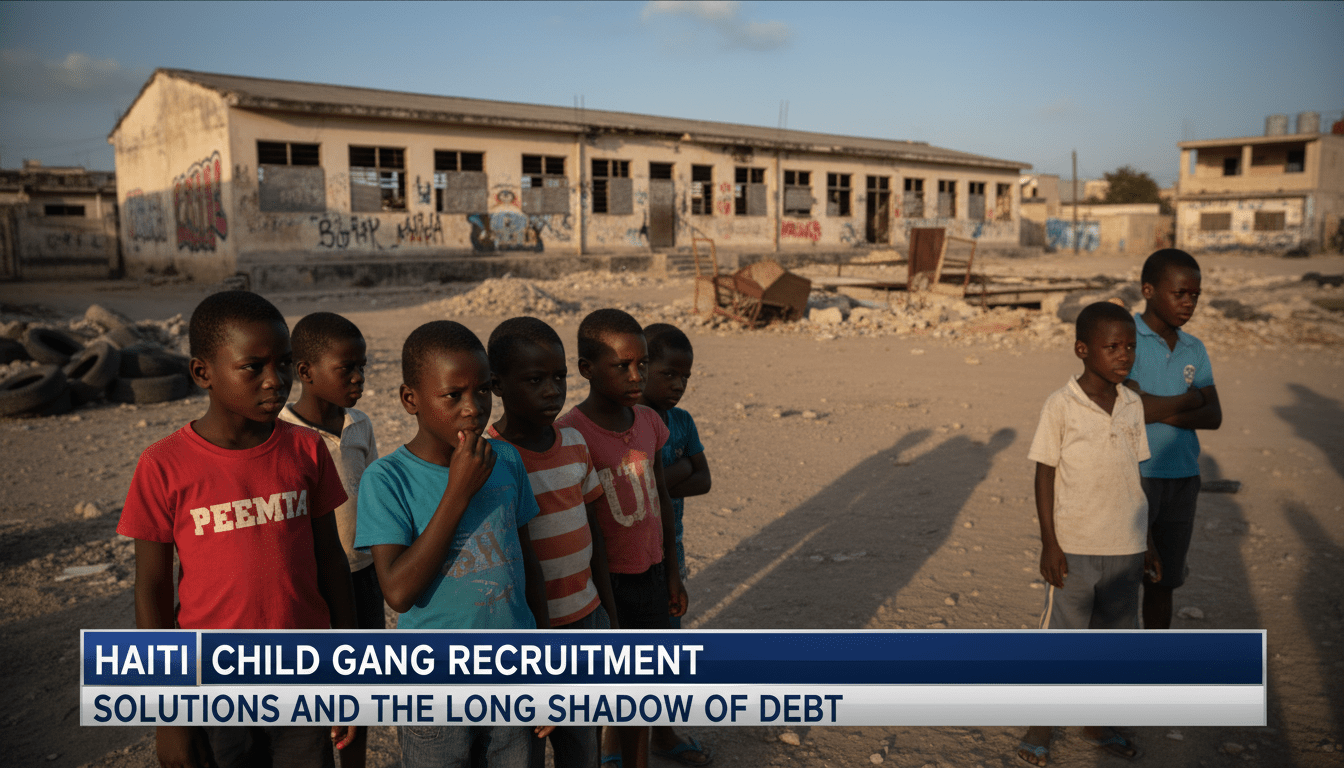
The streets of Port-au-Prince are currently the stage for a tragic cycle that predates the modern era. As world leaders gather for the 70th Commission on the Status of Women (CSW70), the focus is squarely on the youth of Haiti. Caribbean leaders and human rights advocates are sounding the alarm about the systemic recruitment of children into violent gangs. This crisis is not a random occurrence. It is the result of decades of political instability and economic strangulation. The international community now faces a critical moment as the United Nations prepares to deploy a new Gang Suppression Force (GSF). This force aims to reclaim territory from cartels that have turned children into soldiers and human shields (passblue.com).
To understand why children are being pulled into this life, one must look at the history of the island. For over a century, external pressures have shaped the social fabric of the nation. The current situation is the latest chapter in a long struggle for sovereignty and safety. As the United States government, under the leadership of President Donald Trump, weighs its role in the region, the calls for a legal framework to protect children grow louder. The discussion is no longer just about policing. It is about treating child recruitment as a form of human trafficking rather than simple criminal activity (betterworldcampaign.org).
The Historical Blueprint of Armed Groups
The use of informal armed groups in Haiti did not begin with modern cartels. The blueprint was established during the mid-20th century under the rule of François “Papa Doc” Duvalier. In 1959, he created a paramilitary force known as the Tonton Macoutes. This name comes from Haitian folklore, referring to “Uncle Gunnysack,” a figure who kidnaps children. The Duvalier regime used this force to bypass the traditional military and maintain absolute control through terror. This normalization of armed civilians paved the way for the current “gangsterization” of the state (cfr.org).
After the fall of the Duvalier dynasty in 1986, the power vacuum was filled by various political factions. In the 1990s and 2000s, local neighborhood groups became the new muscle for political leaders. These groups eventually evolved from being political tools to becoming independent criminal entities. They began to control specific territories and provide a twisted version of social services where the government failed to act. This evolution is a direct link to the Haitian Revolution and its long aftermath, where the struggle for internal stability has often been undermined by external interference (cfr.org).
The Economic Chains of the Double Debt
One cannot discuss the collapse of Haitian social systems without addressing the “Double Debt.” Following its independence from France, Haiti was forced to pay a massive indemnity in exchange for diplomatic recognition. This debt was meant to compensate former slave owners for their lost property. To pay this, Haiti took out loans from French and American banks, creating a cycle of interest that lasted until 1947. This financial drain prevented the nation from investing in infrastructure, healthcare, or education for over a century (cfr.org).
The lack of economic investment created a permanent state of poverty. Today, roughly 60 percent of the population lives on less than four dollars a day. In this environment, gangs offer the only viable source of income for many families. Recruitment is often driven by a “hunger or death” choice. When a gang offers a child thirty dollars a week, it is frequently the only way that child can feed their siblings. The call for reparations is not just about historical justice. It is about addressing the root causes of why the state cannot protect its youth (betterworldcampaign.org).
The Rise of Viv Ansanm and the Current Crisis
The assassination of President Jovenel Moïse in 2021 was a turning point for the nation. It signaled the near-total collapse of government authority. Following this event, formerly warring gangs formed an alliance known as “Viv Ansanm,” or “Living Together.” While the name traditionally implies social harmony, the alliance used it to signal a unified front against the state. Led by figures like Jimmy “Barbecue” Chérizier, these groups now control nearly 90 percent of the capital city (cfr.org).
The transition of Chérizier from an elite police officer to a gang warlord illustrates the deep corruption within state security forces. This “gangsterization” has made it nearly impossible for the police to maintain order. The Viv Ansanm alliance has used its power to shut down ports, airports, and over 1,600 schools. By closing schools, gangs remove the only safe space for children, making them easy targets for recruitment. The gangs have also used children as human shields because they know international forces are restricted from using lethal force against minors (passblue.com).
Escalation of Vulnerability (2024-2026)
Schools Closed
Internal Displacement
Recruitment Increase
The Gendered Impact of Recruitment
The crisis in Haiti is not experienced the same way by all youth. There is a horrific gendered component to gang recruitment. While boys are often used as combatants and spies, Black women and girls face a different kind of exploitation. Reports from late 2025 indicate a 1,000 percent rise in sexual violence against children. Girls are systematically trafficked within gangs for domestic chores and sexual exploitation (nih.gov).
This violence is used as a tool of control over neighborhoods. By targeting women and children, gangs destroy the social fabric that might otherwise resist their influence. At the CSW70 discussions, regional leaders emphasized that any solution must include specific protection for girls. The international community is being urged to view these actions as war crimes. The framing of this issue at the UN level is a attempt to trigger stronger legal obligations for the protection of victims during security operations (betterworldcampaign.org).
Legal Frameworks and the Handover Protocol
A major point of debate at the CSW70 is the legal status of children caught in gang activity. Human rights groups argue that these children should be treated as victims of forced recruitment rather than as criminals. To address this, a “Handover Protocol” was developed. This legal framework requires that any child captured during security raids be transferred to civilian child protection agencies within 72 hours. The goal is to prevent children from being sent to adult prisons, where they face further radicalization and abuse (passblue.com).
Implementation of this protocol has been slow due to the collapse of the Haitian justice system. The Juvenile Court in Port-au-Prince has not functioned properly since 2019. This legal vacuum often leads to children being caught in a cycle of mass incarceration without due process. Advocates are calling for the GSF to strictly follow the protocol to ensure that the suppression of gangs does not result in the further victimization of the youth. Rehabilitation and reintegration must be the primary goals for these children (betterworldcampaign.org).
The Shift to a Muscular Mandate
The planned deployment of the Gang Suppression Force (GSF) represents a shift in international strategy. Previous missions, such as the Kenyan-led Multinational Security Support (MSS) mission, had a limited advisory role. The GSF, however, operates under a “muscular” mandate. This term means the force is authorized to use offensive lethal force to “neutralize” gangs rather than just acting as a buffer. It falls under Chapter VII of the UN Charter, which allows for all necessary means to restore security (betterworldcampaign.org).
Critics of this approach worry that urban warfare in densely populated areas will lead to high civilian casualties. The gangs have integrated themselves into the slums of Port-au-Prince, making it difficult to separate combatants from civilians. The GSF must navigate this complex landscape while trying to protect the very children the gangs use as shields. The success of the mission depends on its ability to distinguish between the perpetrators of violence and the victims who have been forced to participate in it (passblue.com).
The “Muscular” Mandate Mechanism
Lethal Force Authorized
Target: “Neutralize” Gang Federations (betterworldcampaign.org)
Reintegration and the Road to Stability
Even if the GSF manages to clear gang territories, the work of rebuilding lives remains. Reintegration is the most difficult stage of the process. Children who have been associated with gangs often face deep stigma in their communities. Many have lost their families or are afraid of retaliation from their former gang members. Successful reintegration often requires permanent relocation to other departments of the country, away from the influence of the capital (nih.gov).
UNICEF and local partners have supported hundreds of children, but the scale of the need is overwhelming. For many children, the gang was their only source of community and protection. Replacing that structure with education and mental health support requires a long-term commitment from the international community. The crisis in Haiti is a reminder that security cannot be achieved through force alone. It requires addressing the deep-seated social and economic inequities that allowed gangs to flourish in the first place (betterworldcampaign.org).
The discussion at the CSW70 is a vital step toward a new approach. By framing child recruitment as a human rights violation and a form of trafficking, the world is beginning to acknowledge the complexity of the Haitian struggle. The history behind the headlines shows that the current chaos is not inevitable. It is the result of specific historical choices and economic pressures. As the world watches the deployment of the GSF, the focus must remain on protecting the most vulnerable members of society. Only then can the cycle of violence be truly broken (passblue.com).
About the Author
Darius Spearman is a professor of Black Studies at San Diego City College, where he has been teaching for over 20 years. He is the founder of African Elements, a media platform dedicated to providing educational resources on the history and culture of the African diaspora. Through his work, Spearman aims to empower and educate by bringing historical context to contemporary issues affecting the Black community.
