
Listen & Share
Haiti’s Internal Displacement Crisis: A Diaspora Perspective
By Darius Spearman (africanelements)
Support African Elements at patreon.com/africanelements and hear recent news in a single playlist. Additionally, you can gain early access to ad-free video content.
Understanding Haitian Displacement
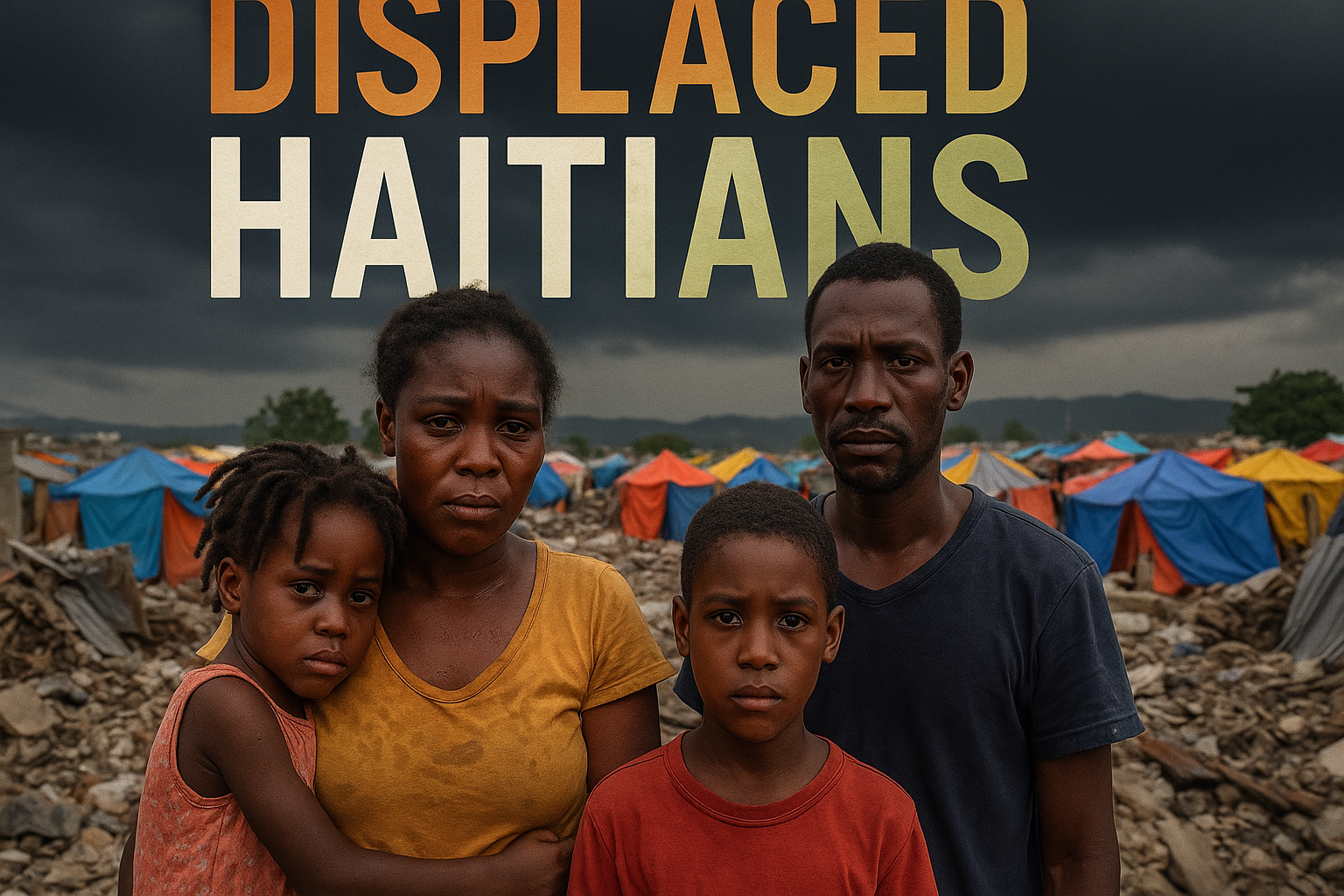
The spirit of resilience defines the Haitian people, yet they face an escalating humanitarian crisis that forces many from their homes. Across the globe, members of the African diaspora watch with heavy hearts as our brethren in Haiti struggle with displacement on an unprecedented scale. Understanding this crisis means recognizing the faces behind the numbers.
For those new to the language of humanitarian aid, “internally displaced persons” might sound complex. Essentially, an internally displaced person, or IDP, is an individual forced to flee their home but, crucially, remains within their own country’s borders (Internally displaced person – Wikipedia). They are often driven out by conflict, widespread violence, devastating disasters, or severe human rights abuses (About internally displaced persons | OHCHR). In this way, they differ from refugees, who cross an international border to seek sanctuary. The forced movement of people within their own nation is what internal displacement describes (Internal displacement | IDMC).
Rapid Increase in Displaced Haitians
Haiti is grappling with a profound surge in internal displacement, impacting nearly 1.3 million people. This staggering figure marks a significant increase from previous reports. Just recently, the total was nearly 703,000 internally displaced Haitians (World Report 2025: Haiti). This doubling of figures since 2022 highlights the rapid deterioration of safety and stability across the nation.
The scale of this crisis is particularly dire, making Haiti one of the highest per capita displacement rates globally (World Report 2025: Haiti). “Per capita” means “per head.” This metric helps us understand the crisis relative to Haiti’s total population, dividing the number of displaced people by the entire population. It therefore reveals how widespread the problem is, not just the raw figures alone. A high per capita rate signals extensive impact on a significant portion of the population. This method allows for meaningful comparisons between countries of varying sizes, showing the disproportionate scale of displacement in Haiti.
Rising Tide of Displacement in Haiti
The Grip of Criminal Groups
The primary force driving displacement is the escalating violence perpetrated by criminal groups, particularly gangs. These groups are not simply engaged in minor offenses. They operate with ruthless efficiency, employing violent extortion, warring over territorial control, and carrying out brutal attacks on civilians. These actions create an atmosphere of terror, leaving residents with no choice but to abandon their homes for survival.
In specific regions, like the Artibonite department, displacement has truly exploded. It has tripled, reaching over 84,000 people in 2024 (IOM). Following armed clashes, the municipality of Verrettes saw 13,086 individuals flee, seeking refuge with host families or in displacement sites (IDMC). While the direct cause of these clashes in Verrettes is not specified, gang violence and territorial struggles are the known catalysts for such unrest throughout Haiti. This consistent state of insecurity is closely linked to widespread political instability and deeply weakened governance, leaving communities vulnerable to the whims of armed factions.
Deportations Deepen Vulnerability
As Haiti grapples with internal chaos, another layer of complexity arises from the mass deportations of Haitian migrants from neighboring countries. Over 25,000 migrants recently faced deportation, primarily from the Dominican Republic (IOM Haiti Situation Report May 2025). When these individuals return to Haiti, they are thrown into a country already buckling under immense humanitarian pressure. This influx of vulnerable returnees further strains already insufficient resources and increases the instability at communities that receive them.
The situation between Haiti and the Dominican Republic is not new. It carries historical baggage of political and social tensions, often fueled by anti-Haitian policies. These forced returns often mean people lack critical documentation. Individuals also face unsafe arrival locations, absence of shelter, food insecurity, and extremely limited access to healthcare and legal support (About internally displaced persons | OHCHR). This combination of factors exacerbates the trauma of displacement. The systemic neglect and limited capacity of the Haitian government mean these deportees – particularly women and children – are at a heightened risk of abuse, exploitation, and extreme deprivation. The humanitarian crisis is therefore compounded by this ongoing challenge.
Dominican Republic Deportations to Haiti
These mass deportations exacerbate Haiti’s existing humanitarian crisis, pushing vulnerable returnees into a nation already struggling with widespread internal displacement and limited resources.
Life on the Edge: Challenges for the Displaced
For those forced to flee their homes and living as internally displaced persons, life becomes an enduring struggle. Many face staggering challenges in securing fundamental necessities for survival. Access to sufficient food, clean water, adequate sanitation, safe shelter, and medical care is woefully inadequate (World Report 2025: Haiti). The conditions in displacement sites are often dire, reflecting the immense pressure on limited resources and the inability of authorities to provide comprehensive support.
Even more concerning is the location of many of these displacement sites. Many are found in areas controlled by the very same criminal groups that caused the initial displacement. Other sites are in high-risk zones, increasing the exposure of displaced persons to additional violence and insecurity (World Report 2025: Haiti). This continuous threat denies individuals any lasting peace or sense of security and traps them in a cycle of fear and vulnerability. The struggle for daily existence is therefore compounded by the constant danger of further harm.
Major Challenges Faced by Internally Displaced Haitians
- Insufficient access to food and water.
- Lack of adequate sanitation facilities.
- Limited access to safe shelter.
- Difficulties in obtaining necessary medical care.
- Exposure to violence in high-risk zones.
- Living in areas controlled by criminal groups.
A Call for Solidarity and Action
The internal displacement crisis in Haiti is a stark reminder of the urgent humanitarian needs facing our global Black family. The stories of resilience from this island nation are legendary, yet the current conditions demand immediate and sustained attention. The numbers paint a sobering picture: millions dislocated, facing immense struggles for basic survival. Haitians, who fought for and won their freedom against chattel slavery, now confront a different battle for dignity and safety within their own homeland.
As we witness these challenges, it is imperative to remember the interconnectedness of the African diaspora. The struggles in Haiti are a call to action for all who believe in justice and humanity. Understanding the root causes of displacement, from relentless gang violence to the impact of deportations, is the first step. Providing meaningful support and advocating for solutions must be the next. The people of Haiti deserve a future where they can thrive, free from the constant threat of displacement and the desperate conditions it entails.
ABOUT THE AUTHOR
Darius Spearman has been a professor of Black Studies at San Diego City College since 2007. He is the author of several books, including Between The Color Lines: A History of African Americans on the California Frontier Through 1890. You can visit Darius online at africanelements.org.
