
Listen to this article
Download AudioMistrial Michigan Cop Patrick Lyoya Shooting
By Darius Spearman (africanelements)
Support African Elements at patreon.com/africanelements and hear recent news in a single playlist. Additionally, you can gain early access to ad-free video content.
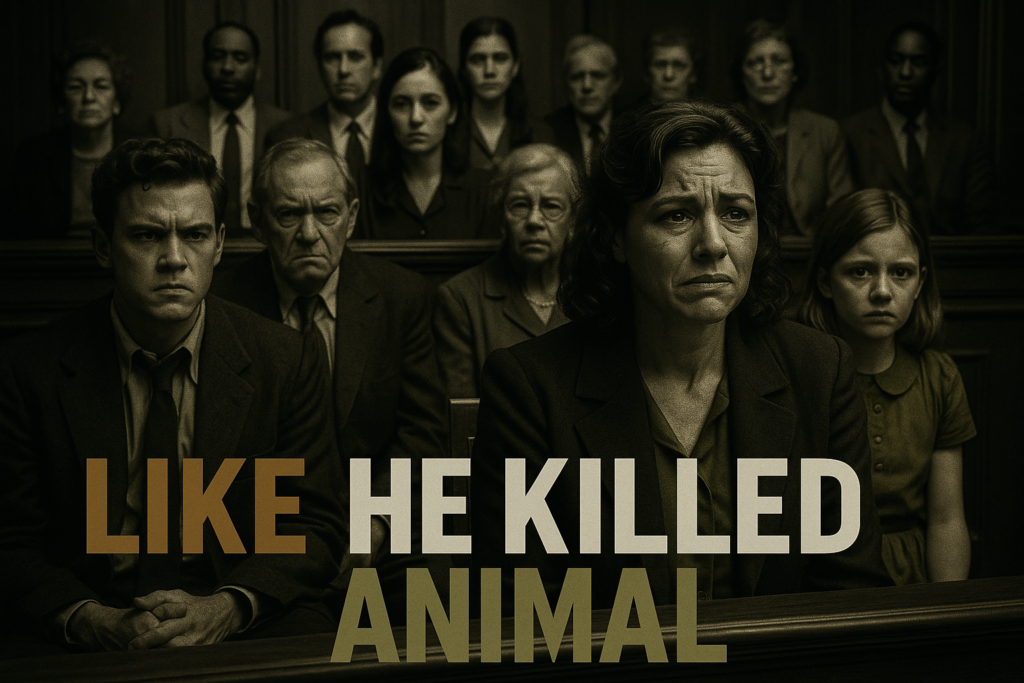
The fight for justice continues after a Michigan jury couldn’t agree. They failed to reach a verdict in the case of Christopher Schurr. Schurr is the former Grand Rapids police officer who shot and killed Patrick Lyoya, a Congolese immigrant, back in 2022. This lack of agreement means the trial ended in a mistrial, leaving many in our community feeling outraged and demanding answers (No verdict, mistrial declared… Durango Herald; ‘Like He Killed an Animal’… Atlanta Black Star).
A mistrial happens when something stops a trial from finishing fairly. A common reason is a “hung jury.” This means the jurors simply cannot all agree on whether the person is guilty or not guilty. Consequently, there is no official verdict, and the legal process essentially stalls at that point. The case isn’t over, though; the prosecution often has the option to try the case again before a new jury.
Patrick Lyoya: The Fatal Encounter
The tragedy unfolded during a traffic stop on April 4, 2022. Patrick Lyoya, a 26-year-old man from the Congo, was pulled over by Officer Christopher Schurr. What started as a stop quickly escalated into a physical struggle on someone’s front lawn. Video evidence captured the horrific final moments. It showed Schurr on top of Lyoya, who was face down on the ground (‘Like He Killed an Animal’… Atlanta Black Star). Shockingly, Schurr then fired a single, fatal shot into the back of Lyoya’s head (Killing of Patrick Lyoya – Wikipedia; No verdict, mistrial declared… Durango Herald).
The official autopsy confirmed Lyoya died from this gunshot wound. No other major injuries or diseases were found (Killing of Patrick Lyoya – Wikipedia). An independent autopsy requested by Lyoya’s family, performed by the well-known Dr. Werner Spitz, reached the same conclusion (Killing of Patrick Lyoya – Wikipedia). Therefore, there was no medical dispute about how Patrick Lyoya died.
Murder Charge and Self-Defense Claim
Prosecutors charged Christopher Schurr with second-degree murder. This charge means they believed Schurr intended to kill or cause significant harm, but without planning it beforehand (Second-Degree Murder – Wex). It sits between first-degree (premeditated) murder and manslaughter (Degrees of Murders – KLF Law). The prosecution argued that shooting Lyoya in the back of the head while he was subdued was excessive and unwarranted deadly force (‘Like He Killed an Animal’… Atlanta Black Star). Essentially, they felt the officer went too far.
However, Schurr’s defense team claimed he acted in self-defense. They argued Lyoya gained control of the officer’s Taser during the struggle (‘Like He Killed an Animal’… Atlanta Black Star; No verdict, mistrial declared… Durango Herald). A Taser is a weapon police use to shock and temporarily disable someone. While less lethal than a gun, the defense suggested Lyoya having it posed a serious threat. In legal terms, self-defense requires a reasonable belief of imminent danger. Furthermore, the force used must generally be proportionate to the perceived threat. This clash between excessive force and self-defense likely became a key point of disagreement for the jury.
Key Legal Arguments in the Trial
Prosecution’s Case
Defense’s Case
Mistrial Verdict and Community Reaction
After deliberation, the jury could not reach a unanimous decision. The judge, therefore, had little choice but to declare a mistrial (No verdict, mistrial declared… Durango Herald). This outcome, a hung jury, means Schurr was neither convicted nor acquitted. For the family of Patrick Lyoya and many in the Grand Rapids community, this result felt like a painful lack of closure and justice. Lyoya’s family expressed deep outrage, with one relative reportedly saying it felt like Schurr “killed an animal” (‘Like He Killed an Animal’… Atlanta Black Star).
The mistrial immediately sparked protests. Large demonstrations occurred in downtown Grand Rapids (‘Like He Killed an Animal’… Atlanta Black Star). People carried signs and chanted, demanding accountability and justice for Patrick Lyoya. Specifically, protesters called on Kent County Prosecutor Chris Becker to retry the case (‘Like He Killed an Animal’… Atlanta Black Star). The community’s reaction underscores the deep-seated pain and frustration surrounding police violence, particularly against Black individuals. The fact that Lyoya was an immigrant from Congo also resonates deeply within diaspora communities, adding layers to the calls for justice.
What Happens Next? The Path to a Retrial
Prosecutor Chris Becker now faces a crucial decision: whether to pursue a retrial. He stated that a decision would be made within weeks, not months (‘Like He Killed an Animal’… Atlanta Black Star). Becker promised to consider the community’s needs but emphasized he would not rush the process. He explicitly mentioned the decision would not come in June, indicating a careful review is underway (‘Like He Killed an Animal’… Atlanta Black Star).
The process for a retrial involves the prosecutor evaluating the first trial. They consider why the jury deadlocked, the strength of the evidence, and the likelihood of a different outcome with a new jury. Community pressure, as seen in the Grand Rapids protests, can also influence this decision, although legally it shouldn’t be the primary factor. Consequently, Becker’s promise to be “careful” suggests a thorough evaluation before committing resources and emotional energy to another trial. For the community demanding justice, this period of waiting is filled with anxiety and hope.
Trial Outcome and Immediate Aftermath
Jurors Deadlocked
No Verdict
Demands for Retrial
Prosecutor Considers Retrial
Justice System: A Broader Pattern?
The mistrial in the Patrick Lyoya case unfortunately echoes outcomes seen in other high-profile police shooting cases involving Black men across the United States (No verdict, mistrial declared… Durango Herald; ‘Like He Killed an Animal’… Atlanta Black Star). These cases often involve intense public scrutiny, video evidence, and debates over self-defense claims versus excessive force. Hung juries or acquittals in such situations frequently lead to community frustration and questions about whether the justice system provides equal protection and accountability.
Video evidence, like the footage showing Schurr shooting Lyoya, plays a significant role. It offers a direct view of events but doesn’t always guarantee a conviction. Juries may interpret video differently, focusing on different moments or angles. Ultimately, the ambiguity or interpretation of the evidence, including the video and the struggle over the Taser, seems to have prevented the jurors from reaching the unanimous agreement required for a verdict in this case. This situation fuels ongoing national conversations about police training, use-of-force policies, and the persistent challenge of achieving justice when Black lives are lost during encounters with law enforcement.
ABOUT THE AUTHOR
Darius Spearman has been a professor of Black Studies at San Diego City College since 2007. He is the author of several books, including Between The Color Lines: A History of African Americans on the California Frontier Through 1890. You can visit Darius online at africanelements.org.
