

Mizzou Funding Cut: Why Black Student Protests Return
By Darius Spearman (africanelements)
Support African Elements at patreon.com/africanelements and hear recent news in a single playlist. Additionally, you can gain early access to ad-free video content.
The Late-Night Decision That Sparked Outrage
Tension is rising at the University of Missouri today. Administrators gathered student leaders for an unexpected meeting late Friday night on April 3, 2026. They stripped direct funding from five multicultural organizations during this session. The Legion of Black Collegians suffered the most significant blow from this sudden policy change. This group served as a recognized student government for nearly six decades. The university removed this official governing status overnight. (highereddive.com)
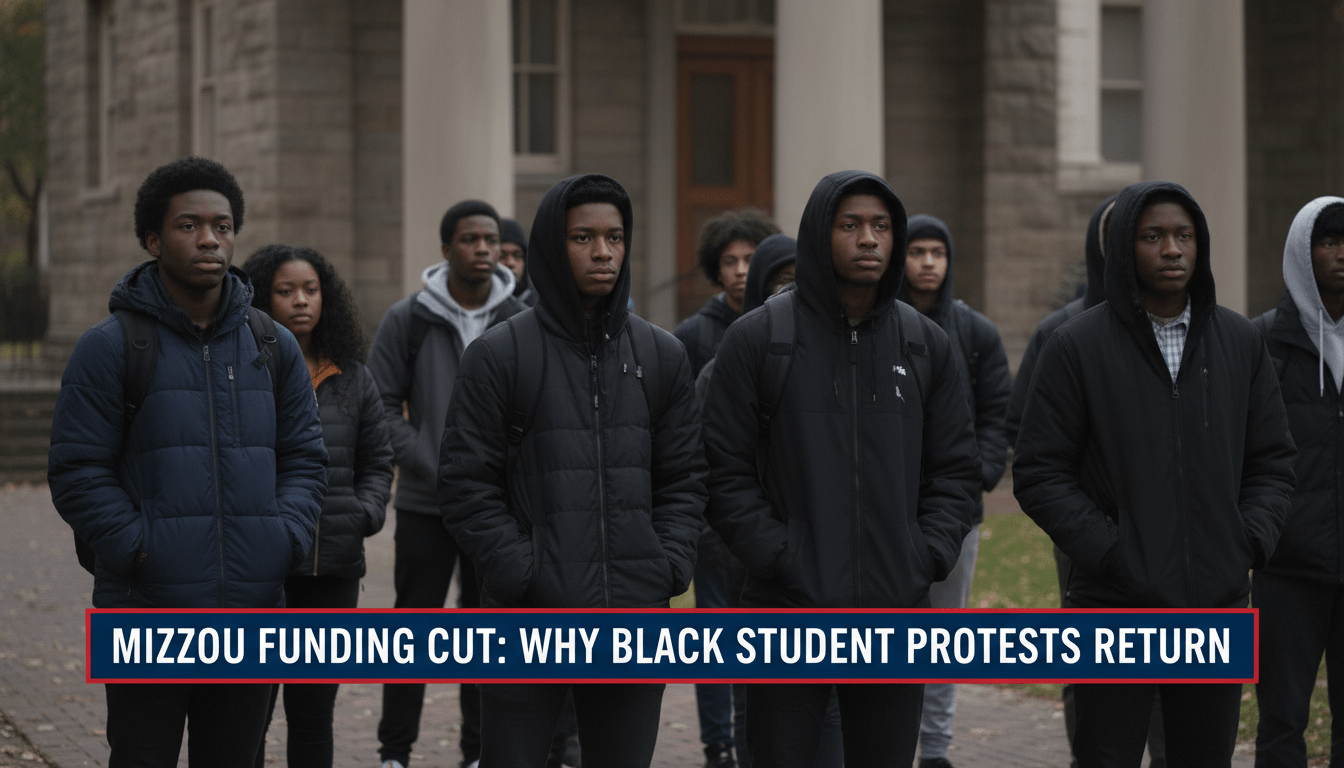
The Legion of Black Collegians must now operate as a standard Recognized Student Organization. Students immediately began organizing campus protests in response to the news. These demonstrations will demand equity in university resources and official representation. Black students argue this move directly erases their historical legacy on campus. They view the administrative decision as a direct attack on their voices. Furthermore, the decision limits their access to top-level university leadership. Leaders previously held direct lines of communication with the Chancellor. That vital access has now vanished entirely. (missouri.edu)
A Financial Blow to Multicultural Groups
The financial impact of this administrative decision is exceptionally severe. Five umbrella organizations previously shared a budget of approximately $140,000. The Legion of Black Collegians alone managed over $60,000 annually. These funds supported massive cultural events and necessary student advocacy programs. (highereddive.com) The new policy eliminates all direct administrative line-item funding for these specific groups. Multicultural organizations must now request money from a general peer-reviewed grant pool. They must compete against more than 600 other campus clubs for limited resources.
LBC Annual Funding Collapse
Additionally, the university imposed strict spending caps on these organizations. Groups can only spend $3,000 total for the entire academic year. Furthermore, a single event cannot exceed a strict $1,500 budget limit. (themaneater.com) Student leaders call this new financial structure completely unsustainable. Umbrella organizations oversee dozens of smaller identity-based sub-groups on campus. Distributing a mere $3,000 among twenty different sub-groups leaves practically nothing for anyone. This financial strangulation forces critical cultural programs to disappear.
The Legacy of Early Campus Struggles
The current crisis connects directly to a long historical struggle at Mizzou. The University of Missouri possesses a deeply troubled history with racial inclusion. Black students fought tirelessly to occupy spaces on this campus for generations. The year 1950 serves as a foundational moment for Black students at the institution. A court order forced the university to admit its first Black student. His name was Gus Ridgel. (mo.gov) This profound milestone paved the way for future generations of students.
However, basic integration did not mean immediate equality for Black students. They faced a deeply hostile environment for many subsequent decades. Understanding this context requires looking at how academic disciplines frame racial history. Examining how history and culture are taught helps clarify these early campus battles. Early Black students existed on the extreme margins of university life. They had no official support systems or dedicated cultural centers. Every inch of progress required intense student activism and unwavering determination.
Birth of a Unique Student Government
The late 1960s brought a wave of radical student organizing across America. White students frequently displayed Confederate flags at university football games. The marching band regularly played the song “Dixie” during official school events. These actions deeply alienated the growing Black student population at Mizzou. In 1968, Black students decided to form their own governing body. They created the Legion of Black Collegians to demand administrative respect. (missouri.edu)
The university officially recognized the group as a student government in 1969. This made Mizzou the only university nationwide with a Black student government. The Legion of Black Collegians held this unique title for 57 years. This status granted them unique administrative rights and official institutional power. Administrators were procedurally required to meet with these student leaders regularly. The organization successfully began shaping political dynamics across the entire university system. The sudden removal of this status in 2026 is devastating to students.
Escalation and the Cotton Ball Incident
Racial hostility continued to plague the campus well into the modern era. A highly offensive event occurred on February 26, 2010. Two white students scattered cotton balls across the campus grounds. They specifically targeted the area outside the Gaines/Oldham Black Culture Center. Many students viewed this act as a racist mockery of African enslavement. (newsone.com) Police initially arrested the two students on suspicion of serious hate crimes.
However, the legal system eventually convicted them only of minor littering charges. (ground.news) This incredibly weak punishment outraged the Black student body at Mizzou. The incident served as a major catalyst for campus organizers. It highlighted a clear pattern of administrative neglect regarding racial hostility. Students felt the university tolerated explicit racism without imposing real consequences. Activists frequently referenced this specific event during later campus protests. They used it to illustrate a decade of unaddressed racial tension.
Echoes of Concerned Student 1950
Frustrations boiled over dramatically during the fall semester of 2015. Several severe racial incidents sparked a massive student uprising on campus. People yelled racial slurs at student leaders walking across the university grounds. A group called Concerned Student 1950 formed to demand immediate institutional change. They chose their name to honor the legacy of Gus Ridgel. (bestcolleges.com) A student named Jonathan Butler launched a highly publicized hunger strike.
Soon after, the Missouri football team announced a historic athletic boycott. The players refused to practice or play until administrators took decisive action. This immense pressure forced top university leaders to step down completely. UM System President Tim Wolfe and Chancellor R. Bowen Loftin resigned from their positions. (kcur.org) The university subsequently created the Division of Inclusion, Diversity and Equity. Students viewed this new division as a major civil rights victory. These events highlighted the often conflicting elements of institutional reform. Yet, this historic victory would prove to be temporary.
The Dismantling of Equity Programs
The political climate in Missouri shifted sharply against diversity programs recently. State lawmakers began heavily scrutinizing university spending on all equity initiatives. Donald Trump is the current president of the United States. His administration consistently fosters a federal environment hostile to diversity programs. Missouri legislators quickly seized this national political momentum to attack university initiatives. In 2024, the university suddenly dissolved the Division of Inclusion, Diversity and Equity. Officials also eliminated several crucial race-based scholarships during this period. (highereddive.com)
The Dismantling of Diversity Support
2015
Division of IDE Created After Protests
2024
Division of IDE Dissolved
April 2026
Black Student Govt Defunded
Missouri legislators explicitly threatened to withhold state funding from the university. By early 2025, politicians filed bills to ban all DEI spending completely. UM System President and Chancellor Mun Y. Choi authorized these aggressive rollbacks. Choi claimed these proactive decisions would keep the university ahead of legislative mandates. (highereddive.com) The administration essentially abandoned the agreements made during the 2015 protests. Black students watched their hard-won resources disappear in a matter of months. Multicultural organizations lacked powerful administrative allies to defend their funding and status.
Using the Law for Cultural Erasure
Administrators heavily cited legal concerns to justify the April 2026 funding cuts. Vice Chancellor Angela King Taylor directly informed students about the new policy. She pointed to a July 2025 memorandum from the Department of Justice. This memo provided guidance regarding unlawful discrimination under federal funding rules. It explicitly interpreted the Supreme Court ruling in Students for Fair Admissions versus Harvard. (sullcrom.com) The document suggested that race-exclusive funding could violate federal civil rights laws.
University leaders claimed they had to avoid forfeiting significant federal funds. They argued that continued direct funding for Black groups risked massive financial penalties. (blankrome.com) However, student advocates strongly challenge this aggressive administrative legal interpretation. They point out that a government memo is merely non-binding practical guidance. It does not carry the absolute weight of established federal law. Students argue the university willfully chose to interpret the guidance broadly. This choice reveals deep contradictions within perceived American ideals of equality.
The Attack on the Welcome Black Barbecue
The funding cuts severely impact specific traditions that build campus community. The “Welcome Black BBQ” is a premier annual event at Mizzou. The Legion of Black Collegians hosts this massive gathering every single fall. It provides a vital networking space for incoming Black students and staff. The barbecue helps them find community in a historically hostile environment. (thegrio.com)
Impact on “Welcome Black BBQ”
The new policy imposes severe event spending limits.
However, the administration began targeting this specific event back in August 2024. Officials forced students to rename it the “Welcome Black and Gold BBQ.” They claimed the original name appeared exclusionary to white students on campus. Students protested fiercely, noting the event was always fully open to everyone. (thegrio.com) The new 2026 funding rules make hosting this barbecue virtually impossible. A massive catered orientation event cannot survive on a $1,500 budget limit. Student leaders view these repeated attacks as a highly calculated administrative effort.
Protests Resume as the Struggle Continues
History is repeating itself on the University of Missouri campus today. The sudden defunding of multicultural groups has reignited massive student activism. Organized protests are actively taking place across the university grounds right now. Students march to demand the immediate restoration of their resources and official status. The hashtag #StillConcerned is currently trending across various social media platforms. (kcur.org)
This phrase directly connects the current generation to the 2015 protest movement. Students recognize that the battle for inclusion is a frustratingly cyclical process. The severe tensions from a decade ago have returned to the forefront. Black students refuse to let their historic organizations quietly fade away. They remain entirely committed to fighting for true equity in campus resources. The university administration now faces another defining historical moment. The entire nation watches to see how Mizzou will respond this time.
About the Author
Darius Spearman is a professor of Black Studies at San Diego City College, where he has been teaching for over 20 years. He is the founder of African Elements, a media platform dedicated to providing educational resources on the history and culture of the African diaspora. Through his work, Spearman aims to empower and educate by bringing historical context to contemporary issues affecting the Black community.
