

Racial Bias in Washington Juvenile Justice
By Darius Spearman (africanelements)
Support African Elements at patreon.com/africanelements and hear recent news in a single playlist. Additionally, you can gain early access to ad-free video content.
The Weight of an Adult Charge
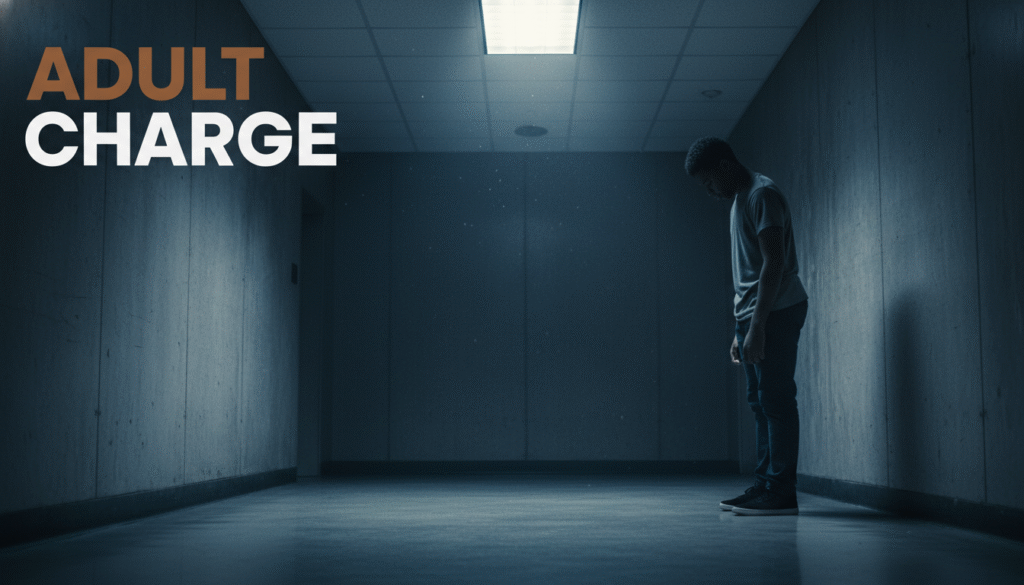
In Washington state, a headline-grabbing statistic reveals a deep and troubling reality: more than eighty percent of all children charged as adults are youth of color (wa.gov). This number is not just an abstract figure; it represents a crossroads where a young person’s life is fundamentally altered. The consequences of being tried in adult court are profoundly different from those in the juvenile system. The juvenile system is designed with rehabilitation in mind, focusing on treatment and support to help a young person reintegrate into society. In contrast, the adult criminal justice system is built on a foundation of punishment and deterrence (ojjdp.gov).
Consequently, a youth tried as an adult faces far more severe outcomes. Sentences are longer and are served in adult correctional facilities, environments that are dangerous and ill-equipped to handle the developmental needs of adolescents (ojjdp.gov). An adult conviction also creates a permanent public record. This record follows an individual for life, creating immense barriers to securing employment, finding housing, and pursuing higher education. It can even strip away fundamental civil rights, such as the right to vote (ojjdp.gov). Juvenile records are often sealed or expunged, offering a chance at a true fresh start, but an adult record offers no such grace (ojjdp.gov).
From Welfare to Punishment: A System in Flux
To understand how Washington arrived at this point, one must look at the historical evolution of its juvenile justice policies. The state’s original system, established in 1913, operated on a welfare model. Courts had wide discretion, and decisions were guided more by a child’s well-being than by strict legal guilt (wa.gov). This approach, however, began to change dramatically in the latter half of the 20th century. The passage of the Juvenile Justice Act of 1977 marked a significant pivot towards accountability and uniformity (washingtonpolicy.org).
Moreover, this legislation shifted a critical power from probation officers and juvenile courts directly to county prosecutors, giving them the authority to file charges (washingtonpolicy.org). This change was part of a national trend focused on due process and consistency, but it also laid the groundwork for future disparities. By placing charging decisions in the hands of prosecutors, the system became more adversarial. This set the stage for a period where punitive measures would begin to overshadow rehabilitative goals, a shift that would have a devastating and disproportionate impact on communities of color.
The “Tough on Crime” Era and Its Racialized Impact
The 1990s ushered in the “Tough on Crime” era, a period fueled by widespread social and political anxieties about juvenile crime. These fears were often amplified by media and political rhetoric that linked crime to specific racial groups (ojp.gov). This atmosphere led Washington, like many other states, to enact far more punitive laws. Legislators made it significantly easier to try children as adults by lowering age thresholds and expanding the list of qualifying offenses (wa.gov). The focus moved away from individual assessments and toward categorical transfers to adult court.
Specifically, laws passed in 1994 and 1997 introduced “automatic transfer” provisions. These laws mandated that 16- and 17-year-olds accused of certain violent crimes be sent directly to adult court, stripping judges of their discretion (wa.gov). The 1994 law also included “Two Strikes and Up” and “Three Strikes and Up” provisions, which automatically transferred youth based on prior violent offenses (wa.gov). These policies were implemented even as awareness of racial disproportionality was growing. A 1993 report had already confirmed that minority youth were overrepresented at every single stage of the justice process, from arrest to confinement (wa.gov).
The Power of the Prosecutor
One of the most significant factors driving these racial disparities is prosecutorial discretion. Prosecutors hold immense power; they decide what charges to file and whether to seek transfer to adult court. This decision-making process, however, is vulnerable to bias. A 2024 University of Washington report provided a stunning example: out of 28 cases where a white child was charged with first or second-degree assault with a deadly weapon, none were sent to adult court. In contrast, 28% of similar cases involving Black and Latino youth were charged in adult court (wa.gov).
This imbalance is often driven by implicit bias, the unconscious attitudes and stereotypes that affect decision-making (ojp.gov). A prosecutor might subconsciously perceive a youth of color as more dangerous or less capable of rehabilitation. These biases are reinforced by a lack of transparency and oversight in charging decisions. Without mandatory racial impact assessments or robust data tracking, it becomes difficult to hold the system accountable for its disproportionate outcomes.
The Data Tells a Persistent Story
For over two decades, data from Washington has consistently painted a picture of deep racial inequity (wa.gov). Youth of color are overrepresented at every point of contact with the system. Black youth are nearly twice as likely as white youth to be arrested, and along with American Indian/Native Alaskan youth, they are more than twice as likely to be referred to court (wa.gov). This trend continues all the way to the most severe consequences. A comprehensive analysis from 2009 to 2022 confirmed that cases involving Black youth were four times more likely to be transferred to adult court than those involving white youth (wa.gov).
Furthermore, the cumulative effect of these disparities is seen in incarceration rates. Black youth in Washington are more than five times as likely to be incarcerated as white youth. Indigenous youth are over three times as likely, and Latino youth are about twice as likely (wa.gov). In King County, the state’s most populous county, 86.1% of all incarcerated youth in 2019 were youth of color, with Black youth alone making up over half of that total at 52.5% (wa.gov). Statistical analysis of these trends concluded that the disproportionality is the result of systematic bias, not random chance (wa.gov).
Recent Reforms, Lingering Problems
In response to growing pressure, the Washington State Legislature passed reforms in 2018 and 2019 known as “JR to 25,” where “JR” stands for Juvenile Rehabilitation. These laws aimed to limit adult transfers and expand access to evidence-based programs for young people (wa.gov). The 2019 law also created a review process for individuals under 25 who were in adult prison for crimes committed as juveniles, offering them a chance to move to a JR facility (wa.gov). These changes had a noticeable effect; by 2023, the total number of children charged as adults had dropped by over 80% (wa.gov).
However, this overall reduction masks a persistent and worsening problem. While fewer children are being transferred, the racial imbalance has become even more extreme. In 2023, a staggering 83% of all children charged as adults in Washington were youth of color (wa.gov). This means that white children benefited most from the reduction in transfers, while Black and Latino youth are now an even larger majority of those left behind in the adult system. This demonstrates that simply reducing the total number of transfers is not enough to fix a system where bias is so deeply embedded.
Dismantling the System: The Path Forward
Advocates and some lawmakers argue that deeper, more structural changes are needed to address the root causes of these disparities. One such issue was Washington’s “juvenile points” system. This practice allowed juvenile offenses to add “points” to an adult’s criminal history score, resulting in longer adult prison sentences (seattleu.edu). The practice was finally banned in 2023, but not before it disproportionately harmed people of color, particularly Indigenous adults (wa.gov). State Representative Chris Stearns is now pushing for legislation to make this change retroactive, which would adjust sentences for those already impacted (investigatewest.org).
Ultimately, true reform requires confronting the systemic biases and structural inequalities that push youth of color into the justice system in the first place. This includes addressing failures in education, lack of access to mental health services, and housing instability (wa.gov). It also means implementing policies like presumptive diversion for low-level offenses and requiring racial impact statements for all justice-related legislation. Keeping track of these ongoing efforts requires staying informed on recent news from a community-focused perspective. The history behind Washington’s headlines shows that while progress is possible, the fight for a truly equitable justice system is far from over.
About the Author
Darius Spearman is a professor of Black Studies at San Diego City College, where he has been teaching for over 20 years. He is the founder of African Elements, a media platform dedicated to providing educational resources on the history and culture of the African diaspora. Through his work, Spearman aims to empower and educate by bringing historical context to contemporary issues affecting the Black community.
