
Listen & Share
Josh Divine’s Literacy Test Advocacy Raises Voter Rights Concerns
By Darius Spearman (africanelements)
Support African Elements at patreon.com/africanelements and hear recent news in a single playlist. Additionally, you can gain early access to ad-free video content.
Trump’s Judicial Nominee and a Troubling Past
The nomination of Josh Divine to the federal bench has brought historical issues of voter suppression into sharp focus. Divine, a selection by former President Trump for the U.S. District Court for the Eastern and Western Districts of Missouri, once voiced support for literacy tests (Demand Justice). This advocacy is particularly concerning given the significant history of literacy tests as a tool for racial discrimination against Black communities in the United States.
Indeed, literacy tests were extensively used, particularly during and after the Jim Crow era, to keep African Americans and other marginalized communities from voting. These tests were often administered unfairly, with arbitrary standards designed to reject eligible voters, thereby suppressing Black votes (The Rise and Fall of Jim Crow. Tools and Activities | PBS – Thirteen.org). The very idea of bringing them back raises alarms for anyone who values equitable voting access.
The Discriminatory History of Literacy Tests
Literacy tests represent a dark chapter in American history regarding voter rights. They were part of a broader system of Jim Crow laws that sought to maintain white supremacy by legally barring Black Americans from participating in democracy (The Rise and Fall of Jim Crow. Tools and Activities | PBS – Thirteen.org). These tests were not about ensuring an informed electorate. Instead, they were designed to create barriers, often by imposing difficult reading and interpretation demands at the discretion of local officials (The Rise and Fall of Jim Crow. Tools and Activities | PBS – Thirteen.org).
Moreover, the administration of these tests was inherently discriminatory; Black voters were frequently given impossible questions or graded unfairly, while white voters faced no such scrutiny (Literacy test – Wikipedia). This systemic racism disenfranchised millions and sustained racial hierarchies in the electoral process. The federal government finally acted to dismantle these discriminatory practices through the Voting Rights Act of 1965, which prohibited literacy tests in jurisdictions with a history of voter discrimination. By 1970, literacy tests were banned nationwide, leading to a significant increase in African American voter registration and access (Literacy test – Wikipedia).
Josh Divine’s Past Advocacy
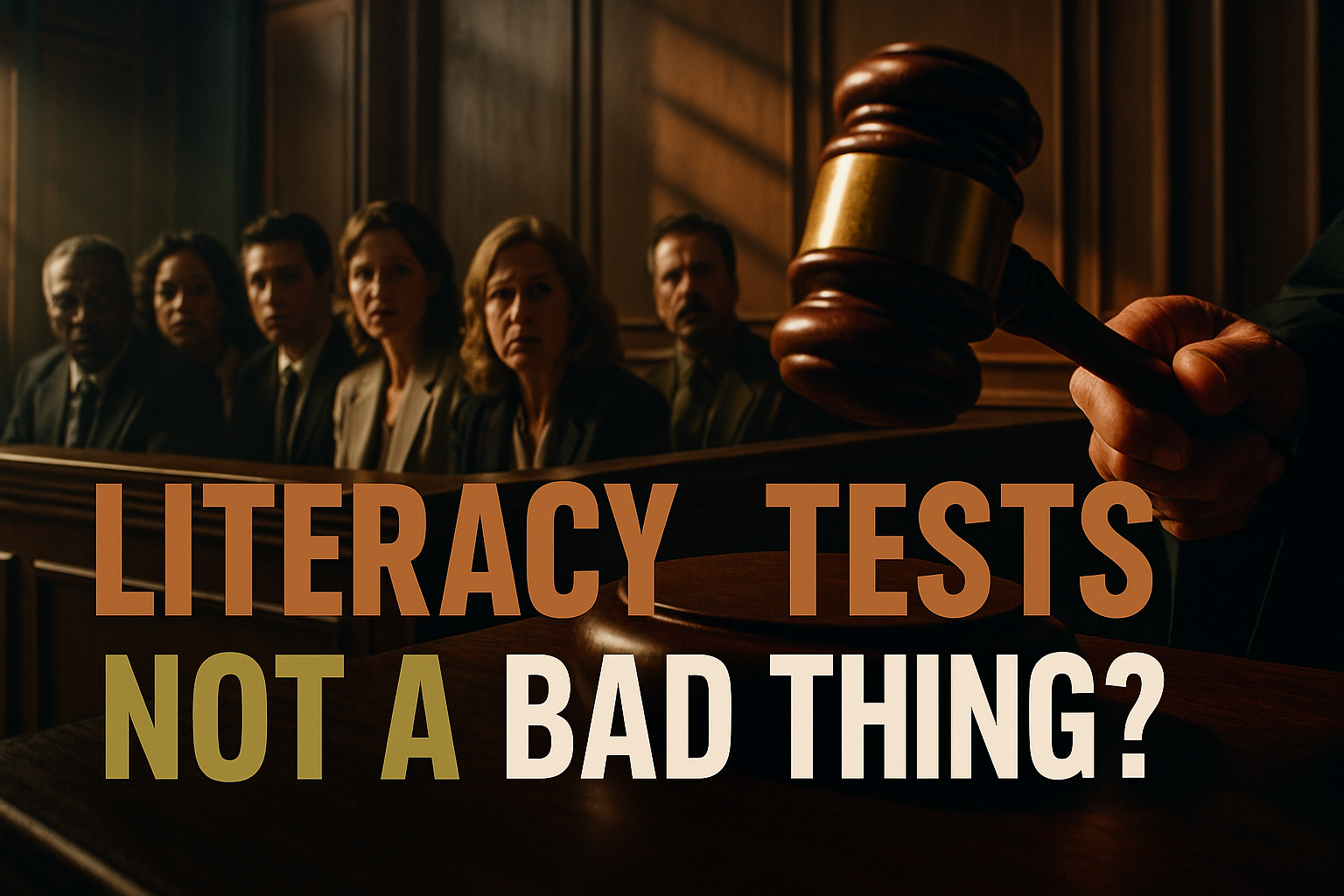
Josh Divine’s college opinion piece, in which he argued that literacy tests were “not inherently bad,” has ignited significant controversy (HuffPost). This perspective disregards the documented history of these tests as instruments of racial oppression. Divine’s views have been criticized especially given their undeniable role in perpetuating racial discrimination in the United States (Ground News).
Additionally, Divine’s nomination to such a critical role on the federal bench raises questions about his understanding of historical injustices and their impact on civil rights. Judicial nominees are expected to safeguard the rights of all citizens, particularly those from marginalized communities who have historically faced disenfranchisement. It remains unclear if Divine has publicly updated his views on these critical voting issues since his college opinion piece. This lack of clarification leaves uncertainty regarding his suitability for a judicial role where addressing past racial discrimination is vital.
Judicial Diversity: People of Color Appointments
This chart shows the percentage of confirmed judicial nominees who were people of color under Biden compared to Trump’s first term. Source: Demand Justice
Judicial Diversity: Women Appointments
This chart shows the percentage of confirmed judicial nominees who were women under Biden compared to Trump’s first term. Source: Demand Justice
Diversity Gap in Judicial Appointments (Biden vs. Trump)
These figures highlight the difference in diversity percentages between judicial nominees confirmed under President Biden and during Trump’s first term. Source: Demand Justice
Trump’s Broader Judicial Strategy
Divine’s nomination fits within a larger strategy by the former President to reshape the federal judiciary with conservative jurists (The American Mind). This effort aims to influence legal decisions for a generation. Trump’s nominees have been scrutinized for their potential impact on the ideological balance of the courts, especially concerning issues like voter rights (The American Mind).
Additionally, the administration’s judicial nominations have sometimes raised concerns about nominees’ past views on critical matters such as voter access. This strategic appointment of specific judges can significantly impact civil rights enforcement and the interpretation of laws related to racial discrimination. It underscores the importance of public vigilance when evaluating judicial nominees.
Impact on Federal Courts and Civil Rights
The federal bench plays a crucial role in upholding justice across the nation. Judges serving in U.S. District Courts handle a wide range of cases, including those that involve civil liberties and voting rights. These courts are the primary trial courts in the federal system. Their decisions can establish legal precedents that profoundly affect social justice issues (Demand Justice).
Specifically, the U.S. District Courts for the Eastern and Western Districts of Missouri hold significant sway over cases arising in their regions. This includes litigation on voting rights and civil rights, which is vital given Missouri’s own history in voter access debates. Therefore, the appointment of new judges to these districts carries substantial weight for continued oversight of fair voting practices and the protection of marginalized communities.
Diversity in Judicial Nominations
The composition of judicial nominees is a crucial aspect of ensuring a fair and representative justice system. A diverse federal bench is better equipped to understand and rule fairly on issues affecting all segments of the population, including African American communities. The statistical data on judicial nominations shows considerable differences between recent administrations.
For instance, during Trump’s first term, only 16 percent of confirmed nominees were people of color, and 24 percent were women (Demand Justice). In contrast, under President Biden, 60 percent of confirmed nominees have been people of color, and 64 percent have been women (Demand Justice). This significant shift highlights a move toward inclusivity, which can promote greater equity in the justice system by bringing varied perspectives to the judicial panels. Greater diversity promotes a judiciary that can better reflect the diverse backgrounds of the American people and foster increased trust in the legal system.
Beyond the Headlines: The Stakes for Black Communities
The controversy surrounding Josh Divine transcends individual qualifications. It speaks to the ongoing struggle for voting rights and racial justice. Literacy tests, once a cornerstone of institutional racism, served to exclude Black Americans from the political process. They perpetuated systemic inequality and maintained racial hierarchies (The Rise and Fall of Jim Crow. Tools and Activities | PBS – Thirteen.org). The very mention of their return echoes this painful past.
Furthermore, the appointment of federal judges is a critical battleground for civil rights advocates. These lifetime appointments shape how laws are interpreted and enforced, directly impacting protections for minority voters and social justice causes. The ideological balance of federal courts affects decisions related to racial justice, making each nomination especially significant for African American communities and those committed to equity. Continuous vigilance is necessary to ensure that the judiciary remains a bulwark against discrimination and for the protection of fundamental rights.
ABOUT THE AUTHOR
Darius Spearman has been a professor of Black Studies at San Diego City College since 2007. He is the author of several books, including Between The Color Lines: A History of African Americans on the California Frontier Through 1890. You can visit Darius online at africanelements.org.
