

The Global Push for Benin Artefact Restitution
By Darius Spearman (africanelements)
Support African Elements at patreon.com/africanelements and hear recent news in a single playlist. Additionally, you can gain early access to ad-free video content.
A Historic Dialogue Begins
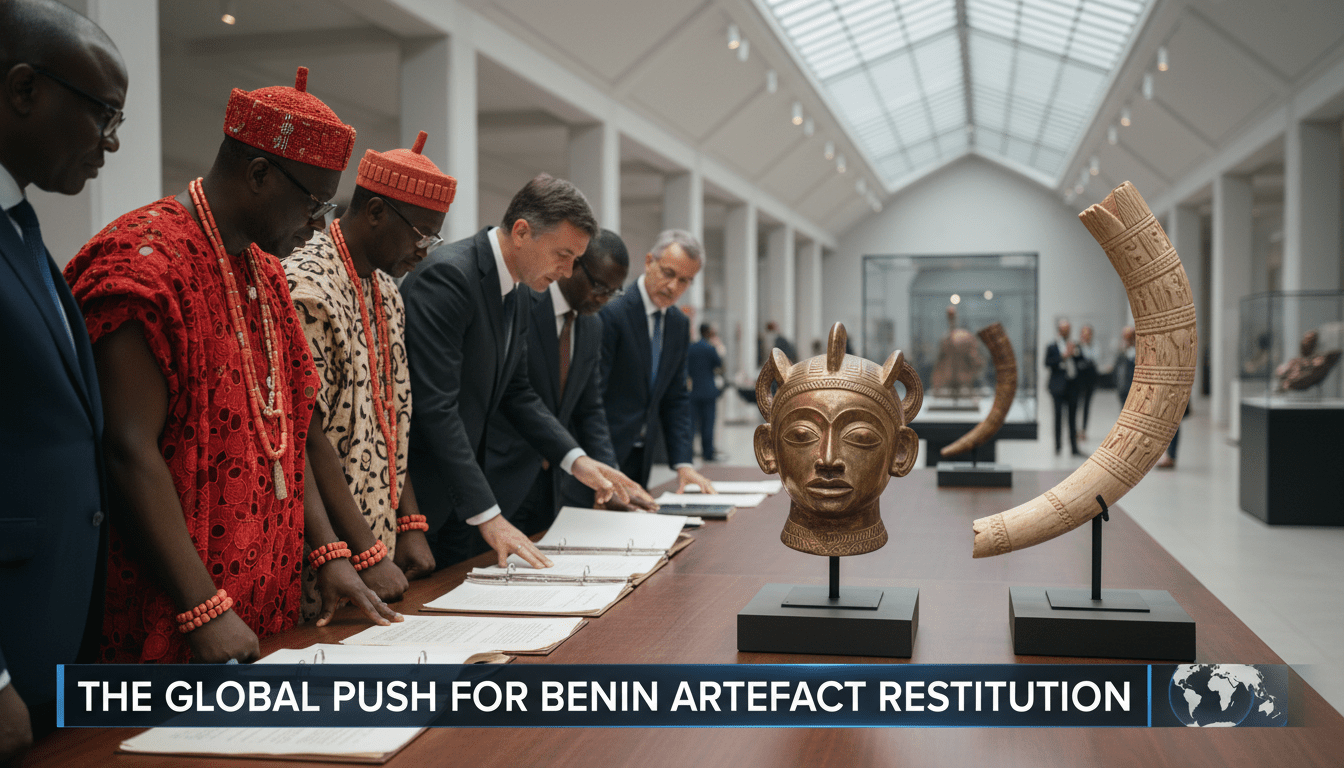
A historic new wave of negotiations opened today. Beninese officials met with prominent European museum leaders. They aim to reclaim additional plundered royal treasures. This crucial meeting occurred on April 10, 2026. The dialogue intensifies the global movement for restitution. It represents a dramatic shift in international policies. Historically, museums offered temporary loans to African nations. Western curators dictated the terms of these agreements. Today, African leaders demand full and unconditional ownership. They completely reject the concept of borrowing their own heritage. This aggressive push challenges long-standing European legal protections. For decades, these laws protected colonial plunder from repatriation. The current negotiations signify a new era of cultural diplomacy. African delegates arrived with comprehensive legal arguments and historical records. They intend to dismantle the remnants of colonial arrogance entirely. The world is watching this unprecedented historical event unfold closely. (restitutionmatters.org)
Understanding Two Distinct Histories
Many observers confuse two completely different geographical regions entirely. They frequently mix up the Kingdom of Benin and the Republic of Benin. It is essential to understand the fundamental difference between them. The Kingdom of Benin is a traditional ancient monarchy. It is located deep within the modern state of Nigeria. The Republic of Benin is a sovereign neighboring country entirely. It is situated directly to the west of Nigeria. The latter nation was formerly known as the Kingdom of Dahomey. Officials officially changed the national name in 1975. They wanted to assert their modern independence and regional identity. They desired to avoid using a painful and violent colonial title. (wikipedia.org)
The famous “Benin Bronzes” belong exclusively to the Nigerian kingdom. Meanwhile, the “Treasures of Dahomey” belong to the Republic of Benin. Both regions suffered severe looting during the late nineteenth century. However, they experienced separate invasions by entirely different colonial powers. Recognizing these distinct histories clarifies the current complex restitution negotiations. The international community must respect these separate cultural identities. African nations are actively shedding colonial influences through these historic returns. They are rewriting their histories on their own sovereign terms. (african-paris.com)
The Bloody Roots of Plunder
The British military orchestrated a devastating invasion in early 1897. A localized trade dispute triggered this extremely violent military campaign. British officials wanted to control local rubber and palm oil. Around 1,200 heavily armed British troops invaded the Kingdom of Benin. They burned the vibrant, highly organized capital city to the ground. The military forces exiled the monarch, Oba Ovonramwen, to Calabar. They systematically looted the royal palace of its priceless valuables. Soldiers stole thousands of sacred objects directly from ancestral altars. They removed intricately carved ivory tusks and commemorative brass heads. (britishmuseum.org)
The British government subsequently auctioned these artifacts in London markets. They claimed the sales would offset the massive expedition costs. Today, at least 165 museums worldwide hold these stolen treasures. French troops executed a similar violent conquest in 1892. General Alfred-Amédée Dodds invaded the sovereign Kingdom of Dahomey. King Béhanzin intentionally torched his own magnificent palace during the conflict. He wanted to deny the invading French forces any satisfaction. Regardless, Dodds seized the remaining royal regalia from the burning ruins. These pillaged items eventually enriched several prominent Parisian museums. The sheer scale of this nineteenth-century theft remains staggering today. (cnrs.fr, archaeology.org)
African Heritage Held Abroad
An estimated 90-95% of all Sub-Saharan Africa’s cultural heritage currently resides in museums outside the continent.
The Legal Walls of Europe
European museums historically utilized a strict and unforgiving legal doctrine. They relied on the doctrine of inalienability to keep stolen art. This legal principle dictates that national collections are permanent public property. Therefore, governments cannot legally sell or give them away ever. The French Code du Patrimoine established very rigid cultural protections. It made national museum collections completely unseizable and legally imprescriptible. Across the English Channel, Britain enforced similar stringent protections. The British Museum Act of 1963 severely restricted item removal. Trustees could only remove items if they were duplicate copies. (barnesrichardson.com)
These national laws created a formidable and frustrating legal wall. Museums often acknowledged the moral wrongness of original colonial theft. However, they claimed they lacked the legal power to act ethically. They used these legal codes to avoid returning artifacts entirely. European governments required special legislative acts for any permanent returns. They had to pass a new law for every single object. This tedious, bureaucratic process stalled major repatriation efforts for decades. It forced African nations into endless and exhausting diplomatic loops. The legal framework was strictly designed to protect the ultimate thieves. (restitutionmatters.org)
Shifting Tides and the New Wave
The political tide began to turn very recently across Europe. The French National Assembly approved a truly landmark restitution bill. This historic legislative vote took place on April 9, 2026. The new framework dramatically streamlines the return of colonial-era assets. It finally eliminates the need to pass individual, time-consuming laws. Beninese officials are currently utilizing this framework for aggressive negotiations. They are demanding the return of additional plundered sacred items. The President of Benin, Patrice Talon, initiated this push previously. He formally requested full restitution from France back in 2016. (theartnewspaper.com, profilenews.com)
Other European nations are making similar unprecedented strides in restitution. The Netherlands completed a massive historical transfer in June 2025. They permanently returned 119 artifacts to the Nigerian federal government. Later, Switzerland transferred legal ownership of twenty-five bronzes to Nigeria. This significant Swiss agreement was finalized in March 2026. These actions demonstrate a growing ethical consensus across the European continent. Temporary exhibition loans are completely insufficient for sovereign African nations. They demand the unconditional transfer of full legal property titles. The era of European museums dictating terms is rapidly closing. (usaartnews.com, artnet.com)
Scale of the 1897 Plunder
Despite recent legal transfers of ownership, a massive gap remains in fully repatriating the stolen treasures from global museums.
Reclaiming the Soul of a Nation
The physical return of these artifacts holds immense spiritual significance. The popular term “Benin Bronzes” is actually a historical misnomer. Craftsmen created these intricate items using brass, ivory, and wood. Highly specialized local guilds managed the creation of these masterpieces. These treasures served as the physical archives of a complex civilization. They recorded the rich history and genealogy of the royal lineage. The society utilized these items instead of a written European language. Every single plaque told a specific story of a past battle. (liverpool.ac.uk, archaeology.org)
Many objects functioned as physical sites for powerful ancestral spirits. The Oba of Benin is considered a highly revered semi-divine figure. His spiritual presence maintains the harmony of the Edo people. Removing these sacred items caused a devastating spiritual decapitation. Returning them restores the ability to perform vital ancestral rites. Restitution is a powerful form of cultural resistance against systemic erasure. It heals deep wounds inflicted by centuries of colonial violence. The artifacts are coming back to their rightful ancestral altars. (momaa.org)
The Diaspora and the Debate
The global restitution movement has sparked complex discussions worldwide. It ignited a passionate and layered debate within the African Diaspora. Many individuals view these monumental returns as a massive victory. They believe returning the items restores sovereignty to African nations. The artifacts showcase highly advanced African metallurgy and complex social organization. They destroy racist myths regarding primitive African societies completely. However, some advocacy groups hold a very different perspective entirely. (newlinesmag.com)
The Restitution Study Group presented a unique and controversial legal argument. They argued that descendants of enslaved people also own this heritage. They filed a federal lawsuit against the Smithsonian in 2022. The group claimed that returns deny access to their own history. British forces bought some metal using currency tied to human trafficking. Therefore, descendants feel a deep ancestral connection to the brass. The debate highlights a deep conflict over who truly owns the artifacts. It questions whether the items belong solely to the source nation. The conversation reflects the modern challenges faced by Black communities globally. (roots-101.org)
Navigating Ownership and Royal Custody
Internal tensions regarding ultimate artifact ownership arose recently within Nigeria. The Nigerian federal government issued a crucial Presidential Declaration. This specific legal decree was officially published in March 2023. It legally recognized the Oba of Benin as the exclusive owner. All returned cultural items must now go directly to the Royal Palace. The federal government stepped back to allow full royal management. The current monarch is Oba Ewuare II, a direct royal descendant. (profilenews.com)
This sudden decision shifted the intended destination of the returned treasures. Officials originally planned to house them in a new state museum. Now, they will reside in the planned Benin Royal Museum. Some international institutions initially paused their scheduled returns following this decree. They expressed bureaucratic concerns about public accessibility under private royal custody. European museums worried the artifacts might disappear from public view. Nevertheless, the royal family insists on maintaining absolute cultural ownership. They demand total control over how the world views their heritage. The Oba represents the unbroken continuity of the Edo people. (yahoo.com)
The Significance of the God Gou
One of the most notable items under current negotiation is remarkable. The God Gou is a monumental, life-sized iron sculpture. It vividly represents the powerful regional deity of war and iron. French troops stole it from the Kingdom of Dahomey originally. This violent theft occurred during a devastating military raid in 1894. The piece symbolizes the profound technological might of the Fon people. Experts consider it an absolute masterpiece of global African ironwork. The artist Akati Akpele Kendo forged it with incredible skill. (cnrs.fr, african-paris.com)
The God Gou served as a vital protective figure during wartime. It was meant to shield the king and his brave soldiers. Its immense spiritual weight makes its return a massive national priority. French authorities previously returned twenty-six royal treasures to Benin in 2021. The current specialized negotiations aim to secure the God Gou permanently. Beninese officials are utilizing the brand new 2026 legislative framework. Its ultimate homecoming would mark another historic triumph for cultural sovereignty. The sculpture belongs on African soil, where it was created. (theartnewspaper.com)
Building World-Class Repositories
European institutions frequently cited a lack of proper African infrastructure. They used this demeaning excuse to delay returning stolen artifacts. They argued that African nations could not safely preserve the items. They claimed the artifacts required superior Western climate control systems. Today, Beninese and Nigerian officials are aggressively dismantling this colonial narrative. They are constructing incredible, state-of-the-art facilities to house their reclaimed heritage. These massive efforts prove that African nations can protect their treasures. (restitutionmatters.org)
The Republic of Benin is developing incredible new cultural institutions. They are building the Musée International du Vodou in Porto-Novo. They are also constructing a stunning museum dedicated to the Amazonians. These institutions are designed as ready-and-waiting, world-class artifact repositories. In Nigeria, the development of massive royal museum spaces continues rapidly. These architectural achievements underscore a profound readiness to welcome history home. They permanently silence the outdated justifications previously used by European curators. The physical spaces are ready for the ultimate cultural homecoming. (momaa.org)
Major Restitution Milestones
A Changing Global Paradigm
The historic events of April 2026 represent a monumental systemic shift. The restitution of African art is no longer a fringe movement. It has evolved into a formalized, highly legal process across Europe. Western governments are actively rewriting their own laws to correct injustices. The shameful days of patronizing loans are rapidly coming to an end. African officials are leading the charge with incredible legal precision. (barnesrichardson.com)
This ongoing international dialogue acknowledges the profound violence of the colonial era. It forces wealthy Western nations to confront their cultural wealth origins. The permanent return of these treasures will have a profound impact on future generations. Artifacts that once financed colonial conquests are returning to their origins. The global movement for cultural restitution continues to gather unstoppable momentum. It promises to reshape the cultural landscape of the entire world forever. The rightful owners are finally reclaiming their stolen historical archives. (restitutionmatters.org)
About the Author
Darius Spearman is a professor of Black Studies at San Diego City College, where he has been teaching for over 20 years. He is the founder of African Elements, a media platform dedicated to providing educational resources on the history and culture of the African diaspora. Through his work, Spearman aims to empower and educate by bringing historical context to contemporary issues affecting the Black community.
