

The Hidden History of Africa’s Growing Food Sovereignty Crisis
By Darius Spearman (africanelements)
Support African Elements at patreon.com/africanelements and hear recent news in a single playlist. Additionally, you can gain early access to ad-free video content.
In March 2026, a powerful voice echoed through the halls of a meeting in Windhoek, Namibia. African Union Commissioner Moses Vilakati stood before a group of leaders with a heavy message. He spoke about a massive struggle that affects millions of people across the continent. Nearly 300 million Africans are currently living without enough food to eat (au.int). This number is not just a statistic; it represents a human crisis that has grown over many decades. The Commissioner warned that the time for writing long reports has passed. He called for an immediate move from “perfecting documents” to “changing realities” on the ground (au.int).
This crisis is known as the food sovereignty crisis. It is a situation where people lose the power to decide how they grow and eat their food. Commissioner Vilakati pointed specifically to land dispossession as a major cause of this trouble. For many years, families have been pushed off their land. This makes it impossible for them to feed themselves or their neighbors. The meeting in Namibia focused on the Kampala Results Framework. This plan aims to fix the broken systems that leave so many hungry. However, the shadow of past failures hangs over these new promises (welthungerhilfe.org).
The Rising Hunger Gap
Number of Food Insecure Africans (Millions)
Source: AU Commission & UN FAO (2025)
The Deep Roots of Land Dispossession
To understand why hunger is so widespread, we must look at the history of the land itself. For over a century, colonial laws were used to take land away from African farmers. These laws were designed to help European settlers and big companies. A famous example is the Native Land Act of 1913 in South Africa. This law limited the Black majority to only seven percent of the land (oaklandinstitute.org). It turned independent farmers into poor workers who had to labor in mines or on white-owned farms. This history of taking land is a central part of the food sovereignty crisis today.
The loss of land in Africa shares a painful connection with the history of the Black Diaspora. In the United States, Black farmers have faced similar struggles to keep their property. Discriminatory policies and legal tricks have caused many families to lose their farms over the last century. This legacy of Black-owned ventures being undermined by the state is a global story. Whether in Namibia or Mississippi, the lack of legal papers has often been used to justify the theft of land from those who work it (oaklandinstitute.org).
Even after many African nations gained independence, the struggle continued. Early leaders wanted to create food self-sufficiency. They built cooperatives and state boards to help small farmers. However, global prices for crops often crashed. Poor infrastructure made it hard for farmers to get their goods to market. By the 1980s, many countries were in debt and needed help from international lenders. These lenders forced nations to change their entire economic systems. This shift often made things worse for the average farmer (worldbank.org).
Food Security Versus Food Sovereignty
There is a big difference between food security and food sovereignty. Food security simply means that food is available and people can reach it. A country can have food security by importing all its meals from other places. Food sovereignty is much deeper than that. It is a social justice framework that gives people the right to define their own food systems (seeds.ca). It focuses on local control and the dignity of the farmers. When a community has food sovereignty, they are not dependent on foreign corporations for their survival.
Food sovereignty protects the unbreakable family ties that are built through shared labor on the land. It allows farmers to use traditional seeds that have been passed down for generations. These seeds are often better at surviving local weather than the seeds sold by big companies. Sovereignty also means that farmers can use agro-ecology. This is a way of farming that works with nature instead of using expensive chemicals (seeds.ca). Without this power, African farmers are forced to follow rules made in offices thousands of miles away.
When food sovereignty is lost, people become vulnerable to market changes. If the price of bread goes up in Europe, families in Africa may go hungry. This happens because local food systems were replaced by systems designed for global trade. Commissioner Vilakati argued that Africa must reclaim this power. He stated that the continent should not be exporting capital to buy food it can grow itself (au.int). Reclaiming sovereignty means putting the needs of the people before the profits of international markets.
The Impact of Neoliberal Policies
During the 1980s and 1990s, many African countries faced a major change in policy. Organizations like the World Bank and the IMF introduced Structural Adjustment Programs. These programs were meant to fix economies, but they often harmed small farmers (worldbank.org). Governments were told to stop giving subsidies for seeds and fertilizer. They were also forced to sell off state-run companies that helped farmers sell their crops. This period of historical exploitation left many rural communities without any support from their own governments.
These policies encouraged farmers to grow “cash crops” for export. Instead of growing food to feed their families, they were told to grow coffee, cocoa, or cotton. This created a dangerous situation. When the global price for these crops fell, farmers had no money and no food to eat. This shift toward monoculture—growing only one crop—damaged the soil and reduced the variety of food available (solidaridadnetwork.org). It made the entire food system fragile and dependent on foreign buyers.
The legacy of these programs is still felt today. Many nations are still paying off large debts and cannot invest in their own agriculture. Instead of building roads and storage for local farmers, money goes to pay interest on loans. This cycle makes it very hard to achieve the goals set by the African Union. Commissioner Vilakati’s frustration in Namibia comes from watching these cycles repeat for years. He knows that without real investment, the documents written in meeting rooms will never help the hungry (au.int).
The Economic Drain
Annual Food Import Bill (Billions of USD)
Africa exports capital to buy food it could produce locally.
The Rise of Modern Land Grabs
In recent years, a new threat has appeared: large-scale land acquisitions. These are often called “land grabs” because they involve foreign entities taking over vast areas of African land. Since the global food crisis in 2008, countries like China and the UAE have leased millions of hectares (landmatrix.org). They often use this land to grow food for their own citizens or to produce biofuels. While these deals are called “investments,” they frequently displace local people who have lived on the land for generations.
One modern example involves carbon credit schemes. Companies from the Middle East have signed deals to manage millions of hectares in countries like Zimbabwe and Liberia (farrellymitchell.com). They claim these projects will help the environment. However, critics say these “green grabs” push indigenous people off their ancestral lands. When people lose their land, they lose their ability to feed themselves. This directly contradicts the goal of food sovereignty. It shifts the control of African resources into the hands of foreign private equity firms (oaklandinstitute.org).
Many of these land deals are possible because of “land tenure insecurity.” In many parts of Africa, land is owned communally according to traditional custom. However, the modern government may not recognize these traditional rights. When a government wants to lease land to a foreign company, they may declare the land “vacant” or “state-owned.” This leaves the farmers with no legal way to protect their homes. This legal conflict is a primary reason why land dispossession continues in the modern era (landmatrix.org).
The Failure of the Malabo Declaration
Commissioner Vilakati mentioned “perfecting documents” because the African Union has a long history of making promises. In 2014, the Malabo Declaration was signed with great hope. It set a target to “End Hunger by 2025” (welthungerhilfe.org). All member states agreed to spend at least ten percent of their national budgets on agriculture. They also aimed for six percent annual growth in the farming sector. However, as the 2025 deadline passed, the results were disappointing.
Reports showed that not a single member state was on track to meet all the commitments (au.int). There are many reasons for this failure. Climate change has brought terrible droughts and floods that destroyed many harvests. The COVID-19 pandemic also disrupted trade and made farming supplies more expensive. However, the biggest problem was the “implementation gap.” Many governments simply did not put the money where they promised. They focused on urban projects instead of supporting rural smallholders (welthungerhilfe.org).
The struggle for food is part of a larger freedom struggle that has defined the continent for centuries. Just as activists fought against political oppression, today’s farmers are fighting for the right to exist. The failure of the Malabo targets shows that technical plans are not enough. There must be a real political will to change the system. Without this will, the next decade of planning may face the same outcome as the last one.
Smallholders: The Backbone of the System
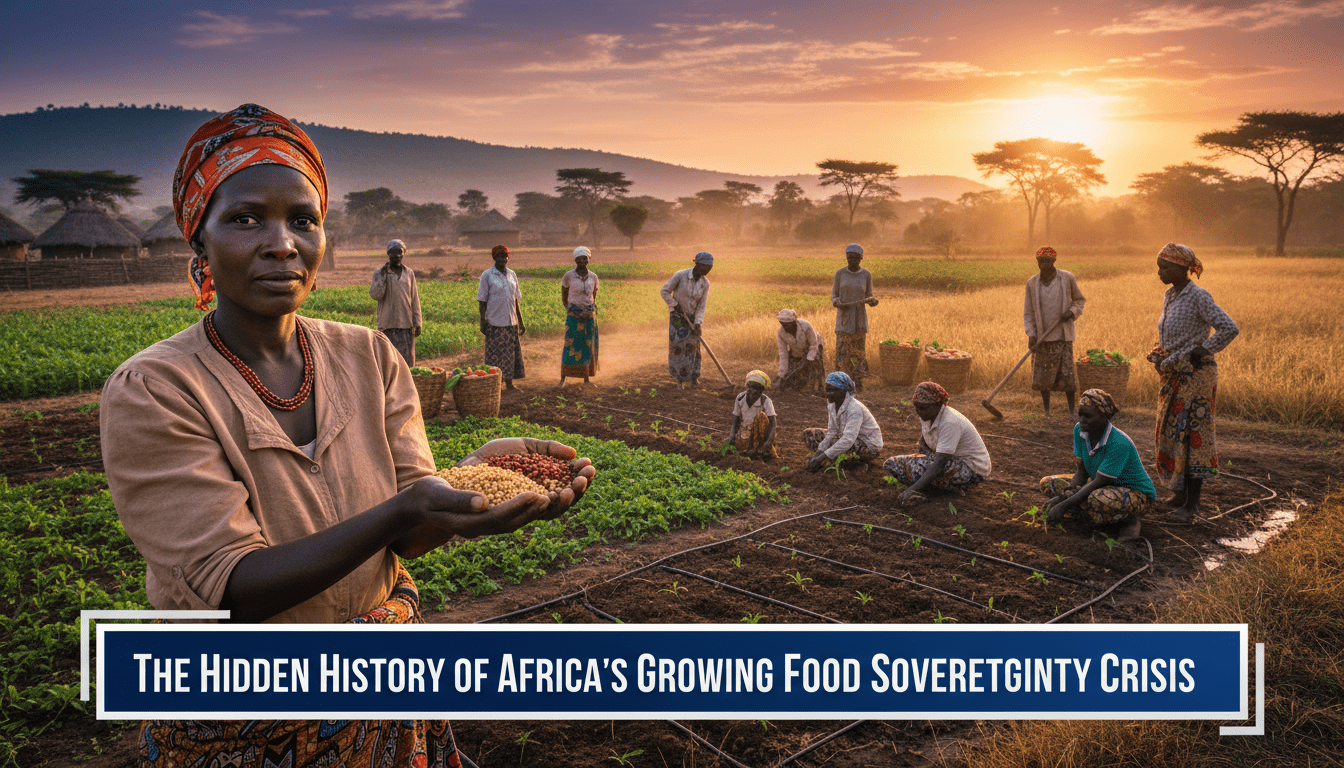
Smallholders are the most important part of Africa’s food system. These are farmers who work on small plots of land, usually less than five acres. There are about 33 million of these small farms across the continent (dai-global-developments.com). They produce about 80 percent of the food that people actually eat in sub-Saharan Africa. Even though they are the most important producers, they are often the most ignored by policy makers. They lack access to credit, storage, and modern tools.
Small farmers are also the best stewards of the environment. They use traditional methods like intercropping, where different plants are grown together. This keeps the soil healthy and protects against pests. Large industrial farms often use monoculture, which strips the soil of its nutrients (solidaridadnetwork.org). By supporting smallholders, governments can build a food system that is both productive and sustainable. Commissioner Vilakati’s call to change realities means shifting focus back to these essential workers (au.int).
Supporting smallholders also means supporting women. In many African countries, women do most of the work on the farm. However, they are often the ones with the least amount of legal protection. They are frequently denied the right to own land in their own names. If the Kampala Declaration is to succeed, it must address these gender gaps. Empowering women farmers is one of the fastest ways to reduce hunger in a community (worldbank.org).
Malabo 2025: Final Review
States on Track
Budget Goal Met? (No)
Import Cost
Hungry
Status as of the 2026 Continental Consultation in Namibia.
The Road to 2035: The Kampala Declaration
After the failure of the Malabo targets, the African Union adopted the Kampala Declaration. This new framework covers the years 2026 to 2035. It aims to increase agrifood production by 45 percent (au.int). This plan is different because it focuses heavily on “Implementation, Implementation, Implementation.” The leaders recognize that they cannot keep making the same mistakes. They want to move away from relying on global markets and move toward intra-African trade.
One major goal of the Kampala plan is to reduce post-harvest losses. Right now, nearly 40 percent of food grown in Africa is lost before it ever reaches a plate (farrellymitchell.com). This happens because there are no good roads or cold storage facilities. By investing in local processing and storage, countries can keep more food at home. This would also create jobs for young people in rural areas. The plan aims to make sure that youth and women are at the center of this new agricultural economy.
The future of 300 million people depends on whether these leaders keep their word. The warning from Commissioner Vilakati serves as a “call to conscience” (au.int). It is a reminder that the continent has the land and the talent to feed itself. Currently, Africa holds 60 percent of the world’s remaining uncultivated arable land. The crisis is not a lack of resources, but a lack of justice and investment. Reclaiming food sovereignty is the only way to ensure that the next generation does not face the same hunger as the current one.
About the Author
Darius Spearman is a professor of Black Studies at San Diego City College, where he has been teaching for over 20 years. He is the founder of African Elements, a media platform dedicated to providing educational resources on the history and culture of the African diaspora. Through his work, Spearman aims to empower and educate by bringing historical context to contemporary issues affecting the Black community.
