
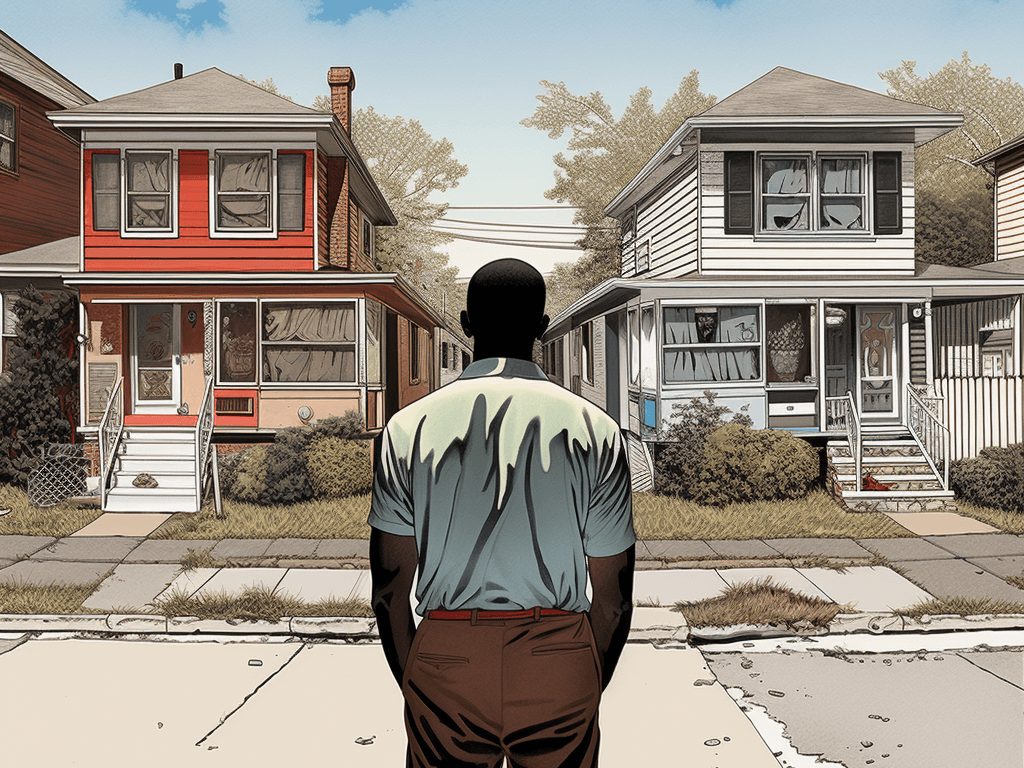
The Persistent Black Homeownership Gap: An Echo of Deep-Rooted Racial Disparities
Introduction
In the United States, the aspiration of homeownership is a fundamental part of the American Dream. However, for a significant number of Black Americans, this dream remains out of reach. The Black homeownership gap has stubbornly persisted despite enacting numerous housing laws and policies since 1968. This enduring gap starkly reflects the deep-rooted racial disparities that pervade the American housing market. As a recent NPR article highlighted, these disparities have remained stubbornly in place for over half a century.
10 Facts You Probably Didn’t Know About Black Homeownership
1. By 1940, 80% of homes in Los Angeles contained restrictive covenants barring Black families.
2. Violent incidents in California rose in the 1950s and 1960s, after courts declared restrictive covenants unenforceable.
3. Of the over 100 incidents of move-in bombings and vandalism that occurred in Los Angeles between 1950 and 1965, only one led to an arrest and prosecution.
4. America is about as segregated today for African Americans as it was in 1940.
5. In 2010, the typical white person in a metropolitan region lived in a neighborhood that was 75 percent white.
6. Today, 90 percent of African Americans live in cities.
7. Between 1949 and 1973, 2,532 eminent domain projects in 992 cities displaced a million people, two-thirds of whom were Black.
8. African Americans made up only 12 percent of the American population at the time, and so they were five times more likely to be displaced than they should have been when considering their portion of the population.
9. In 1984, investigative reporters found that 10 million federally funded public housing residents in 47 states were almost always segregated by race.
10 The Civil Rights Act and the Fair Housing Act did not change the reality on the ground, as civil rights advocates continued to file lawsuits over decades alleging that city housing authorities continued to discriminate in cities like Dallas, San Francisco, Yonkers, and others.
The Persistence of the Black Homeownership Gap
Transitioning from the introduction, it’s important to note that the homeownership gap between Black and white Americans has remained virtually unchanged since 1968. This isn’t due to a lack of effort or intention. Various housing laws and policies have been implemented with the aim of addressing this gap. However, these measures have largely failed to make a significant impact. This persistent homeownership gap is a clear indicator of the deep-seated racial disparities that exist in the American housing market.
The Impact of Historical Injustices
Moving from the present to the past, the roots of the Black homeownership gap can be traced back to historical injustices such as redlining and discriminatory lending practices. These practices, which were widespread throughout the 20th century, systematically denied Black Americans access to homeownership opportunities and the wealth-building potential that comes with it. The impact of these practices is still felt today, with Black Americans significantly less likely to own their homes than their white counterparts.
The Role of Systemic Racism
Building on the historical context, systemic racism plays a significant role in perpetuating the Black homeownership gap. From discriminatory lending practices to racial segregation in housing, systemic racism has created barriers to homeownership for Black Americans. These barriers have limited access to homeownership and contributed to the devaluation of properties in predominantly Black neighborhoods, further exacerbating the wealth gap.
The California Case: A Call for Reparations
In an effort to address these systemic injustices, some states like California have taken bold steps. The state established a reparations task force, the first of its kind in the nation, to study and propose solutions to address the racial wealth gap. As reported in an article on African Elements, the task force is exploring various forms of reparative justice, including potential cash payments, to right the wrongs of the past and pave the way for a more equitable future.
The Economic Impact of the Gap
The Black homeownership gap has significant economic implications from a state-level perspective to a broader economic view. Homeownership is one of the primary ways in which Americans build wealth. Therefore, the gap in homeownership rates between Black and white Americans contributes to the broader racial wealth gap. This wealth gap, in turn, perpetuates economic inequality and hinders economic mobility for Black Americans.
The Social Impact of the Gap
Beyond the economic implications, the Black homeownership gap also has profound social implications. Homeownership is not just about economic stability; it’s also about community stability, access to quality education, and overall quality of life. The homeownership gap contributes to disparities in these areas, further entrenching social inequality.
The Need for Comprehensive Solutions
As we consider the social impact, it becomes clear that addressing the Black homeownership gap requires comprehensive solutions that tackle the issue’s economic and social aspects. This includes policies aimed at increasing Black homeownership rates and broader measures to address systemic racism and economic inequality. It also requires a commitment to understanding and addressing the historical injustices that have contributed to the current situation.
The Role of Policy
Transitioning from solutions to the mechanisms that can implement them, policy plays a crucial role in addressing the Black homeownership gap. This includes housing policies and policies related to education, employment, and criminal justice. These policies must be designed with an understanding of the systemic and structural barriers that contribute to the homeownership gap.
The Importance of Community Engagement
Moving from policy to people, community engagement is also crucial in addressing the Black homeownership gap. This includes engaging with Black communities to understand their needs and challenges and working with community organizations and leaders to develop and implement effective solutions.
The Power of Advocacy
Building on the idea of community engagement, advocacy is another powerful tool in addressing the Black homeownership gap. This includes advocating for policy changes, raising awareness about the issue, and mobilizing support for solutions. Advocacy can also involve challenging discriminatory practices and holding institutions accountable for their role in perpetuating the homeownership gap.
The Potential of Innovation
From advocacy, we turn to innovation, which can also play a role in addressing the Black homeownership gap. This includes innovative housing models, financial products, and technologies that can help increase homeownership rates among Black Americans. It also includes innovative approaches to policy and community engagement.
The Promise of the Future
Despite the challenges, there is reason for optimism. Efforts to address the Black homeownership gap are gaining momentum, and there is a growing recognition of the need for comprehensive solutions. With continued effort and commitment, it is possible to close the homeownership gap and ensure that the dream of homeownership is accessible to all Americans, regardless of race.
Conclusion
In conclusion, the Black homeownership gap is a complex issue that reflects deep-seated racial disparities in the American housing market. Addressing this gap requires a comprehensive approach that tackles the issue’s economic and social aspects, acknowledges and addresses historical injustices, and involves a broad range of stakeholders. While the challenge is significant, the potential rewards – in terms of economic stability, community stability, and social equity – are immense. As we strive towards a more equitable future, closing the Black homeownership gap must be a priority.
