

The Real Reason Behind the Yakima Farmworker Settlement Today
By Darius Spearman (africanelements)
Support African Elements at patreon.com/africanelements and hear recent news in a single playlist. Additionally, you can gain early access to ad-free video content.
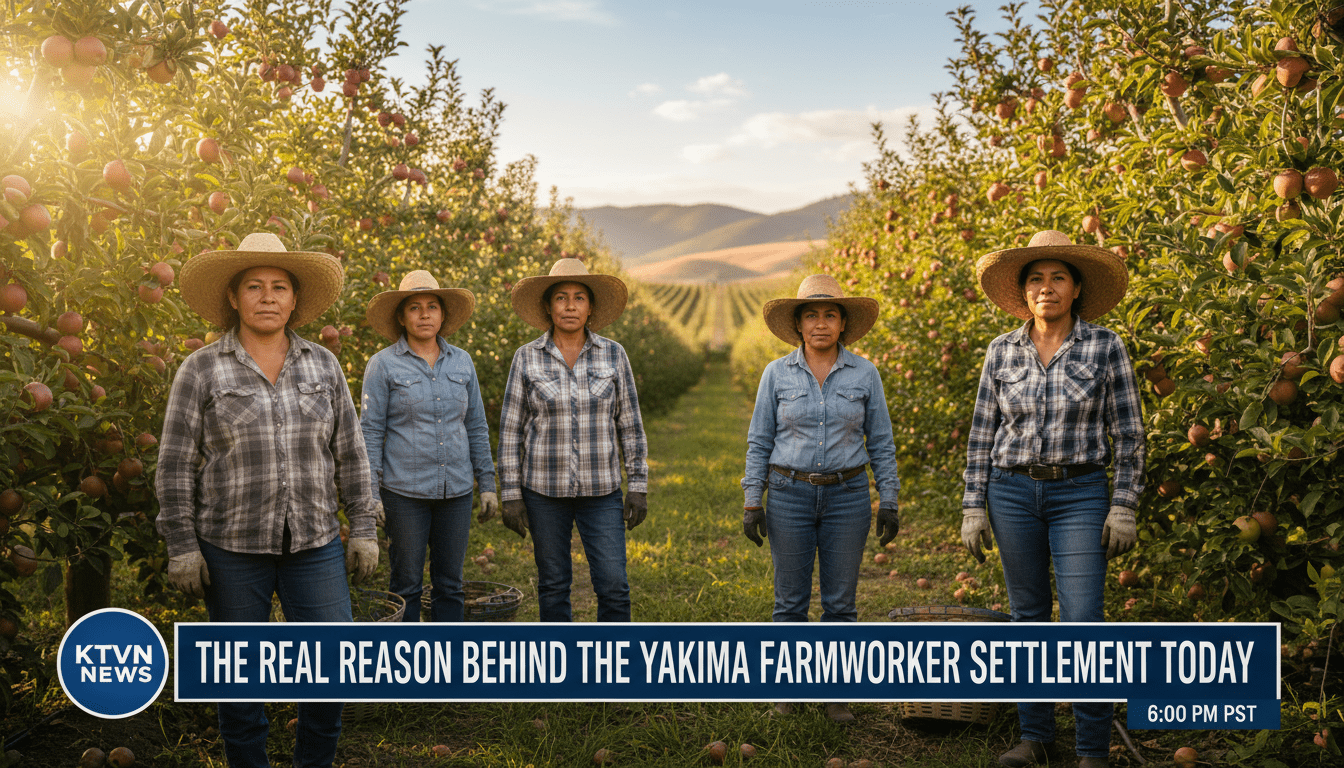
Washington state farmworkers recently received news that could change their lives. Many workers learned they may qualify for a one million dollar settlement. This money is tied to discrimination claims at a farm operation in the Yakima Valley. The legal victory targets Cornerstone Ranches, a long-standing apple and hop grower in Toppenish. Following the announcement, a public notice tells impacted workers how to contact the state civil rights office to seek payment (wa.gov).
This settlement is more than a simple payout for lost wages. It represents a major stand against a system that has long pushed local workers to the side. For generations, the Yakima Valley has relied on the hard work of local families. However, investigators found a troubling pattern at Cornerstone Ranches. The farm allegedly pushed out local workers to make room for foreign guest workers. This practice specifically hurt local women who had worked in these fields for years (wa.gov).
The Rise of H-2A Visas in Washington
Washington is now a top state for foreign agricultural labor (nwpb.org).
The Hidden Impact on Local Families
The state investigation into Cornerstone Ranches revealed startling data. As the farm brought in more male guest workers through the federal H-2A visa program, the hours for local female employees dropped significantly. Records show that the hours worked by local women fell by thirty-nine percent during the period in question. This shift was not an accident. The state alleges the farm held local workers to impossible productivity standards. These same rules were not applied to the male guest workers (wa.gov, wa.gov).
Furthermore, local job seekers were often told that no work was available. This happened even as the farm was actively hiring foreign labor. This type of exclusion creates a “forced turnover” environment. It makes it difficult for local residents to maintain their livelihoods. The settlement aims to provide direct redress to over fifty workers. Some individuals in similar cases have received between five thousand and twenty-five thousand dollars for their losses (chronline.com, laborci.com).
This struggle for fair treatment is part of a larger fight for economic justice that has lasted for decades. Historically, agricultural workers have been excluded from the protections most employees take for granted. By favoring a workforce that is tied to a single employer, farms can exert total control. This creates a structural power imbalance that leaves little room for worker rights or dignity.
The Roots of Agricultural Exclusion
To understand why this settlement is a historic event, one must look at the 1930s. During the New Deal era, President Roosevelt needed the support of Southern Democrats. These lawmakers formed a powerful voting bloc. They refused to support labor laws unless agricultural and domestic workers were excluded. At that time, those sectors were filled with Black laborers. This “Jim Crow Compromise” was a deliberate strategy to keep Black workers in a state of economic subjugation (ssa.gov, msu.edu).
The National Labor Relations Act of 1935 and the Fair Labor Standards Act of 1938 excluded these workers from minimum wage and overtime. Lawmakers used these occupational exclusions as a race-neutral way to deny benefits to sixty-five percent of the Black workforce. Washington State followed this federal lead for many years. It created a legal framework where farmworkers were treated as second-class employees. This legacy of “legislated racism” institutionalized the racial wealth gap in America.
The ways in which federalism and state power interact have often left minority workers vulnerable. While the faces in the fields have changed from Black workers to Latinx workers, the legal loopholes remain similar. The Cornerstone case shows that these old exclusions are finally being challenged in court. Washington is now at the forefront of reversing this century-long history of labor discrimination (mrsc.org).
Yakima County Demographics (2024)
Black residents make up less than 1% of the current population (yakimavalleytrends.org, yakimavalleytrends.org).
The H-2A Program as Modern Servitude
The rise in discrimination claims is closely tied to the explosive growth of the H-2A visa program. This program allows farms to bring in foreign workers for seasonal labor. In 2013, Washington employers requested about sixty-three hundred H-2A visas. By 2024, that number grew to over thirty-six thousand. This is an increase of more than four hundred seventy percent. Washington is now one of the top four states in the country for this type of labor (wafla.org, nwpb.org).
Civil rights advocates often describe the H-2A program as “modern indentured servitude.” The visas are employer-specific. This means if a worker leaves an abusive job, they lose their legal status and face deportation. This lack of mobility grants employers near-total control. Additionally, workers often arrive with large debts from recruitment fees in their home countries. This creates a condition of coercion where workers must endure exploitation to pay back loans (harvust.com, laborci.com).
Consequently, some farms use the H-2A program as a tool for “local worker displacement.” They intentionally create a hostile environment for domestic staff. By setting impossible productivity goals, they can justify firing local workers. Once the local staff is gone, the farm can claim a labor shortage. This allows them to qualify for more H-2A visas. This strategy was seen in the Cornerstone case and a previous three million dollar settlement with Ostrom Mushroom Farms (wa.gov, kiro7.com).
La Causa and the Yakima Movement
The fight for farmworker rights in Washington has a deep history known as “La Causa.” This movement came to the Yakima Valley in 1967. Leaders like Tomás Villanueva and Lupe Gamboa organized strikes to demand dignity and fair pay. Their struggle mirrored the Black Civil Rights Movement. Both movements used nonviolent strategies like boycotts and work stoppages to demand structural change (washington.edu).
In 1985, a major hop strike in Mabton, Washington, became a turning point. Over forty work stoppages paralyzed the industry. This led to the formation of the United Farm Workers of Washington State. These activists understood that Black women and other women of color played a central role in labor organizing. They provided the essential support needed to sustain long strikes and community actions.
Cultural institutions also supported the movement. Radio KDNA in Granger, Washington, launched in 1979 as a vital communication network. It provided news and organizing information to workers in the fields. Today, this same radio station helps distribute settlement notices. It ensures that displaced workers know how to reclaim their lost wages. This network remains a cornerstone of the agricultural community in the Yakima Valley (washington.edu, nwpb.org).
Domestic Labor Displacement at Cornerstone
Local Labor Share (2021):
Local Labor Share (2023):
Hours worked by domestic residents plummeted as guest worker hiring rose (wa.gov).
A Shift in Legal Power
The legal tide in Washington shifted significantly in 2020. In the Martinez-Cuevas v. DeRuyter Brothers Dairy case, the state Supreme Court made a landmark ruling. They decided that exempting dairy workers from overtime was unconstitutional. This ruling opened the door for broader civil rights litigation. Advocates argued that labor exclusions were rooted in systemic racism against the Latinx community (proquest.com, mrsc.org).
The Washington Law Against Discrimination (WLAD) has become a powerful tool in these cases. It is broader than federal anti-discrimination laws. It applies to smaller employers and uses more worker-friendly standards. For example, the WLAD protects categories like citizenship and immigration status. It also allows the state to pursue “systemic” cases where entire groups of workers are displaced (wa.gov, wa.gov).
Under the leadership of Attorney General Nick Brown, the state has stepped up enforcement. Brown is the first Black Attorney General in the history of Washington. He launched a specialized Worker Rights Unit in 2023. This unit focuses on protecting low-income and immigrant workers from exploitation. His office views economic justice as a core part of civil rights. This shift ensures that agricultural companies are held accountable for their hiring practices (wa.gov, wa.gov).
How Impacted Workers Can Seek Payment
The settlement with Cornerstone Ranches is now moving into the payment phase. The state civil rights office is reaching out to those who were harmed. If a person worked at Cornerstone Ranches between 2021 and 2023 and believes they were discriminated against, they should take action. This applies especially to local female workers who saw their hours cut or were denied work (wa.gov).
Impacted workers are instructed to contact the State Attorney General’s Civil Rights Division. They can send an email to cornerstone@atg.wa.gov. Alternatively, they can call 1-833-660-4877 and select Option 6. The current administration under President Donald Trump oversees federal labor policy, but Washington State uses its own laws to protect local residents. This settlement serves as a warning to other farms that use the H-2A program to bypass local labor (wa.gov, wa.gov).
This case is a reminder that the struggle for fair treatment is ongoing. By standing up for local farmworkers, the state is honoring a long history of activism. From the hop strikes of the 1980s to the courtrooms of today, the goal remains the same. Every worker deserves dignity, fair pay, and a workplace free from discrimination. This one million dollar settlement is a significant step toward making that goal a reality for the families of the Yakima Valley.
About the Author
Darius Spearman is a professor of Black Studies at San Diego City College, where he has been teaching for over 20 years. He is the founder of African Elements, a media platform dedicated to providing educational resources on the history and culture of the African diaspora. Through his work, Spearman aims to empower and educate by bringing historical context to contemporary issues affecting the Black community.
