
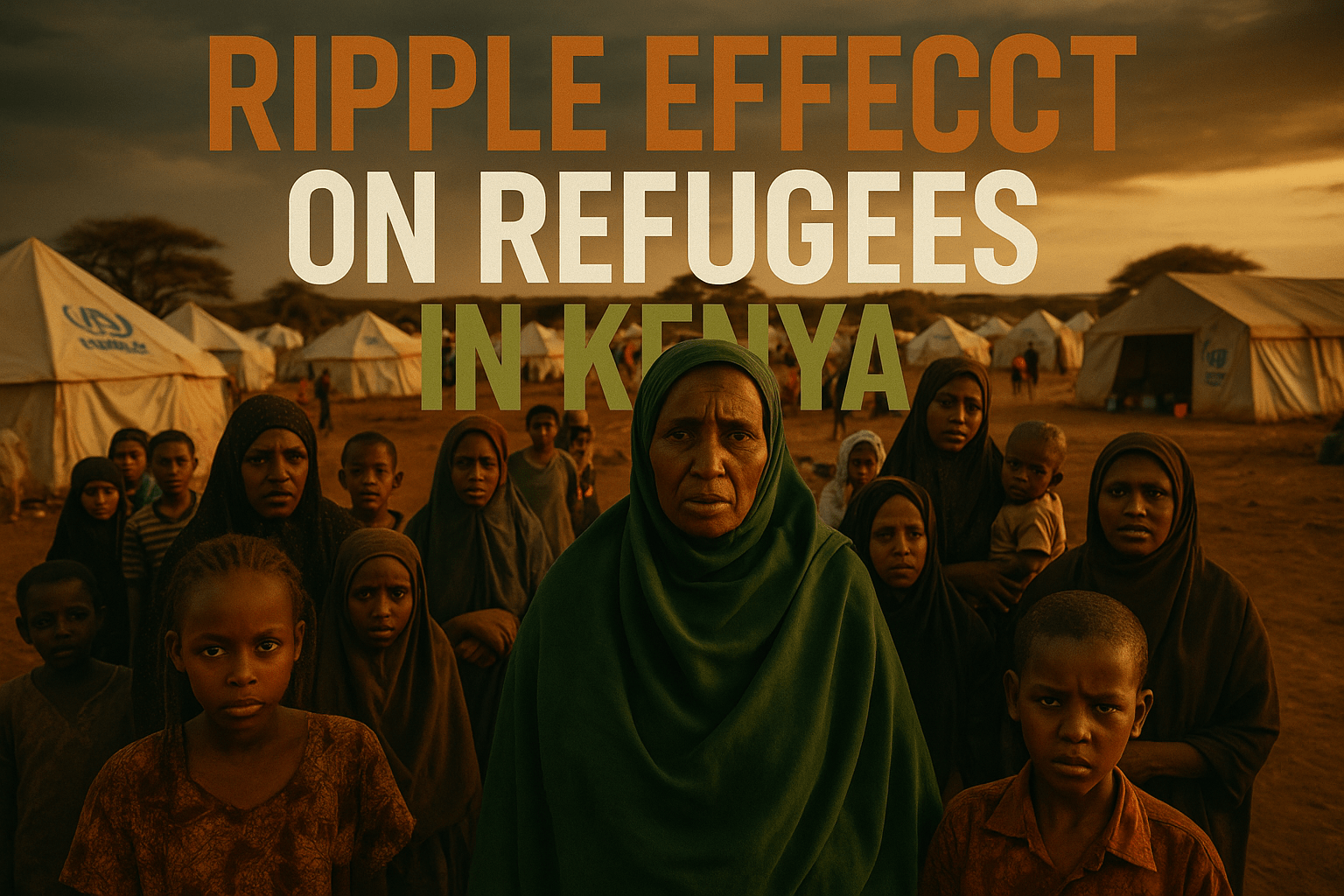
 U.S. aid cuts to Kenyan refugee camps under Trump have caused food shortages, education drops, and scarce sanitation, deepening hardship for displaced Black communities. (AI Generated Image)
Trump’s Aid Cuts Harm Kenyan Refugees
By Darius Spearman (africanelements)
Support African Elements at patreon.com/africanelements and hear recent news in a single playlist. Additionally, you can gain early access to ad-free video content.
Trump’s Budget Cuts Impact
The Trump administration’s decisions to cut U.S. aid have deeply impacted refugee camps in Kenya. The policy adjustments specifically targeted vital funding, worsening conditions for thousands of refugees. Kakuma camp, one of the world’s largest, has seen significant disruptions (Context.news).
Refugees, many of whom are Black individuals fleeing conflict and persecution, rely heavily on U.S. assistance. With reduced support, essential services like food and sanitation have suffered (Context.news). Sadly, aid reduction directly affects their daily lives and future prospects.
Vital Resources Diminish
Major cuts in U.S. aid under the Trump administration have stripped Kakuma refugee camp of crucial resources. Food rations are notably scarce, and sanitary supplies have dwindled significantly (Context.news). Consequently, the reduction has led to widespread food shortages, risking the health of thousands. Young girls, in particular, face challenges locating sanitary pads, forcing many to miss school during their periods (Context.news). Such circumstances underline how aid cuts undermine fundamental human rights and educational access.
Furthermore, large-scale funding reductions have caused severe damage to the educational system within the camp. Dozens of teachers have been laid off because of insufficient funds, further disrupting learning (Context.news). The loss of teaching staff impacts the quality of education and the future opportunities for refugee children. That reduction in support represents a profound setback for communities striving to rebuild their lives in challenging circumstances.
Cash Transfers Disappear
Cash transfers, a lifeline for many refugee families, have been almost completely eliminated (Context.news). Previous cash transfers allowed families to meet their basic needs and maintain a degree of self-sufficiency. Their removal has intensified financial vulnerability for refugees, making it harder to access essentials like food, medicine, and shelter (Context.news).
The absence of cash transfers directly affects access to education and basic necessities. That situation impacts not only individual refugees but also the entire camp community (Context.news). Aid cuts prevent refugees from participating meaningfully in the camp’s economy and society. The lack of financial support traps many in a cycle of dependency and hardship.
Aid Organizations Struggle
Since February 2025, aid organizations have acutely felt the impact of Trump’s funding cuts. Evidence appears across Kenya’s two major refugee camps, Kakuma and Dadaab. The reductions in essential support jeopardize the well-being of thousands of refugees (YouTube: How funding cuts in aid can now be felt in Kenya’s two…).
Humanitarian agencies rely on consistent humanitarian assistance to provide basic services. Continuous reductions threaten their ability to operate, leaving many refugees without critical aid (Africanews: The ripple effect of Trump’s budget cuts on refugee camps in Kenya). The cuts jeopardize their ability to function effectively, leaving thousands vulnerable. Such circumstances underscore the urgency of sustained humanitarian funding for vulnerable populations.
Policy Actions and Account Revocations
Policy actions tied to the budget cuts included revoking funds from important accounts, such as the Migration and Refugee Assistance (MRA) account (CWSGlobal). That account specifically supported refugee admissions and resettlement efforts. Its defunding had immediate and severe consequences for refugees globally.
The revocation led to significant delays and cancellations in refugee flights and resettlement plans. Vulnerable refugees faced disrupted travel and increased risks (CWSGlobal). Such policy changes also highlight how individual lives suffer when refuge policies shift abruptly.
Demographics of Dispossession
Kakuma refugee camp is a sprawling settlement home to over 190,000 refugees from many different countries (Context.news). As one of the largest refugee settlements worldwide, it provides a haven for those fleeing conflict and persecution. The vast majority of its residents are Black individuals, from nations like South Sudan, Somalia, and the Democratic Republic of Congo.
Displaced individuals, already removed from their homes, rely on international aid for survival. Food ration cuts have drastically reduced daily calories, directly impacting nutrition levels within the camp (Context.news). Conditions make refugees even more susceptible to illness and long-term health issues. The situation demonstrates the acute vulnerability of displaced Black communities globally when aid is reduced.
Educational Setbacks for Refugee Children
The reduction in U.S. aid has particularly devastated the education sector in Kakuma camp. Tens of teaching staff have been laid off (Context.news). Previously, several hundred teachers were employed, but now fewer than half remain on salary. That reduction has deeply hampered educational capacity, affecting thousands of children.
Moreover, the ripple effect of such layoffs extends beyond just classroom numbers. Such disruption limits the future prospects of refugee children, diminishing their chances to recover and prosper. Education serves as a key pathway to self-sufficiency and integration, and its curtailment traps a generation in cycles of poverty and instability.
Key Impacts on Kakuma Refugee Camp
Source: Context.news
Humanitarian Crisis Escalates
The U.S. aid cuts have created an escalating humanitarian crisis for residents of Kakuma and Dadaab. Both camps, already burdened by limited resources, now face even greater strain due to reduced funding. Basic services like healthcare, shelter, and water sanitation are severely compromised.
Such conditions heighten the risk of disease outbreaks and further deteriorate living conditions. For communities that have already lost so much, the cuts represent another layer of suffering and insecurity. They also underscore the critical role international aid plays in preventing catastrophe in vulnerable regions.
Systemic Disadvantage for Black Communities
The U.S. aid cuts to Kenyan refugee camps reflect a broader pattern of policies that disproportionately affect Black and Global South communities. Refugees in Kakuma and Dadaab, many of whom are fleeing violence in predominantly Black African nations, bear the brunt of these decisions. The reduction in aid highlights systemic issues that often leave marginalized Black populations vulnerable.
Policy actions can be understood through a framework of historical exploitation and systemic racism. The U.S. has a moral obligation to support those in need, especially when its foreign policies or historical actions contribute to global instabilities. The diminished support for camps hosting a significant Black refugee population raises questions about global equity and humanitarian responsibility.
It is important to remember that such figures are not just numbers; they represent human lives. Each cut, each cancelled program, each displaced person has a story. Ignoring those stories allows for continuation of policies that perpetuate hardship and suffering. Investing in refugee communities means investing in global stability. It also means uplifting Black lives, regardless of where they reside.
ABOUT THE AUTHOR
Darius Spearman has been a professor of Black Studies at San Diego City College since 2007. He is the author of several books, including Between The Color Lines: A History of African Americans on the California Frontier Through 1890. You can visit Darius online at africanelements.org.
