
Listen to this article
Download AudioTrump Administration Violated South Sudan Deportation Ruling
By Darius Spearman (africanelements)
Support African Elements at patreon.com/africanelements and hear recent news in a single playlist. Additionally, you can gain early access to ad-free video content.
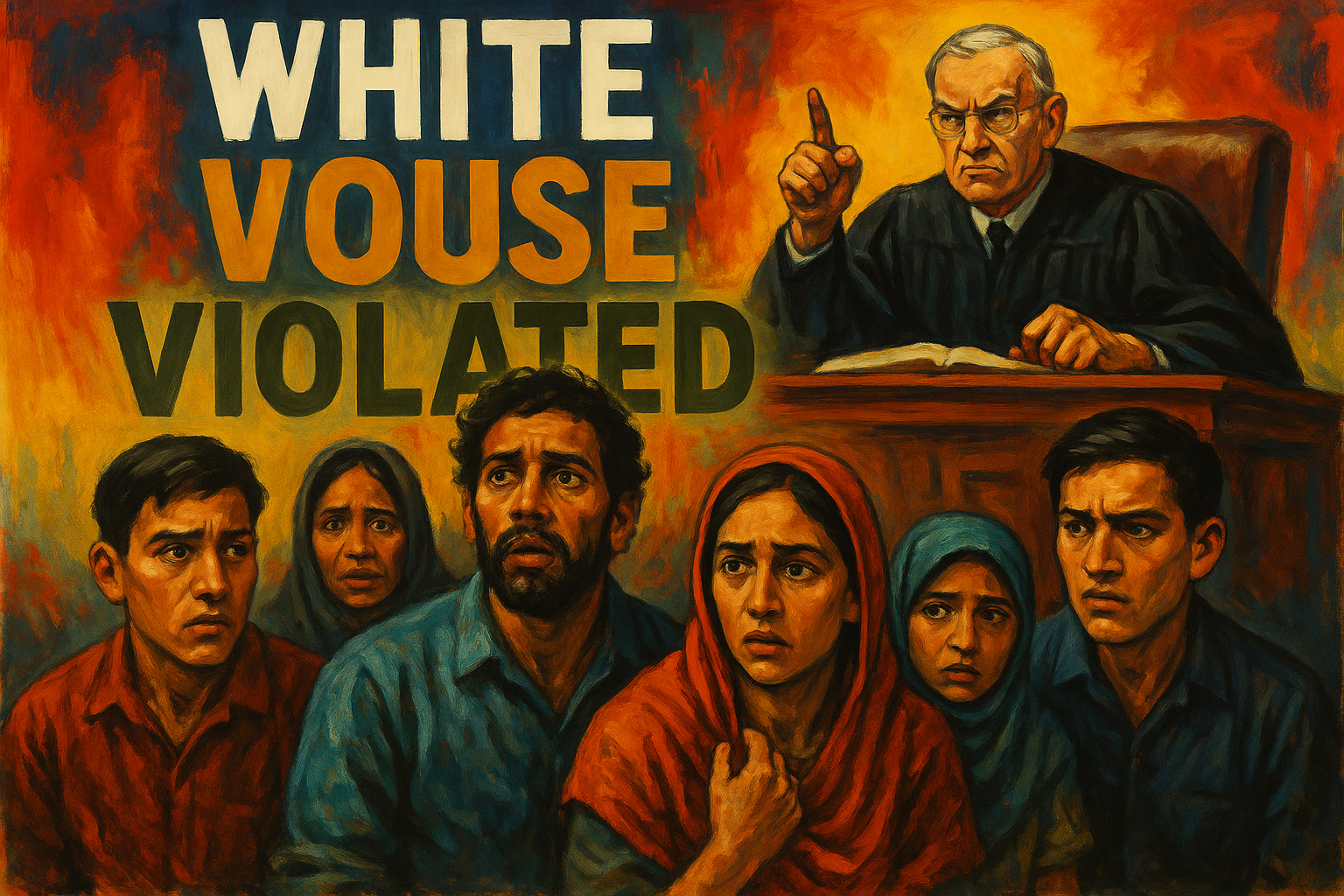
A recent federal court ruling shines a bright light on the complex and sometimes troubling practices within the United States immigration system. A federal judge in Boston ruled that the Trump administration’s Department of Homeland Security (DHS) violated a court order. This violation occurred when eight migrants, who had been convicted of crimes, were deported to South Sudan without essential legal safeguards.
The judge’s decision highlights a crucial need for fairness and adherence to the law, even when dealing with individuals convicted of severe offenses. People deserve to know that the government follows established procedures, especially when lives are at stake. This case, involving a deportation to a nation like South Sudan, raises significant questions about human rights and the treatment of all individuals, regardless of their past deeds or country of origin.
Understanding the DHS
To truly understand the events leading to this court ruling, it is important to grasp the role of the Department of Homeland Security. DHS is a comprehensive U.S. federal department. Its primary job is to safeguard the nation, protecting it from various threats (About DHS – Homeland Security).
This agency was formed after the tragic events of September 11, 2001. Its purpose is to unify and coordinate efforts across different government functions. These functions include securing borders, enforcing immigration laws, countering terrorism, ensuring cybersecurity, and helping during natural disasters (What Does DHS Do? | Homeland Security). Thus, DHS holds immense power over the lives of migrants and has a direct impact on communities, including those with African and African Diaspora roots, when policies are implemented.
Role of the Department of Homeland Security
Department of Homeland Security (DHS): A U.S. federal executive department responsible for comprehensive public security. Its duties include border control, immigration enforcement, anti-terrorism, cybersecurity, and disaster response. It was formed to enhance national security after the 9/11 attacks, coordinating efforts to protect the country from various threats (What Does DHS Do? | Homeland Security).
Judge’s Enforcement of Due Process
Judge Brian Murphy in Boston declared that DHS “unquestionably” violated a court order. This severe judgment came after the agency deported eight migrants to South Sudan (ABC News). These individuals were sent to a nation that was not their home country, and they did not receive the proper legal process they were entitled to. The judge found that the deportees were not given a chance to object to their removal or to speak with a lawyer (PBS NewsHour).
The deportation flight took off just a few hours after the migrants were notified. This rapid removal left the individuals with no time to challenge the decision or voice concerns about their safety (PBS NewsHour). Such actions disregard the fundamental principles of due process, which are meant to protect everyone under the law. It underscores the importance of upholding legal standards, especially for people who might be particularly vulnerable within the system.
Meaning of Due Process in Immigration
Due Process in Immigration Law: This constitutional right ensures that the government must provide fair legal procedures before taking away someone’s liberty or property. For deportation, it typically includes allowing individuals to have a hearing, be informed of charges, present evidence, and sometimes have legal counsel or an interpreter available. It ensures fairness in the legal system.
The Deportees: Their Backgrounds and the Broader Context
Eight individuals were deported on this flight. All had been convicted of violent crimes in the United States. DHS described their past offenses as “uniquely monstrous and barbaric” (PBS NewsHour). However, despite their criminal records, the manner of their deportation still raises questions about government accountability.
The issue became complicated because many of these individuals could not be sent back to their original countries. Nations like Cuba, Laos, Mexico, Myanmar, and Vietnam would not accept them (PBS NewsHour). This situation often leaves individuals in a difficult legal limbo, sometimes referred to as being “stranded” within the immigration system. It also shows a broader challenge when a person’s home country refuses their repatriation.
Number of Deportees in South Sudan Flight
New Legal Safeguards for Migrants
The court’s ruling did not order the return of the deported migrants to the United States. However, it made concrete requirements for how the government must handle similar cases in the future (ABC News). The judge established clearer due process rules, ensuring that migrants facing removal receive fair treatment.
Now, migrants must be given at least 10 days to raise safety concerns if they are to be deported to a third country (ABC News). Additionally, if they show a “reasonable fear” of harm, the government must reopen their immigration case. Even without demonstrating reasonable fear, migrants must still have at least 15 days to ask for their case to be reopened (ABC News). This new standard aims to prevent quick, unjust deportations. It provides a measure of protection for vulnerable individuals. The specific timeframes highlight the new, stricter standards for federal agencies to operate under.
New Due Process Timelines for Deportation Cases
Government’s Response and Justification
Officials from the DHS and the administration responded to the ruling by stating that the deportees had long histories with immigration authorities. They claimed the individuals had many prior chances to object to their deportation (PBS NewsHour). The government also suggested that they might have misunderstood the judge’s order concerning the timing between giving notice and carrying out a deportation.
Furthermore, DHS officials emphasized that the deported individuals were convicted of serious crimes. They presented the deportation as a necessary action to protect public safety (ABC News). This stance highlights the ongoing tension between national security concerns and the human rights protections that due process is meant to provide. It also reflects how different interpretations of legal requirements can lead to direct conflicts between government agencies and the judiciary.
Understanding Third-Country Deportation
Third-Country Deportation: This practice involves sending migrants to a country that is not their home or nationality. Concerns arise because the receiving country may lack resources or legal frameworks to support these individuals. Migrants might also face safety risks or difficulty accessing basic rights and protections in such situations. This scenario is particularly relevant for individuals who face persecution in their home countries.
Challenges with Repatriation Refusals
The incident involving the South Sudan flight underscores a broader issue within the immigration system. Many countries, including Cuba, Laos, Mexico, Myanmar, and Vietnam, often refuse to take back their citizens who have been slated for deportation from the United States (PBS NewsHour). This refusal creates a complex problem as it leaves individuals in a stateless-like condition, unable to return to their homeland and also unable to remain in the U.S.
Several reasons contribute to these refusals. Sometimes, diplomatic tensions play a role, or a lack of administrative resources in the home country prevents them from processing returnees. These situations can create significant challenges for migrants, especially those from African or Afro-descendant communities, who may face systemic biases or unique difficulties in navigating complex international legal frameworks. The failure of countries to accept their citizens back highlights a persistent global issue in immigration management.
Countries Refusing Repatriation of Deportees
The Impact on African and Diaspora Communities
While this particular case dealt with a mixed group of deportees, its implications resonate deeply within African American and broader African Diaspora communities. Many individuals from African nations or those with complex immigration statuses often face heightened scrutiny and challenges within the U.S. immigration system. Therefore, a ruling that reinforces due process and fair procedure is essential for many families.
The specific safety risks in South Sudan, such as ongoing conflicts and humanitarian crises, highlight why the judge’s requirement for a 10-day objection period is so vital. Being deported to a country facing such instability can be extremely dangerous. The ruling indirectly brings attention to the need for thorough consideration of receiving nations’ conditions, especially when those deportees have historical or familial ties to African and diaspora communities, ensuring that deportation does not amount to a death sentence.
This case also underscores the importance of legal representation and the right to information for all individuals facing deportation. When policies disregard these fundamental rights, they create a system that can disproportionately harm vulnerable populations. Furthermore, it continues a historical pattern where Black and brown bodies are often the first to bear the brunt of unjust policies, whether through slavery, Jim Crow, mass incarceration, or immigration actions. This ruling stands as a reminder that vigilance is crucial to protect the rights of all people, particularly those on the fringes. The legal system serves as a critical check against governmental overreach, reinforcing the principle that no one, regardless of their past, is beneath the protection of due process.
ABOUT THE AUTHOR
Darius Spearman is a professor of Black Studies at San Diego City College, where he has been teaching since 2007. He is the author of several books, including Between The Color Lines: A History of African Americans on the California Frontier Through 1890. You can visit Darius online at africanelements.org.
ABOUT THE AUTHOR
Darius Spearman has been a professor of Black Studies at San Diego City College since 2007. He is the author of several books, including Between The Color Lines: A History of African Americans on the California Frontier Through 1890. You can visit Darius online at africanelements.org.
