

West Africa's Shifting Alliances
By Darius Spearman (africanelements)
Support African Elements at patreon.com/africanelements and hear recent news in a single playlist. Additionally, you can gain early access to ad-free video content.
ECOWAS and the Sahel States
The political landscape of West Africa is currently undergoing significant changes, with Sierra Leonean President Julius Maada Bio, the new president of the Economic Community of West African States (ECOWAS), actively advocating for the return of the Alliance of Sahel States (AES) to the regional bloc. This push for reintegration comes at a critical time, as the sub-region grapples with complex challenges ranging from security threats to economic instability. President Maada Bio's efforts are supported by other regional leaders, including Ivorian President Alassane Ouattara, who has also called for a resumption of talks between ECOWAS and AES, emphasizing the mutual benefits for the people of the sub-region (english.news.cn). This sentiment of inclusivity and unity was echoed during Maada Bio's swearing-in as president of Sierra Leone, with his party's campaign manager stating, “Victory for all men, not victory for some. Everyone in, no one out” (politicsgovernance.com).
The Alliance of Sahel States (AES) was formed by Mali, Burkina Faso, and Niger, countries that subsequently withdrew from ECOWAS. These three nations officially left ECOWAS to establish the AES on September 16, 2023 (english.news.cn). The AES is a confederation that emerged in September 2023 following the Nigerien crisis and the eventual withdrawal of these countries from ECOWAS (globalvoices.org). The creation of the AES General Staff, a significant step towards a unified military force, stems from the Liptako-Gourma Charter, signed on September 16, 2024, by the heads of state of Mali, Burkina Faso, and Niger, after their departure from ECOWAS (sahel-intelligence.com). This formation highlights a growing desire among these nations for greater autonomy and a redefinition of regional alliances.
Economic Strain in the Sub-Region
The current political climate in the sub-region, particularly with the departure of the AES countries from ECOWAS, is having a negative impact on the economic situation. Ivorian President Ouattara explicitly stated that “due to this politically fraught situation, the economic situation in the sub-region is not very favorable” (english.news.cn). This assessment underscores the tangible consequences of political fragmentation on the livelihoods of millions. In Mali, for instance, the economy is struggling amidst internal political tensions and purges. There are unofficial “lists” of individuals to be monitored, arrested, or removed, including military, political, and economic figures, reminiscent of the instability experienced before 2012-2013 (financialafrik.com). Such internal strife further exacerbates the economic challenges faced by the region.
The economic implications of the AES exit from ECOWAS are predominantly trade-related (fitchsolutions.com). Historically, the AES countries have maintained close economic relations with their West African neighbors, with significant portions of their imports originating from ECOWAS markets (fitchsolutions.com). In 2023, approximately 33% of the AES's imports came from ECOWAS markets, with Mali being the most exposed at 50.5% (fitchsolutions.com). The withdrawal of the AES poses significant regional implications given these countries' strategic position and their collective emphasis on security cooperation to address existential security threats over economic integration (ghanapeacejournal.com). This shift in priorities highlights a fundamental divergence in regional strategies, with potential long-term economic consequences.
AES Imports from ECOWAS Markets (2023)
The Sahel's Security Landscape
The Alliance of Sahel States (AES) is actively taking steps to establish a unified military force to address pressing security concerns within its confederal space. A significant stride towards this goal was made with the arrival of the first members of its integrated General Staff in Niamey, Niger, at the end of July (sahel-intelligence.com). This joint command, comprising senior officers from Burkina Faso, Mali, and Niger, is diligently working to finalize the legal frameworks, procedures, and operational mechanisms required to make the force fully functional (sahel-intelligence.com). The primary objective of this unified force is to become a key player for security and stability within the confederal space, safeguarding populations and territories from terrorism, foreign interference, and similar threats (sahel-intelligence.com). This initiative reflects a proactive approach by the AES to assert its sovereignty and address its security challenges independently.
The Sahel region, stretching from the Atlantic Ocean to the Red Sea, encompasses countries such as Senegal, Gambia, Mauritania, Guinea, Mali, Burkina Faso, Niger, Chad, Cameroon, and northern Nigeria (globalvoices.org). Despite its rich human capital and strategic importance, the region faces prolonged instability. It is home to one of the youngest and most dynamic populations on the planet, yet its energy has been “betrayed by elites who have hijacked constitutions or seized power in fatigued democracies” (globalvoices.org). This internal betrayal, coupled with external pressures, contributes to the persistent insecurity and challenges faced by the people of the Sahel. The formation of the AES military force is a direct response to these multifaceted threats, aiming to provide a localized solution to regional security issues.
Shifting Alliances and Geopolitical Implications
The Alliance of Sahel States (AES) has increasingly shown a preference for strengthening ties with Russia and other anti-Western states, viewing ECOWAS as acting in Western interests (greydynamics.com). This significant shift is driven by a desire for more localized regional cooperation and a reduced reliance on traditional partners, particularly France (fitchsolutions.com). The AES has accused ECOWAS of being unduly influenced by foreign powers, specifically referencing France's historical legacy in West Africa (fitchsolutions.com). This strategic realignment is further enabled by new security partnerships with Russia and other markets like Türkiye, which are looking to fill the void left by Western states (fitchsolutions.com). The implications of this shift are profound, as it reshapes the geopolitical dynamics of the entire West African region.
The AES's focus on establishing collective defense and military cooperation provides security guarantees for its members, requiring mutual defense against threats to sovereignty and territorial integrity (georgetownsecuritystudiesreview.org). This charter differs from ECOWAS, as it excludes commitments to concepts like economic interdependence and democratization (georgetownsecuritystudiesreview.org). The absence of Mali, Niger, and Burkina Faso from ECOWAS will likely lead to less cooperation between countries in West Africa, reducing the holistic capacity to deal with terrorism effectively (smallwarsjournal.com). ECOWAS's perceived failure to support regional counterterrorism efforts is purportedly a key reason for the withdrawal of these nations (smallwarsjournal.com). This divergence in security strategies presents a complex challenge for regional stability and counter-terrorism efforts.
AES Security Alliances
Strengthening ties, perceived as anti-Western.
Filling void left by Western states.
Seeking diversified partnerships.
The Path to Regional Stability
The ongoing efforts by President Maada Bio and other regional leaders to encourage the return of the AES to ECOWAS underscore the critical need for regional unity in West Africa. The challenges facing the sub-region, including terrorism, climate change, military coups, and poverty, are complex and interconnected. Addressing these issues effectively requires a coordinated and collaborative approach from all regional actors. The “everyone in, no one out” philosophy championed by Maada Bio's party reflects a deep understanding that fragmentation only weakens the collective capacity to overcome these obstacles. Therefore, dialogue and negotiation are essential to bridge the current divide and foster a more cohesive regional framework.
The Sahel region, despite its vast potential, remains plagued by instability. The phrase “betrayed by elites” (globalvoices.org) resonates deeply, highlighting the internal governance issues that have contributed to the current predicament. For the people of the Sahel and the broader West African diaspora, stability and economic prosperity are paramount. The current political and economic climate, characterized by a “not very favorable” economic situation (english.news.cn) and ongoing security threats, directly impacts their daily lives and future prospects. A unified approach, perhaps through renewed engagement between ECOWAS and AES, offers the most promising path towards sustainable peace and development for the region.
Key Facts About the Sahel Region
Stretches from the Atlantic Ocean to the Red Sea, including Senegal, Gambia, Mauritania, Guinea, Mali, Burkina Faso, Niger, Chad, Cameroon, and northern Nigeria.
Home to one of the youngest and most dynamic populations on the planet.
Energy of the population “betrayed by elites who have hijacked constitutions or seized power in fatigued democracies.”
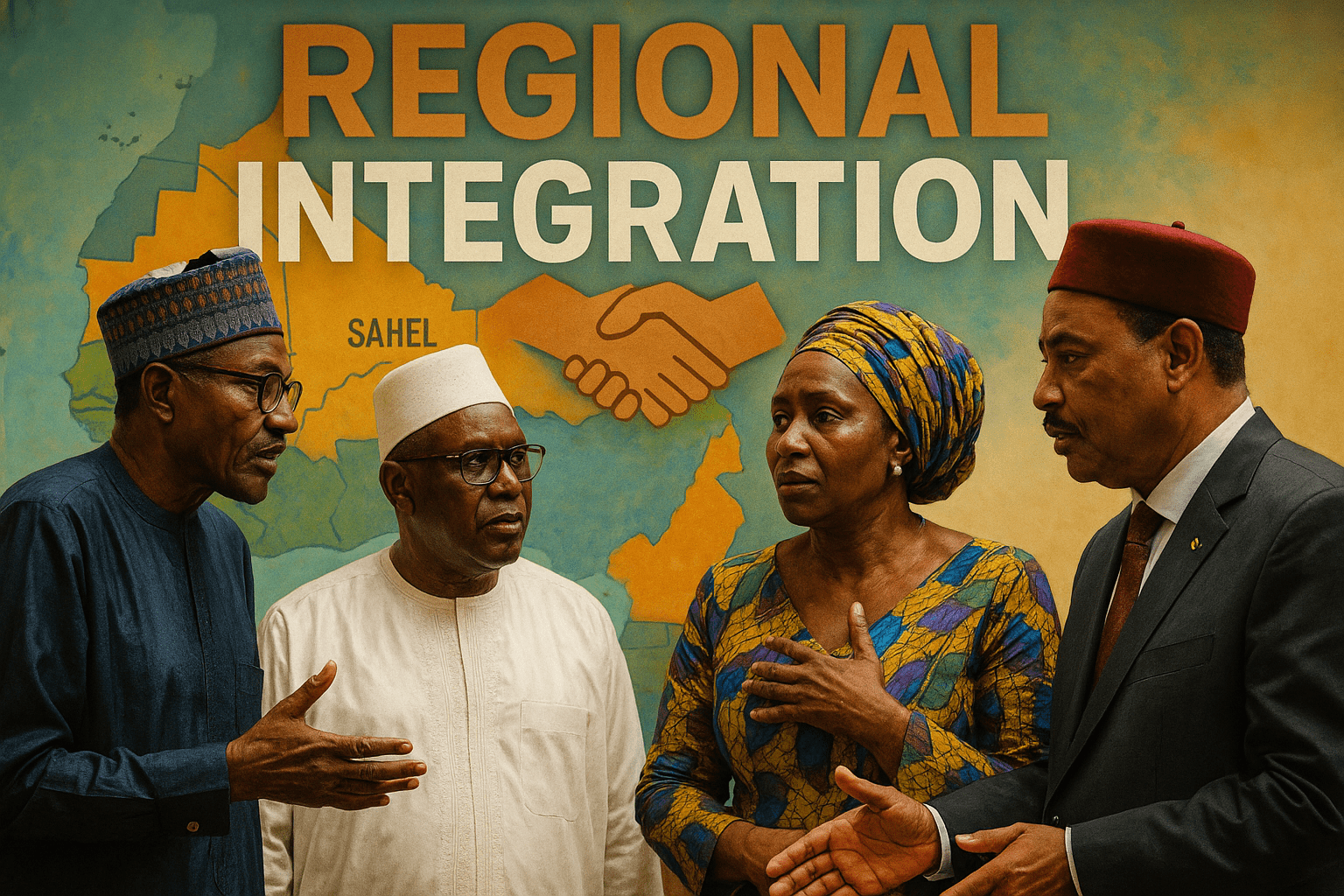
The Future of Regional Integration
The current situation in West Africa presents both challenges and opportunities for regional integration. The withdrawal of the AES countries from ECOWAS has undeniably created a void and complicated efforts to address shared threats. However, the renewed calls for dialogue and reintegration by leaders like President Maada Bio and President Ouattara indicate a strong desire to mend fences and rebuild a united front. The success of these efforts will depend on the willingness of all parties to engage in constructive negotiations, address underlying grievances, and find common ground that prioritizes the well-being and security of the sub-region's inhabitants.
For the African diaspora, the stability and prosperity of West Africa hold immense significance. The region's rich history, diverse cultures, and strategic importance make it a vital component of the global Black experience. Therefore, the resolution of the current tensions between ECOWAS and the AES is not merely a regional matter but one that resonates across the diaspora. A strong, unified West Africa can better leverage its resources, address its challenges, and contribute more effectively to global development. The path forward requires visionary leadership, sustained diplomatic efforts, and a commitment to the principles of cooperation and mutual respect.
ABOUT THE AUTHOR
Darius Spearman has been a professor of Black Studies at San Diego City College since 2007. He is the author of several books, including Between The Color Lines: A History of African Americans on the California Frontier Through 1890. You can visit Darius online at africanelements.org.
