

Why Arlington Police Traffic Stop Data Still Shows Huge Gaps
By Darius Spearman (africanelements)
Support African Elements at patreon.com/africanelements and hear recent news in a single playlist. Additionally, you can gain early access to ad-free video content.
The city of Arlington, Texas, recently released a report that has sparked intense conversation across the state. The 2025 Annual Racial Profiling Report shows that Black drivers are stopped by police more often than any other group. This trend continues even though Black people make up a small portion of the city population. While the numbers are new, the story behind them is old. To understand what is happening today, people must look at the laws and events that shaped policing in Texas over the last twenty-five years. (arlingtontx.gov)
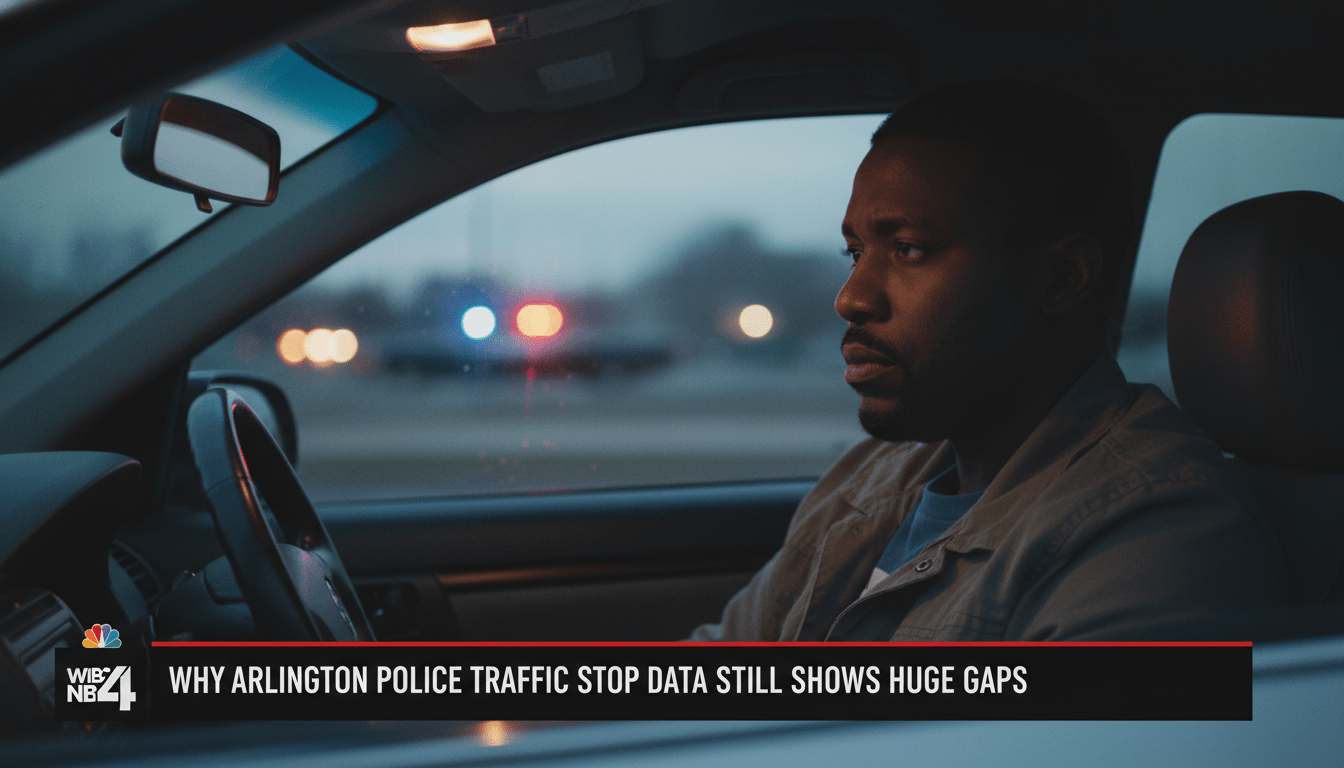
In early 2026, the Arlington Police Department presented these findings to the City Council. The data showed that officers made over 103,000 traffic stops in 2025. This was a massive increase from the previous year. Many residents wonder why the numbers jumped so high. The department points to a new safety plan meant to reduce car crashes. However, for many in the Black community, these numbers feel like a familiar pattern of being watched more closely than others. Analyzing these disparities requires a look at shaping political dynamics within local government and law enforcement. (keranews.org, arlingtontx.gov)
Population vs. Traffic Stops (2025)
The Massive Surge in Traffic Enforcement
The 2025 report revealed a startling rise in police activity. Traffic stops increased by nearly 45,000 compared to 2024. This nearly 80 percent increase was not an accident. It was the result of the “Safe Streets Arlington Plan.” The city also used a state grant called the Selective Traffic Enforcement Program. This grant provided over $315,000 to pay for extra patrols. The current administration under President Donald Trump has continued to support federal and state funding for local law enforcement initiatives aimed at public safety. (arlingtontx.gov)
Chief Al Jones defended the high volume of stops. He argued that more police visibility helps prevent fatal accidents. According to the department, traffic deaths dropped from 43 in 2023 to 30 in 2025. While safety is a priority, the sheer number of stops means more interactions between police and citizens. When enforcement increases, the groups that are stopped most often feel the heaviest burden. In Arlington, that group is consistently Black drivers, who accounted for 36.5 percent of all stops. (keranews.org, arlingtontx.gov)
The department insists that officers do not know the race of a driver before they pull them over in 98 percent of cases. They call these “blind” stops. However, criminologists and community advocates point out that even if an officer does not see a face, they might target certain neighborhoods. This can lead to the same result. The high number of stops in minority areas often stems from a history where Black people continued to face involuntary servitude through various legal systems. Modern policing can sometimes mirror these old patterns of geographic control. (arlingtontx.gov, tmcec.com)
The Legacy of the Sandra Bland Act
The detailed data we see today exists because of a tragedy. In 2015, a Black woman named Sandra Bland was pulled over for a minor traffic violation in Waller County, Texas. She was found dead in a jail cell three days later. Her death caused national outrage and led to the Sandra Bland Act in 2017. This law forced every police department in Texas to change how they report data. It required them to track not just who they stop, but what happens during that stop. (texas.gov, texasstandard.org)
Before this law, reporting in Texas was described as a patchwork. Some departments kept good records, while others kept very few. The Sandra Bland Act mandated that officers report whether they conducted a search. They must also report if they found any contraband, like drugs or weapons. This is known as the “hit rate.” In Arlington’s 2025 report, the hit rate for Black drivers was 52 percent. For white drivers, it was 49 percent. Chief Jones uses this to argue that officers have good reasons for their searches. (texas.gov, arlingtontx.gov)
However, the law does more than just track searches. it also asks officers to state if they knew the race of the driver beforehand. This is a key part of the Texas Code of Criminal Procedure. While Arlington reports that race is usually unknown, critics argue this information is self-reported by officers after the stop. This makes it hard to verify. Still, the existence of this data is a major step forward from the early 2000s when racial profiling was first addressed by the state legislature. (texas.gov, tmcec.com)
Search Hit Rate by Race (2025)
Black (52%)
White (49%)
The Shadow of the 2016 “Fake Stop” Scandal
Public trust in Arlington police data has been tested before. In 2016, a major scandal hit the department. An internal audit found that 16 officers were faking traffic stops. These officers claimed to have pulled people over when they actually had not. This was done to meet activity goals set by supervisors. Nearly 1,500 stops were found to be fraudulent. As a result, 15 of those officers eventually lost their peace officer licenses. (arlingtontx.gov)
This scandal is a crucial piece of the “history behind the headlines.” It revealed the intense pressure officers feel to produce numbers. While Texas law strictly forbids ticket quotas, it does not ban “activity goals.” Critics say these goals act as implied quotas. When officers feel they must make a certain number of stops to get good shifts or overtime, they may target the easiest areas to find violations. Often, those are lower-income minority neighborhoods. (tmcec.com, houstonchronicle.com)
The 2016 event forced the Arlington Police Department to create more rigorous ways to verify data. Today, the department uses GPS and body camera footage to ensure stops are real. However, the memory of that scandal remains. It reminds the community that data can be manipulated. When the city sees a jump from 58,000 stops to 103,000 stops in one year, people naturally ask if the old pressure for high numbers has returned. (arlingtontx.gov, youtube.com)
Understanding Pretextual Stops and the Law
A major reason for the disparity in stops is the use of “pretextual stops.” This happens when an officer pulls a driver over for a tiny mistake, like a dim license plate light. The real goal is to use that stop to look for something more serious. In 1996, the Supreme Court ruled in a case called *Whren v. United States* that these stops are legal. The court said that as long as a real traffic violation happened, the officer’s secret motive does not matter. (tmcec.com)
In Texas, pretextual stops are a primary tool for drug interdiction. However, they are also where racial bias is most likely to appear. An officer might choose to ignore a speeding white driver but pull over a Black driver for a lane change signal. These small choices add up to the large disparities seen in the annual reports. Organizations like the ACLU of Texas argue that these stops are “fishing expeditions” that violate the spirit of Black freedom and civil rights. (keranews.org, tmcec.com)
Arlington officials state that their “Safe Roads” initiative focuses on major thoroughfares like Interstate 20 and Cooper Street. They claim these are high-accident areas where enforcement is most needed. Yet, these same roads are where high volumes of minority drivers travel. When police focus on these zones, they naturally interact more with Black and Hispanic residents. This creates a cycle where safety goals and racial disparities become tangled together. (arlingtontx.gov)
Use of Force and Active Resistance
Traffic stops are only part of the story. The 2025 data also looked at “use of force” incidents. In 2024 and 2025, there were 1,776 such incidents in Arlington. Over half of these involved Black residents. To understand this number, one must know how Arlington defines force. Under General Order 401.07, an officer must file a report if they even point a firearm or a TASER at someone. This is a much broader definition than what many other cities use. (arlingtontx.gov)
Chief Jones noted that while the number of incidents seems high, it represents less than one percent of all calls for service. He also pointed to “active resistance” as a factor. The department records show that Black suspects were documented as resisting at more than double the rate of white suspects. Specifically, 42 percent of force applications were responses to what officers called resistance. These labels are often controversial because they depend on the officer’s perception of the interaction. (arlingtontx.gov)
The department has a Force and Tactics Assessment Unit that reviews every incident. They look for trends and try to identify if certain officers are using force too often. Out of the 1,776 incidents, there were five fatal shootings by officers. For a community studying these issues, these stats are distinct from other academic disciplines because they directly impact life and death. The disparity in force, much like the disparity in stops, continues to be a point of friction between the police and the people they serve. (arlingtontx.gov)
Traffic Stop Volume Trend
The Long History of Arlington’s Police Leadership
Arlington has a unique history when it comes to diversity in its police force. In 1969, Fletcher Ray became the city’s first full-time Black officer. This was a significant moment for a city in the South during that era. Thirty years later, in 1999, Theron Bowman was appointed as the city’s first Black police chief. Chief Bowman was a pioneer in using data to track police performance. He helped Arlington become one of the first cities in the nation to collect traffic stop data in 2000. (arlingtontx.gov)
This history shows that the department has spent decades trying to professionalize and address racial issues from the inside. Current Chief Al Jones, who is also Black, continues this data-driven approach. He has been open about the disparities in the reports. He argues that by being transparent with the data, the department can build trust. However, transparency alone does not fix the problem. Even with Black leadership, the systemic issues of where and how policing happens remain. (arlingtontx.gov)
Criminologists like Dr. Alex del Carmen have analyzed Arlington’s data for over twenty years. He notes that while the city has made progress in reporting, the disparities have remained remarkably consistent. This suggests that the problem is not just about individual officers. It is about the strategies used by the department as a whole. Whether it is the focus on highway enforcement or the use of pretextual stops, the system is designed in a way that continues to put Black drivers in the spotlight. (keranews.org, arlingtontx.gov)
Quotas, Goals, and the Texas Transportation Code
One of the most misunderstood parts of policing is the “quota.” Many people believe that officers are required to write a certain number of tickets. In Texas, this is actually illegal. Section 720.002 of the Texas Transportation Code forbids any city from requiring officers to issue a specific number of citations. It also says that an officer’s performance cannot be judged solely on how many tickets they write. (tmcec.com)
However, there is a loophole. While ticket quotas are illegal, “traffic stop quotas” are not explicitly banned. A supervisor can tell an officer they need to make ten stops per shift. They do not have to write tickets, but they must make the contact. This is often called a “productivity goal.” In the 2016 scandal, defense attorneys argued that supervisors were dangling privileges, like off-duty job opportunities, to officers who met these high stop counts. (tmcec.com, youtube.com)
In the 2025 report, the department describes the surge in stops as a response to public safety goals. By framing it this way, they stay within the limits of state law. But for the driver who is pulled over, the result is the same. Whether it is a goal or a quota, the pressure for high activity leads to more interactions. When that pressure is combined with the legal power of pretextual stops, it creates the environment where Black drivers face the most enforcement. (arlingtontx.gov, tmcec.com)
Moving Forward with Data and Accountability
The 2025 Arlington Racial Profiling Report is more than just a collection of charts. It is a mirror reflecting the complicated relationship between the city and its residents. The nearly 80 percent increase in stops shows a city that is leaning heavily on enforcement to solve safety problems. While traffic deaths may be down, the social cost of these stops is high. For Black drivers, who are stopped and searched at higher rates, the data confirms what they have felt for years. (arlingtontx.gov)
Progress in Texas has often come in the wake of tragedy, like the death of Sandra Bland. The laws passed since then have made policing more transparent. We now know the hit rates, the use of force definitions, and the geographic focus of patrols. This knowledge is a tool for the community to demand change. Accountability relies on having the facts, and Arlington has provided those facts, even when they are uncomfortable. (texas.gov, arlingtontx.gov)
The history behind the headlines shows that Arlington has tried to lead in some areas, like early data collection and diverse leadership. Yet, it has also stumbled, as seen in the 2016 scandal. As the city moves toward its goal of zero traffic deaths by 2050, it must decide if that goal can be reached without placing a disproportionate burden on its Black residents. The data is clear; now the city must decide what to do with it. (arlingtontx.gov)
About the Author
Darius Spearman is a professor of Black Studies at San Diego City College, where he has been teaching for over 20 years. He is the founder of African Elements, a media platform dedicated to providing educational resources on the history and culture of the African diaspora. Through his work, Spearman aims to empower and educate by bringing historical context to contemporary issues affecting the Black community.
