

Why Black Immigrant Detention Rates Are Skyrocketing Today
By Darius Spearman (africanelements)
Support African Elements at patreon.com/africanelements and hear recent news in a single playlist. Additionally, you can gain early access to ad-free video content.
Incarceration Rates in Immigration Proceedings
Source: Coalition of Diaspora Advocacy Groups Update (2026)
The Current Crisis of Operation Metro Surge
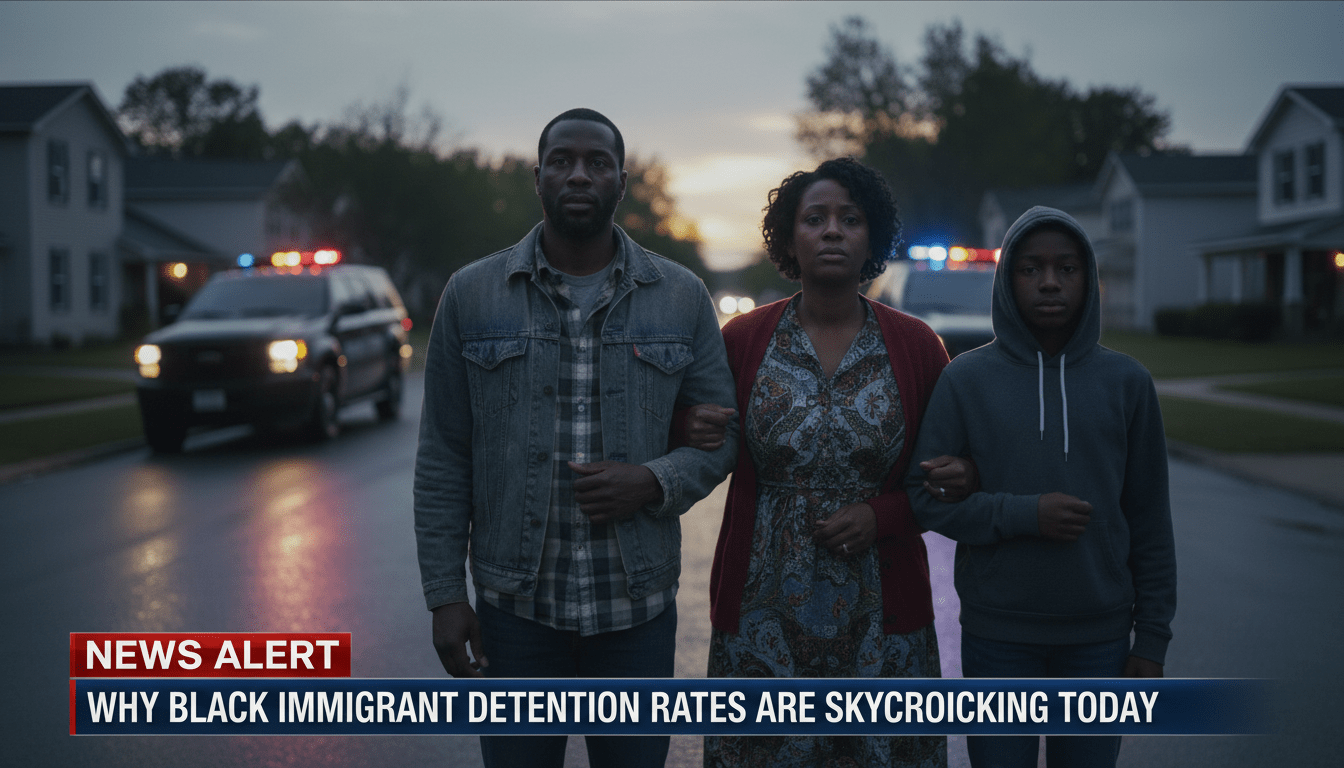
A coalition of diaspora advocacy groups recently released a 24-hour update on a federal initiative called Operation Metro Surge. This report reveals a disturbing pattern. Black immigrants from Africa and the Caribbean face twice the rate of incarceration in immigration proceedings compared to other groups (ibwheadlight.com). This disparity is a central feature of the current enforcement landscape under the administration of Donald Trump. The operation began in December 2025. It is the largest domestic immigration enforcement campaign in the history of the United States (cbsnews.com, apnews.com).
The Department of Homeland Security deployed approximately 2,000 agents to carry out these raids. While the government claims to target individuals with serious criminal histories, the reality on the ground is different. Community observers in the Twin Cities of Minneapolis and St. Paul have documented aggressive tactics. Masked federal agents have used chemical weapons and flashbangs in residential neighborhoods (cbsnews.com). These actions have caused widespread fear. Many families are sheltering in place to avoid encounters with federal agents. The operation specifically targets areas with high concentrations of Somali and Caribbean residents (apnews.com).
Legal challenges to these tactics have already reached federal courts. In March 2026, a federal judge found evidence that agents racially profiled residents. The court noted that agents appeared to arrest individuals based on their physical appearance rather than specific warrants (newsfromthestates.com, cbsnews.com). This militarized approach has led to tragic outcomes. Two United States citizens were fatally shot during the enforcement actions. One death also occurred in immigration custody. These events highlight the severe human cost of current policies. The system treats Black bodies with a level of suspicion that leads to higher rates of detention (cbsnews.com).
Historical Roots in the Negro Seamen Acts
The disproportionate detention of Black migrants is not a new phenomenon. It dates back to the early 19th century. Southern states passed the Negro Seamen Acts between 1803 and the 1860s (britannica.com, wikipedia.org). These laws targeted free Black sailors and Haitian refugees. The goal was to prevent free Black people from interacting with enslaved populations. Authorities feared that these migrants would spread ideas of revolution. When Black sailors arrived in Southern ports, they were immediately taken to local jails (wikipedia.org). They remained in jail until their ships were ready to depart.
This early system created a financial burden for the detained individuals. Ship captains were required to pay for the cost of detaining their crew members. If a captain refused to pay these detention fees, the law allowed the state to sell the free Black migrant into slavery (wikipedia.org). This history shows how the American legal system has long merged immigration control with racial policing. It established a precedent where Black movement was viewed as a threat to national security. Even after emancipation, Black individuals continued to face involuntary servitude through various legal loopholes and discriminatory laws.
The Negro Seamen Acts functioned as a pre-emptive detention system. They did not require the person to commit a crime. The simple act of arriving while Black was enough to justify incarceration. This historical framework mirrors the modern “presumption of dangerousness” that Black immigrants face today. The current double rate of incarceration is a continuation of this 200-year-old logic. It uses the law to restrict the freedom of Black people from the diaspora. Understanding this history is essential to understanding the headlines of 2026 (ibwheadlight.com).
The Criminalization Gap
% of Non-Citizen Population
% Facing “Criminal” Deportation
Black immigrants are disproportionately targeted for criminal-based removal. (americanimmigrationcouncil.org)
The Haitian Precedent and Modern Detention
In the late 20th century, the United States built the modern infrastructure for mass immigration detention. This expansion was a direct response to Haitian asylum seekers. During the 1970s and 1980s, thousands of people fled the Duvalier dictatorship in Haiti. In 1981, the Reagan administration established a policy of mandatory detention for Haitians (refugees.org, theguardian.com). Unlike other migrant groups at the time, Haitians were routinely denied bond. Many were held in federal prisons or rural detention centers. The government intended to use detention as a deterrent to migration (theguardian.com).
The policy of being “interdicted at sea” became a key strategy during this era. The United States Coast Guard would stop boats in international waters. Migrants were then screened for asylum claims while on the ships. This process was highly restrictive. Between 1981 and 1991, only 11 out of 25,000 interdicted Haitians were allowed to apply for asylum (theguardian.com). This practice bypassed the due process rights that migrants would have on United States soil. It relied on the legal theory that those stopped at sea had not yet “entered” the country (refugees.org).
During the 1990s, the detention of Black migrants expanded to Guantánamo Bay. Thousands of Haitian refugees were held there in prison-like conditions. They lacked access to legal counsel. Many were held because they were HIV-positive, a policy that was later ruled unconstitutional. This period solidified the use of mass incarceration as a tool of immigration policy. It disproportionately harmed Black migrants from the Caribbean. These historical actions created the playbook for Operation Metro Surge. The system learned how to isolate and incarcerate specific racial groups with minimal public oversight (theguardian.com, theguardian.com).
The 1996 Legislative Shift
The most significant turning point for the current crisis occurred in 1996. Congress passed two major laws: the Antiterrorism and Effective Death Penalty Act (AEDPA) and the Illegal Immigration Reform and Immigrant Responsibility Act (IIRIRA) (americanimmigrationcouncil.org). These laws fundamentally changed the relationship between criminal law and immigration. They expanded the definition of an “aggravated felony” (immigrantdefenseproject.org). This term is unique to immigration law. It includes many offenses that are neither “aggravated” nor “felonies” in a traditional sense (demesq.com).
Under these laws, minor offenses can lead to mandatory detention and deportation. For example, a misdemeanor theft or a turnstile jump could be labeled an aggravated felony if the potential sentence was one year. This applies even if the person never spent a day in jail. The 1996 laws also made these changes retroactive. Individuals were suddenly deportable for minor crimes they had committed decades earlier (immigrantdefenseproject.org). These laws stripped immigration judges of their discretion. A judge can no longer consider a person’s family ties, military service, or community contributions if an aggravated felony is involved (americanimmigrationcouncil.org).
This legislative shift created a “permanent punishment” for immigrants. For Black immigrants, the impact is severe. Because Black communities are more heavily policed, Black immigrants are more likely to have contact with the criminal justice system. This contact triggers the mandatory detention provisions of the 1996 laws (forumtogether.org). The legal system uses these old convictions to justify the 2:1 incarceration disparity reported today. This policy effectively shaping political dynamics by removing thousands of people from their communities every year.
Statistics of the Disparity Gap
The data clearly shows that Black immigrants are “twice-marked” by the system. They face racial profiling in their neighborhoods and then face harsh treatment in immigration proceedings. While Black immigrants make up only 7% of the non-citizen population, they represent 20% of those facing deportation on “criminal grounds” (ibwheadlight.com, msmagazine.com). This gap is a direct result of over-policing. In many cities, Black residents are stopped and searched at higher rates than other groups. Once an immigrant is in the local jail, they are often flagged for ICE (immigrantdefenseproject.org).
Treatment within detention centers also reveals a racial gap. A study found that Black immigrants from Africa and the Caribbean are six times more likely to be placed in solitary confinement (ibwheadlight.com). Solitary confinement is a harsh punishment that can cause lasting psychological harm. Furthermore, Black migrants account for 28% of all abuse reports in detention facilities. This is a very high number considering their small share of the total population (msmagazine.com). These statistics show that the bias present in the broader criminal legal system is amplified within the immigration system.
Financial barriers also play a role in this disparity. Black immigrants are often forced to pay higher bonds for their release than other groups. When they cannot pay, they remain incarcerated for the duration of their court cases. This process can take months or even years. The lack of legal representation further complicates the issue. Many Black migrants are detained in remote areas where finding a lawyer is difficult (ibwheadlight.com, immigrantdefenseproject.org). This combination of over-policing and systemic bias leads to the incarceration rates we see in the headlines of Operation Metro Surge.
History of Black Detention
Tragedy and Resistance in the Twin Cities
The events in the Twin Cities during Operation Metro Surge illustrate the dangerous reality of these policies. In January 2026, federal agents killed two United States citizens. Renee Nicole Good was shot after dropping her child off at school (cbsnews.com). Federal officials claimed self-defense, but witnesses and video evidence disputed this account. Alex Jeffrey Pretti, a nurse and veteran, was killed while observing the operation. He was attempting to “bear witness” to the treatment of his neighbors (cbsnews.com, cbsnews.com). These killings sparked national outrage and massive protests.
The deaths have raised questions about the rules of engagement for federal agents in residential areas. Many people argue that the government has treated these neighborhoods like war zones. The fatal shooting of citizens shows that aggressive immigration enforcement threatens everyone in the community. It is not just the non-citizens who are at risk when the government uses militarized tactics (cbsnews.com). The state of Minnesota and the cities of Minneapolis and St. Paul have filed lawsuits against the federal government. They allege that the operation is based on racial animus rather than legitimate law enforcement (senate.mn, apnews.com).
In addition to the shootings, deaths have occurred within the detention centers themselves. Victor Manuel Diaz died in an ICE facility in January 2026 (cbsnews.com). His death was labeled a suicide, but his family and lawyers have called for a full investigation. They cite negligent medical care and the poor conditions of the “tent camps” where he was held. These tragedies have fueled a movement for change. Diaspora groups are demanding an immediate end to the surge and the release of those held without criminal records. They are highlighting the deep Enlightenment and Black freedom contradictions that exist when a country claiming to value liberty uses mass incarceration so aggressively.
Conclusion: The Erasure of Due Process
The current reporting on Black immigrant detention rates is a report on the efficiency of a system built over two centuries. The Negro Seamen Acts, the Haitian detention of the 1980s, and the laws of 1996 have all contributed to this moment. The system operates as a filter that disproportionately catches Black migrants. It uses policing as the primary entry point into the deportation pipeline. Once inside, the lack of judicial discretion and the presence of systemic bias make it difficult for individuals to regain their freedom (ibwheadlight.com, americanimmigrationcouncil.org).
Advocacy groups emphasize that Black immigrants often remain invisible in the broader debate about immigration. Operation Metro Surge has brought these issues into the light. The “24-hour update” serves as a critical call to recognize that immigration enforcement is an extension of mass incarceration. It is not an isolated issue but a part of a larger history of racial control. To address the disparity in detention rates, the country must look beyond the immediate headlines and confront the historical policies that created this reality (ibwheadlight.com, msmagazine.com).
The resilience of the diaspora communities remains strong. Neighbors are organizing to protect one another through rapid-response networks. They are documenting federal activity and providing legal resources to those in need. This resistance is also a part of the history. Just as Black sailors and Haitian refugees fought for their rights in the past, today’s migrants and their allies continue to demand justice. The goal is to dismantle a system that uses twice the rate of incarceration to silence a community. The struggle for due process and human dignity continues in the face of Operation Metro Surge (immigrantdefenseproject.org, cbsnews.com).
About the Author
Darius Spearman is a professor of Black Studies at San Diego City College, where he has been teaching for over 20 years. He is the founder of African Elements, a media platform dedicated to providing educational resources on the history and culture of the African diaspora. Through his work, Spearman aims to empower and educate by bringing historical context to contemporary issues affecting the Black community.
