

Why is the Government Hiding Sealed Civil Rights Records?
By Darius Spearman (africanelements)
Support African Elements at patreon.com/africanelements and hear recent news in a single playlist. Additionally, you can gain early access to ad-free video content.
The Struggle for Transparency in Education
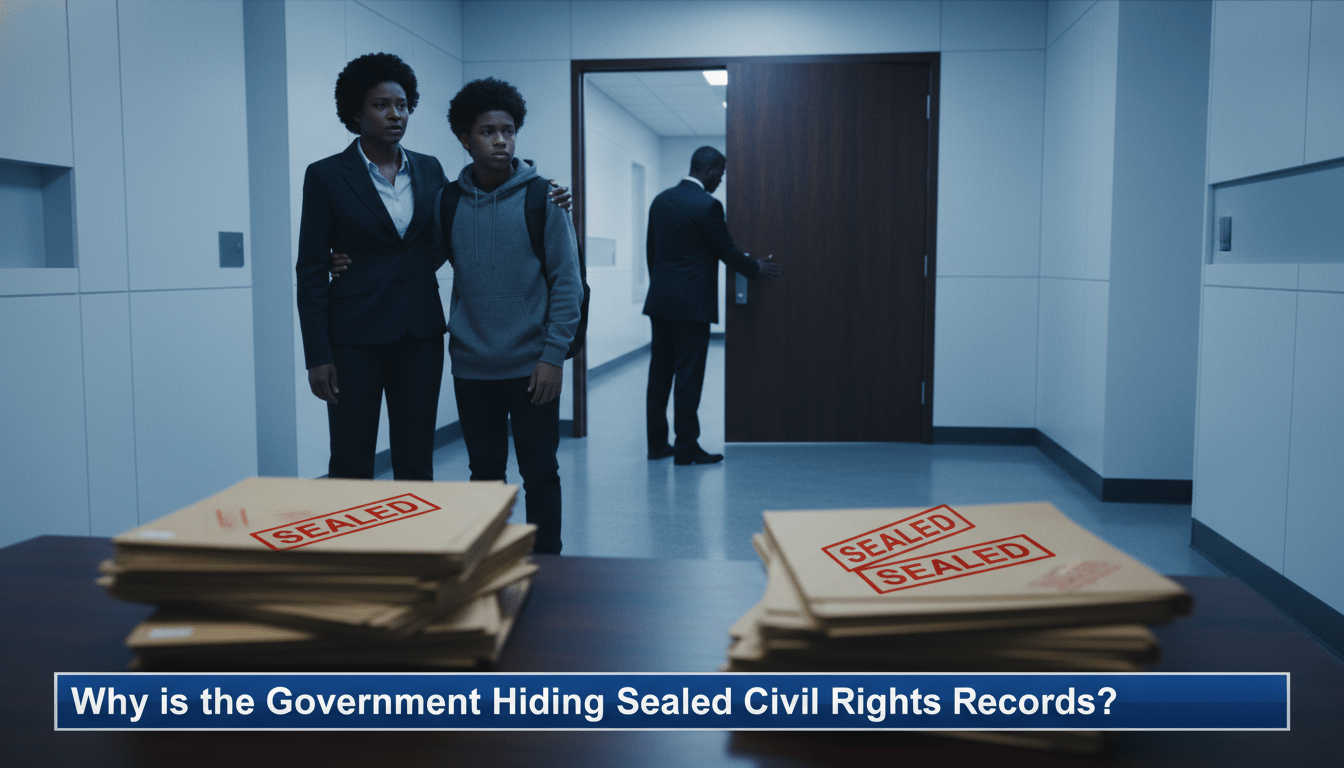
A new legal battle is unfolding in the halls of the United States government. Reporters have filed a lawsuit against the Education Department. They are seeking access to sealed civil rights records (propublica.org). These records hold details about how the government investigates discrimination in schools. For decades, the public could see which schools faced probes for racial bias. Now, the department has shifted toward a policy of secrecy (propublica.org).
Families across the nation are growing concerned. They want to know if their local schools are under investigation. This information is vital for the history of Black family resilience and their search for justice. Without these records, parents cannot hold school districts accountable. The current administration has stopped publishing lists of open investigations. This move marks a sharp departure from previous standards of public oversight (propublica.org).
The Historical Roots of Federal Protection
The Office for Civil Rights (OCR) began with a clear purpose. It was born from the Civil Rights Act of 1964. Title VI of this law is the primary tool for fairness (naacpldf.org). It prohibits discrimination based on race or national origin in federal programs. For Black families, this law has been a shield. It helps challenge unequal discipline and poor funding in schools. Historically, the OCR kept the public informed about its work (civilrightsclassroom.com).
Under past leaders like Catherine Lhamon, the OCR was very active. It used “Dear Colleague” letters to guide schools on civil rights. These documents explained how to follow the law (ed.gov). Transparency was once a core value of the department. It allowed advocacy groups to track systemic issues like racial harassment. However, the political landscape of civil rights enforcement has changed recently. The tradition of openness is now under threat (whiterose.ac.uk).
The Crashing OCR Workforce (2024-2025)
Official staffing counts dropped significantly in one year.
A Sharp Pivot in Enforcement Priorities
In February 2025, the Education Department issued a new directive. This “Dear Colleague” letter changed everything. It used a 2023 Supreme Court ruling to reframe civil rights (civilrightsclassroom.com). The ruling, *SFFA v. Harvard*, ended affirmative action in college admissions. Now, the department applies this to K-12 schools. They argue that race-conscious policies are a form of discrimination (brookings.edu). This interpretation targets diversity programs across the country.
The department is now focused on “directed investigations.” These probes do not start with a victim’s complaint. Instead, the government starts them on its own initiative (k12dive.com). Many of these probes target schools with DEI programs. Officials claim these programs harm white and Asian students. This shift has created a struggle for fair educational opportunities. Schools that once focused on equity now face federal pressure to stop (littler.com).
The Human Cost of the Case Backlog
While the government pursues new targets, a massive backlog is growing. Approximately 25,000 cases remain unresolved as of January 2026 (propublica.org). Many of these involve racial harassment or disability rights. Students are waiting months or years for justice. The speed of resolving cases has plummeted. Under the previous administration, the OCR closed 200 cases per month. That number has fallen to nearly 50 (edweek.org).
This slowdown affects the most vulnerable students. Racial harassment complaints from Black families are often ignored. Some staff members describe their offices as “dismissal factories.” Data shows that 91 percent of cases were dismissed in March 2025 (edweek.org). This is far higher than the historical average. It suggests that the government is closing files without full investigations. The impact on students is devastating and widespread (edweek.org).
The “Dismissal Factory” Phenomenon
Historical Dismissal Rate
March 2025 Rate
The rate of cases closed without full investigation has reached record highs.
Why Sealed Records Harm the Public
Sealing civil rights records prevents public accountability. When the government works in secret, it can hide its true motives. Reporters from ProPublica allege that the department is cloaking its work (propublica.org). They want to see internal messages with conservative advocacy groups. Families also want to know which DEI programs are under fire. Without this knowledge, they cannot prepare a defense. The lack of transparency creates an atmosphere of fear in schools (propublica.org).
Black students and advocates are the most affected. If a “Black Student Success Plan” is investigated in secret, the community cannot respond (afro.com). Districts might enter “secret agreements” to end diversity efforts. They do this to avoid public federal probes. This secrecy hides the fact that traditional racism complaints are being neglected. It represents an ongoing struggle for full citizenship and equal protection under the law (propublica.org).
Staffing Cuts and Regional Office Closures
The ability of the OCR to do its job is fading. Secretary Linda McMahon has overseen deep cuts to the department. The workforce dropped from 568 to 403 people by late 2025 (propublica.org). Furthermore, seven out of twelve regional offices were closed (edweek.org). These closures include the office in Philadelphia. This leaves many states without local investigators to handle bias claims. Remaining staff members face impossible caseloads (edweek.org).
Some investigators now handle 380 cases each. Previously, they managed about 60 cases. This leads to burnout and errors. It also contributes to the high rate of summary dismissals. The government claims it is saving money and “shaking up” the department. However, critics see this as a way to dismantle civil rights protections. The reduction in force has crippled the agency’s core mission (propublica.org, edweek.org).
Current Unresolved Case Backlog
25,000Pending Civil Rights Complaints
As of January 2026, students across America are waiting for justice.
The Threat of Withdrawing Federal Funding
The Education Department holds a “nuclear option” over schools. Under Title VI, it can pull all federal funding for non-compliance (ed.gov). This threat is often enough to make schools cancel programs. Withdrawing funds affects more than just civil rights. It impacts the National School Lunch Program for low-income students. It also threatens special education services under the IDEA law (ct.gov). These cuts would bankrupt many districts.
Schools are often forced to choose between their values and their survival. Even voluntary efforts to increase diversity are now risky. The department warns that any “race-based decision” is a violation (civilrightsclassroom.com). This includes scholarships and even graduation ceremonies. The mere threat of a federal probe creates a “chilling effect.” Schools stop supporting marginalized students to avoid the high cost of a legal battle (quarles.com, omm.com).
The Current Political Context and Future Outlook
The “2025 Shift” reflects the policies of President Donald Trump. His administration seeks to reorient civil rights enforcement. Secretary Linda McMahon is leading the effort to downsize the department. Their goals align with the “Project 2025” agenda (propublica.org). This plan calls for ending federal DEI programs. It also moves the OCR toward a “colorblind” approach. This approach often ignores the reality of systemic racism (crowell.com).
The battle over sealed records is far from over. Courts will decide if the public has a right to see these probes. Reporters and families continue to demand transparency. They believe that a healthy democracy requires accountability. The history of the OCR shows that oversight is essential. Without it, the promise of equal education remains unfulfilled. The outcome of this struggle will shape the future of civil rights in America (propublica.org, propublica.org).
Summary of the Transparency Crisis
The current situation is a clash between two visions of government. One vision values public oversight and traditional civil rights. The other vision prioritizes executive control and a move away from race-conscious policies. The sealing of records is a central part of this conflict. It hides the redirection of resources from harassment cases to DEI probes. It also masks the impact of massive staffing cuts (propublica.org, edweek.org).
Families and journalists are not giving up. They are using FOIA requests and lawsuits to break the silence. They know that transparency is the only way to protect student rights. The 60-year tradition of the Office for Civil Rights is at a crossroads. Whether it remains a shield for the vulnerable or a tool for ideology depends on this fight. The public deserves to know how their schools are being monitored (propublica.org, chalkbeat.org).
About the Author
Darius Spearman is a professor of Black Studies at San Diego City College, where he has been teaching for over 20 years. He is the founder of African Elements, a media platform dedicated to providing educational resources on the history and culture of the African diaspora. Through his work, Spearman aims to empower and educate by bringing historical context to contemporary issues affecting the Black community.
