

Why the Minneapolis Immigration Crackdown is Targeting Citizens
By Darius Spearman (africanelements)
Support African Elements at patreon.com/africanelements and hear recent news in a single playlist. Additionally, you can gain early access to ad-free video content.
The city of Minneapolis recently became the center of a national crisis. In January 2026, federal agents initiated a massive operation in the Twin Cities. This action followed the fatal shooting of Renée Good by an immigration officer. The event triggered widespread unrest and a high-stakes legal battle. This article explores the history behind these headlines to explain why federal power is expanding (youtube.com).
The Fatal Encounter in South Minneapolis
On January 7, 2026, thirty-seven-year-old Renée Nicole Good died in south Minneapolis. She was a U.S. citizen and a mother of three. Good served as a legal observer during a federal operation. Immigration and Customs Enforcement Agent Jonathan Ross fired the fatal shots. This occurred during a federal crackdown known as Operation Metro Surge. The government deployed over two thousand agents to the area (americanimmigrationcouncil.org).
Department of Homeland Security Secretary Kristi Noem defended the agent. She claimed Good attempted to hit officers with her vehicle. However, eyewitness accounts and video footage tell a different story. Bystander videos show the vehicle turning away from the agents. Ross fired three shots through the windshield. One of these shots struck Good in the head. This discrepancy between the official narrative and visual evidence fueled public anger (startribune.com).
Tensions rose further on January 14 when another shooting occurred. A federal agent shot a Venezuelan man during a traffic stop. This second incident led to more protests and property damage. The Minneapolis immigration crackdown has since faced intense scrutiny. Critics argue these tactics mirror historical systems of involuntary servitude where law enforcement exercises unchecked control (startribune.com).
The President and the Insurrection Act
President Trump threatened to invoke the Insurrection Act of 1807. He described the situation in Minneapolis as a travesty. This law allows the President to deploy the military domestically. It is intended for use when state authorities cannot maintain order. However, Minnesota Governor Tim Walz has explicitly opposed federal intervention. This creates a significant legal and political conflict (britannica.com).
The history of the Act is complex and contradictory. Thomas Jefferson signed the law to handle unlawful obstructions. During the Civil Rights Era, the Act protected citizens. Presidents Eisenhower and Kennedy used it to enforce desegregation. They acted against the wishes of Southern governors who favored segregation. Now, the law is being discussed as a tool to override local governance. This shift signals a change in how federal power is used against cities (brennancenter.org).
The last full invocation occurred during the 1992 Los Angeles Riots. In that instance, the California Governor requested federal help. The current scenario in Minneapolis is different. The President is threatening unilateral action. Sections 252 and 253 of the Act permit this without state consent. He can intervene if he determines federal laws are being obstructed. This broad power gives the executive branch significant discretion in defining a crisis (lawfaremedia.org).
History of the Somali Diaspora in Minnesota
The ACLU alleges that federal agents are targeting Somali residents. To understand this, one must look at local history. Ethnic Somalis began arriving in the Twin Cities in the 1990s. They were refugees fleeing the Somali Civil War. They found jobs in meatpacking and utilized a strong social safety net. Over time, the area became known as “Little Mogadishu” (wikipedia.org).
By 2024, the Somali population reached nearly one hundred thousand people. This is the largest Somali diaspora in the United States. Data shows that ninety-five percent of these residents are U.S. citizens. Many were born in America or are naturalized citizens. Despite their status, the community faces increased federal scrutiny. Some argue these operations are similar to tactics used to suppress the black vote through intimidation (motherjones.com).
The administration points to past issues to justify the crackdown. Specifically, they cite a 2022 fraud scandal involving child nutrition funds. President Trump claims the community is a hub for money laundering. He used these allegations to revoke Temporary Protected Status for Somalis. This revocation forces many people toward deportation. Critics argue there is no real link between old fraud cases and current mass arrests (ag.state.mn.us).
The ACLU and Racial Profiling
The ACLU of Minnesota filed a class-action lawsuit on January 15, 2026. The case is titled Hussen v. Noem. It alleges that federal agents engage in racial profiling. The plaintiffs claim that agents target people based on their appearance. This happens even when individuals provide proof of citizenship. The lawsuit describes a pattern of abuse by federal officers (aclu.org).
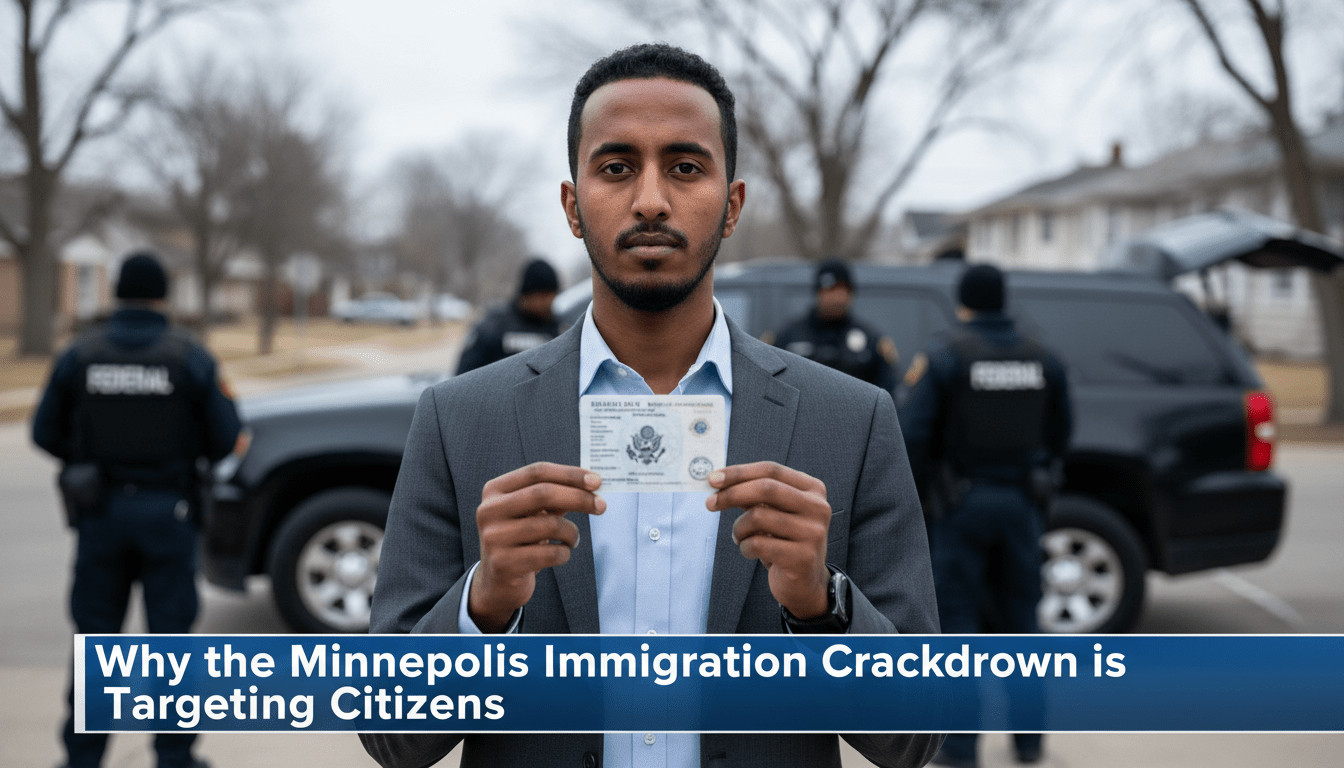
One plaintiff is twenty-year-old Mubashir Khalif Hussen. He is a U.S. citizen who was walking to lunch. Masked agents stopped him in the Cedar-Riverside neighborhood. Hussen showed the agents his federal passport card. This card is a valid form of identification for all federal purposes. However, the agents refused to acknowledge the document. They shackled Hussen and detained him at a federal building (yourvalley.net).
The lawsuit documents other aggressive tactics. Agents have reportedly smashed car windows during traffic stops. They have used concussion grenades near families and children. These actions have caused deep fear within the community. Legal experts suggest these behaviors violate the Fourth Amendment. The Fourth Amendment protects people from unreasonable searches and seizures. The case highlights the importance of protecting the legacy of early Black entrepreneurs who fought for equal rights (americanimmigrationcouncil.org).
Religious Freedom and Civil Rights
The crackdown has also impacted religious practices. Muslim women in the community wear religious face coverings called niqabs. The ACLU lawsuit alleges that agents have ordered women to remove them. This happens in public and during arrests. Such actions are considered a violation of the First Amendment. The Free Exercise Clause protects the right to practice religion freely (aclu.org).
Forcing the removal of a religious veil is a sensitive issue. Legal precedents suggest this can be viewed as a strip search. In 2024, New York City paid a large settlement for similar actions. Law enforcement must use the least restrictive means for identification. For example, they can offer a private room for a search. They can also provide an officer of the same gender. The current federal surge appears to ignore these standard protections (yourvalley.net).
These actions create a hostile environment for residents. People are afraid to go to work or school. The community feels it is under siege by its own government. This situation raises questions about the limits of federal power. It also shows how immigration policy can affect citizens. When agents target based on race, everyone’s rights are at risk. This environment mirrors the historical barriers students face in online learning and other public spaces (motherjones.com).
The Republican Party Internal Split
The Minneapolis unrest has caused a divide within the Republican Party. A recent Reuters Ipsos poll highlights this internal conflict. Some Republicans support the aggressive immigration crackdown. They believe that prioritizing arrests is the most important goal. However, another group is concerned about the human cost. They favor reducing harm and avoiding the detention of citizens (hindustantimes.com).
Data shows that approval of Trump’s immigration leadership is slipping. In March 2025, eighty-eight percent of Republicans approved. By January 2026, that number dropped to seventy-six percent. This change suggests that even supporters are wary of the current tactics. The fatal shooting of a U.S. citizen changed the conversation. It made the consequences of the surge more visible to the entire country (time.com).
Nationwide, public sentiment is even more critical. Only thirty-eight percent of adults approve of the current leadership. Sixty-one percent of the public disapproves of the federal response. This widespread disapproval creates a political liability for the administration. The use of the military against American cities is a divisive issue. It forces many people to reconsider their stance on executive authority (hindustantimes.com).
Legal Immunity and the Path Forward
Agent Jonathan Ross currently faces no federal charges. The administration claims he has absolute immunity from state prosecution. Secretary Noem characterized his actions as heroic. She stated he was protecting himself from a weaponized vehicle. The Department of Justice has declined to open a civil rights investigation. This decision led to several high-level resignations within the department (motherjones.com).
Local authorities face hurdles in their own investigations. The FBI reportedly blocked state investigators from accessing evidence. This makes it difficult for the state to hold the agent accountable. The legal battle over immunity will likely go to the Supreme Court. It will determine if federal agents can be prosecuted for actions on state soil. This case could change the future of law enforcement accountability in America (lawfaremedia.org).
The Minneapolis crisis is more than a local event. It is a collision of three historical trends. First, it shows the expansion of executive power via the Insurrection Act. Second, it highlights the post-9/11 scrutiny of immigrant communities. Third, it demonstrates the ongoing struggle for civil rights against racial profiling. The outcome of the Hussen v. Noem case will be critical. It will decide if the constitutional rights of citizens can survive a federal surge (brennancenter.org).
The human cost of Operation Metro Surge is becoming clear. Families are separated and communities are traumatized. The high percentage of citizens caught in the dragnet is a serious concern. If federal agents can ignore identification documents, no one is safe. The history of the diaspora shows a community that wants to belong. The current headlines show a government that is pushing them away. The path forward requires a balance between security and justice (americanimmigrationcouncil.org).
About the Author
Darius Spearman is a professor of Black Studies at San Diego City College, where he has been teaching for over 20 years. He is the founder of African Elements, a media platform dedicated to providing educational resources on the history and culture of the African diaspora. Through his work, Spearman aims to empower and educate by bringing historical context to contemporary issues affecting the Black community.
