

Why Walnut Cove is Suing to Stop Project Delta AI Centers
By Darius Spearman (africanelements)
Support African Elements at patreon.com/africanelements and hear recent news in a single playlist. Additionally, you can gain early access to ad-free video content.
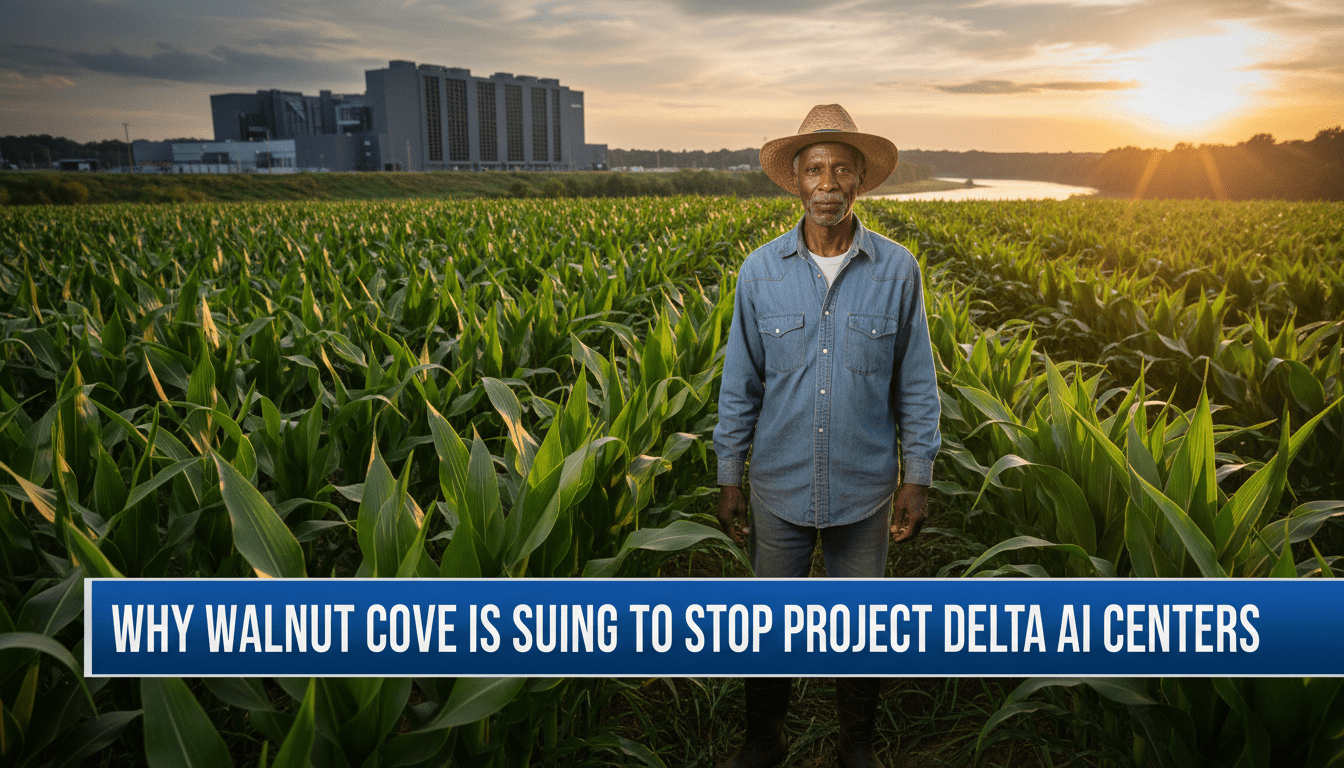
The quiet banks of the Dan River in North Carolina are now a battleground for civil rights. On March 12, 2026, the Southern Coalition for Social Justice filed a major lawsuit to stop a project known as “Project Delta.” This development is a massive $10 billion artificial intelligence data center planned for Walnut Cove. Local residents argue that this project threatens the land and health of historically Black farming communities. While developers promise money and progress, the people of Walnut Cove see another chapter in a long history of land theft and pollution (southerncoalition.org).
To understand this fight, one must look at the soil itself. The land is not an empty space waiting for computers. It is a place where history lives. From the Indigenous people who lived there first to the enslaved people who worked the plantations, every acre holds a story. The current lawsuit, known as The Hairston Clan v. Stokes County, claims that the local government ignored these stories. The county changed the rules for how the land is used without thinking about the people who live there (southerncoalition.org, actionnetwork.org).
Project Delta Land Impact
Comparing total rezoned area to actual development footprint
The Ancient Roots of the Dan River
Long before big tech companies looked at Walnut Cove, the Saura people called this land home. They were the original keepers of the Dan River basin. Archaeologists have found significant sites on the property where Project Delta wants to build. In 1972, they discovered the remains of a woman known as the “Sauratown Woman.” There are also cemeteries believed to hold the ancestors of the Saura tribe. The history of this land started with Indigenous displacement to make room for a different kind of economy (southerncoalition.org).
That new economy was built on the backs of Black people. The fertile land became the Saura Town Plantation. Hundreds of enslaved people worked these fields for the Hairston family. Today, the property still contains the ruins of historic homes and many unrecorded burial sites. These are the graves of people who were forced to build the wealth of the South. The lawsuit argues that turning this sacred ground into an industrial park is a way of erasing that history forever (southerncoalition.org, cemeterycensus.com).
Black Land Ownership and Independence
After the Civil War, formerly enslaved people fought for their own pieces of the American dream. Families like the Hairstons and the Baileys stayed in the area. They worked hard to buy land along the Dan River. They built independent, Black-owned farming communities that survived the era of Jim Crow. By the year 1910, Black-owned farmland was a powerful tool for economic freedom in the South. You can learn more about how Black workers fought for economic justice even when the law was against them (southerncoalition.org).
However, this independence has been under attack for over a century. Discriminatory lending and industrial growth have taken much of that land away. Across the country, Black land ownership has dropped from 16 million acres in 1910 to less than 3 million today. In North Carolina, Black farmers now own only three percent of the farms. Project Delta is seen as the latest threat to what little land remains. The lawsuit claims that the rezoning will drop property values and make it harder for Black families to keep their ancestral homes (southerncoalition.org).
Black Land Loss: 1910 vs Today
1910 Ownership
Today
The Concept of Sacrifice Zones
Walnut Cove has often been treated as a place where industrial waste is dumped. This is part of a pattern called environmental racism. For decades, residents have lived in the shadow of the Belews Creek Power Station. This coal-fired plant has filled the air with pollution and created massive ponds of toxic coal ash. The local Black community has had to fight for the right to clean air and water for a very long time (cwfnc.org, appvoices.org).
In 2014, a major disaster proved how dangerous this industrial presence can be. A pipe burst at a Duke Energy site, dumping 39,000 tons of coal ash and 27 million gallons of wastewater into the Dan River. This contaminated the main water source for the entire community. Residents feel that Project Delta is just the next step in making their town a “sacrifice zone.” They believe the county is willing to sacrifice their health for the tax money a data center might bring (cwfnc.org, selc.org).
The Speculative Nature of Project Delta
One of the biggest concerns for residents is that Project Delta is a “speculative” project. This means the developer, Engineered Land Solutions, does not actually have a tenant yet. They are building a massive complex and hoping that a company like Google or Microsoft will move in later. The Stokes County Planning Board even recommended saying no to the project because of this uncertainty (businessnc.com, wfmynews2.com).
Despite the warnings, the County Board of Commissioners voted 3-2 to move forward with the rezoning. They are looking at the potential for $20 million to $40 million in yearly tax revenue. However, the Planning Board felt the project did not fit the local land use plan. They worried about noise and damage to the rural feel of the area. The lawsuit claims the commissioners acted “capriciously” by ignoring these expert warnings (southerncoalition.org, wral.com).
Resource Consumption and High Costs
Data centers for artificial intelligence use a massive amount of electricity and water. Project Delta is expected to use up to 300 megawatts of power. To get this power, the developers plan to use methane gas generators 24 hours a day until they can connect to the main grid. This will lead to constant noise and air pollution right next to family farms. The impact of such resource-intensive projects can feel like a historical echo of exploitation seen in other parts of the world (cwfnc.org, ncleg.gov).
The project also needs a lot of water for cooling. Estimates show the facility could use up to one million gallons of water every single day. This is a huge strain on the local system. There are also fears about how the wastewater will be handled. The chemicals used to cool data centers can be harmful if they leak into the ground. Residents fear they are being forced to pay for the very thing that is destroying their peace (cwfnc.org, ncleg.gov).
Projected Resource Consumption
Water Usage (Up to 1 Million Gallons/Day)
Power Usage (300 MW Capacity)
The Struggle for Political Power
The fight in Walnut Cove is also about who gets to decide the future of a town. For many years, Black residents in the Walnut Tree area did not even have the right to vote in town elections. They finally won a long legal battle for annexation in 2018. This gave them the right to vote for the leaders who make zoning decisions. This struggle is a clear example of how federalism and state power affect the lives of Black Americans (appvoices.org, southerncoalition.org).
The current lawsuit argues that the county board did not follow the proper steps for a fair decision. They claim that the voices of the most affected people were drowned out by the promise of corporate money. In North Carolina, the law requires a “reasoned decision-making” process. The Southern Coalition for Social Justice says the county failed this test. They argue that the commissioners did not look at how all these different pollutions would stack up on top of each other (southerncoalition.org, actionnetwork.org).
Heirs’ Property and the Loss of Heritage
Many Black families in Walnut Cove own their land as “heirs’ property.” This means the land was passed down through generations without a formal will. This kind of ownership makes the land very vulnerable to outside developers. It is much easier for a company to force a sale when a hundred different relatives have a small claim to the same field. This has been a major cause of Black land loss throughout history (southerncoalition.org).
The National Hairston Clan is working to keep the family land together. They are a network of descendants of the people who were once enslaved on that very soil. By standing together, they hope to stop the erasure of their heritage. They believe that their history is worth more than any data center. They are fighting to keep the stories of their ancestors alive for the next generation (southerncoalition.org, cemeterycensus.com).
A Precedent for the Future of AI
The outcome of this lawsuit will matter far beyond Walnut Cove. As the demand for artificial intelligence grows, more data centers will be built. This case will set a precedent for how North Carolina balances high-tech growth with the rights of its people. It asks if a $10 billion investment is more important than the history of a Black farming community. The people of Walnut Cove are making it clear that their land is not for sale (southerncoalition.org, actionnetwork.org).
Under the current administration of President Donald Trump, industrial growth is often prioritized. However, the law still requires that local communities have a say. The residents of Walnut Cove are using every legal tool they have to protect their homes. They are showing the world that even a small rural community can stand up to a multi-billion dollar project. The fight for the Dan River is a fight for the soul of the community (wral.com, wfmynews2.com).
The lawsuit is now moving to the Stokes County Superior Court. The residents are asking for the rezoning to be reversed. They want a future where their health and history are protected. As they wait for the court’s decision, they continue to farm the land and honor their ancestors. Their struggle serves as a reminder that the land is more than just a place to build; it is the foundation of who they are. You can explore how early Black entrepreneurs shaped the landscape of this country through their resilience (southerncoalition.org).
About the Author
Darius Spearman is a professor of Black Studies at San Diego City College, where he has been teaching for over 20 years. He is the founder of African Elements, a media platform dedicated to providing educational resources on the history and culture of the African diaspora. Through his work, Spearman aims to empower and educate by bringing historical context to contemporary issues affecting the Black community.
